المدونة
Demurrage vs. Detention in GCC Ports: How to Save $2,000 per Container in UAE & Saudi Arabia
Imagine this: You’ve just closed a major deal on industrial equipment from overseas, and your containers are en route to Jebel Ali. Everything seems on track—until a customs holdup stretches your pickup window. Suddenly, you’re hit with a bill for $1,500 in unexpected fees per container. It’s a scenario I’ve faced more times than I’d like in my 20 years running supply chain operations across the Gulf. These hidden costs, known as demurrage charges and detention fees, can quietly erode your margins in GCC shipping. But here’s the good news: with the right approach, you can slash them by up to $2,000 per container. In this guide, we’ll break down the differences, uncover regional pitfalls, and deliver actionable steps to keep your costs in check.
Demurrage vs Detention
Understanding Demurrage and Detention: The Basics
In the fast-paced world of GCC ports, where trade volumes hit record highs—over 19 million TEUs annually at Jebel Ali alone—timing is everything. Demurrage and detention are penalties designed to keep containers moving, but they often catch businesses off guard. Let’s clarify what they mean and why they matter for your bottom line.
What is Demurrage?
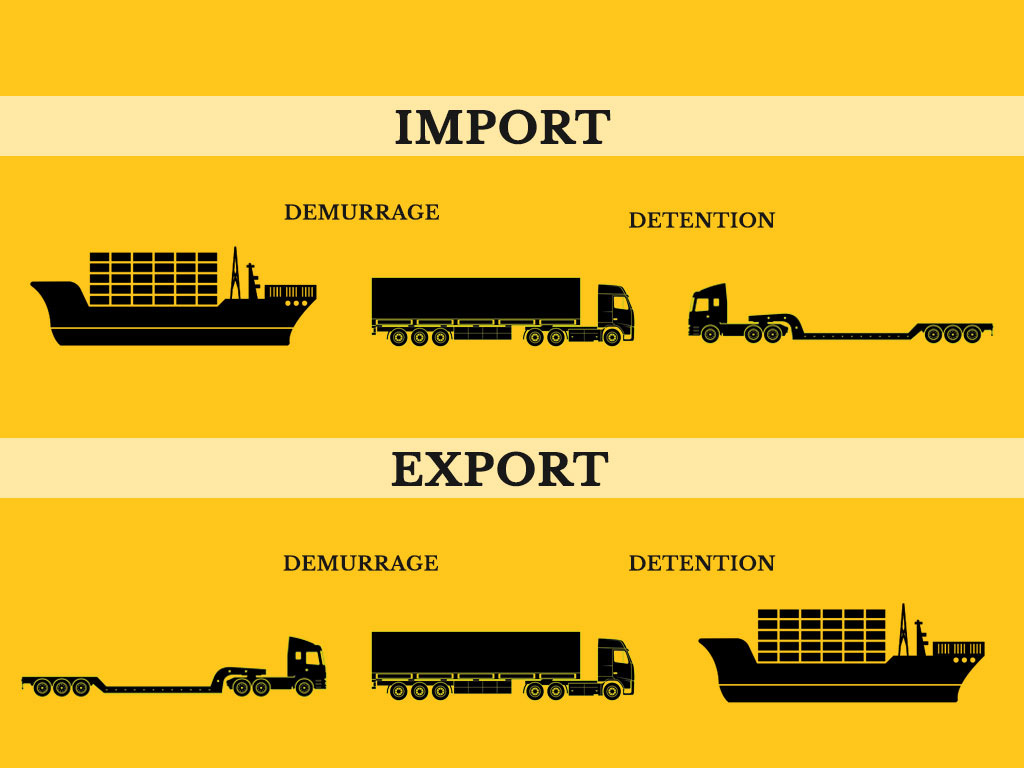
Demurrage refers to charges for keeping a full container inside the port terminal beyond the allowed free time. Think of it as rent for occupying valuable space at the dock. In the UAE and Saudi Arabia, free time typically ranges from 3 to 7 days, depending on the carrier and port. After that, fees kick in—starting at AED 75-110 per day for a 20-foot container in UAE ports like Jebel Ali, escalating to AED 350 or more after two weeks. In Saudi ports such as Jeddah, rates can hit SAR 500 per day after 15 days.
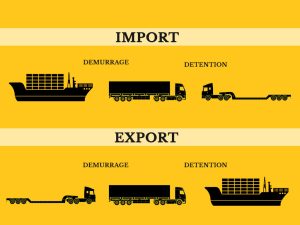
Demurrage
These fees aren’t arbitrary; they’re tied to port efficiency. A study by the World Shipping Council notes that global demurrage costs averaged $720 per container in recent years, but in the Middle East, congestion at high-traffic hubs can push this higher. For importers in the GCC, this means planning customs clearance meticulously to avoid stacking up charges.
What is Detention?
Detention, on the other hand, applies when you hold onto the container outside the port—say, at your warehouse—longer than permitted. This covers the time from pickup to returning the empty container to the carrier’s depot. Free time here is often longer, up to 10 days in UAE exports, but fees ramp up quickly: AED 80-260 per day for standard containers in Dubai. In Saudi Arabia, detention can reach SAR 600 per day for oversized loads after free periods expire.
From my experience, detention often stems from internal delays like unloading bottlenecks or transport scheduling mishaps. Unlike demurrage, which is port-bound, detention gives you more control—but it requires tight coordination with trucking partners.
Key Differences Between Demurrage and Detention
To avoid confusion, here’s a quick breakdown:
- الموقع: Demurrage is inside the terminal; detention is outside.
- Container Status: Demurrage applies to full containers; detention can hit full or empty ones.
- Free Time: Demurrage free days are shorter (3-5 days typically); detention offers more leeway (5-10 days).
- Calculation: Both are per day, but demurrage ties to discharge date, while detention starts from gate-out.
| أسبكت | Demurrage | Detention |
|---|---|---|
| Trigger | Container stays in port past free time | Container held outside port past free time |
| Typical Free Days (GCC) | 3-7 days | 5-10 days |
| Average Daily Fee (UAE, 20ft) | AED 110-350 | AED 80-260 |
| Average Daily Fee (Saudi, 40ft) | SAR 220-600 | SAR 300-1,000 |
| Common Cause | Customs delays | Unloading/transport issues |
The Impact of These Charges in GCC Ports
GCC ports are powerhouses, handling billions in trade annually. But with growth comes pressure: UAE ports processed over 20 million TEUs in 2025, while Saudi Arabia’s saw a 15% uptick. Demurrage and detention fees can add 10-20% to shipping costs if unmanaged, turning a profitable import into a loss.

Charges in GCC Ports
Demurrage and Detention in UAE Ports
In the UAE, Jebel Ali stands out as a global hub, but it’s not immune to delays. For imports, combined demurrage/detention free time is often 5 days for standard containers, with fees starting at AED 85-110 per day. Hazardous cargo gets even less grace—3 days—escalating to AED 250 quickly. I’ve seen businesses in Dubai rack up $1,200 per container from weekend customs backlogs alone.
Reefer containers face steeper penalties: AED 260-1,040 per day after free time, due to power and monitoring needs. With UAE’s focus on diversified trade, these fees hit sectors like construction and oil hard.
Cost of Exporting One Container to GCC Countries (Real Numbers for MENA Traders)
Demurrage and Detention in Saudi Arabia Ports
Saudi ports like Jeddah and Dammam are vital for Vision 2030 imports, but bureaucracy amplifies risks. Free time is 3 days for demurrage, with charges up to SAR 500 per day after 15 days. Detention for exports starts free for 10 days, then SAR 150-400.
A 2025-2026 analysis shows average costs here at $449 per container over 14 days, down 18% from prior peaks but still significant. Congestion from Red Sea reroutes has added layers, making proactive planning essential.
Common Causes of Demurrage and Detention in the Region
No one plans for these fees, but they creep in through overlooked gaps. In my career, I’ve pinpointed these culprits:
- Customs Delays: GCC regulations require precise documentation; a missing NOC can hold containers for days.
- Port Congestion: High volumes at Jebel Ali or Jeddah mean longer wait times—up 20% in 2025 due to global disruptions.
- Transport Bottlenecks: Trucking shortages or scheduling errors extend detention.
- Internal Operations: Slow unloading at warehouses or poor carrier coordination.
- Weather and Geopolitics: Sandstorms or Red Sea tensions delay vessels, compressing free time.
These aren’t just annoyances; a HubSpot report on supply chain efficiency shows they can inflate costs by 15%. The “why” here is simple: ports prioritize flow to handle massive trade, penalizing slowdowns.
Cheapest Way to Export to Saudi Arabia in 2026
Proven Strategies to Minimize or Avoid These Fees
Here’s where we get practical. I’ve implemented these tactics in real operations, saving thousands per shipment. Aim for $2,000 savings per container by combining them.
Step-by-Step Planning for Imports and Exports
- Negotiate Free Time Upfront: In contracts, push for extended days—up to 10 for detention in UAE. Carriers like Maersk often accommodate volume shippers.
- Pre-Clear Customs: Submit docs 72 hours before arrival. Use digital platforms for faster approvals.
- Schedule Drayage Early: Book trucks 48 hours ahead, aligning with ETA.
- Monitor Real-Time: Use tracking tools to predict delays and adjust.
- Optimize Unloading: Allocate resources for quick turnaround—aim for same-day empty returns.
Leveraging Technology and Partnerships
- Adopt Visibility Software: Tools like FourKites provide ETAs, cutting surprises by 30%.
- Partner with Forwarders: Digital freight forwarders streamline GCC logistics, reducing delays by 25%. For more on this, check our guide on Streamlining Cross-Border Logistics for Efficient B2B Trade in the Gulf Region.
- Use SOC Containers: Shipper-owned containers eliminate carrier detention fees entirely.
Cost Comparison: Before and After Optimization
| Scenario | Average Cost per Container (UAE/Saudi) | Optimized Cost | Savings |
|---|---|---|---|
| Standard Delay (5 Days Over) | $1,500-$2,500 | $300 | $1,200-$2,200 |
| Severe Congestion (10 Days Over) | $3,000-$4,500 | $800 | $2,200-$3,700 |
| With Tech/Partnerships | $720 (Baseline) | $200 | $520 |
Case Studies: Real-World Savings in GCC Shipping
Let’s ground this in reality. These anonymized examples from Gulf operations show the power of strategy.
Case Study 1: UAE Importer Slashes Fees by 75%
A Dubai-based construction firm importing machinery faced $3,200 in demurrage per container from Jebel Ali customs holds. By negotiating 7 extra free days and using predictive analytics for ETAs, they reduced delays from 12 to 4 days. Result: Savings of $2,400 per container across 50 shipments, totaling $120,000 annually. The key? Early vendor coordination and digital docs.
Case Study 2: Saudi Exporter Avoids Detention with SOCs
In Dammam, an oil equipment exporter dealt with $1,800 detention fees per container due to warehouse bottlenecks. Switching to shipper-owned containers (SOCs) eliminated carrier penalties. Combined with streamlined trucking, they saved $1,500 per unit—over $75,000 in a quarter. Lesson: Ownership shifts control.
Case Study 3: GCC-Wide Reduction Through AI
A regional logistics provider using AI platforms cut demurrage/detention by 90% across UAE and Saudi ports. By anticipating dwells, they intervened early, saving $2,000+ per container on average. This echoes findings from Search Engine Journal on tech-driven efficiency.
Tools and Best Practices for Ongoing Cost Control
Sustaining savings requires tools:
- Tracking Apps: Maersk’s portal for real-time updates.
- Customs Resources: UAE’s Dubai Customs app; Saudi’s Zakat portal.
- Internal Audits: Quarterly reviews of past fees to spot patterns.
- Training: Educate teams on GCC specifics—free time varies by carrier.
Link internally to our piece on The Role of Digital Freight Forwarders in Modern B2B Supply Chains: Revolutionizing Gulf Trade for deeper tech insights.
In wrapping up, demurrage vs. detention doesn’t have to derail your GCC operations. By understanding the mechanics, addressing causes, and applying these strategies, you’ve got the blueprint to save $2,000 per container. It’s about turning potential pitfalls into competitive edges. Ready to optimize your supply chain? اشترك في Tendify.net today to connect with verified logistics partners and access exclusive tools for seamless Gulf trade.