المدونة
Kuwait Chemical Imports: 2026 Duty Rates & Customs Guide
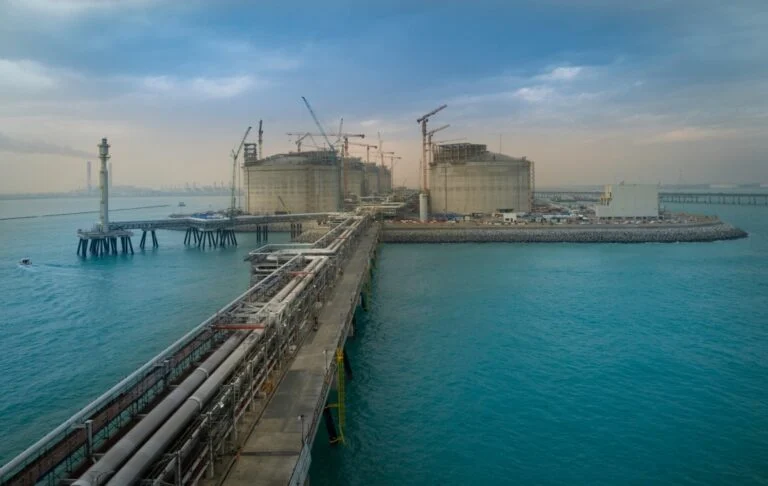
Imagine standing at the bustling Port of Shuwaikh, watching containers of specialty chemicals unload under the Gulf sun. You’ve sourced high-quality petrochemicals from a reliable supplier, but one paperwork slip-up could turn your profitable shipment into a costly delay. As someone who’s navigated these waters for over two decades in global trade, I’ve seen businesses thrive—or stumble—based on how well they grasp Kuwait’s customs rules. In 2026, with GCC integrations tightening and environmental scrutiny rising, getting this right isn’t optional; it’s your edge in a competitive market.
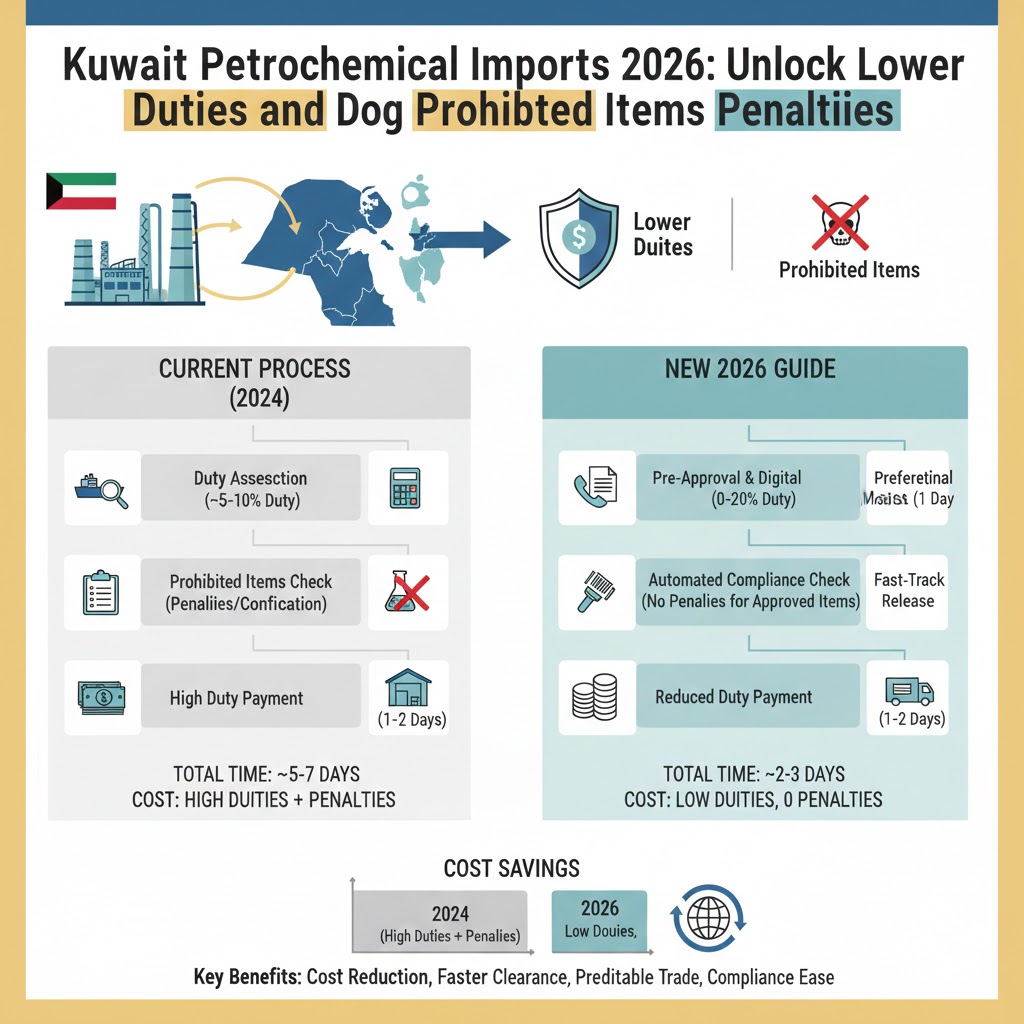
Kuwait Petrochemical Imports 2026 Unlock Lower Duties and Dodge Prohibited Items Penalties
This guide dives deep into Kuwait’s customs landscape for chemical products. We’ll cover everything from duty calculations to the full list of prohibited items, with actionable steps to ensure smooth imports. Whether you’re expanding into petrochemicals or handling industrial solvents, you’ll walk away equipped to avoid pitfalls and capitalize on opportunities. Let’s break it down.
Understanding Kuwait’s Customs Framework in 2026
Kuwait’s customs system operates within the Gulf Cooperation Council (GCC) framework, which standardizes tariffs and procedures across member states like Saudi Arabia, UAE, Oman, Qatar, and Bahrain. This unity simplifies trade but demands precision, especially for chemicals that often straddle industrial and hazardous categories.
The Role of the GCC Common Customs Tariff
At its core, the GCC Common Customs Tariff sets a baseline 5% duty on most imported goods, calculated on the CIF (Cost, Insurance, and Freight) value. For chemical products, this tariff applies broadly, but nuances emerge based on Harmonized System (HS) codes.
GCC Tariff Standards
GCC 8-to-10-Digit Unified Tariff Nomenclature
While the World Customs Organization (WCO) standardizes Harmonized System (HS) codes up to 6 digits globally, Kuwait aligns with the GCC Common Customs Union by utilizing an extended 8-to-10-digit tariff code structure for imports.
How HS Code Extension Works in Kuwait Customs:
- First 6 Digits (WCO Standard): Universal classification defining the global sub-heading for the chemical compound.
- Digits 7 & 8 (GCC Common Tariff): Regional sub-divisions identifying specific GCC duty categories and regional environmental restrictions.
- Digits 9 & 10 (National MicroClear Extensions): Specific statistical and regulatory flags used by Kuwait’s General Administration of Customs (GAC) to trigger EPA or Ministry of Health authorization.
Practical Insight: Misclassifying national 8-to-10-digit sub-items is a primary cause of customs rejection in Kuwait. Always verify your chemical product’s extended line item on MicroClear prior to shipping to ensure accurate duty assessment.

Kuwait Petrochemical Imports
From my experience, businesses that map their products accurately to these codes save thousands in disputes and delays.
Key Updates for 2026
While the core 5% rate holds steady, 2026 brings targeted adjustments. Some basic chemicals now face reduced duties of 2%, reflecting efforts to boost regional manufacturing and supply chains. For instance, certain organic compounds used in petrochemical refining might qualify, but only if they align with GCC environmental goals. On the flip side, restrictions on hazardous waste imports have tightened, prohibiting items like used oils and electronic wastes to protect local ecosystems.
These shifts stem from global pressures: rising sustainability demands and supply chain disruptions. If you’re importing petrochemical intermediates, factor in potential audits for compliance with international treaties like the Basel Convention on hazardous wastes. The insight here? Proactive adaptation turns regulations into advantages—I’ve advised firms to audit their supply chains early, uncovering duty savings that offset compliance costs.
How Kuwait Fits into the Bigger Picture
Kuwait’s General Administration of Customs (GAC) enforces these rules at ports like Shuwaikh and Shuaiba. Unlike standalone nations, Kuwait benefits from GCC-wide exemptions for intra-regional trade, meaning chemicals sourced from UAE free zones might enter duty-free if properly documented. But for non-GCC origins, full tariffs apply unless you qualify for bilateral agreements.
A relatable challenge: Many importers overlook the “single entry point” rule, where goods cleared in one GCC state can move freely. I’ve handled cases where a shipment from Europe cleared in Dubai but faced re-inspection in Kuwait due to mismatched paperwork. The fix? Always use unified GCC forms to streamline transit.
Step-by-Step Import Procedures for Chemical Products
Importing chemicals isn’t just about paying duties—it’s a sequenced process that demands preparation. Here’s how to execute it flawlessly in 2026.

Import Procedures for Chemical Products
Pre-Import Planning
- Classify Your Products: Start with HS codes. Chemicals fall under Chapters 28 (inorganic) to 38 (miscellaneous). For example, ethylene (HS 2901.21) might carry a 5% duty, while certain dyes (Chapter 32) could be lower if they’re eco-friendly.
- Kuwait Environmental Regulations
EPA Authorization ProcessCritical EPA Pre-Shipment Authorization
Contrary to a generalized licensing requirement, importing chemical products into Kuwait demands a explicit pre-shipment approval from the Environmental Public Authority (EPA), specifically through their e-EPA system.
How the e-EPA Process Protects Your Shipment:
- Mandatory Submission: Your Kuwaiti importer must submit a detailed application, including bilingual SDS and technical specs, on the e-EPA portal before the vessel sails from the origin port.
- Technical Review: EPA engineers assess the potential hazardous nature of the specific 8-to-10-digit GCC Tariff code against national lists.
- Unified Code: A successfully processed application generates a unique EPA e-authorization number. This number must be linked by your broker to the MicroClear customs declaration prior to arrival.
Crucial Takeaway: Attempting to clear any chemical shipment at Shuwaikh or Shuaiba without this e-EPA authorization code will result in an immediate, non-negotiable rejection by MicroClear, with no possibility for temporary release. Importers face heavy administrative penalties and are liable for all re-export costs for the cargo.
- Kuwait Maritime Logistics
Port Selection MatrixShuwaikh Port vs. Shuaiba Port: Chemical Import Routing
Selecting the correct port of entry in Kuwait is not merely a logistics preference—it directly impacts customs processing times, specialized holding facilities, and inland freight costs. Kuwait operates two primary commercial ports with distinct operational capabilities for chemical products:
■ Port of Shuwaikh (Containerized Cargo)
Kuwait’s primary commercial port, optimized for general container terminals and dangerous goods (DG) storage yards near Kuwait City.
- Best Suited For: ISO Tanks, IBC Containers, Drums, and Palletized Specialty Chemicals (FCL/LCL).
- الميزة الرئيسية: Direct integration with regional EPA sampling laboratories for rapid container release.
■ Port of Shuaiba (Bulk & Petrochemicals)
Located adjacent to the Shuaiba Industrial Area, equipped with dedicated liquid chemical piers and heavy industrial berths.
- Best Suited For: Bulk Liquid Chemicals, Raw Petrochemical Feedstocks, and Hazardous Bulk Solvents.
- الميزة الرئيسية: Direct pipeline connections to industrial storage tank farms, reducing port demurrage risks.
Operational Tip: Always verify that your Bill of Lading (B/L) designates the appropriate port terminal based on your packaging type. Routing bulk liquids to Shuwaikh or packaged DG containers to non-equipped berths at Shuaiba will result in vessel re-routing penalties and extended MicroClear hold periods.
Documentation Essentials
Gather these before shipment:
- Commercial Invoice: Detailing value, origin, and HS code.
- Bill of Lading or Airway Bill: Proof of transport.
- Packing List: Itemized contents with weights and volumes.
- Certificate of Origin: Verified by your exporter’s chamber.
- Insurance Certificate: Covering CIF value.
- Chemical Safety Data Sheet (SDS): Mandatory for all substances, outlining hazards.
For restricted chemicals, include an Import Permit from the Ministry of Health or EPA. Miss one? Expect holds that could last weeks.
Managed by Public Authority for Industry (PAI)
Kuwait Conformity Assurance Scheme (KUCAS) & TIR Certification
To protect local industry and consumers, Kuwait’s Public Authority for Industry (PAI) enforces the Kuwait Conformity Assurance Scheme (KUCAS). Specified industrial chemicals, specialty solvents, and consumer-grade chemical compounds must prove compliance with technical regulations prior to departure from the exporting country.
Key KUCAS Compliance & Inspection Steps:
- Technical Inspection Report (TIR): Exporters must obtain a mandatory TIR certificate issued by an accredited international inspection agency (such as SGS, Intertek, or Bureau Veritas) in the port of origin.
- Pre-Shipment Testing & Verification: The inspection body verifies physical packaging, GHS labeling, batch specifications, and sampling tests against Kuwaiti National Standards (KSS) or Gulf Standards (GSO).
- MicroClear Linking: The issued TIR reference number must be uploaded to the MicroClear portal alongside the Commercial Invoice and Certificate of Origin to facilitate rapid clearance.
Logistics Advisory: Dispatching chemical shipments without a valid TIR certificate under the KUCAS framework will trigger mandatory destination sampling, prolonged port retention at Shuwaikh/Shuaiba, and severe laboratory testing penalties administered by PAI inspectors.
Customs Clearance Process
- Kuwait Single Window Platform
Operated by Global Clearinghouse Systems (GCS)Digital Clearance via MicroClear System
Customs declarations for chemical products must be submitted electronically through MicroClear, Kuwait’s official Single Window trade platform managed by Global Clearinghouse Systems (GCS) in coordination with the General Administration of Customs (GAC).
Key MicroClear Filing Workflow for Chemical Imports:
- Pre-Arrival E-Manifest Submission: Your clearing agent links shipping manifests directly to the 8-to-10-digit GCC Tariff codes.
- Automated Agency Routing: Hazardous materials and restricted precursors are automatically flagged and routed to the Environmental Public Authority (EPA) or Ministry of Health for e-clearance permits.
- Unified Duty Payment: Electronic settlement of customs duties and port fees prior to physical inspection at Shuwaikh or Shuaiba ports.
نصيحة محترف: Ensure your Kuwaiti importer or customs broker has an active, fully integrated account on the MicroClear portal prior to vessel departure to prevent automated holds at port entry.
- Inspection: Goods undergo physical checks. Chemicals might be sampled for lab testing—budget for this.
- Duty Payment: Pay via bank transfer. Use the formula: Duty = 5% x (Cost + Insurance + Freight).
- Release: Once cleared, collect your goods. Total time? 24-48 hours for compliant shipments.
The deeper insight: Automation tools like AI-driven HS classifiers can cut errors by 30%. I’ve seen firms integrate these into their ERP systems, turning a headache into a seamless operation.
Post-Clearance Compliance
Track your shipment with Kuwait’s online portal. If audited, provide records within 30 days. Penalties for non-compliance? Fines up to 200% of duty value, plus confiscation.
Import Duties on Chemical Products: Rates, Calculations, and Exemptions
Duties form the financial backbone of imports. For chemicals, the standard is straightforward but layered with opportunities for savings.
Import Duties on Chemical Products
Breaking Down Tariff Rates
Most chemical products attract a 5% ad valorem duty. Here’s a snapshot in table form:
| فصل النظام المنسق | Product Examples | Standard Duty Rate (2026) | الملاحظات |
|---|---|---|---|
| 28 | Inorganic chemicals (e.g., acids, salts) | 5% | Reduced to 2% for select basics. |
| 29 | Organic chemicals (e.g., hydrocarbons, alcohols) | 5% | Petrochemical intermediates often qualify for exemptions in industrial zones. |
| 30 | المستحضرات الصيدلانية | 0-5% | Duty-free for essential medicines, but chemicals for production pay full. |
| 31 | Fertilizers | 5% | Agricultural boosts may lower for nitrogen-based. |
| 32-38 | Dyes, paints, soaps, explosives, etc. | 5% | Explosives restricted; duties higher if dual-use. |
How to Calculate Duties Accurately
Duty = Tariff Rate x CIF Value
- التكلفة: Invoice price.
- التأمين: Policy premium.
- Freight: Shipping charges.
Zero VAT Environment for Kuwait Imports
Unlike neighboring GCC member states such as Saudi Arabia and the UAE, Kuwait has not implemented Value Added Tax (VAT). The proposed 5% GCC VAT framework remains suspended in Kuwait as of 2026.
Updated Calculation Example:
• CIF Value: $120,000
• Customs Duty (5%): $6,000
• VAT Applicable: $0 (0%)
• Total Import Duties Payable: $6,000
Key Takeaway for B2B Buyers: Importers clearing chemical shipments through Kuwaiti ports (such as Shuwaikh or Shuaiba) are only liable for the standard customs duty and applicable environmental service fees. Do not factor VAT into your land cost calculations for Kuwait clearance.
Insight: Use transaction value method for customs valuation—it’s the GCC default. If disputed, fallback to identical goods comparisons. I’ve negotiated valuations down by 10-15% with solid comparables.
Exemptions and Reductions
- GCC-Origin Goods: Duty-free.
- Free Zones: Kuwait’s Free Trade Zone offers deferrals.
- Industrial Projects: Exemptions for reconstruction materials, per 2026 policies.
- Bilateral Agreements: Reduced rates for FTA partners.
To claim, submit proof during filing. A common trap: Assuming automatic exemptions. Always apply in advance.
Prohibited and Restricted Goods List for Chemicals in 2026
Safety and security drive prohibitions. For chemicals, the line between allowed and banned is sharp.
Fully Prohibited Items
Kuwait bans imports that pose unmitigated risks:
- Narcotics and Controlled Substances: Any chemical precursors for illegal drugs.
- Explosives Without License: Including ammonium nitrate if not for industrial use.
- Hazardous Wastes: Used oils, chemical sludges, per Basel rules.
- Pork-Derived Chemicals: Rare, but includes certain gelatins.
- Alcohol-Based Compounds: If intended for beverages.
These stem from religious, health, and environmental laws. Attempting import? Immediate seizure and fines.
Restricted Chemicals Requiring Permits
Many chemicals are allowed but regulated:
- Hazardous Materials (Classes 5.1, 5.2, etc.): Oxidizers, corrosives need EPA nod.
- Pesticides and Agrochemicals: Ministry of Agriculture approval.
- Pharmaceutical Intermediates: Health Ministry license.
- Petrochemical Precursors: If dual-use (e.g., for weapons), special clearance.
- Radioactive Substances: Prohibited unless for medical/research with permits.
New in 2026: Stricter controls on restricted chemicals, requiring pre-approval for production or trade. The list includes ozone-depleters and persistent pollutants.
Handling Hazardous Petrochemicals
For petrochemicals like benzene or toluene:
- Transport Compliance: Follow IMDG codes for shipping.
- Storage Rules: Use certified facilities to avoid post-import issues.
- Labeling: SDS in Arabic and English.
The why: Kuwait’s oil-rich economy prioritizes safety to prevent incidents. I’ve seen shipments rejected for poor labeling—simple fixes like bilingual tags prevent this.
GHS Labeling & SDS Mandatory Rules
Kuwait Mandatory GHS Compliance & Bilingual SDS Requirements
Kuwait’s General Administration of Customs (GAC) and the Environmental Public Authority (EPA) strictly enforce the Globally Harmonized System (GHS) for chemical classification, labeling, and packaging. Physical cargo inspections at Shuwaikh and Shuaiba ports will automatically fail if physical containers do not match regulatory documentation.
Critical On-Container & Documentation Mandatory Elements:
- Bilingual Mandatory Labeling: All drums, barrels, IBC containers, and bulk packaging must feature durable, weather-resistant physical labels printed in both Arabic and English.
- UN Hazard Pictograms & Number: Standard GHS red-diamond hazard pictograms, signal words (e.g., Danger / Khatar), and the correct 4-digit UN Identification Number must be prominently displayed.
- 16-Section Bilingual Safety Data Sheet (SDS): A fully compliant 16-section SDS must accompany the shipping documents submitted to MicroClear. The document must be updated within the last 3 years and clearly detail local emergency contact parameters.
Practical Warning: Shipments arriving with English-only labeling or missing UN hazard pictograms will be detained by EPA port inspectors. Re-labeling cargo inside customs warehouses incurs severe port holding surcharges and requires special EPA permits before release.
Ensuring Compliance: Best Practices and Risk Management
Compliance isn’t a checkbox; it’s ongoing.
Documentation and Record-Keeping
Maintain files for five years. Use digital tools for traceability.
Partnering with Experts
Engage customs brokers familiar with chemical regs. On Tendify.net, connect with verified logistics providers for seamless handling.
For broader GCC insights, check our guide on GCC Ports 2026: Master Customs Valuation and Dodge Crushing Penalties.
Auditing Your Supply Chain
Conduct annual reviews. Identify risks like misclassified HS codes.
Common Pitfalls and Solutions
- Pitfall: Ignoring EPA approvals. Solution: Apply 30 days prior.
- Pitfall: Undervaluation. Solution: Use arm’s-length pricing.
- Pitfall: Post-Brexit changes for EU chemicals. Solution: Verify origins.
From experience, these errors cost 20-30% in overruns. Address them upfront.
Real-World Examples: Navigating Chemical Imports Successfully
Consider a mid-sized firm importing solvents for paint production. In 2025, they faced delays due to missing SDS. By 2026, adopting digital submissions, they cleared in hours, saving $15,000.
Another: A petrochemical exporter used GCC exemptions for intra-regional trade, slashing duties from 5% to zero on $500,000 shipments.
These aren’t hypotheticals—they highlight the power of preparation.
Leveraging Platforms for Smoother Trade
In a market like Kuwait, direct connections matter. Platforms bridge gaps, offering verified suppliers and real-time pricing.
For related reading, explore Iraq Zero-Tariff Exemptions 2026: Unlock Duty-Free Imports for Reconstruction Projects on our blog.
Or, dive into Oman Food Imports 2026: Bayan Clearance + Latest Tariffs for adjacent market tips.
Conclusion: Secure Your Edge in Kuwait’s Chemical Market
Mastering Kuwait’s 2026 customs for chemical products boils down to knowledge, preparation, and smart partnerships. With duties at 5% for most items, prohibitions on hazards, and opportunities for exemptions, the path is clear for those who plan. Avoid the traps I’ve outlined, and you’ll turn potential headaches into profitable ventures.