


وبلاگ
War of Corridors: The B2B Playbook for Global Route Security
The War of Corridors
From Cost Optimization to Secure Connectivity: The New Supply Chain Paradigm
Traditional just-in-time models assumed stable sea lanes and predictable geopolitics. Post-pandemic shortages and ongoing disruptions changed that. Companies now evaluate routes based on total landed cost—including war risk surcharges, demurrage from delays, and compliance overhead.
Friend-shoring emphasizes building supply chains among politically aligned or stable partners. In the GCC, this positions hubs like the UAE and Saudi Arabia as neutral connectors that bridge multiple corridors without over-reliance on any single power. Regional players leverage strategic location, modern infrastructure, and diversified agreements to attract investment and reduce exposure to chokepoints.
The result? A “war of corridors” where infrastructure projects compete for cargo volume, investment, and influence. Winners will capture higher trade flows; losers risk isolation from key markets.
Mapping the Major Corridors: Strengths, Weaknesses, and 2026 Realities
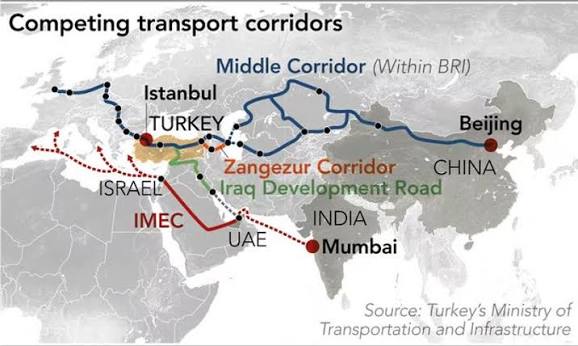
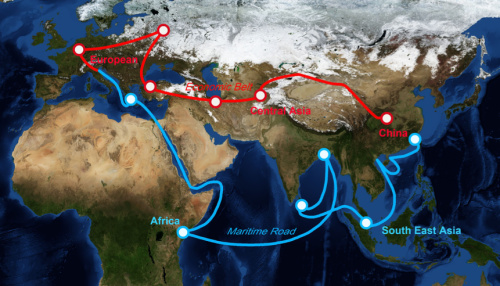
Four major initiatives dominate discussions: China’s Belt and Road Initiative (BRI), the India-Middle East-Europe Economic Corridor (IMEC), the International North-South Transport Corridor (INSTC), and emerging Caucasus routes like the Zangezur Corridor. Each offers different profiles for time, cost, capacity, and risk.
IMEC vs INSTC: The Battle of Eurasian Trade Corridors
- Belt and Road Initiative (BRI): Extensive land and maritime networks connecting Asia to Europe and Africa. It excels in scale and capacity for bulk commodities, with rail options faster than pure sea routes for many segments. However, multiple border crossings introduce bureaucratic delays and variable compliance risks. For GCC traders, BRI links provide access to Central Asian and East Asian markets but require careful navigation of sanctions exposure on certain goods.
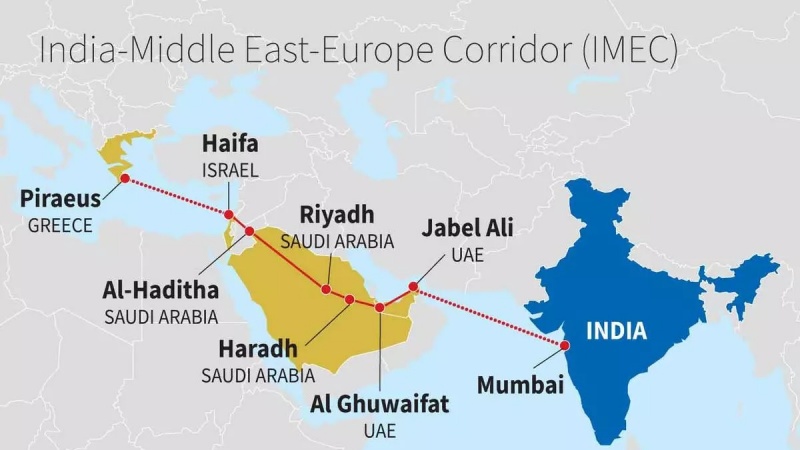
- India-Middle East-Europe Economic Corridor (IMEC): A multimodal project linking Indian ports through Gulf hubs (UAE, Saudi Arabia) to Jordan, Israel, and Europe via rail and sea. It targets 30-40% reductions in transit time and costs versus Suez routes. As of mid-2026, progress focuses on eastern segments and supporting infrastructure in the Gulf, with full realization dependent on regional stability. It emphasizes digital connectivity, clean energy, and private investment alongside public commitments.
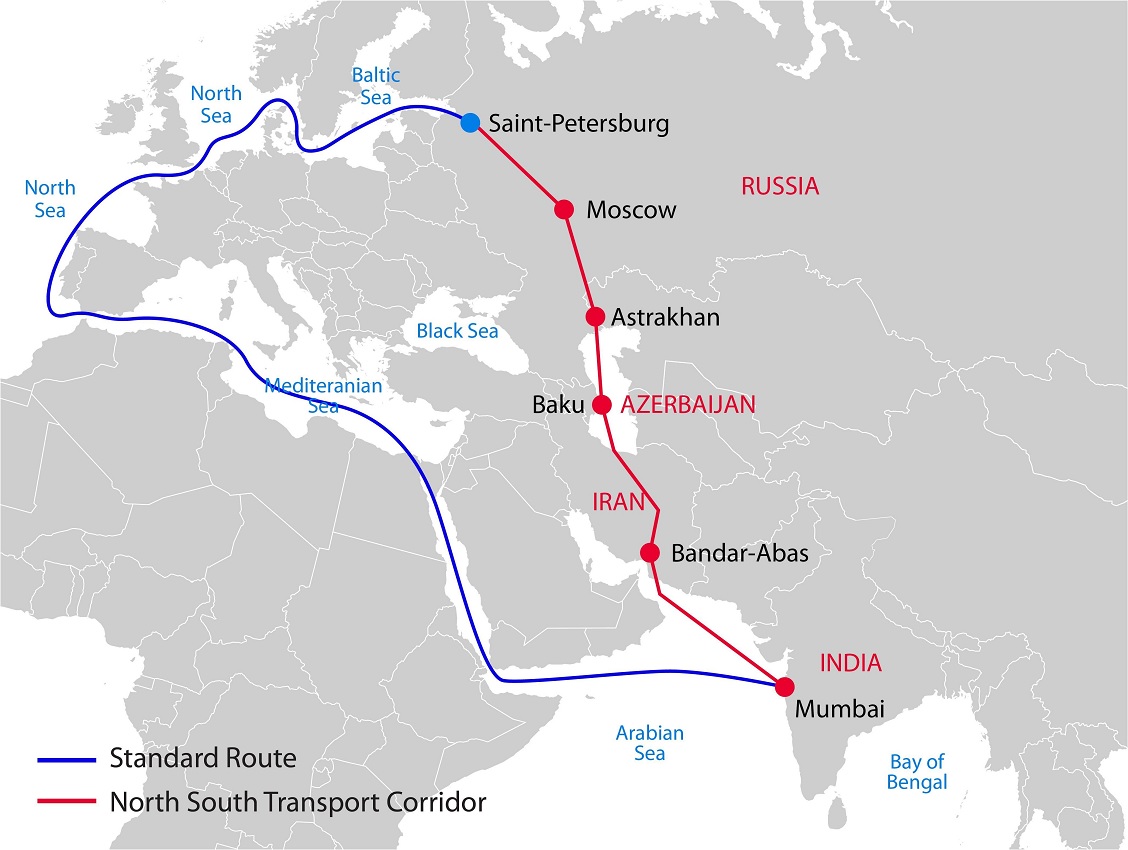
- International North-South Transport Corridor (INSTC): Connects India to Russia and Northern Europe via Gulf/Iranian ports, rail, and road. Dry runs demonstrate 30% cost savings and up to 40% time reductions (e.g., Mumbai to Moscow in 19-25 days versus 40+ via Suez). It serves as a vital alternative for commodities and manufactured goods, though infrastructure gaps and seasonal challenges persist in some segments.
🗺️
INSTC Insider Reality: The Rasht-Astara Operational Bottleneck
For GCC traders, routing cargo via the International North-South Transport Corridor (INSTC) through Iranian ports (Bandar Abbas or Chabahar) to Northern Europe and Russia offers an aggressive shortcut on paper. However, executing this route in 2026 demands navigating a critical physical constraint that frequently disrupts seamless transit.
- Zangezur and Caucasus Alternatives: These routes aim to link Turkey and Azerbaijan more directly to Central Asia, potentially bypassing traditional paths. They add optionality for certain overland flows but introduce their own geopolitical variables and capacity constraints.
The B2B Playbook for Global Route Security
2026 Strategic Reality: The Zangezur Corridor & Caucasus Alternatives
The Zangezur Corridor and wider Caucasus networks have rapidly evolved from political flashpoints into vital intermodal channels. For regional heavyweights like Turkey and Azerbaijan, this route serves as the definitive overland bridge connecting Ankara directly to Central Asian markets (bypassing traditional transit states). By utilizing the Middle Corridor infrastructure, it slices transit times down to 12-18 days for trans-Caspian trade.
However, for B2B logistics managers, navigating the Caucasus routes in 2026 demands a calculated balance between speed and structural limits. While offering an aggressive alternative to choked maritime lanes, the corridor faces severe roll-on/roll-off (Ro-Ro) vessel capacity caps at Caspian Sea ports and fluid border regulatory adjustments between Armenia and Azerbaijan.
💡 Supply Chain Takeaway
Niche Routing: Ideal for high-margin, time-sensitive consumer goods or auto parts moving between Eastern Europe/Turkey and Central Asia.
Capacity Warning: Avoid routing rigid bulk commodities here; instead, combine Caspian rail-ferry booking schedules weeks in advance to mitigate transshipment delays.
Comparative Analysis: Transit Time, Cost, and Risk (2026 Estimates)
| Corridor | Typical Transit | Cost Advantage | Capacity Focus | Key Risks for B2B Traders |
|---|---|---|---|---|
| Traditional Suez | 40–60 days | Baseline reference | High-volume bulk & containers | Red Sea security disruptions, premium volatility |
| Belt and Road (BRI) | 25–45 days | Highly competitive overland | Scalable infrastructure & dry bulk | Multi-border bureaucracy, custom bottlenecks |
| IMEC | 25–30 days | ~30% reduction vs Cape | High-value goods, green energy | Geopolitical dependencies, phased rollouts |
| INSTC | 15–25 days | Up to 30% cheaper vs northern | Consumer goods, metals & agri | Complex secondary sanctions exposure |
| Zangezur & Caucasus | 12–18 days | Highly competitive for Turkey-Central Asia | Medium intermodal & trucks | Border friction, Ro-Ro vessel bottlenecks |
Note: Figures are directional based on operator reports and studies. Always model total cost of ownership, including insurance and potential delays.
🚢
2026 Chokepoint Alert: The Hormuz & Bab-el-Mandeb Risk Premium
While regional attention has focused heavily on Suez disruptions, 2026 maritime realities show that the Strait of Hormuz و the Bab-el-Mandeb now operate as a linked system of heightened volatility. For B2B traders leveraging major Gulf hubs—such as Jebel Ali, Port of Sohar, Bandar Abbas, and King Abdullah Port—relying on traditional sea lanes without active risk mitigation is no longer feasible.
Supply Chain Risk Assessment: What Traders Must Monitor
Geopolitical competition translates into tangible operational pressures.
⚠️ Operational Red Flag: Dual-Use Goods & Route Sanctions
For B2B operators trading in industrial machinery, laboratory equipment, specialized chemicals, or electronic components, route selection is no longer just a matter of freight rates. Under global export control regimes, many of these items fall under the classification of Dual-Use Goods.
Routing dual-use commodities through specific corridors—such as the INSTC via Russian or Iranian territories—carries severe legal and financial consequences. Logistics managers face two major operational hazards:
- Secondary Sanctions Exposure: Underwriters and banks monitor cargo manifests intensely. Securing transit through sanctioned jurisdictions can blackball your company from Swift/dollar systems.
- Bill of Lading (B/L) Freezes: If transit customs discover dual-use products without specific licenses, they can legally impound the container, halting your supply chain indefinitely.
📋 Pre-Routing Compliance Checklist
[✓]
[✓]
[✓]
Freight Rate Volatility: Blockages or rerouting spike demurrage, detention, and war risk premiums. Multimodal corridors can mitigate this through diversification but require robust tracking.
Compliance and Dual-Use Goods: Routes involving multiple jurisdictions heighten scrutiny on sanctions, rules of origin, and export controls. Automated tools for HS classification and documentation become essential.
Corridor Wars
Insurance and Security: Premiums reflect route risk. Corridors with strong digital tracking and allied oversight often yield better terms.
Customs and Multimodal Coordination: Shifting from sea to rail demands harmonized bills of lading, TIR/CMR conventions, and digital customs platforms. Delays at transshipment points erode time savings.
Quantitative Tool
The Corridor Total Cost of Risk (TCOR) Model
To transition to data-driven route selection, procurement managers must move away from comparing raw freight rates alone. Calculate the TCOR before allocating container volumes:
• Base Freight: Ocean, rail, or trucking contract rate per FEU/TEU including THC.
• Pdisrupt (Probability of Disruption): Dynamic % factor based on active choke-point threats.
• Cdelay (Financial Cost of Delay): (Daily Capital Cost of Inventory × Days Delayed) + Penalties.
• Ccomp (Compliance Overhead): Cross-border document alignment & rules of origin expenses.
• Iprem (Insurance Risk Premium): Cargo insurance cost including specialized war-risk surcharges.
In GCC operations, leveraging local free zones and digital platforms helps streamline these processes, turning potential friction into competitive advantage.
Rules of Origin, Digital Customs, and Regional Agreements
Successful navigation requires mastering documentation across corridors. Multimodal transport complicates origin determination, affecting preferential tariffs under agreements like GAFTA یا ECO. Digital platforms for e-documents and single-window systems reduce paperwork errors.
GCC countries continue investing in automated clearance (e.g., SABER in Saudi Arabia, advanced systems in UAE ports), which integrates well with emerging corridors. Traders should prioritize partners with strong local compliance expertise.
⚠️ The Multimodal “Rules of Origin” Trap
In emerging multimodal corridors like IMEC or the INSTC, cargo frequently transitions between diverse customs territories. A simple transit, consolidation, or repackaging at a transshipment hub can inadvertently strip the shipment of its preferential tariff eligibility under GAFTA or ECO agreements. Once the chain of custody is broken, importing duties can spike overnight.
Actionable Compliance Strategy
- Through Bill of Lading (TBL): Always mandate your forwarder to issue a single, continuous TBL covering all transit modes.
- Non-Manipulation Certificates: Request a formal Certificate of Non-Manipulation from intermediate customs authorities to prove the goods remained unaltered.
Practical Strategies for B2B Operators in 2026
- Adopt Multi-Corridor Sourcing: Map primary, secondary, and contingency routes for key SKUs. Test small volumes via INSTC or IMEC-linked paths to validate savings.
- Invest in Visibility Technology: Real-time tracking, predictive analytics, and AI-driven risk alerts minimize surprises.
- Strengthen Compliance Frameworks: Regular audits of counterparties, automated sanctions screening, and updated Incoterms usage protect against disruptions.
- Leverage GCC Hubs: Use UAE/Saudi infrastructure as neutral consolidation points. Free zones offer tax and logistical benefits that buffer corridor volatility.
- Build Scenario Plans: Model impacts of potential chokepoint closures. Diversify insurance and financing partners.
Case Insight: Traders moving bulk commodities have reported meaningful savings by blending sea legs with targeted rail segments in northern corridors, provided they secure reliable forwarders experienced in transshipment.
The Role of Digital Platforms in Corridor Navigation
Modern B2B ecosystems integrate tools for duty calculation, HS classification, contract generation, market intelligence, and logistics optimization. These reduce manual friction and support data-driven route selection. For instance, platforms offering real-time calculators and document builders help operators quickly compare corridor viability without extensive manual research.
(Platform.Tendify.Net provides targeted utilities that complement these efforts by simplifying compliance and cost modeling in dynamic environments.)
For deeper dives into regional specifics, explore related analyses such as GCC Logistics Trends and UAE Re-Export Strategies. Additional perspectives on sustainable supply chains appear in ESG Logistics in Saudi Arabia.
🎯Quick Decision Matrix: Which Corridor Fits Your Cargo?
Follow the logical path based on your primary logistical priority
RECOMMENDED ROUTE: Traditional Suez (Sea) or Belt and Road (BRI)
Important Audit: Before locking in any alternative corridor, run the final transit agent’s state-ownership status through Tendify’s automated Sanctions Screening tool to prevent asset freezes.
Positioning Your Business for Success
The war of corridors underscores a fundamental truth: infrastructure competition creates both risks and opportunities. Companies that treat routes as strategic assets—diversifying, digitizing, and deepening regional partnerships—will capture margin and market share.
Focus on resilience metrics alongside cost. Build relationships with forwarders, financiers, and compliance experts familiar with multiple corridors. Monitor developments in IMEC eastern legs and INSTC upgrades closely, as incremental improvements compound rapidly.
In an environment where geography becomes leverage, proactive adaptation separates leaders from laggards. Evaluate your current network against these dynamics, pilot alternative routings where feasible, and prioritize tools that enhance visibility and speed.
Frequently Asked Questions: Navigation & Risk Management
Quick operational answers for B2B logistics managers and compliance officers.
Q1: What is the main operational difference between IMEC and INSTC in 2026?
IMEC (India-Middle East-Europe Economic Corridor) focuses on connecting Indian ports to Europe via GCC land-bridges (UAE, Saudi Arabia, Jordan, Israel) to bypass Suez chokepoints.
On the other hand, INSTC (International North-South Transport Corridor) utilizes southern Iranian ports to route cargo directly into Russia and Central Asia, offering high cost-efficiency but requiring close attention to regional compliance and localized rail bottlenecks.
Q2: Why are Dual-Use Goods at higher risk when routed through INSTC corridors?
Because the central segments of the INSTC run directly through sanctioned jurisdictions (such as Iranian and Russian territories). Under global export control regimes, any equipment or chemicals deemed “Dual-Use” (having both civilian and military utility) can trigger secondary sanctions, leading to asset freezes, bank account suspensions, or cargo impoundment if routed through these areas without specific licenses.
Q3: How does a Through Bill of Lading (TBL) protect preferential tariffs under GAFTA?
Under trade agreements like GAFTA or ECO, cargo must prove its direct origin and unaltered custody. Changing transport modes at intermediate hubs can break the legal “chain of custody.” A single, continuous Through Bill of Lading (TBL) issued by your freight forwarder legally proves that the goods were merely transshipped, preserving your preferential tariff eligibility at the final destination.
Q4: What is the most cost-effective way to bypass the Strait of Hormuz during high-tension periods?
The most reliable strategy is routing your sea vessels directly to Oman’s ports (Sohar or Duqm), which lie completely outside the Strait of Hormuz. From these strategic gateways, B2B operators can utilize highly developed overland GCC trucking or rail links to deliver cargo directly into mainland logistics hubs across Saudi Arabia and the UAE.
Ready to streamline your cross-border operations?
Secure better terms, mitigate corridor risks, and accelerate growth in this competitive landscape.

