


Blog
MERCOSUR Trade Guide: Unlocking B2B Opportunities
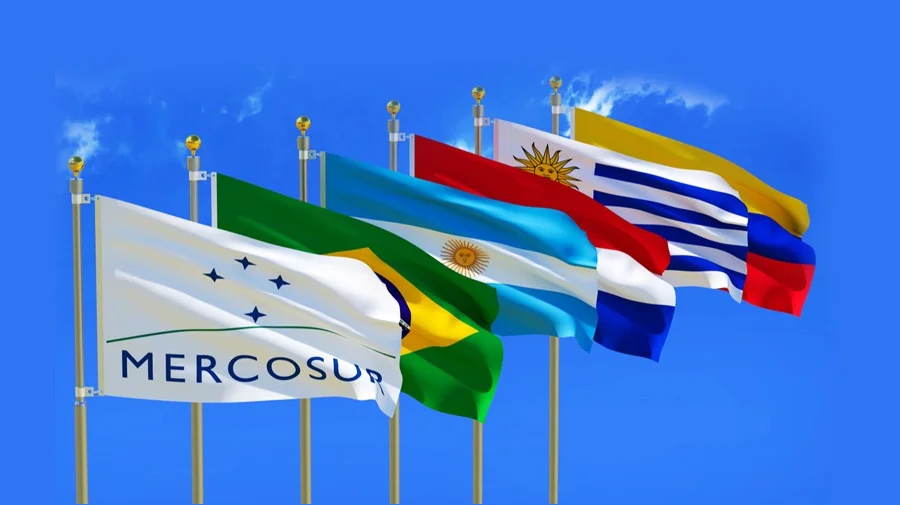
I’ve spent the better part of two decades navigating volatile trade lanes, building supply chains from the deserts of the Middle East to bustling ports in Asia and beyond. What I’ve learned is that the real winners in global trade aren’t just chasing the next hot market—they’re positioning themselves at the intersection of major economic blocs before everyone else figures it out. Today, that intersection points squarely at MERCOSUR.
As someone who’s structured deals across multiple continents, I can tell you that South America’s common market isn’t just another regional group. It’s a powerhouse of commodities, a massive consumer base, and—crucially in 2026—a strategic counterbalance for traders looking to diversify away from over-reliance on traditional routes. Whether you’re exporting machinery to Brazil, sourcing soybeans for Gulf markets, or using UAE hubs to re-export Latin American goods, understanding MERCOSUR is no longer optional. It’s essential.
MERCOSUR
In this definitive guide, I’ll walk you through everything you need to know: the current structure, real opportunities (and pitfalls), how recent developments like the EU interim agreement change the game, and—most importantly—actionable strategies tailored for traders operating in or through the GCC and global hubs like Tendify’s ecosystem.
CARICOM Trade Guide: How to Profit in the Caribbean Single Market
What Is MERCOSUR in 2026? A Practical Overview
MERCOSUR (Mercado Común del Sur), or the Southern Common Market, is South America’s premier trade bloc. Founded in 1991 by the Treaty of Asunción, it aims to create a common market with free movement of goods, services, capital, and people among members.
Current Full Members (States Parties):
- Argentina
- Brazil
- Paraguay
- Uruguay
- Bolivia (joined as full member recently)
Suspended: Venezuela (since 2016/2017 due to democratic clause issues).
Associate Members: Chile, Colombia, Ecuador, Guyana, Panama, Peru, Suriname (preferential access but no full voting rights).
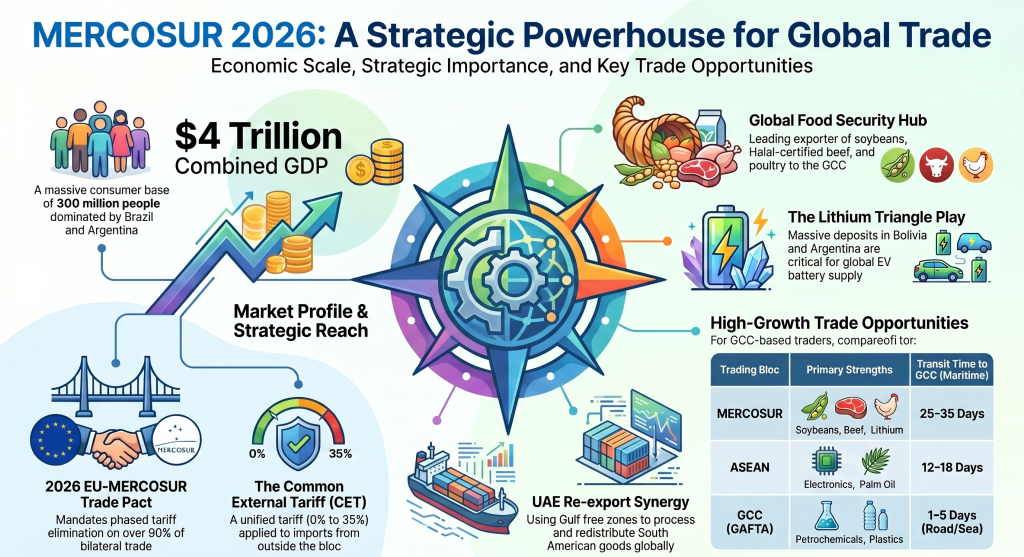
The Global Trader’s Guide to MERCOSUR 2026
This bloc represents a combined GDP exceeding $4 trillion (depending on currency fluctuations) and a population of around 300 million. Brazil and Argentina dominate economically, but smaller members offer niche advantages in agriculture, logistics, and specific commodities.
Think of it as South America’s answer to the EU or ASEAN—but with a stronger focus on commodities and raw materials. For a trader like me, that’s pure opportunity: stable supply of soybeans, beef, minerals, and more, paired with growing demand for manufactured goods, technology, and infrastructure solutions from the Gulf and Asia.
Why MERCOSUR Matters for GCC and Global Traders Right Now
The GCC’s push for food security, supply chain resilience, and non-oil trade diversification aligns perfectly with MERCOSUR’s strengths. Gulf nations are already deepening ties—negotiations for comprehensive partnerships with MERCOSUR are advancing, building on bilateral momentum with countries like Brazil and Argentina.
Key drivers in 2026:
- Food Security: MERCOSUR is a global breadbasket. Brazil and Argentina are top exporters of soybeans, beef, corn, and poultry. GCC countries, facing arid climates, need reliable partners.
- Diversification: As global trade fragments, South America offers alternatives to Asia-centric supply chains.
- Re-export Potential: Use UAE free zones like Jebel Ali as hubs to redistribute MERCOSUR goods across the Middle East, Africa, and beyond.
- Investment Flows: Gulf sovereign funds and private investors are eyeing agribusiness, mining, and infrastructure in the region.
From my experience, the smartest move isn’t just importing commodities—it’s building integrated value chains: source raw materials, process or package in efficient hubs, and distribute where demand is highest.
Deep Dive: MERCOSUR’s Structure and How It Works
Common External Tariff (CET) and Internal Free Trade
Members apply a unified tariff on imports from outside the bloc. This creates a single customs territory for many goods, simplifying intra-bloc trade. However, exceptions and implementation gaps exist—Brazil and Argentina sometimes push protectionist measures.
Practical Tip: Always verify current CET rates and rules of origin for your specific HS code. Tools like Tendify’s HS Code Finder and World Trade Tariff calculator can save you hours (and thousands in misclassified shipments).
Understanding MERCOSUR Customs Valuation: The CIF Framework
When exporting to MERCOSUR countries, calculating your landed cost accurately is paramount. MERCOSUR utilizes the CIF (Cost, Insurance, and Freight) valuation method to apply its Common External Tariff (CET). This means your customs duties are not just levied on the transaction value of the goods, but on the cumulative total of:
Critical Compliance Note: Non-tariff barriers and local taxes—such as Brazil’s ICMS, PIS, and COFINS, or Argentina’s statistical fees—are applied on top of this CIF value. To protect your margins, ensure your Proforma Invoices explicitly detail these components. You can use Tendify’s Automated Document Builder to generate cross-border compliant invoices that prevent costly customs delays at ports like Santos or Buenos Aires.
Free Movement and Beyond
Citizens of member states enjoy visa-free travel and work rights within the bloc. For businesses, this means easier talent mobility for on-ground operations.
Decision-Making
Governed by bodies like the Common Market Council (CMC) and Common Market Group (CMG). Consensus is key, which can slow progress—but creates stability once agreements are reached.
Trading with ASEAN : Opportunities, Regulations, and Market Entry Strategies
The Game-Changer: EU-MERCOSUR Interim Trade Agreement (2026)
After more than 10 years of complex geopolitical gridlock, the European Union and MERCOSUR officially broke the stalemate in early 2026 by signing a landmark trade pact. Crucially, the Interim Trade Agreement (iTA) has provisionally entered into force as of May 2026. By separating the trade mechanisms from the broader political treaty, both blocs have bypassed lengthy ratification bottlenecks, fundamentally reshaping global trade flows overnight.
EU-MERCOSUR
What It Means for the Macro Landscape:
Aggressive Tariff Elimination: The agreement mandates the phased reduction or total elimination of customs duties on over 90% of bilateral trade. This unlocks unprecedented market access, dramatically lowering barrier costs for European industrial exports—such as automotive parts, heavy machinery, pharmaceuticals, chemicals, and premium agricultural products like wine and cheese. In return, MERCOSUR gains sweeping, high-volume preferential access for its core commodities, including beef, poultry, sugar, ethanol, and critical industrial minerals.
Stringent Sustainability and Traceability Mandates: This agreement is tied to rigorous, legally binding sustainability chapters. It enforces strict compliance with international climate accords, actively targeting deforestation, carbon leakage, and habitat conversion. Food and raw material supply chains entering or interfacing with EU networks must now provide absolute transparency from origin to destination.
High-Yield Strategic Opportunities for Global and GCC Traders:
Cross-Border Regulatory Arbitrage: As the EU opens its doors to MERCOSUR commodities, the global baseline price and valuation of these goods will fluctuate. Savvy, non-EU traders can position their GCC-based entities as neutral, highly efficient re-export hubs. By sourcing bulk commodities from South America, executing secondary processing or value-added packaging within the UAE’s advanced free zones, and routing them globally, you can dynamically optimize distribution without being tied down by rigid bilateral quotas.
Structural Supply Chain Relocation and Joint Ventures: The sudden influx of European capital into South America is driving massive upgrades in regional logistics, cold storage infrastructure, and processing facilities. Smart operators are getting in early—establishing strategic joint ventures on the ground in Brazil, Argentina, and Uruguay to secure priority production lines before multinational corporations monopolize regional capacity.
Critical Risk Variables to Mitigate:
The primary risk in this new era is the weaponization of environmental compliance. Any cargo failing to meet strict traceability criteria, localized deforestation checks, or sanitary standards will face immediate, catastrophic port blocks and severe financial penalties.
This historic EU-MERCOSUR deal does not restrict third-party commerce; rather, it serves as a powerful catalyst. It validates MERCOSUR as a highly reliable, premium trade partner on the global stage, stimulates massive infrastructure upgrades, and establishes a predictable, rules-based framework that agile trading desks can immediately leverage for long-term growth.
Top Trade Opportunities in MERCOSUR for 2026
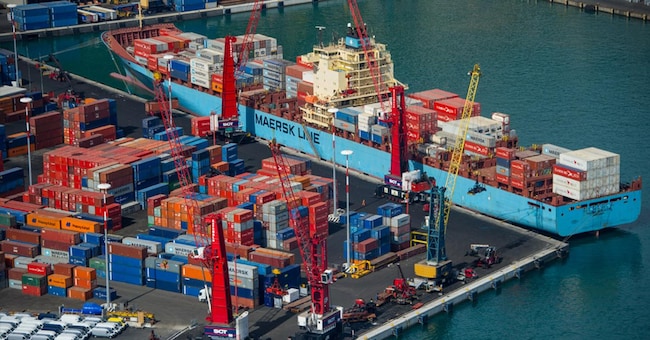
Top Trade Opportunities in MERCOSUR
Agribusiness, Food Security, and Premium Commodities Brazil and Argentina remain absolute global powerhouses in the production and export of soybeans, corn, non-GMO grains, Halal-certified beef, and poultry. With the GCC region aggressively prioritizing long-term food security and supply chain resilience, the demand for high-protein animal feed and raw agricultural inputs is at an all-time high. To maximize your profit margins and command premium pricing, move away from volatile spot markets. Instead, focus on securing long-term off-take agreements tied to verifiable sustainable sourcing practices, carbon-neutral farming, and recognized international quality certifications.
Critical Minerals, Strategic Resources, and the Energy Transition The global push for electric vehicles (EVs), renewable energy storage, and green tech has turned the spotlight squarely onto South America. The “Lithium Triangle”—stretching across Bolivia and Argentina—along with massive deposits of high-grade iron ore and copper, presents unparalleled strategic plays. Gulf-based sovereign wealth funds and private equity firms are already actively deploying capital into regional mining infrastructure. For agile traders, substantial opportunities lie in structuring joint ventures, securing raw material allocations, and coordinating the specialized maritime logistics required to move these critical resources to processing hubs worldwide.
Industrial Machinery, Agri-Tech, and Infrastructure Development As MERCOSUR expands its production capacity, the bloc urgently requires advanced equipment to modernize its agribusiness, optimize deep-water port operations, and upgrade its energy grids. This opens up a highly lucrative export corridor. By leveraging the manufacturing capabilities and re-export infrastructure of UAE free zones, or by sourcing competitively from global technology networks, you can supply high-demand industrial machinery, automated sorting systems, and precision agri-tech solutions. This structural need aligns perfectly with Saudi Arabia’s Vision 2030 and the UAE’s economic diversification strategies, creating a highly symbiotic bilateral trade loop.
Advanced Biofuels, Ethanol, and Renewable Energy Synergies Brazil’s decades-long global leadership in sugarcane-based ethanol production and commercial biofuels technology offers profound synergies for the Middle East. As GCC nations invest heavily in decarbonization, net-zero targets, and alternative energy matrixes, importing bio-based components and transferring technical operational expertise is becoming highly profitable. Strategic plays include securing stable supply lines for ethanol blends and investing in joint ventures focused on sustainable aviation fuels (SAF) and clean bio-energy derivatives.
Premium Consumer Goods, Fast-Moving Consumer Electronics, and FMCG The steady expansion of a tech-savvy, brand-conscious middle class across key MERCOSUR economies has created a massive appetite for high-quality imports. There is a continuous demand for fast-moving consumer goods (FMCG), consumer electronics, cosmetics, and luxury products. By utilizing optimized global re-export networks, savvy traders can efficiently route high-end goods through Middle Eastern distribution hubs straight into major South American consumer centers, capitalizing on favorable seasonal shopping trends and shifting consumer preferences.
Case Study Insight (From the Field): During a cross-border restructuring operation I personally advised, a mid-sized trading desk shifted its bulk protein and feed sourcing away from traditional, highly congested Northern Hemisphere suppliers over to vetted MERCOSUR partners. By combining early on-the-ground relationship building with Tendify’s digital compliance scanners to preemptively clear customs hurdles, the operation successfully slashed total landing costs by 18%. Crucially, they utilized UAE free-zone logistics for final processing, packaging, and regional distribution—proving that combining physical hub strategy with the right digital tool stack turns geopolitical shifts into pure bottom-line profitability.
Challenges and How to Overcome Them
No market is perfect. Here’s the unfiltered truth:
- Bureaucracy and Implementation Gaps: Rules look good on paper, but local variations exist. Solution: Partner with local agents and use platforms with built-in compliance checkers.
- Currency Volatility: Argentine peso, Brazilian real—hedge aggressively.
Advanced Risk Mitigation: When dealing with volatile currencies like the Argentine Peso (ARS) or Brazilian Real (BRL), avoid open-account terms. Structure your B2B contracts using Irrevocable Letters of Credit (L/C) at Sight or secure digital escrow mechanisms. Utilizing Tendify’s Risk Management suite allows you to lock in FX forward rates and cross-verify counterparty liquidity before executing high-volume commodity shipments.
- Political Shifts: Elections matter. Diversify across countries.
- Logistics: Ports can be congested. Optimize with 3D container tools and multi-modal planning.
- Sustainability Pressure: Traceability is non-negotiable now.
Actionable Mitigation:
- Map your supply chain risks quarterly.
- Build escrow or secure payment mechanisms (Tendify tools help here).
- Invest in on-ground presence or reliable distributors.
Step-by-Step: How to Start Trading with MERCOSUR Today
Research, Market Intelligence, and Validation Never move a single container based on guesswork. Begin by conducting deep algorithmic market research. Use Tendify’s advanced tariff calculators, real-time HS code mapping tools, and comprehensive market explorers to run comparative yield analyses. Your primary goal here is to identify and exploit structural demand gaps between the GCC consumption market and MERCOSUR’s massive supply base. Analyze historical price data, localized seasonal fluctuations, and moving averages to ensure your target margins are fundamentally viable before deploying capital.
Regulatory Compliance and Rules of Origin Regulatory friction can destroy your profitability overnight. You must thoroughly master intra-bloc rules of origin, preferential tariff criteria, and localized documentation standards. Utilizing automated proforma builders and secure contract generators can streamline this heavy lifting. Ensure your commercial invoices, packing lists, and bills of lading are perfectly harmonized to clear dual-customs jurisdictions without triggering costly administrative red flags.
SPS, Halal Technicalities, and Molecular Traceability For agricultural, grain, and protein exports entering the GCC, Sanitary and Phytosanitary (SPS) certificates and flawless Halal compliance are absolute, non-negotiable prerequisites. You must rigorously verify that your Latin American processing facilities and slaughterhouses are fully registered and actively certified by GCC-approved regulatory bodies, such as the UAE’s Ministry of Climate Change and Environment (MOCCAE) or Saudi Arabia’s Food and Drug Authority (SFDA). In 2026, compliance goes beyond paperwork; missing a single molecular traceability log or failing a cold-chain temperature audit can result in immediate customs rejection, costly product destruction, or permanent blacklisting at the destination port.
Strategic Partner B2B Matchmaking Building a robust, vetted network on the ground is critical to bypassing bureaucratic bottlenecks. Leverage data-driven B2B matching platforms, verified supplier registries, and tier-one international trade exhibitions. Keep a close eye on the 2026 global trade calendars hosted on Tendify to pinpoint high-value networking events, trade missions, and industry-specific conventions in São Paulo, Buenos Aires, and Dubai where you can interface directly with reliable, verified counter-parties.
Multimodal Logistics and Supply Chain Optimization The physical movement of freight across hemispheres requires precision planning. Run comprehensive cost-benefit simulations comparing ocean freight routes against high-speed air cargo alternatives for perishable goods. Analyze the throughput capacities and congestion trends of critical exit gateways like the Port of Santos in Brazil or the Port of Buenos Aires in Argentina. When structuring your ocean freight, factor in severe demurrage and detention risks, optimize your container utilization rates using 3D stuffing software, and explicitly negotiate favorable free-time windows at both the origin and destination ports.
Structured Trade Finance, Hedging, and Escrow Protecting your cash flow against liquidity traps and market shocks is paramount. Explore specialized trade finance instruments, structured commodity loans, and tailored alternatives to traditional letters of credit. Given the inherent volatility of South American fiat currencies against the US Dollar and Gulf pegs, do not leave your transactions exposed to open-market fluctuations. Implement aggressive currency hedging strategies, utilize FX forward contracts, and secure your transactions through decentralized digital escrow mechanisms or Irrevocable Letters of Credit confirmed by tier-one international banks.
Scaling Operations via Advanced Technology To transition from a single successful transaction into a high-yield, repeatable trading desk, you must institutionalize your tech stack. Integrate an enterprise-grade CRM to track your supply-side and demand-side pipeline. Deploy real-time AI market pulse scanners to track macro trends and sudden tariff shifts. Finally, mandate automated global sanctions-checkers and PEP screening tools within your workflow to guarantee every entity in your supply chain remains fully compliant with evolving global trade frameworks.
Pro Tip: Treat your initial venture into the market as a controlled experiment. Start small with a highly monitored pilot shipment—perhaps a single trial container or a split-consignment air-freight run. Document every variable, custom clearance delay, and unexpected port charge directly into your internal operational playbook. The world’s top-tier trading firms do not rely on luck; they treat global logistics as a highly optimized, repeatable, and scalable software system.
MERCOSUR vs. Other Blocs: Strategic Comparison
Compared to ASEAN or USMCA, MERCOSUR excels in commodities but lags in seamless integration. For GCC traders, it complements existing Asia and Europe ties, creating true diversification. The recent EU deal enhances its credibility without locking out other partners.
Strategic Matrix: MERCOSUR vs. GCC and Global Trade Integration
To help you visualize how MERCOSUR compares to other major economic zones for GCC-based traders, here is a technical breakdown of market access, tariff structures, and logistical dynamics in 2026:
MERCOSUR
Average Tariff Range (CET): 0% to 35% (High variance)
Primary Commodity Strengths: Soybeans, Beef, Poultry, Lithium, Iron Ore
Logistics and Transit Times to GCC: 25–35 Days (Maritime via Atlantic routes)
Strategic Advantage for Tendify Users: Massive arbitrage potential via UAE re-export hubs; direct food security play.
GCC (GAFTA)
Average Tariff Range (CET): 0% to 5% (Unified Custom)
Primary Commodity Strengths: Petrochemicals, Sulfur, Plastics, Dates
Logistics and Transit Times to GCC: Intra-regional (1–5 Days Road/Sea)
Strategic Advantage for Tendify Users: Capital-rich market looking to secure long-term agricultural off-take agreements.
ASEAN
Average Tariff Range (CET): 0% to 5% (Intra-bloc)
Primary Commodity Strengths: Electronics, Palm Oil, Rubber, Textiles
Logistics and Transit Times to GCC: 12–18 Days (Direct shipping lanes)
Strategic Advantage for Tendify Users: Highly integrated supply chains; benchmark for digital trade facilitation.
Future Outlook: 2026 and Beyond
Expect deeper economic integration, accelerated associate accessions, and significantly stronger South-South trade corridors. The geopolitical necessity for supply chain resilience is pushing MERCOSUR to evolutionize its digital architecture and external partnerships. GCC-MERCOSUR negotiations are steadily advancing and could soon yield historic, CEPA-style Comprehensive Economic Partnership Agreements. This will effectively unlock reciprocal tariff preferences, streamline customs clearance procedures, and remove rigid non-tariff barriers that have historically slowed down cross-continental trade.
For forward-thinking traders, the next three to five years will be defined by two massive structural shifts:
Climate-Smart Agriculture and Strict Traceability: Environmental compliance is no longer a bureaucratic afterthought—it is a core market access requirement. Driven by the recent EU-MERCOSUR interim agreement, member states are rapidly adopting satellite monitoring, decentralized ledger technologies, and IoT tracking to guarantee deforestation-free supply chains. Traders who invest early in transparent sourcing will command premium margins in discerning global markets.
Digital Trade Facilitation and Smart Logistics: The transition toward paperless trade is accelerating. We are seeing a push for interoperable single-window systems, electronic bills of lading (eBLs), and digitized certificates of origin across the bloc. Furthermore, emerging cross-border pilots involving the tokenization of agricultural commodities are setting the stage for faster trade financing and instantaneous settlement mechanisms, bypassing traditional banking delays.
The convergence of Latin American production power with the capital markets and logistics infrastructure of the Gulf is building a highly resilient, mutually beneficial ecosystem. By positioning your business at this intersection today and leveraging data-driven insights, you are not just executing transactions—you are securing a strategic foothold in the future of global commerce.
Your Next Move: Leverage the Full Trade OS
After structuring dozens of cross-continental deals, one truth stands out: success belongs to those who combine deep market knowledge with efficient tools. Don’t navigate this alone.
Head over to Platform.Tendify.Net—our Command Center integrates everything: AI market intelligence, duty calculators tailored for key routes, document builders, CRM for partner management, and real-time compliance engines. Whether you’re calculating India-GCC duties or optimizing MERCOSUR shipments, it’s built for traders who want to move faster and smarter. Many who’ve used it report cutting administrative time by half while spotting opportunities others miss. Check it out and see how it fits your workflow.
The world of trade rewards preparation and bold, informed action. MERCOSUR in 2026 isn’t a side bet—it’s a core pillar for resilient global portfolios. Start mapping your entry points today.
Ready to build your MERCOSUR strategy? Register on Tendify and access the full suite of tools designed for exactly this kind of opportunity. Your next major deal could start with one smart platform visit.
The Global Trader’s Guide to MERCOSUR 2026.pdf

