Blog
Why ASTM Type V Cement is Mandatory for GCC Coastal & Marine Projects
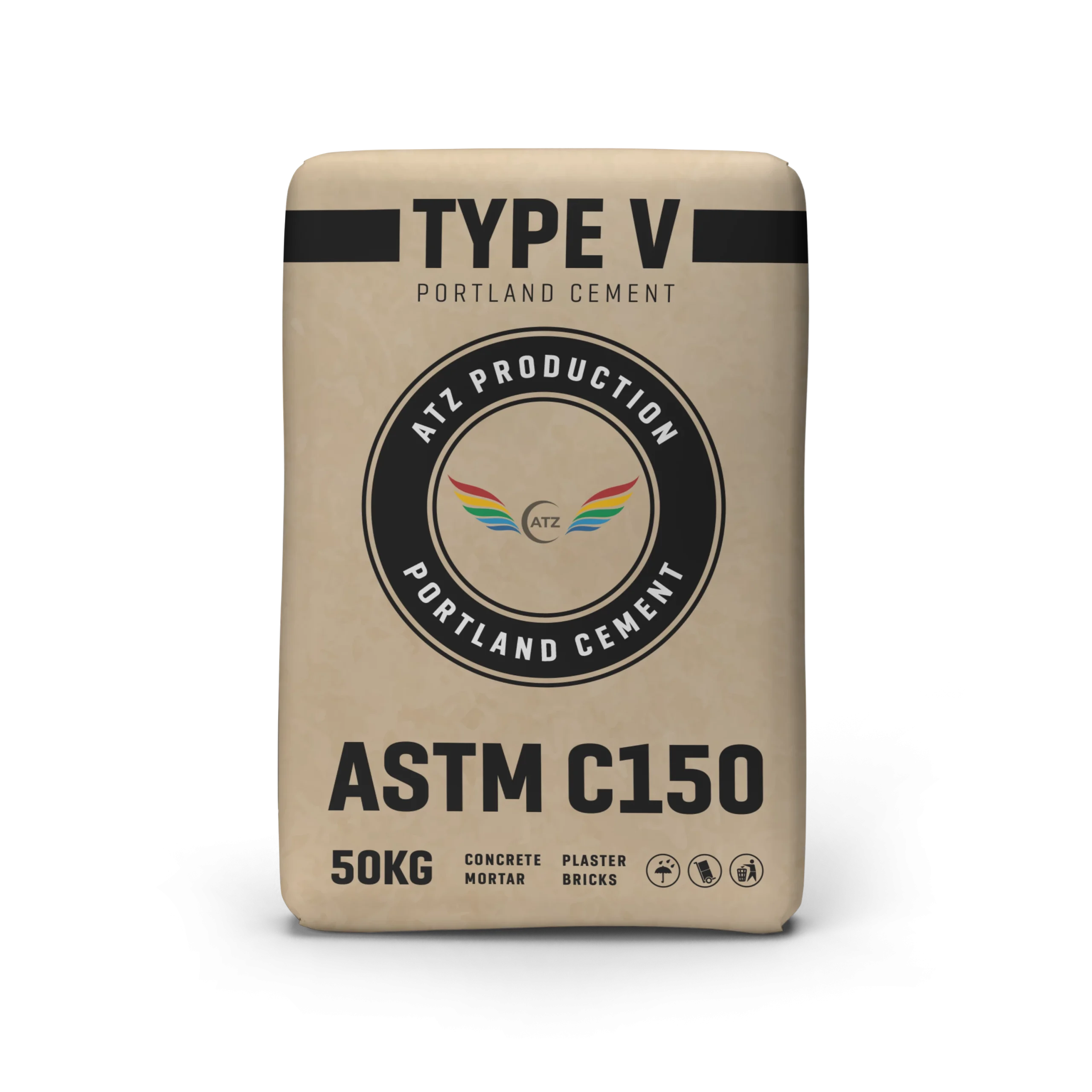
A Comprehensive Technical Guide
I’ve spent decades in the construction materials supply chain, sourcing cement and aggregates for massive infrastructure projects across harsh environments. Nothing teaches you faster than watching a perfectly poured foundation crack under aggressive soil or seawater exposure. In the Gulf Cooperation Council (GCC) region’s coastal zones—think ports, bridges, desalination plants, and offshore structures—the combination of high chlorides from seawater and sulfates from groundwater or sabkha soils creates one of the most punishing settings for concrete durability.

ASTM Type V Cement
The hard truth? Standard cements often fail prematurely here, leading to costly repairs or shortened service life. That’s why ASTM Type V cement, with its high sulfate resistance, isn’t just recommended—it’s a necessity for long-term performance. This guide dives deep into the testing protocols, degradation mechanisms, and practical strategies to ensure your concrete withstands these dual threats.
Understanding the Dual Threats: Chloride Ingress and Sulfate Attack in Marine Environments
Coastal GCC projects face relentless exposure to seawater and saline soils. Seawater typically contains around 19,000 ppm chlorides and 2,700 ppm sulfates, while groundwater in sabkha areas can exceed 10,000 ppm sulfates.
Chloride-Induced Degradation
Chlorides penetrate concrete primarily through diffusion and capillary action, reaching embedded rebar and depassivating the protective oxide layer. This triggers pitting corrosion, where rust expansion (up to 6-7 times the original steel volume) cracks the concrete cover.
- Key impact: Accelerated rebar corrosion, leading to spalling and structural weakening.
- Why it matters in GCC coasts: Tidal and splash zones amplify ingress via wet-dry cycling.
Sulfate Attack Mechanisms
Sulfates react with cement hydration products, forming expansive compounds:
- Ettringite (from tricalcium aluminate, C3A, reacting with sulfates).
- Gypsum (from calcium hydroxide).
These cause internal expansion, cracking, and strength loss.
- Physical salt crystallization: In evaporative zones, sodium sulfate forms thenardite/mirabilite cycles, adding mechanical stress.
In combined chloride-sulfate environments, interactions are complex: Chlorides can bind with C3A to form Friedel’s salt, temporarily reducing available C3A for ettringite—but cracking from sulfates can accelerate chloride penetration.
Studies show that in marine settings, sulfate-induced expansion can increase chloride diffusion coefficients by 2-5 times once microcracks form.
Why ASTM Type V Cement Excels in High-Sulfate Resistance
ASTM C150 defines Type V cement specifically for severe sulfate exposures, limiting tricalcium aluminate (C3A) to a maximum of 5% (compared to up to 15% in Type I/II).
ASTM Cement
Key Chemical Requirements for Type V (per ASTM C150)
| Compound | Maximum Limit (%) | Reason |
|---|---|---|
| Tricalcium Aluminate (C3A) | 5 | Minimizes ettringite formation |
| Sum of C4AF + 2(C3A) | 20 | Further controls reactive aluminates |
| Tricalcium Silicate (C3S) | No specific limit, but balanced for strength | Ensures durability without excess heat |
In contrast:
- Type II (moderate resistance): C3A ≤8%, suitable for milder exposures.
- Type I: No sulfate limits, vulnerable in high-sulfate soils.
Real-world data from coastal projects supports this: Structures using Type V in high-sulfate marine zones show 50-100% longer service life before significant deterioration, per case studies in similar environments.
Essential Testing Methods for Chloride and Sulfate Resistance
Proper testing isn’t optional—it’s your insurance against failure. Here’s how to validate concrete performance.
Sulfate Resistance Testing
ASTM C1012: Length Change of Hydraulic-Cement Mortars Exposed to Sulfate Solution
- Procedure:
- Cast mortar bars (25x25x285 mm).
- Cure for 28 days until reaching 20 MPa strength.
- Immerse in 5% sodium sulfate solution (renewed periodically).
- Measure length change over 12-18 months.
- Acceptance criteria for high resistance: <0.040% expansion at 6 months.
- Why reliable: Simulates long-term exposure; correlates well with field performance.
Alternative: ASTM C452 (for pure portland cements only) mixes sulfate into the mortar for accelerated results.
Chloride Penetration Resistance Testing
ASTM C1202: Rapid Chloride Permeability Test (RCPT)
- Procedure:
- Core 50 mm thick slices from 100 mm cylinders.
- Apply 60V DC across the sample (one side 3% NaCl, other 0.3N NaOH).
- Measure charge passed (coulombs) over 6 hours.
- Qualitative ratings:
| Charge Passed (Coulombs) | Chloride Ion Penetrability | Typical for Type V Mixes |
|---|---|---|
| >4,000 | High | Rare with good mix design |
| 2,000-4,000 | Moderate | Common baseline |
| 1,000-2,000 | Low | Achievable |
| 100-1,000 | Very Low | With SCMs |
| <100 | Negligible | Premium durability mixes |
- Insight: Low coulombs indicate dense microstructure, reducing diffusion.
Other Key Tests
- ASTM C1556: Apparent Chloride Diffusion Coefficient (bulk diffusion in saturated samples).
- ASTM C1543: Non-steady-state migration for diffusion coefficients.
For combined attacks, custom immersion tests (e.g., alternating chloride/sulfate solutions) reveal interactions.
Practical Strategies for Optimizing Durability in GCC Coastal Projects
Type V is foundational, but combine it with these for robust performance.
Mix Design Best Practices
- Use low water-cementitious ratio (≤0.40) for denser paste.
- Incorporate supplementary cementitious materials (SCMs) like fly ash or slag (up to 20-30%) to further bind aluminates and refine pores.
- Target 28-day strength ≥40 MPa, with air entrainment for freeze-thaw if applicable (though rare in GCC).
Step-by-Step Implementation
- Assess exposure: Classify per ACI 318 (Severe sulfate: S3 requires Type V).
- Select cement: Mandate ASTM Type V from verified suppliers.
- Qualify mixes: Run ASTM C1012 and C1202 on trial batches.
- Cure properly: Minimum 14 days moist curing to develop resistance.
- Monitor in-service: Periodic core testing for chloride profiles.
Comparison of Cement Types in Severe Exposures
| Cement Type | Max C3A (%) | Sulfate Exposure Suitability | Chloride Resistance (Typical RCPT Coulombs) | Recommended for GCC Coastal? |
|---|---|---|---|---|
| Type I | No limit | Low | 3,000-5,000 | No |
| Type II | 8 | Moderate | 2,000-4,000 | Marginal |
| Type V | 5 | High | 1,500-3,000 (improves with SCMs) | Yes |
Case Insights from Harsh Environments
In regions with similar saline soils and marine exposure, projects switching to Type V + SCMs reduced maintenance costs by 40-60% over 20 years. Early failures often trace back to using Type II where sulfates exceeded 5,000 ppm—expansion cracked covers, accelerating chloride corrosion.
The “why” boils down to chemistry: Lower reactive phases mean fewer expansive products, preserving integrity longer.
For deeper dives into trade logistics or supplier strategies in the region, check these related guides on Tendify.net:
- Domestic Logistics in the UAE: Mastering Inter-Emirate Road Networks, Etihad Rail Revolution, and the Rise of Smart 3PL Partnerships
- The Ultimate Practical Guide to Re-Exporting Goods from Dubai: Processes, Benefits, and Market Opportunities
- The Complete 2026–2027 UAE Import Mastery Manual
- The Global Cement Cartel 2026: Unmasking the Seven Giants Controlling 62% of Worldwide Trade and Their Tactics to Squeeze Out Independent Exporters
- Pricing, Payment Terms & Contract Clauses That Locked In $28 Million Profit on Cement Deals 2024–2026
These cover sourcing high-quality materials efficiently.
Ready to source durable cement or connect with verified suppliers for your next GCC coastal project? Join Tendify.net today—our B2B platform connects buyers and sellers directly for construction materials, with secure transactions and real-time pricing. Register now and elevate your project’s longevity.