Blog
Trade-Based Money Laundering: Over-Invoicing and Under-Invoicing Secrets That Could Cost You Millions
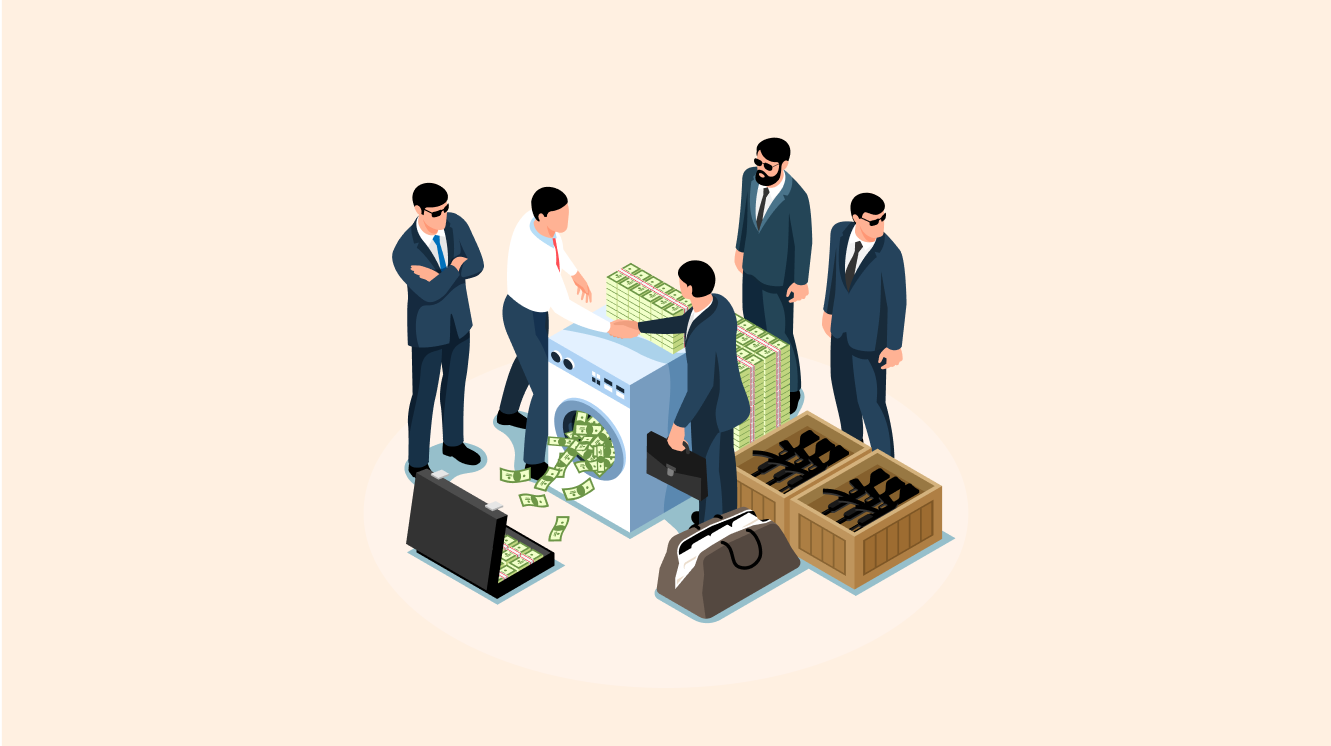
I’ve closed countless international deals over four decades, moving goods from bustling ports to emerging markets, always chasing that edge where opportunity meets execution. But one shipment early in my career nearly cost me everything—a routine export to a high-demand region flagged for discrepancies in the invoices. It wasn’t my doing, but the fallout from a partner’s subtle manipulations taught me a brutal lesson: trade isn’t just about profits; it’s a battlefield where illicit flows hide in plain sight. In that moment, I realized how easily legitimate businesses get entangled in schemes that turn everyday transactions into criminal conduits.
Trade-Based Money Laundering
Fast forward to 2026, and trade-based money laundering (TBML) remains one of the most insidious threats in global commerce. This isn’t abstract—it’s the deliberate distortion of trade documents to move dirty money, often through invoicing fraud like over- or under-declaring values. Criminals exploit the sheer volume of world trade, estimated at $28 trillion annually, to layer and integrate proceeds from drugs, corruption, or sanctions evasion. If you’re in export-import, supply chains, or even investing in trade-heavy sectors, ignoring this could freeze your assets or trigger audits. This guide pulls back the curtain: We’ll dissect the mechanics, reveal why trade channels are so appealing, share hard data, and deliver step-by-step defenses. By the end, you’ll see the “why” behind these tactics and how to safeguard your operations without slowing growth.
What Is Trade-Based Money Laundering? A Clear Breakdown
At its core, trade-based money laundering disguises illicit funds by manipulating legitimate trade transactions. Unlike cash-heavy schemes, TBML leverages invoices, shipping docs, and contracts to create the illusion of normal business while shifting value across borders.
The Three Core Stages Adapted to Trade
Criminals adapt classic laundering phases to fit commerce:
- Placement: Illicit funds enter via overpayments or fake trades, blending with real deals.
- Layering: Multiple manipulations obscure origins—think repeated invoicing or mismatched shipments.
- Integration: “Clean” funds emerge as profits from resales or refunds, ready for legitimate use.
What makes TBML tricky? It hides in the noise of everyday trade. A single container might carry goods worth $100,000, but invoice tweaks move millions undetected.
Key Components of TBML Operations
- Actors Involved: Exporters/importers, brokers, banks, and unwitting mules.
- Tools of the Trade: Forged bills of lading, customs declarations, and digital platforms.
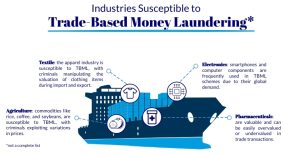
- High-Risk Sectors: Commodities like gold, electronics, or textiles—easy to misprice.
Understanding this foundation matters because TBML isn’t just fraud; it’s a gateway for broader crimes, distorting markets and funding terror.
The Anatomy of Invoicing Fraud: Over- and Under-Invoicing Explained
Invoicing fraud sits at the heart of TBML, where values are deliberately skewed to transfer hidden wealth. This isn’t sloppy paperwork—it’s calculated deception that exploits pricing subjectivity.
The Anatomy of Invoicing Fraud
Over-Invoicing: How It Works and Why It’s Effective
In over-invoicing, the declared value exceeds the actual worth, allowing excess payments to flow to the exporter.
- Step 1: Buyer agrees to pay inflated price—say, $200,000 for goods worth $100,000.
- Step 2: Extra $100,000 (illicit funds) transfers as “payment,” documented as legit.
- Step 3: Exporter receives clean money; buyer claims overpayment as tax deduction or refund.
Why this tactic? It justifies large wire transfers without raising bank alarms. In my dealings, I’ve seen it in machinery exports where specs are vague, making prices hard to challenge.
Under-Invoicing: The Flip Side for Evasion
Under-invoicing declares values below reality, enabling under-the-table settlements.
- Step 1: Goods worth $200,000 invoiced at $100,000.
- Step 2: Buyer pays official amount via bank; remainder settles off-books (cash, crypto).
- Step 3: Seller evades duties; buyer resells at market value, pocketing clean profits.
This shines in high-tariff environments, reducing customs hits while moving undeclared funds.
Multiple Invoicing and Related Frauds
Beyond singles, criminals issue duplicates for the same shipment, claiming multiple payments. Or falsely describe goods—declaring luxury watches as “plastic toys” to undervalue.
Pro Insight: These aren’t isolated; often chain with phantom shipments (docs without goods) or carousel fraud (circular trades). The “why” here is scalability—trade volumes mask anomalies.
Why Criminals Choose Trade Channels for Laundering
Trade offers advantages no other method matches, making it a go-to for sophisticated networks.
Inherent Complexity and Volume as Cover
Global trade’s $28 trillion scale drowns illicit flows. With billions of invoices yearly, spotting fraud requires deep analysis—something many customs lack resources for.
Regulatory Gaps and Jurisdictional Challenges
Borders mean multiple agencies; info sharing lags. Criminals exploit this, routing through free zones or weak-enforcement countries.
Economic Incentives Align with Crime
High margins in commodities allow price fudging without suspicion. Plus, trade finance (letters of credit) adds legitimacy.
From my vantage, I’ve watched partners in volatile markets use this—initially for tax dodging, escalating to full laundering. The appeal? Low detection risk compared to cash mules.
Advanced TBML Techniques Beyond Basic Invoicing
While invoicing dominates, criminals innovate to stay ahead.
Phantom and Ghost Shipments
Docs created for non-existent trades justify fund moves. Example: Invoice for “shipped” electronics, payment received—goods never exist.
Misdescription of Goods and Services
Declaring high-value items as low-cost (e.g., diamonds as “glass beads”) or inflating quantities.
Carousel and Rotation Schemes
Goods cycle between countries, invoices manipulated each leg to layer funds.
Integration with Digital and Crypto Elements
2026 sees hybrid: Invoice fraud funds crypto buys, further obscured on blockchain.
These evolve with tech—AI now generates realistic docs, upping the ante.
Global Statistics and Economic Impact of TBML
Data paints a stark picture: TBML drives massive illicit flows.
Key Figures from Recent Reports
- Up to 87% of global illicit financial flows tie to TBML, equating to $800 billion to $2 trillion yearly.
- Misinvoicing accounts for 63% of documented cases, per studies.
- In 2025, AML penalties exceeded $1.1 billion, many linked to trade schemes.
Developing economies suffer most—lost revenues fund corruption, not infrastructure.
Broader Economic Ripple Effects
Inflated trade distorts prices, hurts competition. Legit exporters face unfair undercutting; governments lose tax billions.
In my experience, this erodes trust—partners demand deeper due diligence, slowing deals.
Detection Strategies: Spotting Red Flags in Trade Transactions
Catching TBML requires vigilance beyond basics.
Common Indicators for Businesses and Banks
- Price Anomalies: Values deviating 20%+ from market norms.
- Unusual Partners: New entities from high-risk jurisdictions.
- Document Discrepancies: Mismatched weights, descriptions, or origins.
- Payment Patterns: Overpayments followed by refunds.
- High-Volume Low-Logic Trades: Frequent deals without economic sense.
Tools and Tech for Early Detection
- AI Analytics: Scan invoices against benchmarks.
- Blockchain Tracking: For transparent supply chains.
- Collaborative Platforms: Share data with customs.
Banks play gatekeeper—flagging via transaction monitoring.
Regulatory Frameworks and 2026 Updates on TBML
Global bodies lead the charge against invoicing fraud.
FATF Guidelines: The Gold Standard
FATF’s best practices emphasize risk-based approaches: Enhanced due diligence for trade finance, UBO transparency. 2026 sees refreshed guidance on digital trade.
Regional Reforms and Enforcement
U.S. FinCEN advisories target schemes like Chinese money laundering networks using trade. EU pushes for unified customs data.
In Gulf regions, reforms align with FATF to exit grey lists, mandating source-of-funds proofs.
Why Reforms Matter: They close gaps, but compliance costs rise—balance is key.
Real-World Case Studies: Lessons from Invoicing Fraud Schemes
Theory meets reality in these examples.
Colombian Gold Mining Ring
Illicit miners under-invoiced exports, moving $2 billion via fake invoices. U.S. probes revealed layering through U.S. banks—penalties hit millions.
Ugandan Commodity Carousel
Goods rotated Africa-Europe, over-invoiced to extract funds. Exposed via mismatched manifests—losses: $500 million in evaded duties.
Asian Electronics Fraud
Multiple invoicing for phantom shipments laundered $300 million from fraud. AI detection led to arrests.
These show: Early flags save fortunes.
Practical Steps for Businesses to Mitigate TBML Risks
Don’t wait for audits—act now.
Step-by-Step Risk Management Plan
- Assess Vulnerabilities: Map trade partners, sectors for exposure.
- Implement Due Diligence: Verify UBOs, prices via third-party data.
- Train Teams: Workshops on red flags, reporting.
- Adopt Tech: Invoice automation with AI checks.
- Partner with Compliant Entities: Use verified platforms for deals.
- Audit Regularly: Internal reviews quarterly.
- Report Proactively: File SARs on suspicions.
Table: Risk Levels by Trade Type
| Trade Type | Risk Level | Key Mitigation |
|---|---|---|
| Commodities | High | Price Benchmarking |
| Electronics | Medium | UBO Verification |
| Services | Low | Contract Audits |
For deeper dives into related threats, check our analysis on crypto money laundering myths and GCC trade dynamics.
Future Outlook: TBML in a Digital Trade World
2026 brings AI escalation—both for crimes and defenses. Expect tighter FATF on virtual trade, hybrid schemes with crypto.
But opportunity knocks: Compliant firms gain edges in secure markets.
Turning Insights into Action
TBML via invoicing fraud isn’t unbeatable—it’s a puzzle solved with knowledge and tools. From my years on the frontlines, I’ve learned: Stay vigilant, build barriers, and trade grows stronger.
If you’re navigating global commerce and want verified partners to minimize these risks, Tendify.net has you covered. Sign up today for real-time buyer leads, secure RFQs, and compliance intel—your pathway to safer, profitable deals starts here.