Blog
Strategic Analysis of Industrial Plant Acquisitions in Iran’s Reconstruction Phase 2026

A practical playbook for converting large-scale liquid capital into high-quality fixed industrial assets under the cover of legitimate post-conflict reconstruction.
In the months following the 2026 conflict, Iran is rapidly repositioning itself as the emerging manufacturing powerhouse of West Asia. Decades of industrial know-how, a young and technically skilled workforce, abundant energy resources, and strategic location along the International North-South Transport Corridor (INSTC) have created a historic window for sophisticated capital to acquire modern and semi-modern industrial plants at significant discounts to replacement cost.
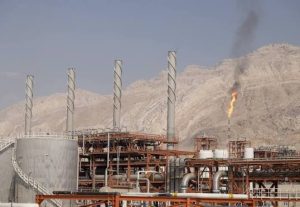
Industrial Plant Acquisitions in Iran
For those managing substantial cash positions seeking to move out of pure liquidity into durable fixed assets, the current distressed industrial asset market in Iran offers one of the cleanest and most defensible strategies available in the region. This is not speculative trading — it is structured engineering of manufacturing capacity under the legitimate banner of national reconstruction and industrial modernization.
The Post-Conflict Industrial Reset: Why Iran Is Becoming West Asia’s New Manufacturing Hub
The 2026 conflict, while disruptive, accelerated several structural shifts that now favor large-scale industrial investment:
- Significant forced divestment by over-leveraged or liquidity-constrained owners
- Government policy prioritizing rapid reconstruction and technology upgrading of the industrial base
- Partial sanctions relief creating new export corridors to GCC, Central Asia, Russia, and India
- Chronic undersupply of modern, efficient manufacturing capacity in key sectors
- Attractive incentives in free zones and special economic zones for foreign and domestic investors

Iran Is Becoming West Asia’s New Manufacturing Hub
Iran’s industrial infrastructure — steel, petrochemicals, automotive components, pharmaceuticals, food processing, cement, and machinery — remains fundamentally sound. What changed is ownership structure and valuation. Many plants that were built or upgraded in the last 15 years are now available at 35–65% below pre-war replacement value, often with existing skilled labor, utility connections, and partial operational continuity.
“The smartest capital does not wait for full stability. It engineers entry during the reconstruction phase, when assets are cheapest and policy support is strongest.”
Target Sectors for Industrial Plant Acquisitions in 2026–2028
1. Petrochemicals & Downstream Chemicals
Iran holds the world’s second-largest gas reserves. Post-conflict, the focus has shifted from crude exports to value-added petrochemical production. Methanol, polyethylene, polypropylene, urea, and specialty chemicals plants are prime acquisition targets. Many facilities are located in southern free zones with direct port access, offering built-in export logistics.
2. Steel, Metals & Mining Processing
Iran is rich in iron ore, copper, zinc, and chromite. Integrated steel mills and downstream metal processing plants near mineral deposits or logistics hubs represent excellent fixed-asset plays. Reconstruction demand across the region will drive sustained offtake for years.
3. Automotive Components & Heavy Machinery
The Iranian automotive industry was one of the largest in the Middle East pre-war. Component manufacturers and assembly-adjacent plants are available at deep discounts. With regional vehicle fleets needing renewal and new export markets opening, these assets offer strong cash-flow potential.
4. Food Processing & Agro-Industrial Complexes
Modern food processing plants (tomato paste, dairy, edible oils, dried fruits, nuts) benefit from abundant raw materials and growing demand in GCC and Eurasian markets. Many facilities come with cold-chain and packaging infrastructure already in place.
5. Pharmaceuticals & Medical Equipment
Iran’s generic pharmaceutical manufacturing base is highly developed. Plants producing APIs, finished dosage forms, and basic medical devices are strategic assets with strong domestic and export potential under reconstruction priorities.
6. Cement, Construction Materials & Building Products
Reconstruction across Iran and neighboring countries will create multi-year demand for cement, gypsum, ceramics, and prefabricated materials. Existing plants with quarry access are highly attractive fixed-asset opportunities.
The Economics of Distressed Industrial Acquisitions in Iran 2026
Typical transaction metrics observed in the current market:
| Sector | Discount to Replacement Cost | Expected Stabilized Yield | Projected Repricing Horizon |
|---|---|---|---|
| Petrochemical Downstream | 40–60% | 14–22% | 4–7 years |
| Steel & Metals Processing | 35–55% | 12–18% | 5–8 years |
| Food Processing | 45–65% | 16–24% | 3–6 years |
| Pharmaceuticals | 30–50% | 13–19% | 4–7 years |
| Cement & Construction Materials | 50–70% | 18–25% | 3–5 years |
These yields are calculated in local currency terms with built-in inflation protection. When paired with export revenues in harder currencies, the effective returns become even more compelling for large capital pools seeking to park and grow value.
Strategic Rationale: Converting Liquid Capital into Protected Fixed Assets
For capital pools that have accumulated significant liquidity — whether through trade surpluses, energy revenues, or other commercial activities — the current environment offers a rare opportunity to transition into tangible, productive fixed assets under the legitimate umbrella of industrial reconstruction and modernization.
Key advantages of this approach:
- Asset-Backed Capital Preservation: Moving from cash or bank deposits into revenue-generating factories provides inflation and currency protection.
- Legitimate Economic Contribution: Acquisitions framed as reconstruction and technology upgrade receive policy support and faster permitting.
- Cash Flow Generation: Operational plants can be stabilized and brought to positive EBITDA within 12–24 months.
- Future Exit or IPO Potential: Modernized facilities become attractive to regional sovereign funds and international strategic buyers as Iran reintegrates.
- Supply Chain Control: Owning production capacity secures inputs for downstream trading activities.
Execution Framework: How to Acquire and Operate Industrial Plants in Iran 2026
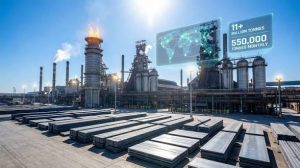
How to Acquire and Operate Industrial Plants in Iran 2026
Phase 1: Target Identification & Off-Market Sourcing
Focus on plants with clear title, existing infrastructure, and partial operational history. Prioritize assets in free zones or special economic zones for ownership flexibility.
Phase 2: Technical & Financial Due Diligence
Comprehensive plant audits, equipment valuation, environmental compliance checks, and cash-flow modeling under multiple recovery scenarios.
Phase 3: Transaction Structuring
Use smart escrow mechanisms, milestone-based payments, and local JV structures where beneficial. Flexible invoicing and trade-based settlement can optimize cross-border capital movement.
Phase 4: Post-Acquisition Modernization & Optimization
Implement technology upgrades, process improvements, export certification, and professional management to rapidly increase output and margins.
How Platform.Tendify.Net Powers Large-Scale Industrial Acquisitions in Iran
Platform.Tendify.Net — The Operating System for Industrial Reconstruction Capital
When deploying significant capital into Iranian industrial assets, success depends on precision in cost modeling, documentation integrity, regulatory navigation, and secure performance mechanisms.
Platform.Tendify.Net has been engineered precisely for this purpose — serving as the command center that allows large operators to move capital into fixed industrial assets with speed, control, and commercial legitimacy.
Core capabilities include:
- Advanced landed-cost calculators and trade economics modeling for Iran-origin production
- Export Documentation Checklist Generator and flexible proforma/contract builders
- HS Code classification, duty optimization, and Incoterms advisory tools
- Smart Escrow infrastructure for secure, milestone-based asset acquisitions and performance guarantees
- AI-powered market pulse and compliance monitoring tailored to reconstruction-phase opportunities
- 3D container optimization and logistics planning tools for export-ready production
Whether structuring the acquisition of a petrochemical complex, modernizing a steel rolling mill, or scaling food processing capacity, the platform compresses complex cross-border execution into streamlined, auditable processes.
The operators who will dominate Iran’s reconstruction-phase industrial landscape are those who combine capital scale with operational infrastructure. Tendify.net provides exactly that infrastructure — turning distressed manufacturing opportunities into strategically positioned, cash-flowing fixed assets.
The Strategic Window: 2026–2028
This distressed acquisition window will not last indefinitely. As reconstruction progresses, diplomatic normalization advances, and regional demand for Iranian industrial output grows, valuations will normalize and competition will increase. Capital that engineers its entry now — converting liquid positions into productive industrial fixed assets — will secure both defensive capital preservation and substantial participation in West Asia’s manufacturing renaissance.
Iran is not merely recovering. It is repositioning as the central manufacturing node connecting the Persian Gulf, Caspian, and Eurasian markets. The factories being acquired today will form the backbone of that new hub.
We at Tendify have built the tools that simplify the most complex equations of industrial acquisition, regulatory compliance, logistics integration, and performance security. Our calculators, document engines, and smart escrow systems allow large capital to move with precision and confidence.
If you are actively evaluating or structuring the acquisition of industrial plants and manufacturing facilities in Iran as part of a broader fixed-asset strategy, the complete operational toolkit is available inside the user dashboard at Platform.Tendify.Net.
The reconstruction phase has begun. The time to engineer your position in West Asia’s new manufacturing hub is now.
Further Strategic Reading on Tendify.net
- Rebuilding Iran After the 2026 Conflict: The Global Investment Playbook
- Engineering Distressed Asset Acquisition: The 2026 Guide to Undervalued Commercial Real Estate in Iran
- Cross-Border Logistics for B2B Trade in the Gulf Region
- The Hidden Arbitrage of Risk: How Trade-Based Settlement Exploits Regulatory Blind Spots in 2026