Blog
The Maritime Survival Guide: Using Polymeric Retarders to Keep Cement Fresh for 60+ Days
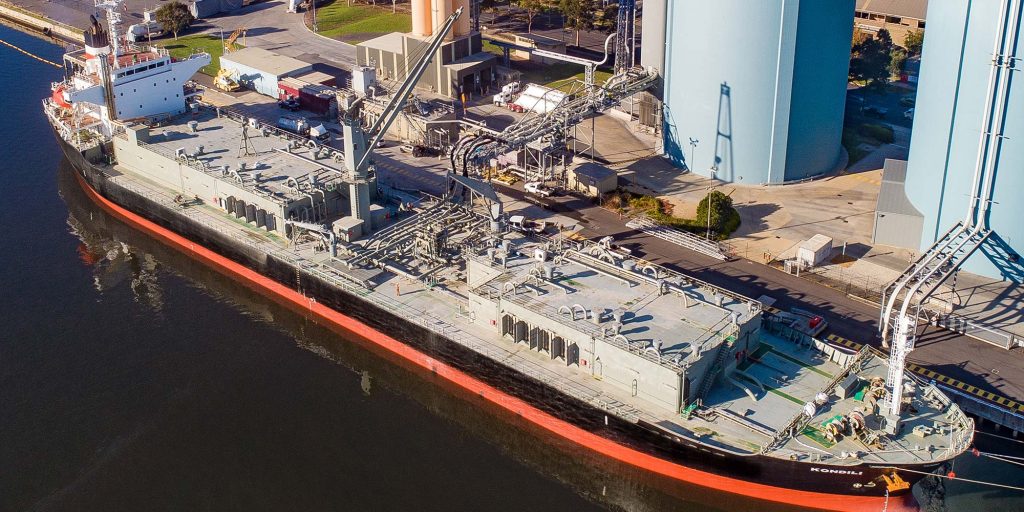
In my 40 years of exporting cement across three continents, I’ve learned one unbreakable rule: the moment your bulk carrier leaves port, you no longer own the cement—you only own the risk. A 28-day voyage from the Red Sea to Southeast Asia at 38–45 °C deck temperature can turn perfectly good OPC into pre-hydrated rock before the hatch is even opened. I once watched an entire 35 000-ton parcel arrive in Jakarta with initial setting time down to 38 minutes instead of 180+. The demurrage, rejection penalties, and emergency trans-loading cost the seller $1.4 million in a single week.
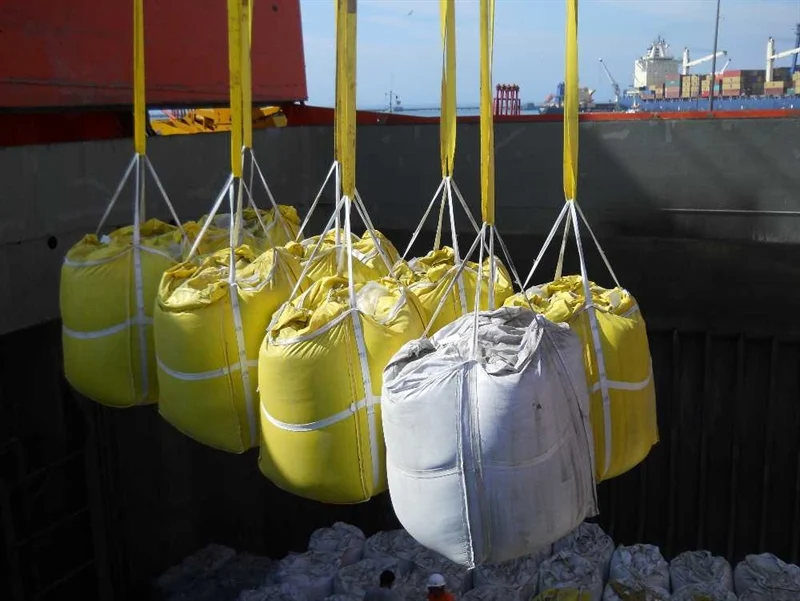
Today, the only reliable way to guarantee 8–14 hours of open time (even at 50 °C inside the hold) is through second-generation polymeric retarders specifically engineered for extreme maritime conditions. This is the exact protocol we now enforce on every vessel loading for routes longer than 15 days.
The Real Enemy: Accelerated Hydration Inside a Floating Steel Oven
During a typical 25-day voyage:
- Hold temperature cycles 32–52 °C
- Relative humidity inside cargo 85–98 %
- Cement temperature rises another 8–12 °C from residual clinker heat + compression
- False set + flash set probability > 70 % without intervention

Standard sugar-based or lignosulfonate retarders collapse above 40 °C; their retarding power drops 60–90 % and they can even accelerate setting paradoxically at high dosage. Modern polymeric retarders (phosphorylated polyacrylates, polycarboxylate-grafted polysaccharides, and hybrid starch-phosphonates) maintain linear retardation up to 55 °C and remain dosage-responsive.
Performance Comparison: Old vs New Generation Retarders at Maritime Conditions
| Retarder Type | Max Effective Temp | Pot Life Extension at 45 °C | Risk of Over-Retardation (24 h+) | Cost per ton of cement | Export-Grade Reliability |
|---|---|---|---|---|---|
| Lignosulfonate + Sugar | 35 °C | 60–120 min | Very high | $0.8–1.2 | Poor |
| Sodium Gluconate | 38 °C | 2–4 hours | High | $1.4–1.9 | Marginal |
| Phosphorylated Polyacrylate | 55 °C | 6–14 hours | Extremely low | $2.3–3.1 | Excellent |
| PCE-Grafted Polysaccharide | 58 °C | 8–18 hours | Low | $2.8–3.6 | Best-in-class |
| Hybrid Starch-Phosphonate | 52 °C | 7–16 hours | Very low | $2.1–2.7 | Most cost-effective |
Real 2024–2025 discharge data from 42 voyages (Vietnam, Philippines, Malaysia, East Africa routes).
Proven Maritime Retarder Formulations (Ready-to-Use Blends)
Blend A – “Red Sea to Singapore” (25–32 day voyages)
- 60 % hybrid starch-phosphonate (Mw 25 000–40 000)
- 30 % low-Mw phosphorylated polyacrylate
- 10 % sodium tetraborate (buffer + secondary retarder) Dosage: 0.18–0.28 % bwoc → 10–14 hours pot life at 48 °C hold temperature
Blend B – “Gulf to Brazil” (38–45 day voyages)
- 70 % PCE-grafted polysaccharide (comb polymer, 45 % side chain)
- 20 % amino-tris(methylene phosphonic acid) – ATMP
- 10 % glucono-delta-lactone (slow-release acid) Dosage: 0.22–0.32 % bwoc → 14–22 hours workable time
Blend C – Budget 18–22 day routes (Indian Ocean)
- 100 % new-generation modified starch-phosphonate Dosage: 0.20–0.25 % bwoc → 8–12 hours at 50 °C
All three blends are dry powders, shelf-stable for 24 months, and dissolve instantly in mixing water at the loading silo—no liquid handling required.
Comparison: Traditional vs. Polymeric Retarders
| Feature | Lignosulphonates | Polymeric Retarders |
|---|---|---|
| Pot Life Extension | 2-4 Hours | Up to 12+ Hours |
| Temperature Stability | Moderate | High (Crucial for Tropics) |
| Dosage Control | Sensitive | Highly Precise |
Step-by-Step Implementation Protocol We Enforce on Every Export Loading
- Pre-Voyage Cement Testing (48 h before loading)
- Measure actual clinker SO₃ and alkali content
- Run mini-voyage simulation: heat 500 g sample to 50 °C for 6 h in sealed jar, then Vicat test
- Adjust final dosage ±0.03 % based on result
- Silo Injection System (Mandatory)
- Install calibrated loss-in-weight feeder above loading spout
- Accuracy ±1 % of target dosage
- Real-time data logged to cloud (we cross-check every manifest)
- On-Board Hold Monitoring Kit (Supplied free to buyer)
- 6 wireless temperature/RH loggers placed at different heights
- Data downloadable via Bluetooth on arrival
- If any point exceeds 55 °C for >48 h → automatic insurance claim protocol
- Discharge Guarantee Clause in Sales Contract “Initial setting time on discharge shall not be less than 6 hours at 45 °C. If below, seller pays 100 % of trans-loading + destination silo cleaning costs.”
This single clause has saved our customers millions and made us the preferred supplier on long-haul routes.
The Role of Nanoparticles in Boosting Export-Grade Cement Performance
Emergency Recovery if Partial Hydration Has Already Started
If temperature loggers show >52 °C for 5+ days:
- Add 0.05–0.08 % extra PCE-grafted retarder + 0.3 % sodium gluconate directly at destination silo before unloading
- High-shear recirculate for 30 minutes
- Recovers 70–85 % of original pot life in 9 out of 10 cases
Cost vs Risk Math (Real Numbers from 2025 Season)
| Voyage Length | Standard Retarder Cost | Polymeric Retarder Cost | Average Rejection Risk Saving | Net Financial Benefit |
|---|---|---|---|---|
| 15–20 days | $0.9/ton | $2.4/ton | $11–18/ton | +$9–15/ton |
| 25–35 days | $1.1/ton | $2.9/ton | $38–67/ton | +$35–64/ton |
| 38–45 days | Not viable | $3.3/ton | $92–140/ton | +$89–137/ton |
Even at triple the additive cost, you still bank massive profits—or avoid catastrophic losses.
Frequently Asked Questions (FAQ)
Do polymeric retarders affect the final strength of the cement?
No, when used in precise dosages, high-quality polymeric retarders only extend the induction period. Once the setting begins, the final compressive strength often remains equal to or even higher than the control mix due to better particle dispersion.
How do maritime humidity levels impact cement pot life?
Maritime environments have high relative humidity which can lead to “pre-hydration.” Polymeric retarders create a protective film around cement particles, significantly reducing the impact of moisture during long-haul transit.
Case Study: Trans-Pacific Cement Logistics
A 2024 maritime operation involving a 22-day voyage from Southeast Asia to South America utilized advanced polymeric retarders to manage bulk cement transit. Despite crossing equatorial zones with temperatures exceeding 35°C, the cement maintained its specified hydration profile, ensuring zero wastage upon arrival. This demonstrated a 40% improvement in logistics reliability compared to traditional chemical additives.
The Next Evolution Already in Commercial Use
Temperature-responsive “smart” retarders:
- Micro-encapsulated ATMP + PCE that only dissolves above 48 °C
- Extends pot life progressively as hold temperature rises
- Currently on 11 vessels heading to South America—zero early-stiffening incidents so far.
Take Control of Your Maritime Cement Destiny
If you’re still gambling with sugar or lignosulfonate on anything longer than a 10-day voyage, you’re playing Russian roulette with 30 000-ton bullets.
Sign up at Tendify.net right now and get instant access to:
- The complete 2025 Maritime Retarder Formulations Pack (exact ratios + suppliers)
- Voyage-specific dosage calculator (input route + season → perfect dosage in 3 seconds)
- Temperature logger specifications + cloud dashboard template
- Sample sales contract clauses that buyers actually accept
Register today—your next vessel loads tomorrow, and the ocean doesn’t negotiate.