المدونة
Establishing Multi-Layered Special Purpose Vehicles (SPVs) in Independent Jurisdictions: Guaranteeing Anonymous Ownership in Large-Scale Projects 2026
- A practical, operator-level playbook for structuring layered corporate vehicles in jurisdictions that do not participate in automatic information exchange with Western financial intelligence networks.
In my two decades structuring cross-border mega-projects, one lesson stands above all others: when capital reaches a certain scale, visibility becomes the single greatest risk. Whether you are deploying nine-figure sums into reconstruction, energy, logistics, or industrial assets, the ability to maintain legitimate yet discreet ownership is no longer optional — it is a competitive necessity.
Multi-layered Special Purpose Vehicles
Multi-layered Special Purpose Vehicles (SPVs) established in independent jurisdictions that operate outside the Common Reporting Standard (CRS), FATCA, and automatic exchange of information (AEOI) frameworks provide the cleanest, most defensible structure for anonymous beneficial ownership while remaining fully compliant with local commercial law and international trade rules.
This is not about evasion. It is about intelligent engineering of ownership and control in an era where traditional banking rails have become instruments of surveillance. The jurisdictions that do not share ownership data with Western authorities — certain free zones in the Gulf, select Southeast Asian hubs, and specific offshore centers with strict privacy statutes — have become the gold standard for sophisticated operators executing large-scale projects.
Why Multi-Layered SPVs Have Become Essential in 2026
Global financial transparency regimes have reached unprecedented reach. CRS participation now covers over 110 jurisdictions, FATCA reporting is mandatory for US-linked entities, and beneficial ownership registers are being rolled out even in traditionally private centers. For projects involving reconstruction capital, distressed asset acquisition, or trade-based settlement flows, full visibility to every regulator creates operational friction, political exposure, and competitive disadvantage.
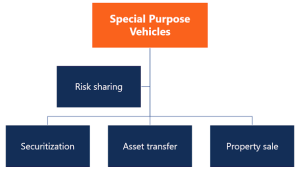
Multi-Layered SPVs
A properly structured multi-layered SPV solves this by creating legitimate separation between economic ownership, legal title, and operational control. The top layer (often a holding company in a non-CRS jurisdiction) owns the project-level SPV, which in turn contracts directly with local partners or free-zone entities. Information exchange stops at the first layer because the jurisdiction simply does not participate in automatic reporting.
This structure delivers three critical advantages:
- Anonymous beneficial ownership without violating local law
- Asset protection through jurisdictional firewalls
- Operational flexibility for trade-based settlement, smart escrow, and project financing
Selecting the Right Independent Jurisdictions in 2026
Not every “offshore” location qualifies. The most effective jurisdictions for 2026 mega-projects combine three characteristics: no participation in CRS/AEOI, robust commercial law, and seamless integration with global trade corridors.
Primary Tier – Gulf Free Zones (UAE, Oman, Qatar)
Jebel Ali Free Zone, DMCC, Ras Al Khaimah, Duqm SEZ (Oman), and Qatar’s Ras Bufontas offer 100% foreign ownership, zero corporate tax on qualifying activities, and no automatic information exchange with most Western authorities. These zones are fully integrated with the Golden Triangle of settlement described in previous analyses and serve as perfect top-layer or mid-layer vehicles.
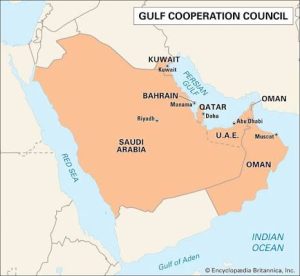
Gulf Free Zones (UAE, Oman, Qatar)
Secondary Tier – Select Non-CRS Hubs in Asia and Beyond
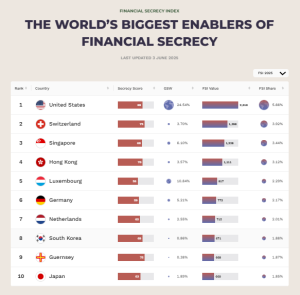
Certain jurisdictions in Southeast Asia and the Indian Ocean maintain strict privacy statutes and do not participate in full automatic exchange. When layered correctly, they provide additional firewalls without sacrificing commercial credibility.
Non-CRS Hubs in Asia
Step-by-Step Construction of a Multi-Layered SPV Structure
Phase 1: Define the Project Objective and Risk Profile
Begin with a clear map of the project: reconstruction, industrial acquisition, logistics concession, or commodity trading. Identify the required level of ownership privacy, repatriation needs, and counterparty exposure.
Phase 2: Design the Ownership Pyramid
A typical 2026 structure uses three to four layers:
Layer 1 (Top): Holding company in a non-CRS jurisdiction
Layer 2: Intermediate SPV for financing and escrow
Layer 3: Project-level SPV registered in the target free zone
Layer 4 (optional): Operating subsidiary for day-to-day contracts
Phase 3: Incorporate and Capitalize Each Layer
Use professional corporate service providers with proven track records in the chosen jurisdiction. Capitalize minimally at each level while ensuring substance requirements are met through local directors and documented decision-making.
Phase 4: Integrate Smart Escrow and Trade Documentation
Link the SPV structure to performance-based escrow mechanisms and flexible invoicing tools. This allows value to move through legitimate trade flows while ownership remains insulated.
Practical Applications in Mega-Projects
Multi-layered SPVs are now standard in:
- Industrial plant acquisitions during reconstruction phases
- Port and logistics concession bids
- Energy and petrochemical joint ventures
- Distressed asset portfolios in high-friction geographies
Risk Management and Compliance Discipline
Legitimate structures require rigorous adherence to local substance rules, accurate economic reporting, and full audit trails. The goal is privacy through architecture, not secrecy through evasion.
How Platform.Tendify.Net Powers Multi-Layered SPV Operations
Platform.Tendify.Net — The Operating System for Sovereign-Jurisdiction SPV Execution
Structuring and operating multi-layered SPVs at scale requires precision in documentation, cost modeling, regulatory navigation, and secure performance mechanisms. Platform.Tendify.Net was engineered as the single command center that makes this possible.
Key capabilities for SPV operators:
- Advanced trade cost and landed-value calculators tailored to free-zone jurisdictions
- Export Documentation Checklist Generator and multi-layer proforma/contract builders
- HS Code intelligence, duty optimization, and Incoterms advisory
- Smart escrow infrastructure that links SPV ownership to verifiable performance milestones
- AI-powered compliance monitoring across independent jurisdictions
- Real-time modeling of ownership structures and repatriation flows
Whether you are establishing the top-layer holding company in a non-CRS jurisdiction or managing the project-level SPV inside a Gulf free zone, the platform ensures every document, cost, and performance obligation remains aligned and auditable.
The operators who master multi-layered SPV engineering in 2026 will control the most important reconstruction and industrial projects of the decade. The infrastructure required to do so at scale now exists in one integrated platform.
Looking Forward: SPVs as the Standard for Large-Scale Capital Deployment
As global transparency regimes continue to expand, the strategic value of independent jurisdictions will only increase. Multi-layered SPVs are not a temporary workaround — they are the new institutional standard for anonymous yet fully legitimate ownership in mega-projects.
We at Tendify have built the tools that simplify the most complex equations of SPV structuring, regulatory compliance, trade documentation, and performance security. Our calculators, document engines, and smart escrow systems allow sophisticated capital to operate with precision and confidence.
If you are actively planning or executing large-scale projects and require robust ownership structures in independent jurisdictions, the complete operational toolkit is ready inside your dashboard at Platform.Tendify.Net.
The window for strategic positioning is open. The systems to protect and execute your ownership are built.
Related Strategic Resources on Tendify.net
- The Hidden Arbitrage of Risk: How Trade-Based Settlement Exploits Regulatory Blind Spots in 2026
- The Golden Triangle of Settlement: How Free Ports in Oman, UAE, and Qatar Enable Non-Banking Capital Transit
- Cross-Border Logistics for B2B Trade in the Gulf Region
- Rebuilding Iran After the 2026 Conflict: The Global Investment Playbook