المدونة
The Hidden Arbitrage of Risk: How Trade-Based Settlement Exploits Regulatory Blind Spots in 2026

Over the past decade, layers of international financial oversight have grown thicker and more intrusive. What began as targeted measures against illicit finance has evolved into a system of hyper-regulation that now touches nearly every cross-border movement of capital. SWIFT messages face enhanced scrutiny, correspondent banking relationships have contracted sharply in certain corridors, and FATF-driven compliance expectations continue to raise the cost and visibility of traditional payments.
For large-scale operators managing significant value across jurisdictions, the consequences are tangible: longer settlement cycles, higher friction costs, restricted access to reliable banking rails, and increased exposure to regulatory or geopolitical interruption. In response, a quiet but strategic shift is underway. Experienced participants are reallocating portions of their flows toward structures where economic value moves primarily through documented trade rather than pure financial channels.
This approach, known as trade-based settlement, embeds the transfer of value inside legitimate commercial transactions. Payment is not executed as a standalone wire but realized through the delivery and acceptance of goods whose pricing and terms reflect the underlying economic exchange. The method leverages the sheer complexity and volume of global supply chains—elements that traditional monitoring systems, optimized for cash flows, find far more difficult to dissect in real time.
The Pressure of Hyper-Regulation and the Search for Alternative Routes
Global trade has never been more documented, yet paradoxically, it has also become more constrained in its financial dimension. De-risking by correspondent banks, driven by compliance costs and uncertainty over ultimate beneficial ownership, has reduced direct relationships in numerous corridors. Even where rails remain open, the combination of Travel Rule requirements, enhanced due diligence, and real-time screening has slowed execution and raised operational overhead.
For traders handling substantial volumes—whether in commodities, industrial inputs, or specialized manufactured goods—the cumulative effect is a narrowing of viable conventional options. Capital that needs to move efficiently between regions with differing regulatory intensities or currency controls faces repeated choke points. In such an environment, the incentive to explore alternative routes grows.
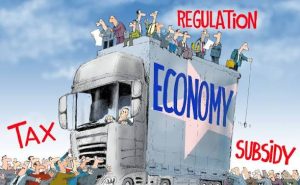
trade Hyper-Regulation
Trade-based settlement does not replace banking entirely. Rather, it repositions the financial leg as secondary to the physical and documentary flow. A supplier ships goods at a commercially justifiable price. The receiver accepts delivery and, through pre-agreed mechanisms, the economic obligation is discharged. The documentation—commercial invoice, bill of lading, packing list, certificates of origin and conformity—serves dual purposes: proving legitimate trade while simultaneously completing the value transfer.
Because the primary movement is commercial, the associated value transfer inherits the opacity that naturally arises from multi-layered supply chains, variable pricing justified by quality, quantity, Incoterms, and local market conditions. Systems designed primarily to track SWIFT-style messages encounter structural regulatory blind spots when attempting to reconstruct intent across thousands of daily shipments differentiated by HS codes, packaging, routing, and counterparties.
This is not theoretical. Industry analyses of trade-based money laundering typologies (often cited in FATF and Egmont Group materials) repeatedly highlight how over- or under-invoicing, phantom shipments, or mismatched quantities can move value with lower immediate visibility than direct funds transfers. Legitimate operators apply the same structural characteristics—minus any illicit intent—to achieve efficiency and resilience in environments where traditional rails have become commercially or regulatorily burdensome.
Understanding Asymmetric Liquidity in Practice
At the heart of effective trade-based settlement lies the concept of asymmetric liquidity. Capital trapped or slow-moving in one jurisdiction—due to controls, banking limitations, or currency inconvertibility—is transformed into physical goods that carry high liquidity in the target market.

Understanding Asymmetric Liquidity in Practice
Consider a simplified yet representative flow: An exporter in a jurisdiction with restricted outbound capital converts available local resources into producible or procurable goods. These goods are shipped under standard trade terms to a buyer in a more liquid market. Upon verified delivery and acceptance, the economic value is realized in the receiving jurisdiction, often in a form (local currency, readily convertible assets, or reinvestable inventory) that enjoys superior liquidity and usability.
The asymmetry arises because the physical and logistical risks—transport, insurance, quality verification, customs clearance—are well-understood, quantifiable, and insurable, while the financial outcome bypasses multiple layers of banking scrutiny that would otherwise apply to an equivalent direct transfer. The trader accepts the arbitrage of risk: trading known operational exposure for reduced financial and visibility friction.
When executed at scale across diversified commodity or industrial portfolios, this creates a parallel liquidity channel that operates alongside, rather than in direct competition with, conventional banking. The key requirement is legitimacy: every step must withstand commercial scrutiny. Pricing must reflect verifiable market conditions, quantities must match physical reality, and documentation must form a coherent, auditable chain.
Structuring Trade-Based Settlement Through B2B Platforms
Manual execution of such flows at meaningful scale quickly becomes unmanageable. Coordinating counterparties, aligning documentation across jurisdictions, modeling landed costs (including duties, transport, currency conversion, and local taxes), and managing performance risk without introducing new vulnerabilities requires infrastructure.
Modern B2B platforms have emerged as the operational backbone for controlled, legitimate trade-based settlement. These environments allow participants to:
Map end-to-end cost scenarios before commitment, incorporating dynamic variables such as tariff regimes, exchange rates, and port-specific fees.
Generate flexible invoicing structures that accurately reflect commercial reality while supporting the embedded settlement logic—adjusting for quality premiums, volume tiers, or Incoterms without compromising auditability.
Route documentation through distributed systems that maintain full records for each party yet avoid creating a single centralized repository subject to broad extraterritorial data demands.
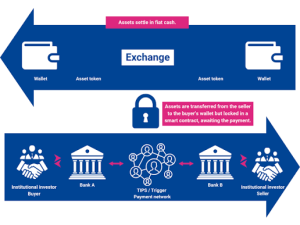
Trade-Based Settlement
The most sophisticated platforms further incorporate smart escrow mechanisms. Rather than relying solely on trust between counterparties or traditional letters of credit (which themselves route through banking channels), digital escrow holds performance obligations—release of title documents, confirmation of delivery, or conditional payment triggers—until predefined, verifiable milestones are met. This reduces counterparty risk without forcing premature movement of funds through restricted rails.
Because the platform’s role is that of a neutral facilitator and performance guarantor within a commercial transaction, the overall flow retains the character of legitimate trade. Financial settlement becomes a natural byproduct of physical delivery rather than a standalone event flagged for separate monitoring.
The Technical Foundations That Enable Scale and Resilience
The competitive edge in 2026 belongs to platforms that treat logistics, documentation, and embedded finance as a single integrated process. Key capabilities include:
Non-centralized or jurisdictionally distributed data architectures that limit exposure to any single regulatory data request regime. By design, core transactional intelligence remains segmented and permissioned, accessible primarily to direct participants rather than aggregated into repositories under broad oversight.
Precision cost-modeling engines capable of simulating complete landed economics across multiple origin-destination pairs, incorporating real-time or near-real-time inputs for customs valuation, VAT/GST treatment, currency hedging implications, and multimodal transport options.
Document generation tools that produce consistent yet adaptable commercial sets—proforma invoices, final invoices, packing lists, and supporting certificates—while preserving version control and alignment across all parties.
When these elements operate together, the platform effectively compresses the complexity that once made large-scale trade-based settlement prohibitive for all but the most resourced operators. What previously required teams of specialists and weeks of coordination can now be structured, stress-tested, and executed with far greater speed and transparency among authorized participants.
Importantly, these tools do not create new opacity; they enhance the quality and consistency of legitimate documentation. Strong audit trails, verifiable timestamps, and immutable records of acceptance actually strengthen commercial legitimacy while simultaneously reducing the practical visibility of the embedded value transfer to systems focused on pure financial messaging.
Practical Considerations and Risk Management
Successful implementation demands discipline. Pricing must remain defensible against market benchmarks. Quantities and specifications must match physical reality to survive customs or quality inspections. Counterparties require vetted onboarding, and performance milestones must be objectively measurable.
Smart escrow plays a critical stabilizing role here. By automating release conditions based on confirmed delivery evidence (such as port receipts, inspection reports, or GPS-tracked milestones), it removes much of the trust deficit that could otherwise slow adoption. The escrow does not disguise the transaction; it enforces its commercial integrity.
Operators also maintain hybrid models—routing a baseline volume through conventional channels for routine, low-friction corridors while reserving trade-based structures for higher-friction or time-sensitive movements. This diversification preserves banking relationships where they remain efficient while building resilience where they do not.
Regulatory awareness remains essential. While trade-based settlement exploits structural blind spots in financial monitoring, it does not grant immunity from commercial or customs scrutiny. Authorities in many jurisdictions continue to refine techniques for detecting anomalous trade patterns, particularly around valuation discrepancies or unusual routing. Sustainable use therefore requires meticulous adherence to legitimate commercial purpose and full documentary compliance.
The Strategic Outlook for 2026 and Beyond
Global trade volume continues to expand, yet the financial architecture supporting it fragments along geopolitical and regulatory lines. Correspondent banking de-risking shows no signs of reversal in higher-friction corridors. Enhanced FATF expectations around payment transparency and virtual asset integration add further layers. In this environment, structures that embed value transfer inside resilient physical flows gain structural relevance.
The advantage accrues to those who can orchestrate asymmetric liquidity efficiently: converting position in one market into usable value in another with acceptable risk and minimal visibility drag. Platforms that provide the necessary modeling, documentation, and escrow infrastructure lower the barrier to entry and raise the sophistication threshold for execution.
We at Tendify have designed tools that simplify the most complex equations involving both physical logistics and embedded financial settlement. Our calculators handle everything from precise duty modeling to flexible invoicing structures, while our platform infrastructure supports secure, performance-based escrow arrangements.
If you are actively optimizing commercial routes in challenging or high-friction geographies and want to explore how trade-based settlement can reduce both cost and visibility drag, the full suite of computational and documentation tools is available inside the user dashboard at Platform.Tendify.Net.
The window for strategic advantage in this space remains open—but it increasingly favors those equipped with the right infrastructure, disciplined processes, and clear commercial intent .