


Blog
EU-Mercosur Agreement: B2B Trade & Logistics Guide

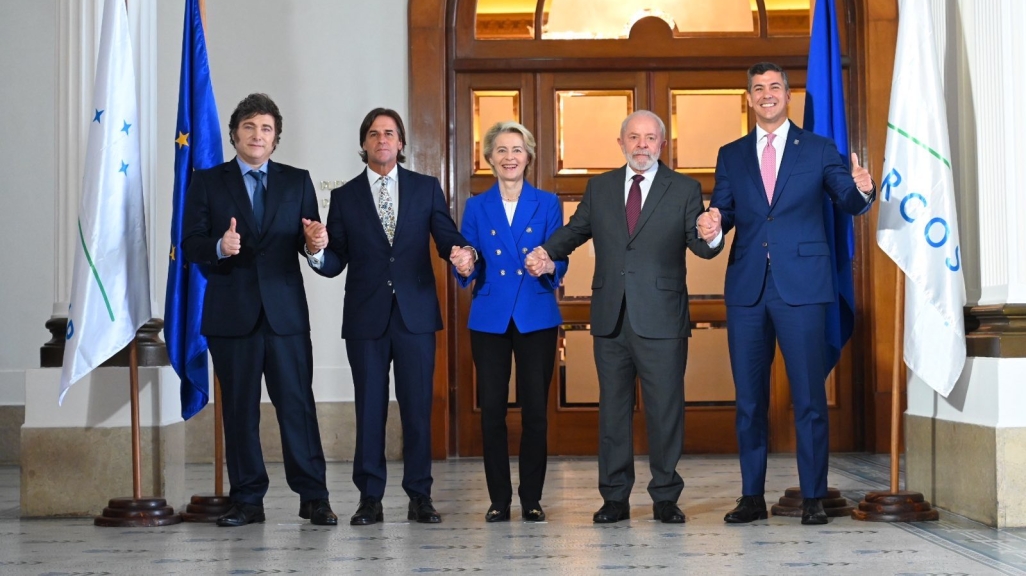
In early 2026, after more than two decades of negotiations, the EU and Mercosur bloc formalized one of the largest free trade areas in history, encompassing roughly 700 million consumers. Provisional application of key trade provisions began on May 1, 2026, delivering immediate tariff relief on over 90% of goods traded between the two regions.
For B2B traders, logistics operators, and supply chain executives operating in dynamic markets such as the GCC and broader MENA region, this agreement reshapes sourcing strategies, re-export models, and investment calculations. It creates tangible pathways to reduce costs, diversify suppliers, and capture value in high-growth sectors while demanding sharp compliance with rules of origin and sustainability standards.
This guide breaks down the operational realities, sector-specific impacts, and practical steps to integrate the EU-Mercosur framework into your cross-border operations.
Bypass Logistics in the Gulf: A B2B Risk Framework
What Is the EU-Mercosur Agreement and Why Does It Matter Now?
The agreement establishes a comprehensive partnership covering trade in goods and services, investment facilitation, public procurement, intellectual property, and sustainable development. At its core lies the interim trade agreement (iTA), which is now provisionally applied, enabling businesses to claim preferential tariffs without waiting for full ratification.

What Is the EU-Mercosur Agreement
Key structural features include:
- Elimination or phased reduction of tariffs on 91-95% of tariff lines.
- Tariff-rate quotas (TRQs) for sensitive agricultural products.
- Simplified customs procedures and mutual recognition of standards.
- Strong emphasis on rules of origin to prevent trade deflection.
For traders in the Gulf, this matters because Mercosur—led by Brazil, Argentina, Paraguay, and Uruguay—supplies critical raw materials, agricultural commodities, and emerging manufactured goods. The EU, meanwhile, exports high-value industrial products, machinery, chemicals, and premium agri-food items. The deal lowers friction between these blocs, creating ripple effects for third-country players who can position themselves as efficient connectors.
Operational data from the first months of provisional application shows early tariff savings translating into lower landed costs, particularly for European machinery entering Brazilian ports and select Mercosur agri-exports gaining better access to European buyers.
Tariff Reductions and Immediate Cost Savings for Traders
The most direct benefit is the removal of long-standing tariff barriers.
Tariff Reductions and Immediate Cost Savings
For EU exporters to Mercosur:
- Automobiles: Previously up to 35% tariffs now phased down significantly.
- Machinery and equipment: Reductions from 14-20%.
- Pharmaceuticals and chemicals: Cuts up to 14-18%.
- Premium agri-food (wine, spirits, olive oil, cheese): Reductions from peaks of 20-35%.
For Mercosur exporters to the EU:
- Beef, poultry, sugar, soy, and ethanol benefit from expanded TRQs and reduced duties.
- Industrial goods and raw materials see broad liberalization.
These changes translate into real savings. European exporters are projected to save billions annually in duties, while Mercosur suppliers gain predictable access to one of the world’s most affluent consumer markets.
Real-World Scenario
Case Study: Margin Impact on European Industrial Machinery Imports
To visualize how the EU-Mercosur agreement alters bottom-line profitability, consider a Middle Eastern trading house importing high-specification European heavy machinery components for regional infrastructure supply and re-export into South America.
Value / Baseline
$1,000,000 USD (Industrial Valves & Pumps)
18% ($180,000 USD Duty)
0% (Phased Duty Exemption)
+$180,000 USD
Bottom-Line Effect: On a $1M CIF shipment, eliminating the 18% tariff instantly frees up $180,000 in operational capital. For a trader operating on an average 8% net margin, this cost reduction effectively more than doubles the net margin to 26% on landed cost—providing tremendous flexibility to either undercut market prices or absorb logistics surcharges without sacrificing profitability.
Practical implication for GCC-based traders: If your operations involve re-export or triangular trade, you can source Brazilian soy or Argentine beef derivatives, process or consolidate in UAE free zones, and route to European or Asian endpoints with improved margin visibility. Monitor cumulative rules of origin carefully—goods must meet specific transformation thresholds to qualify.
Rules of Origin: The Compliance Gatekeeper
Preferential treatment only applies to qualifying originating goods. The agreement uses a combination of wholly obtained, substantial transformation, and product-specific rules.
Core principles traders must master:
- Territoriality and absorption rules — Inputs from either bloc can contribute to origin status.
- Double transformation for textiles and apparel.
- Chemical process rules for pharmaceuticals and industrial chemicals.
- Vehicle-specific requirements for automotive supply chains, emphasizing regional value content.
Step-by-step compliance checklist:
- Verify HS codes against product-specific annexes.
- Maintain supplier declarations and origin documentation.
- Implement internal audits for cumulation calculations.
- Leverage digital tools for real-time classification and simulation.
Non-compliance risks duty recovery and penalties, so integrate origin management into your ERP systems early.
Re-Export Mechanics & GCC Free Zone Processing
A common pitfall for Gulf-based operators is assuming that basic handling or re-packaging within regional hubs preserves preferential tariff status. Understanding origin thresholds is vital when routing Mercosur or EU goods through Middle Eastern hubs.
- Bilateral Cumulation Limits: Preferential origin cumulation applies strictly between EU and Mercosur territories. Intermediate processing, sorting, or re-labeling in non-member third countries (such as Jebel Ali or Duqm free zones) does not confer originating status unless substantial transformation alters the 6-digit HS code.
- Simple Operations Rule: Minimal operations—such as bulk blending, simple packaging, or quality grading—are categorized as non-originating processes. Goods routed through GCC hubs for purely logistics consolidation must enter under bonded transit or customs-controlled warehouse procedures to retain original Certificates of Origin without losing tariff benefits.
- Value-Add Transformation Thresholds: To qualify for re-export duty relief into either bloc after processing in a third region, the final product must meet strict local content ratio requirements or undergo a defined chemical/industrial transformation specified in product-specific annexes.
Financial Strategy
Navigating Settlement Mechanics & Currency Volatility
While tariff reductions optimize baseline landed costs, real-world execution hinges on cross-border financial mechanics. B2B traders navigating transactions between the EU, Mercosur, and GCC hubs face unique liquidity, currency, and compliance hurdles.
- Currency Hedging & Multi-Currency Invoicing: Sharp fluctuations in Mercosur currencies (e.g., Brazilian Real, Argentine Peso) necessitate local-currency hedging or pegging contracts to stable benchmarks like EUR or AED to preserve profit margins.
- Structured Trade Finance: Leveraging irrevocable Letters of Credit (L/Cs) and re-export financing through Gulf financial centers helps mitigate counterparty risk and settlement lags across long-haul ocean routes.
- Sanctions & Intermediary Compliance: Triangular trade routes involve strict banking scrutiny. Ensuring transparent documentation for intermediate transfers via GCC free zones prevents unexpected wire holds and correspondent bank delays.
Sector Opportunities Reshaping Global Supply Chains
Sector Opportunities Reshaping Global Supply Chains
1. Agriculture, Food Processing & Agri-Commodities
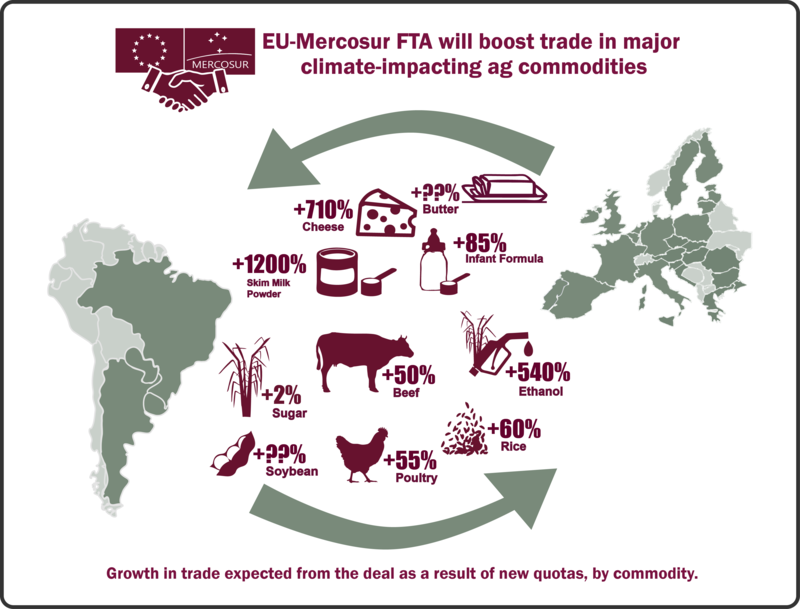
Mercosur solidifies its position as an irreplaceable global powerhouse for grains, animal proteins, vegetable oils, and oilseeds. The interim agreement expands duty-free Tariff-Rate Quotas (TRQs) and reduces prohibitive tariffs on core commodities, including South American beef, poultry, corn, and ethanol into Europe. Concurrently, European agri-food exporters gain unprecedented access for high-value protected designation of origin (PDO) goods, including dairy, premium cheeses, wine, spirits, and olive oil, with tariffs stepping down from historical peaks of 20–35%.
GCC & MENA Strategic Leverage: Gulf-based trading houses and food security operators can utilize this bilateral liberalization to secure long-term off-take agreements for wheat, animal feed, and frozen proteins out of Brazil and Argentina. By leveraging GCC transshipment hubs (such as Jebel Ali, Khalifa Port, or Duqm), traders can import bulk commodities, execute secondary processing or HALAL-compliant packaging in free zones, and redistribute across the MENA region. This effectively hedges against Black Sea trade corridor disruptions and stabilizes regional food security.
2. Automotive, Heavy Machinery & Industrial Equipment
Historically protected by Mercosur import tariffs as high as 35% on completed vehicles and 14–20% on industrial machinery and spare parts, the South American market is now opening up to European original equipment manufacturers (OEMs). The phased tariff elimination over agreed transition periods levels the playing field for European heavy equipment, precision tooling, and industrial automation technology.
GCC & MENA Strategic Leverage: Regional distributors and logistics integrators handling industrial supply chains stand to benefit significantly. Gulf operators managing heavy machinery fleets, oil & gas equipment, or construction inputs can optimize their international procurement. Middle Eastern trading entities can act as strategic intermediaries—sourcing European industrial components duty-free, consolidating them with regional assemblies, and servicing infrastructure projects across North Africa and Central Asia with higher margin clarity.
3. Chemicals, Pharmaceuticals & Critical Energy Minerals
The agreement slashes tariffs (previously up to 18%) on specialty chemicals, active pharmaceutical ingredients (APIs), and healthcare products moving from the EU into South America. Conversely, Mercosur’s rich reserves of critical energy transition materials—including lithium, copper, nickel, and rare earth elements—gain streamlined access to European green-tech supply chains, particularly for battery gigafactories and renewable infrastructure.
GCC & MENA Strategic Leverage: The Gulf’s expanding petrochemical ecosystem (e.g., in KSA and the UAE) can tap into freer trade flows by supplying intermediary polymers and fertilizers to Mercosur’s massive agricultural sector. Additionally, multimodal logistics providers in the Middle East can position themselves as neutral storage, blending, and distribution centers for fine chemicals and mineral derivatives moving between the Atlantic and Asian markets.
4. Services, Public Procurement & Digital Commerce
Beyond physical goods, the framework provides unprecedented liberalized access to public procurement markets. European and Mercosur entities gain non-discriminatory bidding rights on government tenders, alongside improved commercial terms for cross-border services, including engineering, maritime transport, technical consulting, and digital services.
GCC & MENA Strategic Leverage: Engineering, procurement, and construction (EPC) conglomerates and international logistics operators based in the GCC can form joint ventures with European or South American firms. By establishing qualified entities in either bloc, Middle Eastern service providers can bid on large-scale infrastructure, port development, and digital supply chain projects created by this expanded 700-million-consumer marketplace.
Strategic Implications for GCC and MENA Supply Chain Leaders
The agreement accelerates de-risking trends already visible in global trade. Gulf traders can:
- Source cost-competitive inputs from Mercosur to feed re-export hubs in Jebel Ali or Duqm.
- Partner with European firms for technology transfer in manufacturing joint ventures.
- Develop value-added processing capabilities that leverage origin cumulation.
Logistics optimization angles:
- Increased volumes on Europe-South America routes pressure freight rates—negotiate long-term contracts now.
- Enhanced digital customs cooperation between blocs can inspire similar efficiencies in GCC single-window systems.
- Sustainability requirements in the agreement align with growing ESG demands from European buyers, pushing adoption of green shipping and traceability solutions.
Logistics & Freight Reality
Maritime Bottlenecks: Freight Rates & Direct Route Limits
Tariff reductions alone do not guarantee commercial viability if ocean freight costs erode profit margins. While the agreement opens significant trade channels, B2B operators must factor in the physical realities of global ocean carrier capacity and long-haul shipping lanes.
- Direct vs. Transshipment Corridors: Major Mercosur gateways like Santos (Brazil) or Buenos Aires (Argentina) enjoy dense direct liner services to North European hubs like Rotterdam and Hamburg. However, direct capacity to GCC transshipment hubs like Jebel Ali remains more constrained, often requiring feeder calls that extend transit times to 30–40 days.
- Freight Rate Volatility: Shift in trade flows following the agreement is driving demand on Atlantic and South America–Middle East routes. B2B operators should expect spot-rate fluctuations and monitor bunker adjustment factors (BAF) closely.
- Container Availability & Reefer Supply: High demand for temperature-controlled agricultural exports (beef, poultry, fruit) out of Mercosur can create localized reefer container shortages during peak harvest seasons.
Navigating Challenges: Sustainability, Standards, and Geopolitics
Regulatory Risk
EUDR Compliance: The Deforestation Hard Stop for Commodities
The EU-Mercosur agreement operates under the strict shadow of the EU Deforestation Regulation (EUDR). For B2B traders dealing in Mercosur agricultural outputs—specifically cattle, soy, wood, cocoa, coffee, oil palm, and rubber—tariff relief is irrelevant if products fail EUDR compliance checks at European ports of entry.
- Mandatory Geolocation Traceability: Operators placing relevant commodities on the EU market must prove goods were not produced on land deforested or degraded after December 31, 2020. This requires precise GPS coordinates of farm plots and verifiable due diligence statements.
- Re-Export & Triangular Trade Bottlenecks: GCC traders processing or re-exporting Brazilian soy or beef through Middle Eastern free zones into European destinations remain fully accountable under EUDR guidelines. Blending compliant and non-compliant batches invalidates the entire shipment.
- Enforcement Penalties: Non-compliance risks severe penalties, including fines up to 4% of EU annual turnover, confiscation of revenues, and temporary exclusion from EU public procurement tenders.
How to Capitalize: Actionable Roadmap for B2B Operators
To translate the macro-economic benefits of the EU-Mercosur agreement into bottom-line profitability, B2B executives and trade operators must adopt a structured execution framework. Below is a step-by-step operational roadmap designed to guide sourcing, compliance, and logistics teams through integration over a 12-month horizon.
+-----------------------------------------------------------------------------------+
|                        12-MONTH OPERATIONAL ROADMAP                               |
+--------------------------+--------------------------+-----------------------------+
|   PHASE 1: ASSESSMENT    |   PHASE 2: INTEGRATION   |       PHASE 3: SCALING      |
|       (Months 0-3)       |       (Months 3-9)       |        (Months 9-12+)       |
+--------------------------+--------------------------+-----------------------------+
| * HS Code Mapping        | * Origin Protocol Audit  | * Multimodal Routing        |
| * Duty Differential Calc | * Pilot Shipments        | * Value-Add Packaging       |
| * Contract Review        | * JV & Partner Sourcing  | * Predictive Analytics      |
+--------------------------+--------------------------+-----------------------------+
Phase 1: Strategic Assessment & Portfolio Mapping (Months 0–3)
The primary objective during the initial quarter is establishing total visibility over your current supply chain exposure and quantifying potential margin expansions.
6-Digit HS Code Audit & Tariff Classification: Map your entire procurement catalog and export inventory against the agreement’s updated tariff schedules. Identify products experiencing immediate duty elimination versus those subject to multi-year phased reductions or Tariff-Rate Quotas (TRQs).
Duty Savings & Landed Cost Modeling: Utilize dynamic duty calculation models to compute the exact duty differential across high-volume trade lanes. Factor in secondary variables such as ocean freight surcharges, insurance, and currency conversion buffers to determine net margin impact per SKU.
Contractual Audit & Origin Compliance Clauses: Review existing long-term supply agreements and purchase orders with European and South American vendors. Insert explicit clauses requiring suppliers to furnish verifiable Supplier Declarations and Certificates of Origin compliant with interim trade agreement (iTA) standards.
Risk Screening: Benchmark key commodity flows against regulatory constraints, particularly verifying whether agricultural or forestry products comply with the EU Deforestation Regulation (EUDR) geolocation mandates.
Phase 2: Operational Integration & Pilot Execution (Months 3–9)
Once high-margin opportunities are identified, focus shifts toward embedding compliance protocols and stress-testing new corridors through live commercial shipments.
Internal Origin Management & ERP Upgrades: Upgrade Enterprise Resource Planning (ERP) and Customs Management systems to handle bilateral cumulation calculations automatically. Train logistics and compliance teams on product-specific rules of origin (e.g., substantial transformation criteria, value-add thresholds, and chemical process rules).
Controlled Pilot Shipments: Execute small-to-medium trial shipments across newly optimized lanes (e.g., sourcing Brazilian agricultural derivatives or importing European industrial machinery via GCC bonded free zones). Use these pilots to measure actual transit lead times, test customs clearance speeds, and validate origin documentation acceptance.
Strategic Supplier & Distributor Partnerships: Establish direct commercial relationships with tier-1 Mercosur producers and European distribution networks. Explore triangular trade structures—such as utilizing GCC hub facilities for consignment storage, quality inspection, and regional split-bulk distribution—without breaching origin status.
Financial & Currency Risk Hedging: Implement multi-currency treasury mechanisms (such as hedging Brazilian Real or Euro exposures against USD/AED) and structure irrevocable Letters of Credit (L/Cs) tailored to cross-bloc trade timelines.
Phase 3: Commercial Scaling & Network Optimization (Months 9–12+)
The final phase focuses on scaling operational volumes, capturing market share, and building sustainable long-term competitive advantages.
Multimodal Logistics & Contract Optimization: Transition from spot-market ocean freight rates to multi-year Volume Service Contracts (VSCs) with major global ocean carriers. Optimize end-to-end routing by combining direct ocean liners with feeder networks and bonded rail/road corridors across Europe, South America, and the MENA region.
Value-Added Processing & Private-Label Development: Leverage free-zone manufacturing or processing capabilities (e.g., blending, specialized packaging, or light assembly) to build proprietary or co-branded product lines that meet specific regional market standards while capitalizing on duty-free raw material inputs.
Predictive Demand Forecasting & Analytics: Integrate real-time trade data analytics to monitor cross-bloc demand shifts, track tariff-rate quota utilization rates in real time, and adjust inventory buffers ahead of seasonal harvest cycles or industrial demand surges.
Tools like advanced tariff calculators, HS code finders, and contract generators can streamline these processes significantly.
For traders seeking integrated platforms that connect these opportunities with real-time market intelligence and compliance support, Platform.Tendify.Net offers practical utilities tailored to cross-border workflows.
Related reading:
- Demurrage vs. Detention in GCC Ports: How to Save $2,000 per Container in UAE & Saudi Arabia
- Mastering Incoterms Selection for Bulk and Container Shipments
- GCC Logistics Revolution: Multimodal Strategies for 2026
The Road Ahead: Positioning for Long-Term Advantage
The EU-Mercosur agreement is more than a tariff cut—it signals a broader realignment in global value chains toward resilient, multi-bloc sourcing. Businesses that treat it as a strategic operating framework rather than a one-off event will capture disproportionate value.
By focusing on compliance excellence, logistics agility, and relationship-driven partnerships, forward-looking traders in the Gulf and beyond can turn this landmark pact into a competitive edge that compounds over the decade ahead.
Ready to streamline your trade operations, secure better terms, and access the full suite of tools designed for modern B2B commerce? Register today at https://tendify.net/my-account/ and start turning global opportunities into measurable results.

