وبلاگ
GAFTA Trade Guide : Master Rules of Origin and Slash MENA Customs Costs

In the high-stakes arena of international trade, one agreement stands out as a game-changer for those operating in the Middle East and North Africa: the Greater Arab Free Trade Area, commonly known as GAFTA. Over my years building and scaling export operations across volatile markets, I’ve seen firsthand how leveraging regional agreements like this can slash costs, open new markets, and deliver margins that turn good deals into exceptional ones.
GAFTA
If you’re exporting to or importing from Arab countries, understanding GAFTA isn’t optional—it’s essential for staying competitive in 2026. This guide breaks down everything you need: from the core mechanics and rules of origin to practical strategies, common pitfalls, and how to integrate it into your operations for real results. No fluff—just actionable insights drawn from real-world trade challenges I’ve navigated.
What Exactly Is GAFTA and Why Does It Matter in 2026?
GAFTA, or the Greater Arab Free Trade Area, is a landmark economic agreement among Arab League member states designed to create a unified market by eliminating tariffs and reducing non-tariff barriers on goods traded between participating countries. Fully implemented for most goods since 2005, it now covers 18 active members, creating one of the largest preferential trade zones in the MENA region.
The goal? Foster economic integration, boost intra-Arab trade, and make regional supply chains more efficient. In practice, this means qualified goods can move with zero or minimal customs duties, dramatically lowering your landed costs compared to trading with non-members.
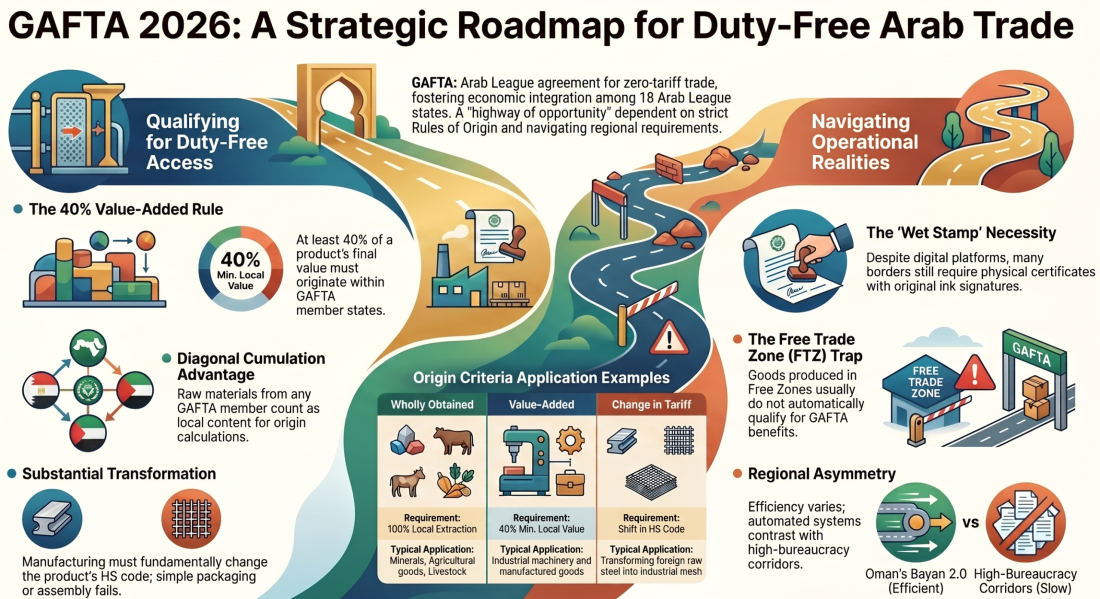
GAFTA 2026 Strategic Trade Roadmap
For traders in 2026, GAFTA’s relevance has only grown. With global supply chain disruptions, rising protectionism elsewhere, and regional ambitions like Vision 2030 in Saudi Arabia or reconstruction projects in Iraq, this agreement offers a stable, cost-effective corridor. Exporters can source materials across borders more cheaply, manufacturers can access larger markets, and importers benefit from competitive pricing on everything from construction materials to agricultural products.
Trading with ASEAN : Opportunities, Regulations, and Market Entry Strategies
Key Benefits at a Glance:
- Tariff Elimination: Zero duties on most originating goods.
- Market Access: Seamless movement across GCC, North Africa, and Levant markets.
- Supply Chain Efficiency: Reduced costs enable better pricing and higher volumes.
- Competitive Edge: Especially powerful when combined with local production or cumulation rules.
I’ve used similar regional frameworks to cut logistics expenses by 15-25% on multi-country deals. The “why” is straightforward: lower barriers mean faster turnover, stronger margins, and resilience against external shocks like currency fluctuations or distant sourcing risks.
Member Countries: Your GAFTA Trade Map
GAFTA spans a vast, strategically vital geography, linking major economic powerhouses across the Middle East and North Africa. By erasing tariff walls, it bridges disparate sub-regions into a massive, interconnected market. Understanding how these blocs interact is key to mapping your supply chain:
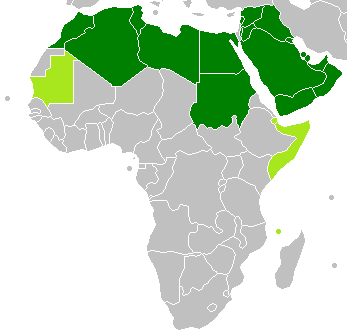
GAFTA Member Countries
GCC Countries: Saudi Arabia, UAE, Oman, Qatar, Kuwait, and Bahrain. While these nations are active GAFTA members, they internally leverage the deeper mechanisms of the GCC Customs Union. This means that for intra-GCC trade, you benefit from a unified 5% external tariff and frictionless statistical transfers, whereas GAFTA serves as their primary bridge to the wider Arab world.
Levant and Northern Arab States: Iraq, Jordan, Lebanon, Syria, and Palestine. This sub-region acts as a critical consumption market and a historical overland transit corridor. Jordan, for instance, serves as an excellent manufacturing hub leveraging both GAFTA and Western FTAs, while Iraq represents an immense, high-volume destination for industrial and consumer goods.
North Africa (Maghreb and Egypt): Egypt, Libya, Tunisia, Algeria, Morocco, and Sudan. Egypt stands out here as an industrial powerhouse and a massive consumer base of over 100 million people. The North African sub-bloc connects GAFTA directly to Mediterranean trade routes, offering massive advantages for manufacturers looking to distribute across both continents.
Peripheral Members: Yemen. While active, logistics and regulatory frameworks here require specialized risk management.
(Note: Certain Arab League member states, including Djibouti, Somalia, Mauritania, and the Comoros, are either in the process of full accession or have not yet fully operationalized the customs executive mechanisms on the ground).
The Reality of Regional Asymmetry It is critical to recognize that GAFTA does not implement with identical speed, depth, or bureaucratic fluidity across all 18 active nations. While the overarching legal framework is robust and predictable, administrative capabilities vary wildly. For a trader shipping from the UAE to Egypt, or from Jordan over into Iraq, GAFTA opens up highly lucrative, low-cost pathways. However, the operational reality depends heavily on the destination country’s local customs maturity, bilateral political climates, and physical border infrastructure.
نکته حرفهای: Never assume a blanket approval for your cargo. Always verify the real-time status of your specific HS codes and maritime or overland routes. While advanced customs engines like Oman’s Bayan 2.0 or ASYCUDA World platforms across the Levant automate and accelerate these preference verifications, sudden local regulatory updates or temporary protectionist measures can disrupt an active shipment. Knowledge gaps and outdated compliance data in this region don’t just cause minor delays—they cost thousands of dollars in unexpected demurrage and storage fees.
How GAFTA Works: Tariffs, Procedures, and Daily Operations
At its heart, GAFTA removes customs duties on qualifying goods through a structured preferential regime. Once goods meet origin criteria and proper documentation is in place, they enjoy duty-free (or reduced) treatment.
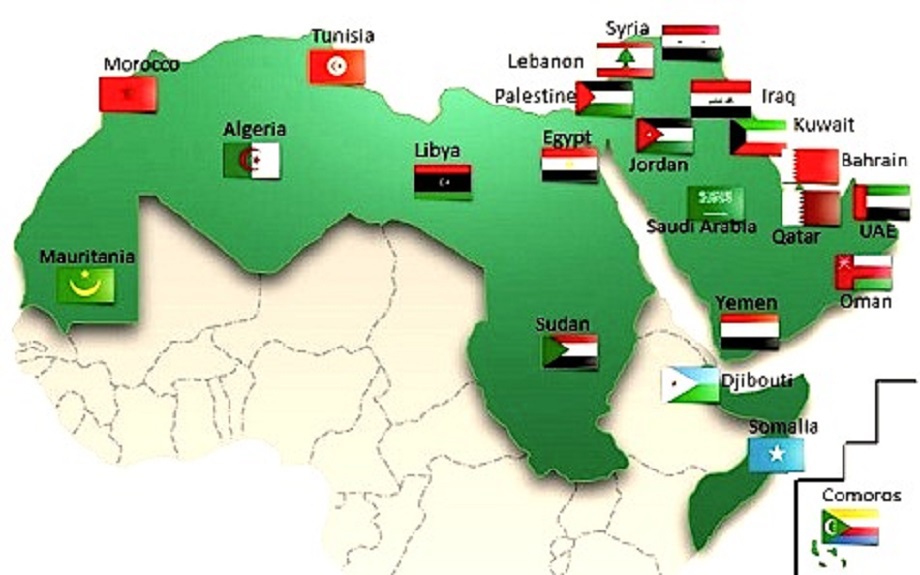
Greater Arab Free Trade Area
Core Operational Flow:
- Determine Eligibility: Check if your product qualifies under rules of origin.
- Obtain Certification: Secure an Arab Certificate of Origin.
- Declare Properly: Use the correct customs procedure codes in the destination country’s system.
- Clear and Move: Benefit from green channels where possible for faster release.
In modern customs platforms, this is data-driven. When filing declarations, you select the agreement (GAFTA vs. GCC), input exemption codes, and upload proofs. The system then calculates zero tariffs automatically if compliant.
While advanced platforms like Oman’s Bayan 2.0 or ASYCUDA World in various countries allow for the digital upload of trade documents, do not fall into the trap of going completely paperless. In volatile transit corridors—particularly at Iraqi borders or Egyptian ports—customs officers routinely demand the physical Arab Certificate of Origin bearing an original, physical “wet stamp” and ink signature. To prevent costly demurrage and administrative delays, never rely solely on digital approvals. Always ensure the physical, original stamped documents are in the hands of your transit driver or shipping agent at the point of entry.
This isn’t theoretical. In practice, it streamlines everything from bulk commodities like cement or bitumen to processed foods and machinery parts.
Rules of Origin: The Make-or-Break for GAFTA Benefits
In international trade, preferential tariffs are never handed out unconditionally. Rules of Origin (ROO) serve as the strict gatekeepers of the agreement. They ensure that only genuinely “Arab-origin” goods receive duty-free treatment, effectively preventing third-country manufacturers from using a member state as a mere transit point to bypass tariffs. If your documentation or production structure fails to satisfy these criteria, your cargo will be assessed at standard Most-Favored-Nation (MFN) tariff rates at the destination port.
To secure GAFTA preferences, your products must satisfy one of the two primary origin criteria:
Main Criteria:
1. Wholly Obtained Products This category applies to goods that are 100% extracted, harvested, bred, or produced within the borders of a single GAFTA member state, utilizing no foreign inputs whatsoever.
Primary Examples: Mineral products extracted from Saudi soil, agricultural goods harvested in Egypt, or live animals raised in Sudan.
2. Substantial Transformation For manufactured goods that utilize imported raw materials or components from outside the GAFTA zone, the product must undergo significant local processing that fundamentally alters its character. This is verified through three distinct regulatory benchmarks:
- The 40% Value-Added Rule: This is the most widely utilized baseline. At least 40% of the final Free On Board (FOB) value of the exported product must be derived from local materials, domestic labor, manufacturing overhead, and factory energy costs incurred within the member state. Conversely, non-originating, foreign materials must not exceed 60% of the FOB price.
Practical Example: If the Free On Board (FOB) price of an exported industrial pump is $1,000, at least $400 of that value must be derived from local components, domestic labor wages, and manufacturing overhead (like energy) within a GAFTA member state to successfully secure the Arab Certificate of Origin.
Change in Tariff Classification (CTC): The manufacturing process must be intense enough to cause a shift in the Harmonized System (HS) code. This means the final product must fall under a completely different tariff heading or subheading than the imported raw materials used to make it (e.g., importing raw foreign steel wire and transforming it into industrial mesh screws).
Specific Manufacturing Processes: For highly technical sectors like textiles or chemicals, the agreement dictates specific, non-negotiable chemical reactions or industrial steps that must occur within the territory to confer origin, regardless of the value-added percentage.
The Power of Cumulation of Origin
One of GAFTA’s most potent strategic advantages is the concept of diagonal cumulation. Under this rule, raw materials or semi-finished components originating from any GAFTA member state can be counted as local content when calculating the 40% value-added threshold in another member state. For instance, if a factory in the UAE assembles industrial equipment using specialized electronic components sourced from Egypt and plastic housings from Jordan, those inputs are treated as 100% domestic content, not foreign imports. This feature allows savvy operators to build highly resilient, cost-optimized intra-Arab supply chains.
Non-Qualifying Operations: What to Avoid
It is a critical mistake to assume that any physical activity qualifies as manufacturing. GAFTA explicitly denies origin to “minimal operations.” Simple packaging, repackaging, labeling, sorting, cleaning, sifting, dilution with water, or basic screwdriver assembly of knocked-down parts will never suffice. The transformation must be substantial and industrial.
Mandatory Documentation and the GCC Overlap
To claim these benefits at the border, a physical Arab Certificate of Origin, formally issued by an authorized Chamber of Commerce or Ministry of Industry, is mandatory. This document must accompany the bill of lading and commercial invoices for verification by destination customs.
Furthermore, managing the geographic overlap between the GCC Customs Union و GAFTA requires precise routing logic. Inside the GCC, a single 5% external tariff applies, and inter-state movement operates under internal statistical transfers with minimal origin checks. However, when moving goods from a GCC country to a non-GCC GAFTA destination—such as shipping from Oman to Iraq or Egypt—full GAFTA Rules of Origin must be rigorously proven.
Understanding these “whys” and technical boundaries matters. Strict ROO protect local regional industries, but they demand precise accounting and compliance planning. Get them right during the product development phase, and your cost advantage will compound beautifully across multiple borders, giving you an unassailable edge over international competitors.
Practical Strategies: How to Leverage GAFTA in Your Business
Transitioning GAFTA from a theoretical treaty into a highly profitable operational tool requires deliberate corporate strategy. It is not something you think about at the border; it must be hardcoded into your procurement, manufacturing, and logistics workflows. Successful operators implement this advantage across four core pillars:
1. Sourcing Optimization (The Multi-Country Advantage)
Instead of relying on single-source vendor networks outside the region, structure your supply chain to take full advantage of diagonal cumulation. By intentionally sourcing raw materials or semi-finished components from multiple GAFTA member states, you can effortlessly clear the 40% value-added threshold.
Strategic Scenario: Imagine an engineering firm assembling complex industrial machinery in a UAE manufacturing hub. By strategically purchasing specialized aluminum housings from Egypt and electronic controllers from Jordan, these components enter the factory floor pre-qualified as regional content. When the final machinery is exported to high-demand markets like Saudi Arabia or Iraq, the entire consignment easily secures duty-free entry, dropping your landed costs far below competitors relying on Chinese or European supply chains.
2. Data-Driven Export Planning
Never launch a regional trade lane on guesswork. Before moving a single container, map your expansion using a rigorous, data-backed approach:
Granular HS Code Mapping: Cross-reference your exact Harmonized System codes against destination tariffs to identify your exact margin differential under GAFTA vs. standard MFN rates.
Supplier Mapping: Identify and vet alternative suppliers within the 18 active member countries to build a redundant, GAFTA-compliant procurement network.
Scenario Modeling: Leverage digital trade infrastructure—such as Tendify’s HS Code Finder or interactive regional duty calculators—to model financial outcomes, transport times, and tariff savings before committing capital to a deal.
3. The Compliance Playbook
Compliance is not an administrative cost; it is a strategic shield. To prevent customs delays from eating into your margins, build a standardized internal playbook:
On-the-Ground Broker Alliances: Partner exclusively with tier-one customs brokers who possess documented, daily experience navigating advanced platforms like Oman’s Bayan 2.0 or country-specific ASYCUDA World interfaces.
Audit-Ready Digital Records: Maintain a flawless, end-to-end digital paper trail. Your bills of materials (BOM), local labor cost accounting, and supplier certificates of origin must be digitally archived and instantly retrievable to survive retroactive customs audits.
Continuous Team Training: Ensure your logistics, procurement, and sales teams are thoroughly trained on the exact documentation mechanics required to issue and verify an Arab Certificate of Origin.
4. Proactive Risk Mitigation
Operating within volatile or rapidly developing markets requires a proactive approach to risk. Administrative bottlenecks, sudden local protectionist decrees, and geopolitical shifts can alter trade lanes overnight.
Route Diversification: Never rely on a single border crossing or port. Maintain active, modeled backup routes—utilizing both overland transit networks and feeder shipping lines.
Regulatory Monitoring: Stay tightly integrated with regional chambers of commerce and digital trade monitoring platforms to capture changes to national “Negative Lists” or customs procedures before your cargo leaves the warehouse.
Specialized Trade Insurance: Protect your cash flow by securing comprehensive marine or overland cargo insurance that explicitly covers customs delays and administrative disruptions.
Case Study Insight: Turning a Marginal Deal Profitable
Consider a trade operation moving high-volume construction materials from a production facility in the UAE to a major infrastructure project in Egypt. Initially, the deal’s margins were dangerously thin due to aggressive international competition. By auditing their production costs early, the exporter proved that local processing constituted a substantial transformation, and by utilizing cumulation rules on regional raw inputs, they cleanly hit the 40% value-added target. Proving GAFTA origin eliminated a prohibitive import duty at the Egyptian border, instantly transforming a high-risk, marginal transaction into a highly lucrative, predictable revenue stream. The key to their success was executing the ROO compliance strategy during the initial product manufacturing phase, rather than scrambling at the port of Alexandria.
End-to-End Operational Integration
Maximum profitability is achieved when you combine GAFTA privileges with a comprehensive suite of modern trade tools. True efficiency means aligning your duty-free status with precise Incoterms selection (e.g., maximizing control over documentation via FCA or FOB), using 3D container load optimization to slash ocean freight overhead, and deploying standardized, legally vetted international contract templates that explicitly allocate the responsibility and timelines for securing valid Arab Certificates of Origin. Treat trade agreements as a core component of your broader operational architecture, and the cost savings will compound directly into your bottom line.
چالشهای رایج و چگونگی غلبه بر آنها
While the Greater Arab Free Trade Area offers unparalleled financial and competitive advantages, executing a flawless GAFTA-backed trade operation requires a clear-eyed understanding of its operational friction points. In the cross-border arena, assuming that a treaty works seamlessly on paper will inevitably lead to costly delays. Navigating this ecosystem successfully means actively managing five persistent challenges:
Bureaucracy and Asymmetric Enforcement: Customs administration varies significantly across the 18 active member states. While some borders feature streamlined, fully automated processing, others remain highly bureaucratic, requiring redundant physical inspections, manual document verifications, and localized administrative approvals that can disrupt strict logistics timelines.
Rules of Origin (ROO) Complexity: Proving that your products meet the mandatory 40% value-added threshold is an intensive accounting challenge. It requires granular, transparent cost-breakdown structures that track local versus foreign raw materials, direct factory labor, and manufacturing overhead. Without institutionalized bookkeeping, surviving a retroactive origin audit by a destination country’s customs authority is incredibly difficult.
The Illusion of Duty-Free (Non-Tariff Barriers & National Platforms): A zero-tariff agreement under GAFTA does not guarantee frictionless entry. In reality, the true hurdles are Non-Tariff Barriers (NTBs)—specifically, mandatory compliance with national standard platforms. For example, exporting to Saudi Arabia requires navigating the SABER platform for strict product conformity, while entering Egypt demands compliance with the NAFEZA single-window system and its rigid Advance Cargo Information (ACI) regulations. GAFTA’s tariff exemptions only trigger after your shipment successfully clears these mandatory, highly technical compliance gates. Failing to secure the required regional conformity certificates beforehand renders your GAFTA benefits entirely useless.
The Free Trade Zone (FTZ) Trap: This is arguably the single largest financial blind spot for traders operating in the Middle East. Countless manufacturers establish operations within world-class hubs like Jebel Ali in the UAE, or specialized free zones across Oman and Jordan, under the mistaken assumption that their products automatically qualify for GAFTA’s zero-tariff benefits. They do not. Goods produced within FTZs are generally excluded from GAFTA privileges because they operate outside the domestic customs territory. To qualify, these goods must typically undergo substantial transformation on the mainland or navigate complex regulatory mechanisms that account for duties on foreign raw materials. Failing to master this operational nuance is a fast track to having your containers permanently stranded at a border crossing.
Navigating Negative Lists and Exclusions: While the treaty promises comprehensive market access, it is not absolute. Member states aggressively maintain “Negative Lists”—specific sectors and Harmonized System (HS) codes explicitly excluded from tariff exemptions due to religious mandates, public health considerations, environmental protection, or the temporary shielding of nascent domestic industries (infant industry protection). Assuming blanket coverage across all product categories can completely break a deal’s financial modeling.
The Blueprint: Practical Solutions for Smart Operators
Overcoming these structural hurdles requires moving away from reactive logistics and adopting a proactive compliance framework. The most successful operators treat regulatory compliance as a core strategic weapon rather than an administrative burden:
Deploy Digital Compliance and Trade Infrastructure: Shift away from manual spreadsheets. Invest in enterprise-grade compliance software and digital trade platforms that automatically track global tariff schedules, verify document authenticity, and streamline the complex calculations required for value-added Rules of Origin.
Build Localized Institutional Knowledge: Do not operate in an information vacuum. Maintain active memberships in regional chambers of commerce, cross-border trade associations, and specialized logistics networks. These institutions provide immediate, actionable alerts regarding sudden updates to national negative lists, platform changes, or border enforcement policies before they impact your cargo.
Execute Low-Risk Phased Testing: When launching a brand-new trade lane or utilizing a new regional supplier network, never risk your entire quarterly volume on the first shipment. Run small, low-risk test consignments through the target corridor. Use these initial shipments to stress-test your documentation flow, audit your customs broker’s performance, and clock the exact clearance times inside platforms like SABER or NAFEZA.
Leverage Integrated B2B Trade Platforms: Streamline your end-to-end operations by utilizing comprehensive ecosystems like Tendify.net. Digital platforms simplify the complex documentation process, provide built-in tools like HS code verifiers, and instantly connect you with verified, compliance-vetted customs brokers and logistics partners on the ground who understand the local realities of your destination ports.
In my years navigating these trade lanes, the dividing line between highly profitable operators and those facing constant losses is simple: the winners treat compliance as a core component of their competitive advantage. By hardcoding these solutions into your daily operations, you transform regional barriers into an efficient, predictable, and highly profitable highway of opportunity.
GAFTA vs. Other Agreements: Strategic Context
GAFTA complements bilateral deals and broader frameworks. It overlaps with GCC but extends further into North Africa and Levant. Pair it with global tools for hybrid strategies—e.g., GAFTA for regional distribution, other FTAs for external sourcing.
Synergy with Emerging Mega-Corridors: Strategic context isn’t just about overlapping legal agreements; it’s about physical logistics. The region is undergoing a massive infrastructure transformation. Integrating GAFTA’s duty-free privileges with emerging physical networks—such as the highly anticipated Development Road corridor in Iraq or new multimodal transit routes—creates a massive multiplier effect. Moving goods from the ports of the Persian Gulf up through the Levant and towards Turkey becomes exponentially cheaper and faster when you combine zero-tariff frameworks with these high-speed, cost-optimized physical transit arteries.
For 2026, with reconstruction, infrastructure booms, and green initiatives, GAFTA positions you to capture growing demand in high-potential sectors like construction, energy, agriculture, and logistics.
Future Outlook: GAFTA in the Digital Trade Era
Reforms are ongoing to simplify ROO, extend certificate validity, and enhance digital integration. Expect more automation, better cumulation, and alignment with sustainability goals. Forward-thinking traders who master it now will lead the next wave of regional growth.
Action Steps to Get Started Today
- Audit your current trade lanes for GAFTA eligibility.
- Obtain sample certificates and test processes.
- Model costs with and without preferences using reliable calculators.
- Build relationships across member markets.
- Explore comprehensive platforms for sourcing, compliance, and networking.
For hands-on tools that make this seamless—from duty calculators and HS code finders to contract builders and market explorers—head over to Platform.Tendify.Net. It connects you directly with verified partners and streamlines the operational side so you can focus on scaling profitably. Checking it out could be the edge your next deal needs.
Mastering GAFTA transforms regional trade from a maze of barriers into a highway of opportunity. It’s not just about saving on duties—it’s about building resilient, efficient operations that deliver consistent results in a competitive landscape. Apply these principles, stay diligent on compliance, and you’ll see the difference in your bottom line.
Ready to put this into action? Register on Tendify today and start accessing the tools and network that turn knowledge into profitable trades.