وبلاگ
Abraham Accords: Rewriting the Middle East Logistics Map

After more than two decades building export businesses across the Gulf, I’ve learned one truth the hard way: real shifts in regional power don’t always come from new oil fields or mega-infrastructure projects. Sometimes they arrive quietly through diplomatic agreements that quietly rewrite the rules of who can trade with whom, how fast, and at what cost.
The Abraham Accords represent exactly that kind of quiet revolution. Signed in 2020, these normalization agreements between Israel and several Arab nations have evolved from symbolic handshakes into a practical framework that’s creating new supply chains, opening previously closed corridors, and forcing every serious trader in the region to rethink their maps.

Abraham Accords
In my experience, the smartest players aren’t treating these accords as political news. They’re treating them as a new operating environment—one that rewards those who move first on logistics, compliance, and partnership building. Whether you’re exporting construction materials to the UAE, sourcing technology components, or optimizing container routes through Jebel Ali, understanding this new reality has become non-negotiable for staying competitive in 2026.
What the Abraham Accords Actually Changed for Traders
Let’s cut through the headlines. The core achievement wasn’t just opening embassies. It was removing decades of invisible barriers that made direct business between Israel and key Gulf markets nearly impossible.
Direct flights between Tel Aviv, Dubai, and Abu Dhabi slashed transit times and costs. The Comprehensive Economic Partnership Agreement (CEPA) between the UAE and Israel eliminated or reduced tariffs on 96% of goods. New maritime and aviation routes became viable. And perhaps most importantly, private sector players on both sides began exploring partnerships without the previous layers of third-party intermediaries.
From the perspective of someone who has negotiated hundreds of cross-border deals, this matters because it shortens supply chains and reduces risk premiums. When goods can move more directly and information flows more openly between markets, your cost of capital drops and your margin predictability improves.

The Abraham Accords Trade Strategy and Logistics for 2026
Key trade impacts I’ve observed:
- UAE-Israel bilateral trade has grown significantly, with annual volumes exceeding $3 billion in recent years. Key sectors include technology, diamonds, agriculture tech, and defense-related equipment.
- New multimodal corridors are emerging, including elements of the India-Middle East-Europe Economic Corridor (IMEC) concept, which aims to connect Indian ports through UAE facilities, overland routes, and Israeli ports toward Europe.
- Water and energy projects have created fresh commercial opportunities—Israeli expertise in desalination and desert agriculture paired with Gulf capital and land resources.
- Regulatory harmonization efforts in areas like standards, digital certificates, and financial settlements have made compliance less painful.
2026 Logistics Reality: The Red Sea Bypass and the Land Bridge
When the India-Middle East-Europe Economic Corridor (IMEC) was first announced, many viewed it as a long-term diplomatic concept. Moving through 2026, prolonged maritime insecurity in the Red Sea and persistent drone and missile threats along key shipping lanes have converted theory into urgent operational necessity.
The Abraham Accords quietly laid the regulatory and diplomatic framework for what has now become a vital overland “Land Bridge.” By connecting UAE ports (like Jebel Ali) through the highway and rail networks of Saudi Arabia and Jordan straight to Israel’s Port of Haifa, smart operators are completely bypassing the volatile Bab al-Mandeb strait.
For supply chain managers, this isn’t just about speed—it is about restoring predictability to your margin calculations. When ocean freight rates spike due to war risk premiums, having an integrated land alternative that handles customs clearance seamlessly across three borders is a massive competitive moat.
These aren’t abstract geopolitical wins. They translate into real dollars: lower demurrage risks, faster customs clearance in certain lanes, and access to complementary product categories that strengthen your overall offering.
Unlock “Made in UAE” & Slash Tariffs in 2026
The Strategic “Why” Behind the Economic Momentum
Many traders I mentor ask the same question: why did this work when previous attempts at regional peace stalled? The answer lies in incentives.
Unlike older frameworks focused primarily on security guarantees, the Abraham Accords were built with economic interdependence as a central pillar from day one. Gulf countries sought diversification away from oil. Israel sought new markets and capital. The United States wanted a counterweight to other regional influences. These aligned interests created staying power even through periods of tension.
For traders, this means the infrastructure being built—digital platforms, joint investment funds, technical working groups—is designed to last. Direct banking channels, updated Incoterms application in new routes, and shared interest in supply chain resilience against global disruptions all flow from this foundation.
I remember closing one early deal where the ability to reference normalized relations helped streamline documentation through multiple jurisdictions. What used to require complex workarounds now moves through standard channels. That time and legal cost savings compounds quickly at scale.
The Elephant in the Room: Stress-Testing the Accords Amid Regional Conflict
Operating in 2026, we cannot analyze the Abraham Accords in a vacuum. It is impossible to discuss regional trade without addressing the severe escalations, conflicts, and kinetic tensions involving Gaza, Lebanon, and Iran that shook the Middle East baseline. For many outside observers, these events were expected to be the death knell for normalization.
Yet, from a purely commercial and logistics standpoint, the most revealing takeaway is what didn’t happen. The trade infrastructure didn’t collapse. Diplomatic ties were not severed, and Dubai maintained its role as a critical operational bridge.
“This resilience proves that the Accords were never just a political showroom; they represent a deeply rooted economic architecture built for long-term alignment.”
However, pragmatism demands that we acknowledge both sides of the coin. While the existing UAE-Israel and Bahrain-Israel trade lanes have proven remarkably battle-tested, the broader geopolitical headwinds have undeniably altered the timeline for expansion. The velocity of onboarding new heavyweights—most notably Saudi Arabia—has shifted from a sprint to a highly cautious, conditional diplomatic marathon. For tactical traders, this means maximizing the highly resilient lanes that exist today while factoring localized volatility into forward planning.
Practical Opportunities for Exporters and Importers in 2026
Here’s where the rubber meets the road. If you’re operating within the GCC or eyeing aggressive regional expansion, treating the current landscape as “business as usual” is a losing strategy. The integration has deepened, and the transactional lanes have matured. Based on active cross-border volumes we are tracking this year, five specific action areas offer the highest margin potential for forward-thinking traders:
1. Advanced Technology and Cross-Border Innovation Joint Ventures
Israeli strengths in deep-tech—specifically agritech, automated water management, enterprise cybersecurity, and digital health—pair naturally with the Gulf’s massive investment appetite and its drive for large-scale urban implementation.
We are no longer just talking about software licenses; the real volume in 2026 is in hardware-software integration. Traders who facilitate the supply chains for specialized sensor networks, desalination components, and automated greenhouse infrastructure are seeing unprecedented demand. Establishing localized joint ventures in free zones like Dubai’s JAFZA or Abu Dhabi’s ADGM allows operators to combine Israeli R&D with Gulf capital and regional market access.
2. Multi-Modal Logistics and Re-Export Optimization
With enhanced, multi-modal connectivity now fully active, the UAE’s position as a global re-export powerhouse has received a massive structural upgrade. Savvy freight forwarders and non-vessel-operating common carriers (NVOCCs) are actively leveraging the land-bridge corridors to bypass maritime choke points.
By routing sensitive or high-value cargo through a mix of sea, rail, and road networks, you can drastically reduce transit times to Mediterranean ports and Southern Europe. In this environment, margins are won or lost on space utilization and regulatory speed. Utilizing precision digital tools like 3D container load optimization, real-time freight tracking, and dynamic tariff calculators is no longer a luxury—it is a baseline requirement to prevent demurrage leaks when layering these complex corridors.
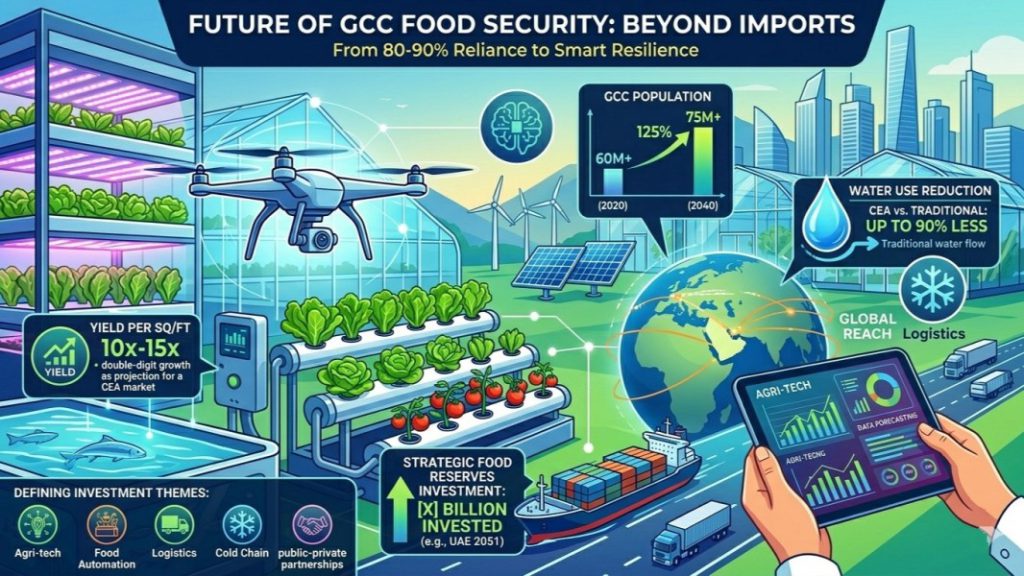
3. Food Security, Agritech, and Cold Chain Trade
Food security remains a strategic priority across the MENA region. The pairing of advanced desert agriculture tech with the massive import dependencies of the Gulf states is opening lucrative avenues for high-value trade.
The breakthrough here is two-fold: harmonized phytosanitary standards (plant health certifications) and advanced cold chain logistics. We are seeing a surge in the cross-border movement of organic perishables, high-yield seeds, and specialized bio-fertilizers. To capture this value, traders must master the specific customs clearance protocols for temperature-controlled goods at both ends of the lane, ensuring that documentation matches the strict compliance mandates of Gulf municipal inspectors.
4. Construction, Infrastructure, and Industrial Materials Arbitrage
As giga-projects across the GCC—including Saudi Arabia’s Vision 2030 initiatives and the UAE’s expanded urban master plans—continue to drive massive demand for physical inputs, procurement managers face intense supply chain bottlenecks.
The current trade architecture provides an excellent diversification play. Industrial manufacturers and material traders are exploiting geographic and tariff arbitrage by sourcing raw materials, specialized chemical polymers, and advanced structural components from diverse Mediterranean manufacturing bases. This creates a critical buffer for projects, ensuring that regional contractors can mitigate geopolitical supply shocks by keeping multiple sourcing pipelines open simultaneously.
5. Services, Fintech, and Digital Trade Corridors
Physical goods tell only half the story. The easing of capital movement, mutual regulatory recognition, and simplified corporate structuring have accelerated cross-border service delivery.
Fintech platforms, localized software-as-a-service (SaaS) architectures, and specialized technical consultancies are scaling across these lanes with minimal friction. B2B marketplaces that can seamlessly integrate multi-currency escrow accounts, localized clearing systems, and cross-border legal contract templates are dominating the digital trade space, removing the traditional reliance on slow, expensive Western intermediary banks.
The Bottom Line for Traders
The common thread tying all these opportunities together? Success in 2026 requires moving past the macro-narratives and mastering the granular mechanics of execution. It is about understanding the exact certificate of origin requirements, the precise HS code alignments for dual-use technologies, and the specific banking compliance workflows required in each distinct trading lane. This level of complexity is exactly where integrated, tech-driven platforms provide a decisive operational edge.
Export Import Business in India: The Ultimate 2026 Guide
Challenges Smart Traders Must Navigate
No major shift comes without friction. Public sentiment in some markets remains complex. Regulatory details continue evolving. And geopolitical headwinds can create sudden volatility in specific routes.
From my desk, the biggest practical challenges I see traders facing are:
- Compliance navigation across multiple new frameworks
- Currency and payment settlement optimization in emerging corridors
- Due diligence on partners in previously less-connected markets
- Supply chain visibility when layering multiple new modal options
⚠️ Operational Friction: Compliance, Sanctions, and the Banking Bottleneck
Moving past macro-politics, executing these trades in 2026 requires navigating a web of micro-level regulatory traps. For any trader leveraging regional hubs like Dubai for re-export, three operational friction points demand absolute precision:
- 1. Country of Origin (CoO) Rules for Re-Export:
Utilizing Gulf free zones to route goods requires strict adherence to value-added processing and transformation rules. If your CoO documentation isn’t perfectly transparent, you risk severe compliance penalties or cargo rejection when clearing customs in secondary regional markets that still maintain older boycott frameworks. - 2. The Tripartite Banking Bottleneck:
This is where most deals stall. While political treaties are signed, legacy commercial banks across the Middle East remain risk-averse. Opening Letters of Credit (LCs) or clearing escrow for tripartite (three-party) transactions involving Israeli entities, Gulf intermediaries, and global suppliers often triggers intense compliance red flags. Many traditional regional banks still hesitate out of fear of secondary sanctions or domestic legal liabilities. - 3. Aggressive KYC/AML Scrubbing:
Because these trade lanes cross deeply complex geopolitical fault lines, financial intelligence units are applying maximum scrutiny. Your Know Your Customer (KYC) and Anti-Money Laundering (AML) profiles must be flawless, with ultimate beneficial owners (UBOs) verified down to the last layer.
This operational friction is exactly why digital trade engines have shifted from convenience to necessity. Trying to handle these specialized compliance checks, HS code alignments, and currency settlement mappings using legacy spreadsheets is an invite for margin leakage or legal exposure.
The winners treat these as operational problems to solve systematically, not reasons to hesitate. They build checklists, leverage digital tools, and maintain multiple scenario plans.
Building Resilience in the New Regional Architecture
After years of watching Middle Eastern markets shift, adapt, and react to geopolitical tremors, I’ve come to view frameworks like the Abraham Accords not merely as political treaties, but as critical infrastructure for supply chain resilience. They do not eliminate systemic risk—no diplomatic pen can do that—but they fundamentally change how risk is distributed. By establishing formalized, state-backed trade corridors, they create vital new buffers and alternative operational routes through diversified regional partnerships.
When a traditional shipping lane gets choked or a diplomatic dispute stalls a primary sourcing hub, resilient businesses do not halt operations. They pivot to pre-mapped alternatives. Based on my observations of the operators who are consistently booking the highest net margins across the GCC this year, successful traders share four definitive habits:
1. Continuous Value Chain Mapping Against Dynamic Connectivity
The top 1% of traders never look at a logistics map as a static document. They actively map and stress-test their entire value chain against the region’s evolving multi-modal options. If ocean freight rates spike or a specific maritime choke point faces a security downgrade, they instantly know how to shift a percentage of their volume to land-bridge networks or re-export via a secondary free zone without breaking their client service-level agreements (SLAs).
2. Diversifying Jurisdictional and Institutional Relationships
Relying on a single point of failure in the Middle East is an operational hazard. Resilient traders maintain active, transparent relationships across multiple jurisdictions simultaneously. They ensure they have boots on the ground—or trusted corporate partners—in Jebel Ali, Riyadh, Manama, and Haifa. This localized, multi-hub approach guarantees that if regulatory friction or banking compliance tightening slows down operations in one lane, they have the corporate infrastructure ready to clear cargo through an alternate gateway.
3. Aggressive Investment in Digital Integrity and Visibility Tools
In 2026, blind spots in your supply chain are where profits go to die. Winners in this environment invest heavily in integrated digital architectures that provide real-time compliance tracking, immediate HS code validation, and granular landing-cost visibility. They understand that when navigating newly opened or complex trading lanes, having audited, instantly accessible digital documentation (like verifiable blockchain-based certificates of origin) is the only way to prevent costly customs delays and compliance audits.
4. Transitioning from Pure Commodity Trading to Value-Added Services
The days of making a sustainable living purely on basic arbitrage—buying cheap in market A and selling un-transformed goods in market B—are rapidly closing. Successful operators are using the new regional architecture to bundle products with specialized services. They leverage the specific, unique strengths of different markets: for example, pairing raw industrial inputs sourced from Mediterranean bases with advanced Gulf-based finish manufacturing, or integrating Israeli IoT hardware directly into logistics equipment assembled in UAE free zones.
Turning Disruption into Your Moat
Ultimately, this proactive approach completely flips the script on regional volatility. Instead of constantly reacting to the news cycle, prepared traders treat macro-level shifts as a systematic problem-solving exercise. By configuring your logistics, compliance, and banking routes to absorb shocks, potential market disruptions stop being a threat to your business—they become a sustainable competitive advantage that leaves less agile competitors behind.
How Modern Trade Platforms Support This New Reality
In today’s environment, having the right operational backbone matters more than ever. Whether you need to calculate duties across new routes, generate compliant documentation, optimize container loads, or track market sentiment in real time, integrated solutions help you execute faster and with greater confidence.
At Platform.Tendify.net, you’ll find practical tools designed specifically for these complex regional trades—from tariff calculators و HS code finders to contract builders and logistics optimizers. These aren’t theoretical features; they’re built from real trading challenges we’ve faced ourselves.
Exploring the command center can give you immediate visibility into how these shifting dynamics affect your specific product categories and target markets.
Looking Ahead: The Next Phase of Regional Trade
As we move through 2026, the trajectory seems clear. The economic foundations laid by the Abraham Accords continue creating compounding opportunities even as political narratives fluctuate. New countries may join the framework over time, but the core networks between existing participants are deepening.
For individual traders and companies, this means the window for early positioning remains open. Those who build relationships, master the new operational realities, and leverage technology to reduce friction will capture disproportionate value.
The region isn’t waiting for perfect conditions. Markets are moving, capital is deploying, and supply chains are reconfiguring. The question is whether your business is positioned to participate effectively.
Take Action on Your Trade Strategy Today
If you’re serious about capitalizing on Middle East trade opportunities in this evolving landscape, the time to strengthen your operational setup is now. Whether you’re optimizing existing routes or exploring new ones opened by regional normalization, having reliable tools and current intelligence makes the difference between reacting and leading.
Head over to Platform.Tendify.net to access the full suite of trade engines, calculators, and market intelligence tools designed to help you navigate these opportunities profitably and compliantly. Many traders have told me that simply exploring the available resources helped them identify margin improvements they hadn’t seen before.
The Abraham Accords didn’t create peace in the abstract. They created new pathways for business. The traders who thrive will be those who walk those pathways with preparation, discipline, and the right support systems.
Your next competitive advantage in regional trade might be one strategic adjustment away. Start building it today.