وبلاگ
Etihad Rail Abu Dhabi–Fujairah: Cutting GCC Logistics Costs
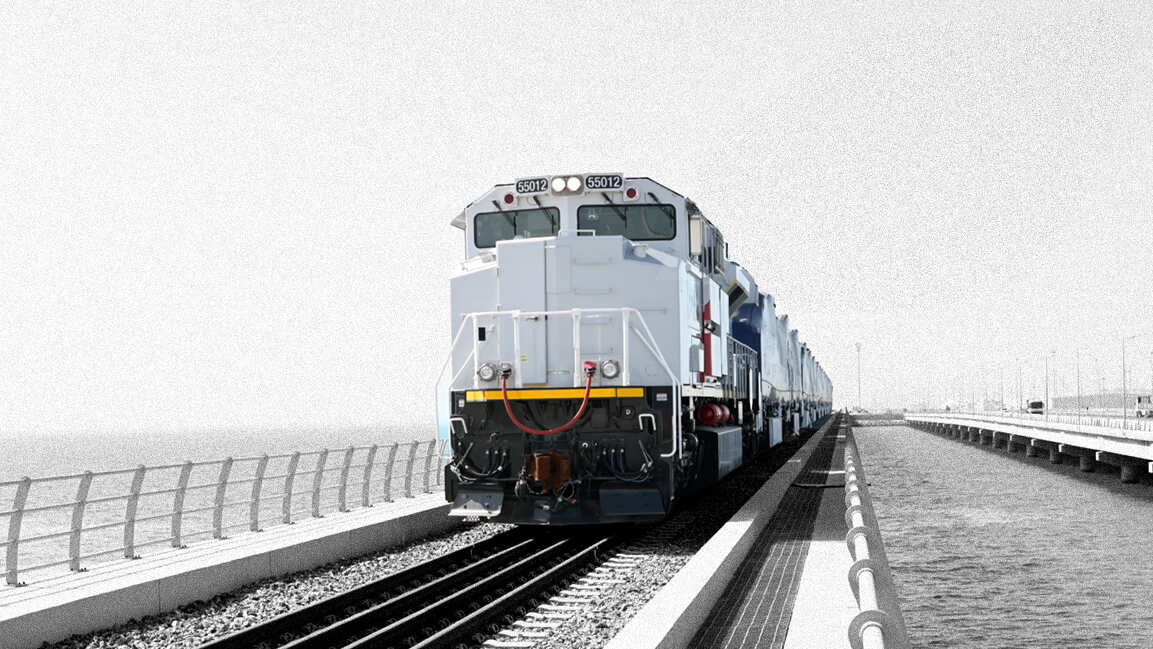
In the high-stakes world of cross-border trade, where every hour of transit and every percentage point in logistics costs directly impacts margins, the Etihad Rail connection between Abu Dhabi and Fujairah stands out as a transformative infrastructure milestone. This strategic east-west rail artery slices through challenging desert and mountain terrain to link the UAE’s western industrial and energy hubs with one of the region’s most vital ports on the Gulf of Oman.
For B2B traders, freight forwarders, manufacturers, and supply chain leaders operating in the GCC and broader MENA markets, this line is far more than convenient passenger travel. It delivers faster, more reliable, and lower-cost movement of bulk commodities, construction materials, containers, and energy products—fundamentally altering competitive dynamics in regional trade.
The Khorfakkan Pivot: Master the UAE Land-Bridge to Bypass Hormuz Risks
Why the Abu Dhabi–Fujairah Rail Link Matters for Global Traders in 2026
The Etihad Rail network, spanning approximately 900 km across the UAE, connects key economic centers from the Saudi border in the west to Fujairah in the east. The Abu Dhabi to Fujairah segment forms a critical spine in Phase 2, operational for freight since 2023 and now transitioning to full passenger services in 2026.
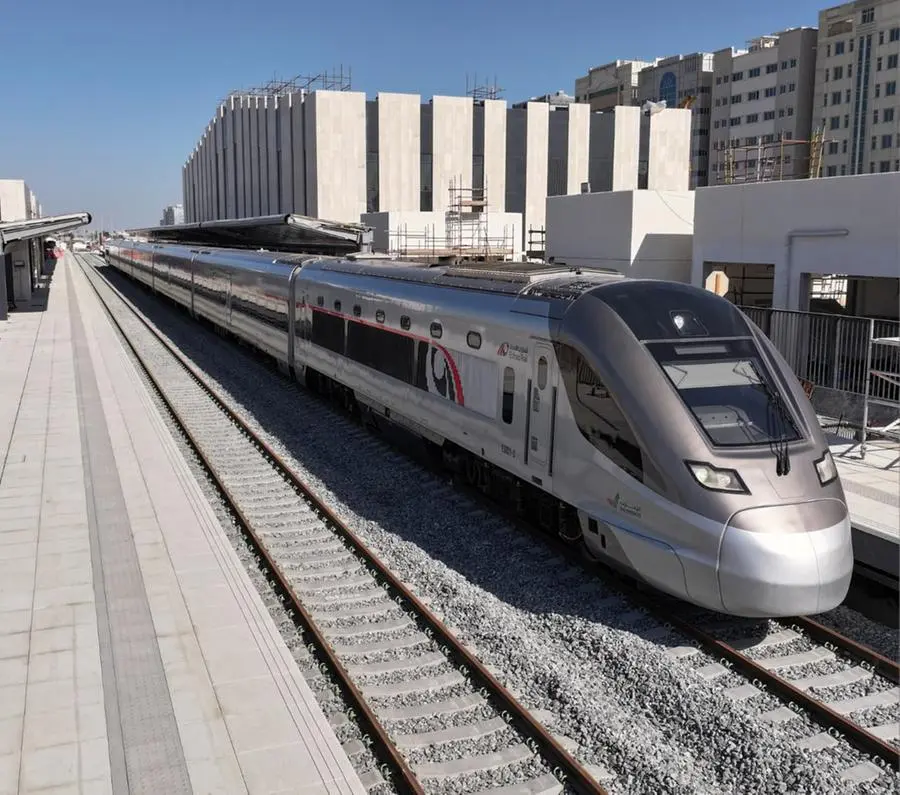
Etihad Rail Abu Dhabi–Fujairah
Key operational highlights include:
- 🏗️ Freight Capacity & Scale:
- Passenger service launch: Introductory operations began around June 30, 2026, with Abu Dhabi (Mohammed bin Zayed City) to Fujairah (Al Hilal) in approximately 1 hour 45 minutes—compared to 2.5–3 hours by road.
- Engineering feat: 9 tunnels totaling about 6.9 km and 54 bridges to navigate the rugged Hajar Mountains.
- Speed and scale: Passenger trains reaching 200–250 km/h; freight operations already shifting heavy truck traffic off roads.
This integration supports broader goals of economic diversification, sustainability, and resilience in GCC supply chains.
Technical Specifications and Engineering Challenges Overcome
The route traverses varied landscapes: flat deserts from Abu Dhabi, through Dubai-adjacent areas, and into the steep Hajar Mountains near Fujairah. This demanded advanced engineering solutions that set benchmarks for regional infrastructure.
- Mountainous Section: Extensive tunneling and bridging ensure safe, high-speed passage through terrain that previously limited efficient overland transport.
- Multimodal Connectivity: Direct links to Abu Dhabi’s Khalifa Port and ICAD industrial zone on one end, and Fujairah Port on the other—creating seamless handoffs for sea-rail transfers.
- Sustainability Edge: Rail transport typically reduces emissions significantly compared to road haulage, aligning with GCC net-zero ambitions and ESG requirements in international contracts.
These features make the line particularly attractive for high-volume, time-sensitive shipments common in construction booms across Saudi Vision 2030 projects, UAE infrastructure, and re-export operations.
GCC Economy 2026: Tactical Playbook for B2B Traders & Logistics
Freight Operations: Immediate Impact on B2B Logistics Costs and Efficiency
Freight services on the Etihad Rail have been active since 2023, already delivering measurable gains:
- Reduced Road Congestion and Costs: Shifting bulk materials like stone aggregates, cement, and containers from trucks to rail lowers fuel, maintenance, and delay expenses. Estimates suggest logistics cost savings of up to 30% on certain routes through optimized multimodal chains.
- Key Commodities: Ideal for construction inputs from Fujairah’s quarries heading west, petroleum products, and containerized goods leveraging Fujairah’s strategic position.
- Port Integration: Enhances throughput at Fujairah Port, a major bunkering and re-export hub, by providing efficient hinterland connections.
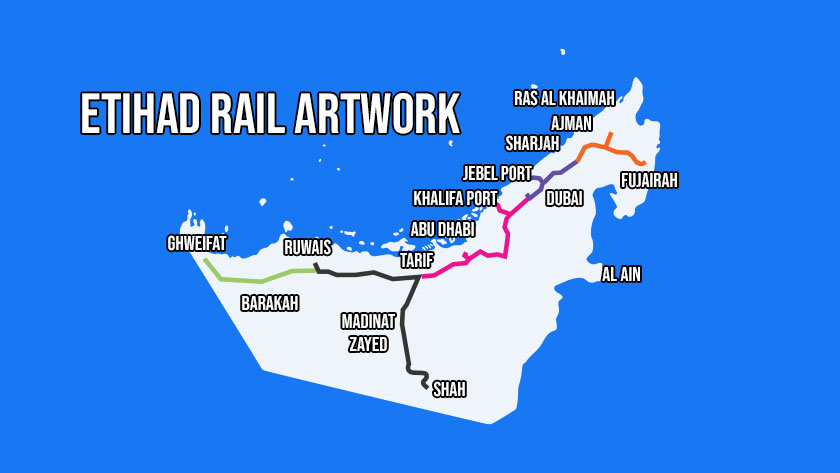
Abu Dhabi–Fujairah Rail
For traders, this means more predictable scheduling, lower demurrage/detention risks, and better inventory management. In competitive GCC tenders—especially for Saudi and UAE mega-projects—reliable rail-backed logistics can be a decisive edge.
🤝
Strategic Alliances: Who Operates the Network?
For B2B commercial leaders, knowing the operational counterparties is vital for contract execution. Etihad Rail Freight does not operate in isolation; it has formalized heavy-weight integration agreements with global logistics titans including DP World, DHL, and Aramex. These partnerships allow top-tier freight forwarders to book end-to-end multimodal slots, combining rail lines seamlessly with first- and last-mile road networks or ocean freight lanes under a single commercial framework.
Operational Reality: You do not necessarily need to contract with Etihad Rail directly. Your existing tier-1 freight forwarders can likely route your containers via rail by leveraging these pre-integrated networks.
Practical Steps for Leveraging Rail Freight:
- Map your origin and destination against rail-connected nodes (Khalifa Port, ICAD, Fujairah Port).
- Partner with freight forwarders integrated with Etihad Rail schedules for combined sea-rail quotes.
- Factor rail reliability into Incoterms selection: While favoring terms like DAP or DDP is highly effective where rail access is strong, integrating FCA (Free Carrier) at specific rail hubs is a major tactical play.
💡 Tactical Incoterms: Mitigating Port Demurrage via FCA Etihad Rail
While favoring traditional terms like DAP or DDP works where door-to-door infrastructure is seamless, executing FCA (Free Carrier) at strategic rail terminals is becoming the ultimate risk-mitigation play for high-volume GCC commodities.
📝 B2B Case Scenario: Bulk Bitumen Export to Mumbai, India
Imagine an industrial buyer in Mumbai purchasing 5,000 tonnes of export-grade bulk bitumen or cement from an Abu Dhabi-based refinery located near the ICAD industrial zone.
Risk Metric The Traditional Route (FOB Fujairah Port) The Rail Route (FCA Etihad Rail Terminal ICAD) Transfer of Risk Occurs only when the cargo clears the ship’s rail at Fujairah Port. Occurs the moment the loaded train container is handed over at the Abu Dhabi rail-head. Port Congestion Exposure High. Trucking delays through mountain passes can cause the buyer’s chartered vessel to miss its loading window. Zero. Cargo moves on a dedicated, predictable rail slot directly to the secure terminal. Demurrage Risk Buyer faces thousands of dollars per day in vessel/container detention fees if trucks lag behind. Eliminated. The bulk cargo waits securely in the bonded rail yard, ready for synchronized vessel arrival. The Commercial Bottom Line: By utilizing FCA Etihad Rail Terminal, the international buyer absorbs the logistics chain under a highly controlled, fixed scheduling framework. The 30% saving in overland freight cost is legally locked in, and the volatile operational risks of local road transport are completely eliminated before the vessel even docks at Fujairah.
- Use digital tools for real-time tracking to minimize buffer stocks.
⚡
Frictionless Customs: Digital Integration at Rail-Port Nodes
🔗 Next-Gen Customs: Blockchain & The ATLP Infrastructure
This seamless migration from vessel to rail is powered by the UAE’s cutting-edge digital trade architecture. Central to this is Abu Dhabi’s Advanced Trade and Logistics Platform (ATLP), developed by Maqta Gateway. Acting as the official single window for trade, ATLP integrates sea, land, air, and future rail logistics under a unified digital umbrella, eliminating up to 90% of traditional paperwork and radically compressing delivery timelines.
🛡️ The “Invisible Customs” via TradeChain & Silsal
To ensure complete data integrity across borders, UAE authorities leverage decentralized technologies. Platforms like Abu Dhabi Customs’ TradeChain (powered by blockchain) and the Silsal ledger allow freight forwarders, port authorities, and Etihad Rail to exchange cryptographic e-manifests in real time. This secure data sharing allows for automated pre-arrival clearances and advanced risk assessments, reducing customs processing and goods clearance friction by up to 80%.
Trader’s Take: For B2B logistics leaders, this means a container moving from Fujairah Port via Etihad Rail to the industrial heartlands gets its digital clearance secured mid-transit, entirely preventing costly port storage fees and logistical chokepoints.
The Passenger Dimension: Human Capital and Business Mobility in 2026
While freight drives immediate commercial value, passenger services amplify long-term benefits. The ~105-minute journey between Abu Dhabi and Fujairah compresses travel time dramatically, facilitating:
- Faster executive and technical team movements for project oversight.
- Enhanced tourism and business travel between eastern and western emirates.
- Support for workforce mobility in industries like construction and energy.
With trains featuring modern amenities (Wi-Fi, comfortable seating, premium classes), it becomes a viable alternative to road or short-haul flights, reducing fatigue and carbon footprints for frequent travelers.
Initial routes focus on high-demand corridors (Abu Dhabi–Dubai–Fujairah), with phased expansion to 11 stations across the network. This connectivity strengthens the UAE’s position as a regional hub, attracting more investment and talent.
Strategic Importance: Bypassing Chokepoints and Enhancing Regional Resilience
Fujairah Port’s location on the Gulf of Oman positions it as a critical alternative to routes through the Strait of Hormuz. The rail link amplifies this by enabling efficient overland movement of goods to and from western UAE hubs without sole reliance on maritime passages.
Combined with pipelines like Habshan–Fujairah, this infrastructure diversifies export corridors, bolsters energy security, and supports stable supply chains for global buyers—particularly important amid geopolitical uncertainties in MENA.
For GCC traders:
- Re-exports: Faster routing of goods through Fujairah for onward shipment to Indian Ocean markets, East Africa, and beyond.
- Import Efficiency: Quicker delivery of raw materials and machinery to industrial heartlands.
- Investment Appeal: Strengthens the case for setting up warehousing, distribution, or manufacturing near rail nodes.
🚢
The Indian Ocean Gateway: Accelerating India & East Africa Transit
Fujairah’s positioning as the eastern terminus of Etihad Rail unlocks the shortest, most efficient maritime corridor to the Indian Subcontinent and East Africa. By bypassing the voyage around the Arabian Peninsula, goods manufactured in Abu Dhabi’s industrial heartlands (like ICAD and KIZAD) can be railed straight to Fujairah Port and shipped directly to mega-hubs like Mundra and Nhava Sheva (Mumbai) in India, Karachi in Pakistan, and key East African gateways. This multi-modal transit corridor slashes transit times by days, providing a massive edge in an era of just-in-time manufacturing.
Macro Opportunity: For B2B traders, this transforms Fujairah from a regional transshipment point into a vital launchpad for high-velocity trade between the GCC economic engine and the booming markets of Western India.
How This Fits into Broader GCC Trade Strategies
The Etihad Rail aligns with wider regional trends: Saudi Vision 2030 infrastructure push, Oman and Qatar port expansions, and the drive for integrated multimodal logistics across the Gulf. It reduces dependency on congested roads, supports green logistics mandates, and enables just-in-time delivery models increasingly demanded by large buyers.
Beyond Borders: Mastering the Export of Technical and Engineering Expertise
While the rail link physically connects Abu Dhabi to Fujairah, its route strategically skirts the periphery of Dubai, seamlessly integrating the entire Emirates’ logistics ecosystem. This synergy serves as a critical infrastructure catalyst for the Dubai Economic Agenda (D33), which aims to double Dubai’s foreign trade and firmly establish the UAE among the world’s top three logistical hubs by the next decade.
Trader’s Take: By bridging the gap between the Arabian Gulf and the Gulf of Oman, Etihad Rail elevates the UAE from a collection of fragmented domestic ports into a unified, ultra-connected global re-export powerhouse.
Comparative Advantages Over Traditional Options:
| Logistics Aspect | Traditional Road Transport | Sea-Only (via Hormuz) | Etihad Rail + Multimodal |
|---|---|---|---|
| Transit Time (AD–Fujairah) | 2.5 – 3 hours | Variable (Subject to port & anchorage congestion) | ⏱️ ~1.75 hours (Passenger) 🚛 Scheduled Express Freight (Guaranteed under 3 hours) |
| Cost per Tonne (Bulk) | Higher (Volatile fuel prices & driver overheads) | Competitive for massive volumes, but slower | 📉 Up to 30% lower than road for high-volume bulk & containers |
| Schedule Reliability | Medium (Prone to peak highway traffic & border checks) | Low to Medium (Geopolitical risks & maritime choke points) | 🛡️ High (Dedicated infrastructure with fixed, daily operational slots) |
| Environmental & ESG Impact | High carbon footprint per tonne-kilometer | Fuel-intensive maritime emissions | 🌱 Significantly lower (Reduces CO2 emissions by up to 80% vs trucks) |
| Capacity Scalability | Limited (Requires more trucks/drivers line-managed individually) | High but strictly bound to seaport infrastructure constraints | 📦 Excellent (Single freight train replaces up to 300 heavy trucks) |
📊 Etihad Rail Freight Technical Fact Sheet
| Operational Metric | Technical Specifications & Cargo Types |
|---|---|
| Rolling Stock & Wagon Types | • Intermodal Flat Wagons: ISO Containers (20ft, 40ft, 45ft) • Tanker Wagons: Liquid Cargo, Bitumen, Petroleum Products, Sulfur • Bulk Hoppers & Gondolas: Heavy Cement, Clinker, Aggregates, Grains |
| Max Payload Capacity | • Per Wagon Axle Load: Up to 32.5 tonnes (Heavy-haul GCC standard) • Total Train Freight Capacity: Up to 11,000 tonnes single payload per trip |
| Key Rail Node Connections | • Fujairah Terminal: Eastern ocean gateway bypassing Hormuz • ICAD Terminal (Abu Dhabi): Primary heavy industrial & manufacturing hub • Khalifa Port Terminal: Deepwater container handling & transshipment node |
*Note: Intermodal multi-boarding and bulk dispatch slots are synchronized directly with terminal customs integration via ATLP.
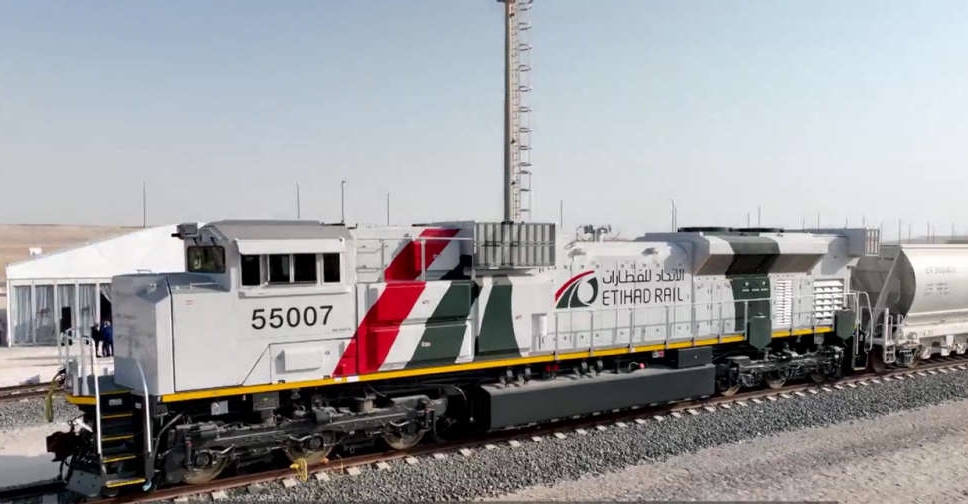
Etihad Rail Freight
🇴🇲 The Hafeet Rail Extension: Unlocking Direct Oman–UAE Trade
The strategic value of the Abu Dhabi–Fujairah link cannot be fully evaluated without looking slightly south. The Hafeet Rail project (formerly the Oman–Emirates Rail Link) seamlessly connects this network directly to the industrial powerhouse of Sohar in Oman. By bridging the UAE’s national network with Oman’s premier maritime hub, Hafeet Rail completes a crucial puzzle piece for regional supply chains.
Strategic Cross-Border Play: For B2B traders, this commercial artery enables high-capacity freight to bypass coastal maritime routes entirely. Bulk commodities, petrochemicals, and containerized consumer goods can now flow seamlessly between Sohar, Fujairah, and Abu Dhabi under a single, unified customs transit framework, drastically cutting transshipment friction in the GCC region.
🇸🇦 The Ghuwaifat Gateway: Overland Rail Link to Saudi Arabia
The true operational scale of the Abu Dhabi–Fujairah line is unlocked by its western terminus at the Ghuwaifat border crossing, seamlessly linking the UAE national network directly into Saudi Arabia. This creates a powerful overland land-bridge that fundamentally changes the game for cross-border logistics. Instead of navigating the long maritime journey around the Arabian Peninsula, traders can now discharge bulk commodities or containers at Fujairah Port (Gulf of Oman) and rail them straight into the heart of Riyadh or Jeddah.
⚡ Unified Customs and Rapid Transit
To eliminate traditional border bottlenecks, Saudi and UAE authorities are leveraging harmonized HS codes and electronic data interchanges (EDI). Pre-arrival customs clearance protocols at Ghuwaifat mean that freight moving under bonded transit customs frameworks undergoes swift automated inspection, cutting down historical cross-border transit delays from days to just hours.
Actionable Recommendations for Traders and Supply Chain Managers
To capitalize on this development:
- Audit Your Routes: Identify shipments that could shift to rail-integrated paths. Prioritize high-volume, low-value-density goods like construction materials.
- Build Partnerships: Engage forwarders and logistics providers with direct Etihad Rail access. Test small consignments to validate time and cost savings.
- Incorporate into Contracts: Update procurement and sales agreements to reference rail options for better pricing and delivery terms.
- Leverage Technology: Use market intelligence tools and tariff calculators to model total landed costs including rail legs.
- Monitor Expansion: Stay updated on new stations and services rolling out through 2026 for further optimization.
- Sustainability Angle: Highlight rail usage in ESG reporting to appeal to international buyers and secure premium contracts.
Internal Resource: For deeper insights into optimizing multimodal logistics in the Gulf, explore our guide on streamlining cross-border logistics for B2B trade.
Another valuable read: GCC Ports 2026: Mastering Customs and Logistics.
UAE Corporate Tax Small Business Relief: 2029 Extension Guide
Future Outlook: Scaling Impact Through 2030 and Beyond
Projections indicate the full network could handle tens of millions of passengers and tens of millions of tonnes of freight annually. As passenger services mature and freight volumes grow, expect cascading effects: lower overall logistics costs in the UAE, stronger integration with neighboring markets, and enhanced attractiveness for foreign direct investment.
This rail link is not an isolated project but a foundational piece of the UAE’s vision as a global trade facilitator—connecting energy, industry, and commerce more efficiently than ever.
In an era where supply chain resilience separates market leaders from the rest, infrastructure like the Etihad Rail Abu Dhabi–Fujairah line provides a tangible edge. Businesses that adapt early—realigning sourcing, distribution, and operations around these new capabilities—will capture disproportionate value in the evolving GCC and MENA trade landscape.
To streamline your access to these opportunities, secure faster market entry, and integrate powerful tools for trade compliance, cost calculation, and partner discovery, take the next step by registering on the platform. Visit https://tendify.net/my-account/ to begin building more efficient, resilient cross-border operations today.