


Blog
FPSO Supply Chain: Capturing the $94B South Atlantic Wave

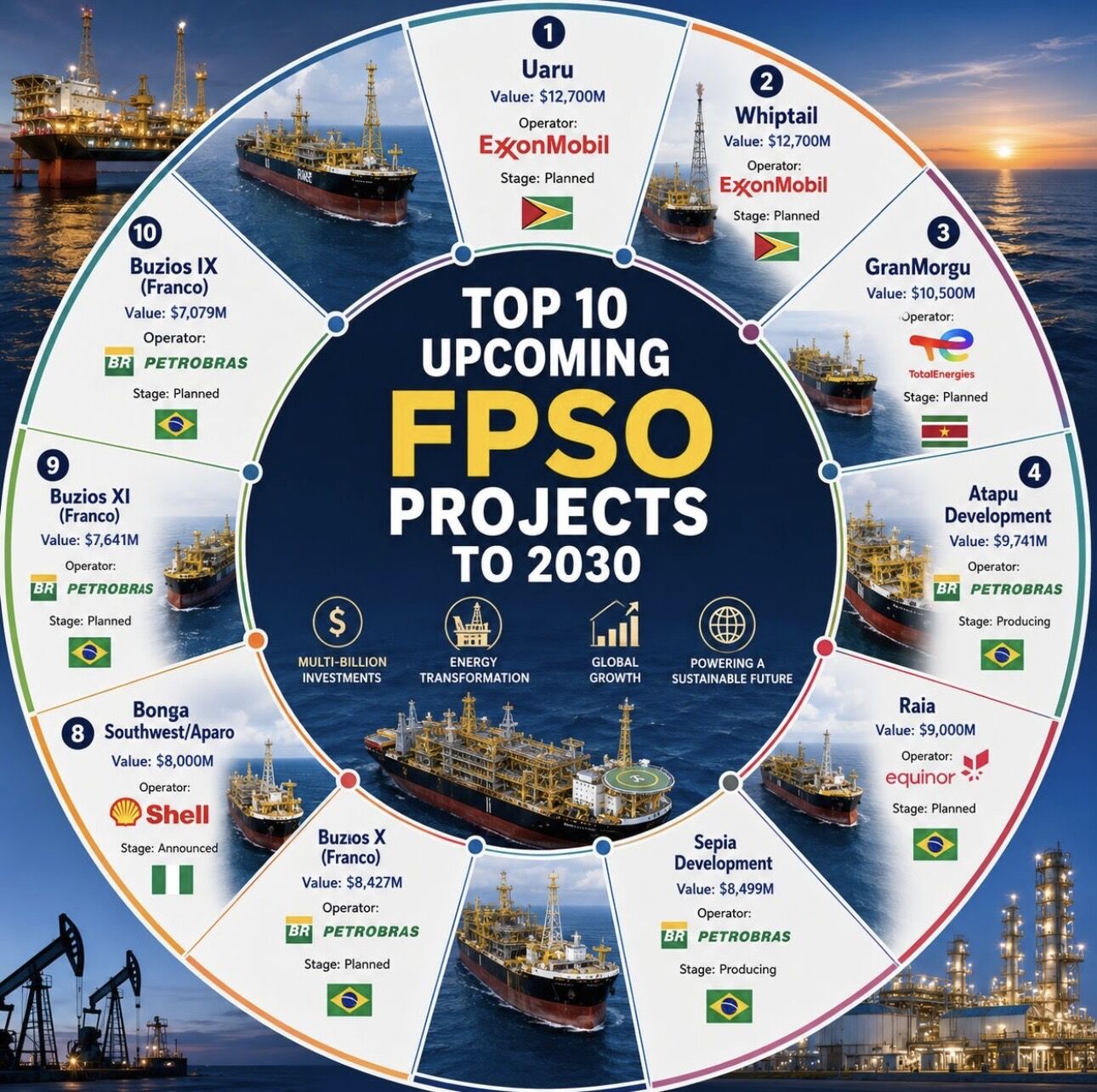
$94 billion. That figure represents the combined value of the top 10 FPSO projects slated for deployment through 2030. Nine of these mega-developments cluster in the South Atlantic — primarily Brazil’s pre-salt basins and Guyana’s Stabroek block — reshaping deepwater oil economics and creating sustained demand for specialized equipment, materials, logistics services, and compliance solutions.
For B2B traders, freight forwarders, manufacturers, and service providers operating in cross-border markets, this surge signals more than headline production numbers. It translates into multi-year procurement pipelines for high-spec steel, topside modules, mooring systems, safety equipment, chemicals, and end-to-end logistics support in remote offshore environments. Operations in the Gulf region and broader MENA supply chains stand to capture meaningful share by addressing technical specifications, lead times, and regional compliance requirements that define success in these high-stakes projects.
Mediterranean Trade Corridor: Reviving the Iraq-Syria Route
Why the South Atlantic Dominates FPSO Deployment
Floating Production Storage and Offloading (FPSO) vessels serve as self-contained offshore factories. They process, store, and offload hydrocarbons in ultra-deep waters where fixed platforms prove uneconomical. South America leads global activity because of geology, policy stability, and capital allocation priorities.
FPSO Supply Chain
Key Drivers:
- Pre-salt Brazil: Massive reservoirs with thick pay zones and high productivity. Fields like Búzios rank among the world’s largest, supporting multiple FPSOs with capacities often exceeding 180,000–225,000 barrels per day.
- Guyana Stabroek Block: Rapid development pace driven by ExxonMobil and partners. Projects deliver quick payback with lower breakeven costs compared to many legacy basins.
- Emerging Suriname: Projects like Krabdagu signal the next wave of frontier activity.
Rystad Energy forecasts 15+ FPSO projects in South America through 2030, contributing heavily to a regional total exceeding $180 billion when including broader floating production commitments.
This scale creates predictable, high-volume demand that savvy cross-border suppliers can forecast and service months or years in advance.
Breaking Down the Top Projects: What Traders Need to Know
ExxonMobil-Led Guyana Developments
Uaru and Whiptail top many valuation lists, each valued around $12.7 billion. These follow successful deployments like ONE GUYANA (Yellowtail), which achieved first oil ahead of schedule and boosted regional capacity beyond 900,000 barrels per day.
Procurement focuses on:
- High-pressure topside processing modules
- Advanced mooring and riser systems for harsh currents
- Produced water treatment and gas compression packages
- Crew support and helideck logistics
Petrobras Pre-Salt Portfolio
Búzios alone hosts multiple FPSOs (P-78, P-79, and upcoming P-80/82/83 series). These units emphasize local content rules, decarbonization features (carbon capture readiness, heat recovery), and large-scale gas export capabilities via pipelines like ROTA 3.
Opportunities center on:
- Corrosion-resistant materials for sour service
- Modular construction components shippable via heavy-lift vessels
- Long-lead items like turbines, pumps, and electrical systems
Critical Insight: Navigating Brazil’s LCR
The Reality of Petrobras Procurement & Local Content Rules
Brazil’s National Agency of Petroleum, Natural Gas and Biofuels (ANP) enforces strict Local Content Requirements (LCR). Foreign B2B suppliers and traders rarely close direct contracts with Petrobras. Instead, the realistic gateway to these multi-billion dollar pre-salt pipelines is through strategic alignment with Tier-1 EPC Contractors and local Brazilian shipyards.
Key Gatekeepers to Target:
- SBM Offshore & MODEC: The primary international lease-and-operate giants handling major Búzios units.
- Domestic Brazilian Shipyards: Entities executing local integration, modular assembly, and structural fabrication.
- Strategic Joint Ventures: Partnering with verified local distributors to satisfy the legally mandated percentage of domestic value-add.
⚠️ The Customs Nightmare: Navigating Brazil’s RADAR, Siscomex & REPETRO Regimes
While Local Content Requirements (LCR) define who you can sell to, Brazil’s notorious customs bureaucracy dictates if your cargo will ever leave the port. For cross-border B2B traders, navigating the administrative maze of the Brazilian Federal Revenue (Receita Federal) is the ultimate operational bottleneck.
- RADAR License & Siscomex Integration
Every importer must secure a RADAR license (customs financial capacity clearance) before executing any trade. All transactions are funneled through Siscomex, Brazil’s centralized IT trade network. A single clerical mismatch in your commercial invoice can cause Siscomex to flag your shipment, locking highly specialized topside equipment into gray channels for months. - The REPETRO Lifeline (Tax Suspensions)
Brazil’s standard import tax grid is crippling. However, the golden gate for FPSO supply chains is REPETRO-Sped. This special customs regime allows for the total suspension or exemption of federal taxes (such as II, IPI, PIS, and COFINS) on goods imported for the exploration and production of oil and gas. For a foreign trader or freight forwarder, ensuring your Tier-1 buyer can apply REPETRO to your components is the difference between a profitable contract and a fiscal disaster.
📊 Unsure how Brazilian taxes or RADAR restrictions affect your cargo value?
Broader FPSO Project Pipeline (2026-2030)
Additional units target revitalization of mature fields and new frontier plays, sustaining demand for maintenance, retrofits, and brownfield upgrades through the decade.
⚡ Critical Procurement Data: High-Demand HS Codes for FPSO Supply Chains
Oil and gas procurement professionals, freight forwarders, and trade compliance officers don’t source by generic descriptions—they track and audit pipelines using precise Harmonized System (HS) Codes. Misclassification in multi-million dollar topside modules or long-lead components can trigger catastrophic customs delays, severe fiscal penalties, and demurrage in ports like Santos or Georgetown.
| Equipment Category | Subheading HS Code | Supply Chain & Compliance Insights |
|---|---|---|
| Advanced Structural Steel & Line Pipes | Chapter 73 | Covers seamless casing, tubing, and iron/steel products optimized for extreme deepwater pressures and sour service ($H_2S$ resistance). |
| High-Pressure Valves & Actuators | HS 8481.80 | Critical long-lead items for topside process manifolds and subsea trees. High risk of customs inspection due to technical specs. |
| Centrifugal & Hydraulic Pumps | HS 8413.70 | Essential for oil export transfers, water injection modules, and fluid handling systems across the South Atlantic fleet. |
💡 Need to verify regional duties, import taxes, or compliance restrictions for these codes?
B2B Supply Chain Playbook: How to Position for FPSO Contracts
Success in this market requires more than competitive pricing. Operators and EPC contractors prioritize reliability, traceability, and schedule certainty.
1. Equipment and Materials Sourcing
Focus on categories with recurring demand:
- Structural steel and pressure vessels meeting stringent offshore codes
- Valves, instrumentation, and control systems
- Safety and fire-fighting equipment
- Chemicals for production and maintenance
Practical Steps:
- Map exact specifications from tender documents early
- Qualify for vendor lists through third-party certifications
- Leverage regional hubs for just-in-time staging to reduce offshore storage costs
2. Logistics and Multimodal Execution
Deepwater projects demand specialized transport:
- Heavy-lift vessels for modules
- Project cargo management for oversized components
- Integrated sea-air-road solutions for time-critical spares
Logistics Alert: Frontier Bottlenecks
The Guyana Infrastructure Reality for Heavy-Lift Cargo
While Guyana’s Stabroek block drives global production numbers, the onshore reality presents severe bottlenecks. The primary port in Georgetown suffers from draft limitations (shallow water depths) and nascent infrastructure, making direct discharge of heavy-lift topside components or oversized project cargo highly restricted.
Operational Workaround for Freight Forwarders:
- Utilize established regional hubs like Trinidad and Tobago or deepwater ports in Brazil for initial deep-draft vessel discharge.
- Coordinate transshipment via specialized shallow-draft feeder vessels or roll-on/roll-off (RoRo) barges tailored for Georgetown’s river terminals.
- Factor in localized demurrage risks and seasonal river silting shifts when quoting transit times.
Cost-Saving Levers:
- Optimize Incoterms (e.g., DAP or DDP at Brazilian or Guyanese ports)
- Use digital tracking for real-time visibility
- Bundle with warehousing near key load-out ports
Incoterms Reality Check
The Danger of DDP in Offshore Oil & Gas Contracts
In major offshore FPSO developments, Tier-1 operators and EPCMs almost never accept DDP (Delivered Duty Paid) terms. They refuse to inherit the clearance risks of notorious customs bureaucracies—such as Brazil’s complex tax regime. Insisting on DDP or blindly accepting it can expose suppliers to catastrophic delays, compounding demurrage, and unexpected fiscal liabilities.
Recommended Structural Framework:
- Prioritize FCA (Named Place of Delivery) at your origin hub, passing international transit and destination clearance to the buyer.
- Utilize CFR or CIF (Destination Port) to maintain control over the ocean/air freight component without touching the local customs web.
- Only evaluate DAP (Delivered at Place) if you have structured back-to-back contracts with asset-backed, licensed local customs brokers in the destination country.
3. Compliance and Risk Management
Navigate local content requirements, environmental standards, and sanctions screening. Tools for HS code classification, duty calculators, and contract generators streamline preparation.
💰4. Trade Finance Realities: Mitigating Liquidity Risks in FPSO Megaprojects
Securing an offshore supply contract is only half the battle; financing it is where many cross-border traders stumble. FPSO developments require massive upfront working capital, yet Tier-1 EPCMs rarely offer substantial down payments. To survive multi-year procurement cycles, Middle Eastern and international suppliers must deploy sophisticated trade finance architectures.
- Performance Bonds vs. Advanced Payment Guarantees
Operators almost universally demand a Performance Bond (typically 5% to 10% of the contract value) to secure execution. If you require upfront mobilization capital, you must negotiate an Advance Payment Bond. Middle Eastern suppliers can leverage GCC-based international banks to issue these bank guarantees directly to Western or South American operators via SWIFT. - Irrevocable Letters of Credit (LCs) & Factoring
Never trade on open accounts in frontier offshore markets. Protect your cash flow utilizing Confirmed, Irrevocable Letters of Credit (L/C) at Sight or structured Usance LCs that allow for supply chain factoring. This enables your business to bridge the gap between long manufacturing lead times and actual cargo discharge in Brazil or Guyana.
📝 Drafting international payment terms or contract clauses for offshore tenders?
Generate Compliant Trade Contracts & Checklists on Tendify →
Regional Advantages for GCC and MENA Suppliers
Gulf-based exporters benefit from established maritime expertise, free zone efficiencies, and proximity to global shipping lanes. Many FPSO supply chains already route through or source from Middle East hubs for certain equipment categories.
Actionable Strategies:
- Position as reliable alternatives or complements to traditional Asian supply bases
- Emphasize faster lead times via established GCC logistics networks
- Highlight sustainability credentials aligning with operator ESG targets

South Atlantic FPSO Supply Chain
Technology and Sustainability Trends Shaping Demand
Modern FPSOs incorporate:
- Digital twins for predictive maintenance
- Reduced flaring and energy-efficient designs
- Integration with renewable power options
Suppliers offering IoT-enabled monitoring, low-emission materials, or circular economy solutions gain preference in tender evaluations.
Free ATS Resume Builder & Professional
Risk Mitigation in Offshore Supply Chains
Common pitfalls include:
- Schedule slips from customs delays
- Quality non-conformance leading to rework offshore
- Currency and geopolitical volatility
Mitigation Framework:
- Build redundant supplier networks
- Implement rigorous pre-shipment inspection protocols
- Use digital platforms for end-to-end documentation and compliance
Case Studies in Cross-Border Execution
While specific project names vary, patterns from recent awards show that suppliers who invest in relationship-building, technical alignment, and reliable delivery consistently win repeat business. Integrated service providers combining manufacturing, logistics, and digital tools outperform fragmented approaches.
Preparing Your Operations for the Next Wave
Step-by-Step Readiness Checklist:
- Market Intelligence: Track FID announcements and tender releases for upcoming FPSOs
- Capability Audit: Assess current offerings against pre-salt and deepwater specifications
- Partnership Mapping: Identify EPC contractors and tier-1 suppliers active in the region
- Digital Enablement: Adopt tools for real-time quoting, document generation, and compliance
- Logistics Optimization: Model end-to-end costs including demurrage, detention, and port handling
- Compliance Roadmap: Stay ahead of evolving local content and environmental rules
Future Outlook: Beyond 2030 Pipeline Visibility
The South Atlantic momentum extends well into the decade, with potential for additional units in Guyana (up to 7–10 total) and continued Brazil pre-salt expansion. Sustained activity supports long-term investment in specialized capabilities.
Traders who treat these projects as ecosystem opportunities — rather than one-off transactions — build durable revenue streams.
The $94 billion headline captures only the largest projects. Broader ecosystem spending on support vessels, subsea infrastructure, and ongoing operations multiplies the addressable market significantly.
Cross-border B2B platforms streamline discovery, contracting, and execution for these complex supply chains. By connecting verified suppliers with project needs, they reduce friction and accelerate time-to-deployment.
Take the Next Step Position your business at the center of the South Atlantic energy expansion. Register an account to access specialized tools, market intelligence, and verified partner networks that turn offshore opportunities into executed contracts: https://tendify.net/my-account/
This comprehensive guide equips strategic traders with the insights and frameworks needed to capture value in one of the most dynamic offshore markets of the coming decade. The FPSO wave is building — preparation determines who rides it successfully.

