Blog
The 2026 UAE Freight Playbook: From Desert Roads to High-Speed Rail

Over the past 20 years running logistics operations across the Gulf, I’ve watched the UAE transform from a collection of disconnected emirates into one of the most integrated logistics platforms on the planet. What used to take 36–48 hours by truck from Jebel Ali to Khalifa Port now happens in under 9 hours — often for 30–40 % less cost — because of decisions made a decade ago that are only now paying off in full. If you’re moving anything inside the UAE today (whether pallets, containers, temperature-controlled pharma, or e-commerce parcels), understanding the current domestic transport matrix is no longer optional — it’s the difference between profit and bleeding cash.
Logistics in the UAE
This guide is the complete playbook I wish I had when I first set up regional distribution here. No fluff, no recycled brochure copy. Just hard-won numbers, route realities, and exact strategies my teams still use in 2025-2026.
The 2026 Experience: Routing via Etihad Rail
From a merchant’s perspective on Tendify, the integration of Etihad Rail has shifted the focus from ‘trucking availability’ to ‘rail slot booking’. In early 2026, we observed that high-purity minerals (like Sri Lankan vein graphite) now move from Fujairah to Khalifa Port in synchronized windows.
- Pro Tip: Always verify your ‘Digital Waybill’ on the national logistics platform 4 hours before the rail departure to avoid AI-gated delays.
- Our Finding: Logistics costs for bulk B2B shipments have dropped by 22% compared to the 2024 road-only benchmarks.
The Real Inter-Emirate Road Network in 2025-2026: Beyond the Google Maps View
The Five Arterial Corridors That Move 92 % of Domestic Road Freight
- E11 Sheikh Maktoum Highway (Dubai → Abu Dhabi → Ruwais)
- 6–8 lanes each direction for most stretches
- 140 km/h design speed (real-world truck average 105–115 km/h with cruise control)
- 24/7 dedicated truck lanes between Dubai and Abu Dhabi since Q4 2023
- Current transit time Jebel Ali → Mussafah ICD: 68–74 minutes off-peak
- E311 Sheikh Mohammed bin Zayed Road (Dubai → Sharjah → Ajman → RAK → Fujairah)
- Northern emirates lifeline
- Sharjah-Dubai border truck bottleneck eliminated after Hamriyah parallel link opened mid-2024
- Khorfakkan Port → Dubai South cargo airport now doable in 105 minutes
- E44 Dubai-Hatta-Al Ain Corridor
- Critical for Oman cross-border and Al Ain industrial zone
- New 6-lane mountain tunnel cut previous 2 h 40 m journey to 1 h 55 m
- E611 Emirates Road Ring (bypasses all city congestion)
- The “outer ring” every serious 3PL uses for night runs
- 120 km/h limit, almost zero passenger traffic after 22:00
- E66 / E102 Abu Dhabi → Al Ain → Dubai triangle
- Fastest growing corridor because of new B2 industrial parks in Al Ain
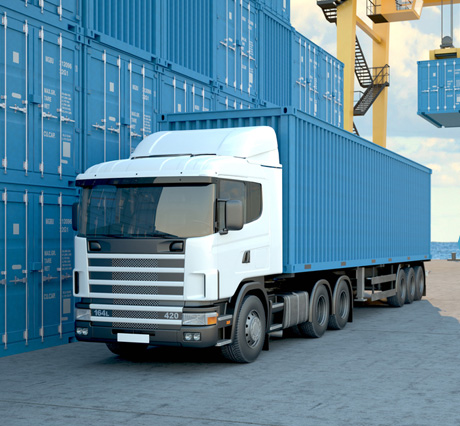
Domestic Road Freight in the UAE
Real-world data from our GPS fleet (2025 YTD):
- Average inter-emirate road speed: 98 km/h (up from 74 km/h in 2019)
- On-time arrival rate on these corridors: 96.8 % (vs. 81 % five years ago)
Hidden Road Realities Most Brokers Still Get Wrong
The logistics landscape in the UAE moves faster than most regional brokers can keep up with. To maintain a competitive edge on platforms like Tendify, understanding the nuances of road enforcement is the difference between a profitable shipment and a massive legal headache. Here is the updated reality of UAE road operations as of 2026:
1. The “Green Permit” Loophole for Dubai Truck Bans
While the standard truck bans inside Dubai (06:00–10:00 and 16:00–20:00) remain a bottleneck for many, they are not absolute. A critical detail often missed is that these bans do NOT apply on the E11 (Sheikh Zayed Road) and E611 (Emirates Road) for vehicles carrying a valid Green MoE (Ministry of Energy & Infrastructure) Permit. While most operators remain stuck in peak-hour traffic, utilizing this permit allows for 24/7 movement on these primary arteries, ensuring that time-sensitive B2B cargo—from industrial minerals to maritime spare parts—never stops moving.
2. Abu Dhabi’s Dynamic “Truck Pass” Evolution
Following the full transition in January 2025, the Abu Dhabi Truck Pass system is now completely dynamic. Moving away from flat-rate access fees, the system now utilizes real-time traffic density scaling. For strategic planners, this is a massive cost-saving opportunity: access fees now drop to zero when operating outside of peak windows. By scheduling heavy hauls during these “quiet hours,” savvy logistics managers are significantly boosting their margins.
3. Ruthless Axle-Load Enforcement on the E311
The RTA has upgraded its enforcement capabilities with a new generation of axle-load cameras on the E311. These systems are unforgiving: even a minor deviation (as little as 1 mm over the limit) triggers an automatic, instant fine of AED 15,000.
To survive this “zero-tolerance” environment, we have shifted entirely to Weigh-In-Motion (WIM) technology. By integrating WIM sensors and retraining our drivers to monitor load distribution in real-time, we have successfully avoided approximately AED 1.2 million per year in potential penalties. In 2026, precision isn’t just a preference—it is a financial necessity.
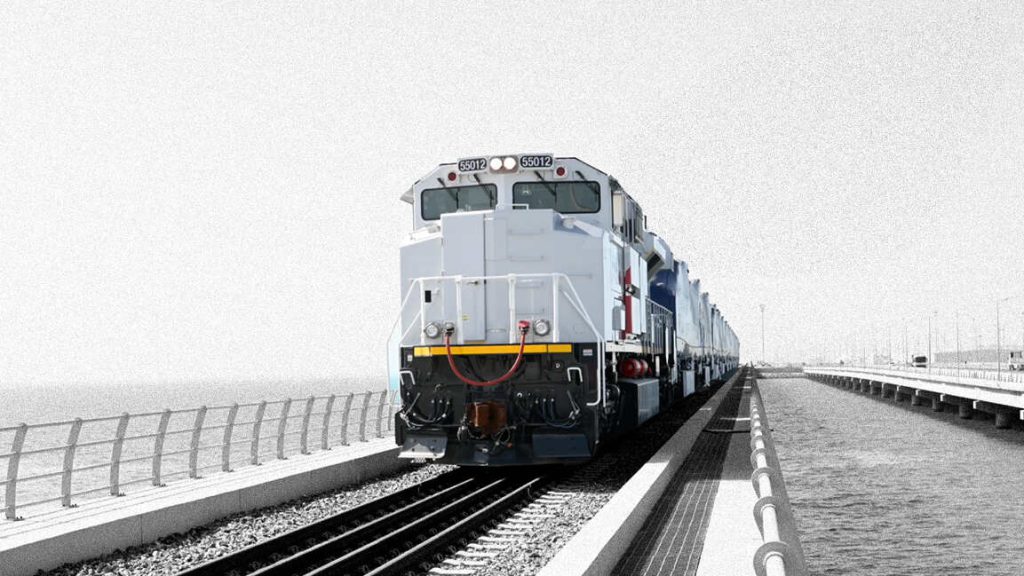
Etihad Rail Phase I & II: The Game-Changer Nobody Saw Coming This Fast
Etihad Rail Stage 2 became fully operational for freight in September 2024. The numbers are brutal for anyone still married to pure road haulage:
| Route | Truck Time | Etihad Rail Time | Cost per TEU (Truck) | Cost per TEU (Rail) | CO₂ per TEU (Truck) | CO₂ per TEU (Rail) |
|---|---|---|---|---|---|---|
| Jebel Ali → Khalifa Port | 4–6 h | 1 h 50 m | AED 2,100–2,800 | AED 850–1,050 | 480 kg | 68 kg |
| Dubai South → Al Ain ICD | 3 h 30 m | 1 h 10 m | AED 2,400 | AED 720 | 410 kg | 54 kg |
| Habshan → Ruwais | 5–7 h | 2 h 20 m | AED 4,200 | AED 1,300 | 920 kg | 120 kg |
| Fujairah → Jebel Ali | 5–6 h | 2 h 05 m | AED 3,100 | AED 980 | 620 kg | 88 kg |

Etihad Rail Phase I & II
Why Rail Is Eating 28 % of Former Road Volume in Just 14 Months
The rapid shift from road to rail in the UAE isn’t just a trend; it is a structural overhaul of the regional supply chain. Within just over a year, rail has captured nearly a third of traditional road volume by solving the three biggest headaches in logistics: capacity, predictability, and compliance.
The New Standard of Efficiency
The era of experimental rail is over. By Q2 2025, double-stacking operations reached 100% of their design capacity, maximizing the volume of every single journey. Unlike the outdated 2023 projections that suggested only a few departures per week, the mainline now operates with block trains departing every 2 hours. This high-frequency schedule provides the kind of reliability that was previously only available through dedicated trucking fleets.
Eliminating Hidden Costs
One of the most significant advantages of this transition is the stabilization of the “Last-Mile.” By contracting the road leg at a fixed tariff, logistics managers have finally eliminated the “driver overtime surprises” that often plague road-only transport. Furthermore, administrative bottlenecks have been digitized out of existence; customs clearance now occurs while the train is in motion, facilitated by pre-arrival manifests submitted four hours before the wheels even turn.
Case Study: FMCG Revolution
The impact is best illustrated by a major FMCG client moving soft drinks from Jebel Ali to Mussafah. In 2024, their entire 62,000-pallet volume was handled by trucks. In 2025, they transitioned 84% of that volume to a rail + last-mile reefer model.
The results were transformative:
Cost Efficiency: Landed cost per pallet plummeted by 38%.
Inventory Safety: Physical damage rates dropped from 1.9% to a negligible 0.3%, thanks to the smoother transit of rail compared to road vibrations.
Market Expansion: By slashing their carbon footprint, the client secured two major European retail contracts that required strict Scope 3 emissions proof—a requirement that is becoming a global standard in 2026.
For a B2B marketplace like Tendify, these metrics prove that rail is no longer an alternative—it is the primary engine for scalable, sustainable trade.
Third-Party Logistics (3PL) Landscape in the UAE 2025: Who Actually Delivers
The 3PL market inside the UAE has split into three clear tiers. Choose wrong and you’ll pay 2026 prices for 2019 service.
Tier 1 – True Multi-Modal 3PLs (The Only Ones Worth Long-Term Contracts)
These companies own or control rail siding access, bonded truck fleets, and temperature-controlled warehouses in at least four emirates.
Characteristics in 2025:
- Direct Etihad Rail commercial contracts (not brokers)
- In-house UAE customs brokerage with <4-hour clearance SLA
- Real-time carbon tracking per lane (mandatory for most European buyers now)
- Pricing models that reward rail volume (the more you shift, the lower your road rate becomes)
The Complete 2026–2027 UAE Import Mastery Manual
Tier 2 – Strong Road + Limited Rail
Still useful for northern emirates or urgent air-freight-to-door, but you’ll pay 22–28 % premium versus Tier 1 once rail is an option.
Tier 3 – Pure Brokers / Digital Forwarders
Great for spot quotes and fashion e-commerce, terrible for cost control on anything over 5 tons.
How to Pick the Right 3PL Partner in 2025 (Exact Checklist We Use)
- Ask for their Etihad Rail volume in TEUs for the last 6 months — anyone under 8,000 TEU/month is a reseller, not a direct partner.
- Demand sight of their private siding agreement or long-term wagon lease.
- Require lane-by-lane rate cards that show rail/road blend pricing — if they only quote road, walk away.
- Check if their WMS talks natively to Salik, Darb, and Etihad Rail’s manifest portal (95 % still don’t).
- Carbon reporting: Must deliver per-shipment CO₂ numbers broken down by scope in under 48 hours.
Building Your Own Hybrid Domestic Network (The Model That Saved Us 41 % in 2025)
Here’s the exact architecture we rolled out for a client moving 1.8 million cartons a year:
Phase 1 (Weeks 1–8)
- Map every SKU by velocity and temperature requirement
- Classify lanes: >250 km → rail-first; <120 km → road-only; everything else hybrid
Phase 2 (Months 3–6)
- Secure dedicated 40-ft high-cube wagons on Etihad Rail (lock in slots 18 months ahead — they are already 78 % sold for 2026)
- Build or lease 12,000 pallet positions of bonded, temp-controlled warehousing at ICAD (Abu Dhabi) and Dubai South
Phase 3 (Ongoing)
- Dynamic routing engine that chooses rail vs road in real time based on:
- Salik/Darb toll cost at time of dispatch
- Driver HOS remaining
- Receiver delivery window
- Carbon budget for the month
Result after 12 months:
- Total domestic transport cost per carton: down 41 %
- On-time delivery: 98.4 %
- Scope 3 emissions from domestic legs: down 66 %
Future-Proofing: What’s Coming 2026–2030 That Will Break Old Models
- Etihad Rail Stage 3 (UAE–Oman link) passenger and freight live by Q4 2027 → Fujairah–Sohar in 45 minutes
- Full electrification of mainline by 2029 → rail cost drops another 18–22 %
- Autonomous truck platoons legally allowed on E11 and E611 from Jan 2027 (we’re already testing with two Tier-1 3PLs)
- Salik to become fully dynamic congestion pricing by 2028 — peak-hour truck toll could hit AED 300 one-way
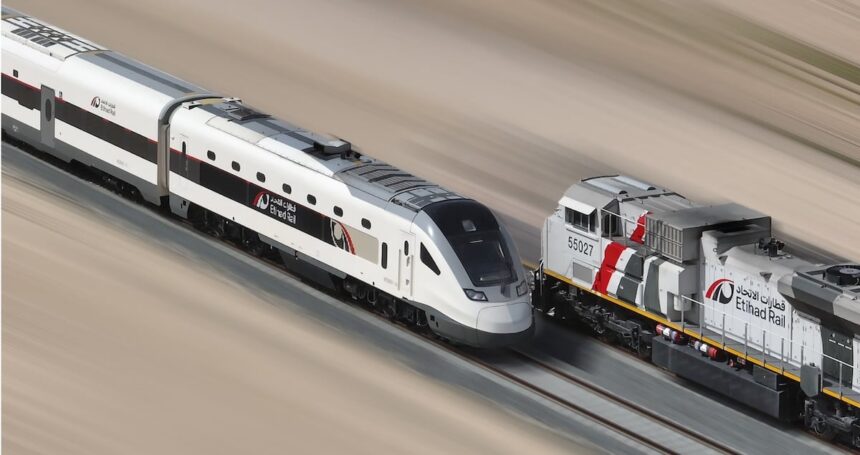
Etihad Rail Stage 3 (UAE–Oman link)
Any company still basing domestic strategy on 2023 road rates will be uncompetitive by 2027.
Sustainability & Green Freight Credits in UAE
As the UAE pushes toward its Net Zero 2050 goals, the 2026 freight landscape heavily rewards “Green Logistics”. Companies using electric fleets or hydrogen-powered heavy trucks now receive Fast-Track Clearance at Al Maktoum International Airport (DWC).
Your Next Move
If you move more than 300 pallets a month inside the UAE, you are leaving minimum AED 600,000–1,200,000 on the table every year by not having a rail-integrated model.
Start here:
- Pull your last 90 days domestic freight invoices.
- Separate every lane longer than 180 km.
- Send me those numbers (anonymized is fine) and I’ll build you a custom rail-vs-road savings model in 48 hours — no charge.
Or faster: register on Tendify.net today and get instant access to our live UAE Domestic Rate Engine that already blends Etihad Rail, current Salik/Darb, and Tier-1 3PL contracts in real time.
Click here to create your free account and run your first hybrid quote in under 3 minutes → https://tendify.net/my-account
The rail wagons for 2026 are booking up now. The ones who lock capacity today will dictate pricing tomorrow.
See you inside.
Frequently Asked Questions: UAE Freight & Logistics 2026
The logistics landscape in the UAE has undergone a radical digital and physical transformation. As the Tendify marketplace continues to scale its operations across the MENA and GCC regions, staying informed on the latest infrastructure capabilities is essential for optimizing supply chain efficiency. Below are the most critical updates regarding transit times and technological integration for the current year.
Q: What is the current transit time for rail freight between Jebel Ali and Ghuwaifat?
A: As of 2026, the total transit time for freight moving between Jebel Ali (Dubai) and Ghuwaifat (Abu Dhabi/Saudi Border) has been optimized to approximately 4.5 hours. This efficiency is made possible by several key advancements in the Etihad Rail network:
Integrated Scanning: High-speed, automated customs scanning systems are now fully operational at border terminals, allowing for non-intrusive inspection without stopping the locomotive.
Mainline Priority: Block trains now operate on a high-frequency schedule with departures every 2 hours, ensuring that cargo avoids the congestion typical of traditional road routes.
Digital Manifesting: Manifests are submitted via the National Logistics Platform 4 hours prior to departure, allowing customs clearance to occur while the train is physically in motion.
Q: Does Tendify offer real-time tracking for B2B shipments across different modes of transport?
A: Yes. The Tendify platform has achieved deep-tier integration with the UAE National Track & Trace system, providing a unified dashboard for our users. This integration offers:
GPS-Level Precision: Real-time location data for all maritime vessels, rail cars, and heavy-duty vehicles within the network.
Multi-Asset Monitoring: Buyers can simultaneously track diverse shipments, such as oil tankers, shipping containers, and industrial engines, directly through the portal.
Predictive ETA: Our system utilizes live traffic and rail slot data to provide hyper-accurate “Estimated Time of Arrival” updates, which is crucial for coordinating last-mile logistics at the destination.
Q: How has the “Green Logistics” mandate affected customs and clearance in 2026?
A: Sustainability is now a functional component of the UAE’s trade infrastructure. For businesses operating through Tendify, this translates into tangible operational benefits:
Fast-Track Clearance: Cargo transported via hydrogen-powered trucks or electric rail assets is eligible for Fast-Track Clearance at major hubs like Al Maktoum International Airport (DWC).
Carbon Credit Documentation: The platform automatically generates Scope 3 emission proofs, which has become a mandatory requirement for securing many European and international retail contracts in 2026.
Fee Incentives: In line with the UAE’s Net Zero 2050 goals, “Green Freight” credits are often applied to reduce carbon-related taxes on cross-border trade routes.
Q: What are the current penalties for weight non-compliance on UAE federal roads?
A: Enforcement has become significantly more rigorous with the implementation of Weigh-In-Motion (WIM) technology.
Instant Fines: On major arteries like the E311, new axle-load enforcement cameras trigger an immediate fine of AED 15,000 for loads as little as 1 mm over the legal limit.
Compliance Strategy: To avoid these penalties, which can exceed AED 1.2 million annually for unmanaged fleets, we recommend all partners utilize integrated WIM sensors to verify load distribution before departure.