Blog
Oman vs. Qatar: The Battle for the Next Re-Export Kingdom in 2026
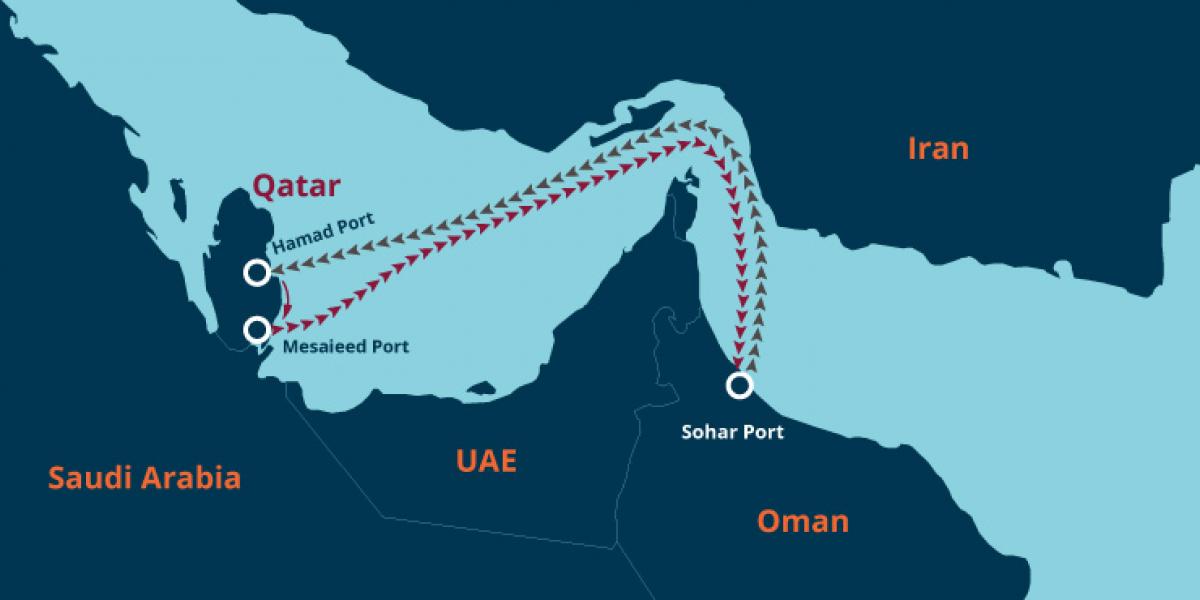
I’ve spent the last two decades building and scaling businesses across the Gulf, shipping everything from industrial machinery to bulk commodities. I’ve watched ports rise, free zones fill up, and trade routes shift almost overnight. Right now, in early 2026, one of the most fascinating competitions unfolding is between Oman and Qatar for dominance as the next major re-export hub in the region. The UAE still leads with massive volumes and established networks, but Oman and Qatar are closing the gap fast—with different strategies, strengths, and realities on the ground.
The Battle for the Next Re-Export Kingdom in 2026
This isn’t just about ports and cargo stats. It’s about who can offer importers, exporters, and B2B traders the fastest, cheapest, most reliable way to move goods in and out of the Gulf without getting stuck in bottlenecks or paying unnecessary duties. If you’re sourcing products for re-export to Africa, Europe, or Asia—or building a supply chain that touches multiple GCC markets—this showdown matters to your bottom line.
Let me break it down honestly, based on what I’ve seen in real deals, port visits, and the latest numbers rolling in.
Why Re-Exports Matter More Than Ever in 2026
Re-exports—importing goods, storing or minimally processing them, then shipping them onward without full local duties—are the lifeblood of diversified Gulf economies. They turn ports into profit engines beyond oil and gas.
According to recent trade data, the UAE still commands around 30% of its exports as re-exports, but Oman and Qatar are ramping up aggressively. Oman’s non-oil exports grew 11.3% to over $10 billion by mid-2025, with re-exports showing steady resilience. Qatar’s Hamad Port saw transshipment volumes jump 23% in recent years, pushing total throughput toward 1.4-1.5 million TEUs annually.

Re-Exports Matter More Than Ever in 2026
The drivers? Global supply chain disruptions, new trade corridors bypassing congested chokepoints, and GCC diversification pushing logistics as a core sector. In 2026, with GCC non-oil growth projected at 4.1-4.4%, re-export capabilities decide who captures the next wave of intra-regional and Asia-Europe trade.
Most Profitable Arbitrage Opportunities in Iran 2026: A Practical Guide
Key advantages both countries share:
- Strategic locations outside major straits for redundancy
- Free zones with 0% duties on re-exports
- Modern infrastructure investments
- Growing multimodal links (sea-air-road)
But the paths diverge sharply.
Oman’s Rise: The Strategic Long-Game Player
Oman has quietly positioned itself as the “re-export underdog” turning into a serious contender. Ports like Salalah, Sohar, and especially Duqm are built for scale and diversification.
In 2024-2025, Oman’s ports handled massive growth: over 137 million tonnes of cargo (up 15%), with Duqm surging 152% in volumes. Salalah expanded to 6.5 million TEU capacity after a $300 million upgrade, handling around 3.3 million TEUs recently. Sohar and Duqm add bulk, liquid, and project cargo strengths.
Re-exports held steady or grew modestly (0.5-17% in various periods through 2025), often routing to UAE, Saudi Arabia, and beyond. Bonded warehouses at Muscat and other ports allow tax-free storage and quick GCC dispatch—ideal for time-sensitive re-exports.
What makes Oman attractive for re-export businesses:
- Lower costs and less congestion — Living and operating costs 40-60% below Qatar or UAE; warehouse occupancy high but land still available.
- 100% foreign ownership in most sectors, plus generous free zone incentives (0% customs on re-exports, tax holidays).
- Outside-the-Strait location — Duqm avoids Hormuz risks, appealing for heavy industry and Asia-Africa routes.
- Green and industrial focus — Hydrogen projects and SEZs attract value-added re-exports.
From my experience shipping bulk to India and East Africa, Oman’s reliability shines: fewer delays, competitive freight, and ports hungry for volume.
Qatar’s Push: The High-Efficiency, High-Connectivity Challenger
Qatar leverages its wealth and post-blockade independence to build a sleek, integrated hub. Hamad Port is the star—deep-water, handling ultra-large vessels, with throughput at 1.421 million TEU in 2024 (up 9%), and transshipment surging.
Free zones near Hamad offer bonded storage, smart tech (solar, waste recycling), and seamless air-sea links via Hamad International Airport. Qatar’s logistics market is valued around $10 billion in 2025, projected to hit $13.5 billion by 2030.
Recent rules tightened vehicle exports (one-year delay on new vehicles), potentially shifting some flows elsewhere, but core strengths remain: efficiency, multimodal integration, and GCC connectivity.
Speaking the Language of Gen Z Business: 150 Terms Defining the Future of Global Trade
Qatar’s re-export strengths:
- Speed and tech — Faster customs, digital tools reduce dwell times.
- Multimodal edge — Air cargo growth (2.6 million tonnes in 2024) complements sea for high-value re-exports.
- Resilience post-blockade — Independent routes, less reliance on neighbors.
- Trade surplus muscle — Strong LNG exports fund infrastructure; 2025-2026 growth forecasts high (5.2% GDP).
I’ve used Hamad for time-critical shipments—it’s smooth when volumes align.
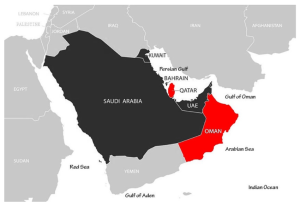
Head-to-Head Comparison: Oman vs. Qatar for Re-Export in 2026
Here’s a practical breakdown based on what traders actually face.
Oman vs. Qatar Re-export hub
Port Infrastructure and Capacity
- Oman: Multiple specialized ports (Salalah for containers/transshipment, Duqm for bulk/project, Sohar for industrial). Total TEU ~4-5 million+ across network; massive growth trajectory.
- Qatar: Hamad as single flagship (1.4-2 million TEU potential by 2030). Focused, efficient, but less diversified.
Cost and Incentives
- Oman wins on operating costs, land availability, and free zone perks. Ideal for volume players storing long-term.
- Qatar higher costs but faster ROI on high-value, quick-turn goods.
Location and Route Access
- Oman: Better for East Africa, Indian Ocean, Asia-Europe avoidance routes.
- Qatar: Strong Gulf-Asia links, air integration for perishables/electronics.
Re-Export Volume Trends (Recent Data)
- Oman: Steady re-exports (~OMR 1-1.4 billion periods), growing with port expansions.
- Qatar: Rising transshipment, but overall re-exports smaller relative to domestic focus.
Challenges
- Oman: Still building global recognition; some routes longer.
- Qatar: Higher competition internally; recent export restrictions in niches.
Iran–US–Israel Tensions: Strategic Risks, War Scenarios, and Global Economic Consequences
Who Wins the Re-Export Crown in 2026—and Beyond?
No single winner yet. Oman excels for cost-conscious, bulk, or long-haul re-exporters building regional warehouses. Qatar suits premium, fast-cycle, multimodal operations.
Many smart traders hedge: use Oman for storage/heavy lift, Qatar for quick distribution. The real battle is complementary—both erode UAE dominance by offering alternatives.
For B2B players on Tendify.net sourcing or exporting bulk/industrial goods, the choice depends on your cargo type, timelines, and margins.
If you’re moving machinery, commodities, or building Gulf supply chains, test both. Start with bonded options in Oman for cost savings, layer Qatar for speed.
Ready to position your business in this shift? Register on Tendify.net today—connect directly with verified suppliers, post RFQs for logistics partners in Oman or Qatar, and build your re-export network without middlemen. Free to join, and you’ll get access to real-time pricing and Gulf-focused traders already navigating these routes. Don’t watch from the sidelines—get in the game now.