


وبلاگ
Critical Minerals Trade: 2026 Supply Chains & GCC Logistics
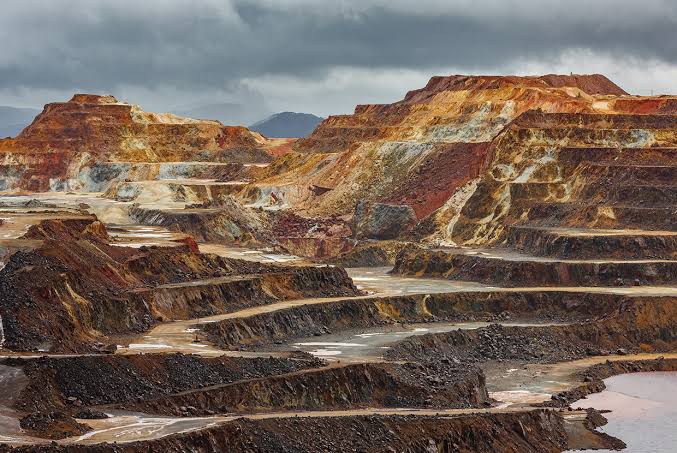
In early 2026, officials from over 50 countries gathered in Washington for the inaugural Critical Minerals Ministerial. The message was clear: diversified, secure supply chains for materials powering electric vehicles, renewable energy, defense systems, and advanced electronics are no longer optional. They are the foundation of competitive advantage in global trade.
For B2B traders, manufacturers, and logistics operators active in GCC, MENA, and broader international markets, this development signals both risk and opportunity. Price volatility, export controls, and preferential trade arrangements are reshaping flows of lithium from South America, graphite from emerging sources, cobalt from Africa, and rare earth elements from diversified producers. Operations that ignore these shifts face higher costs, compliance headaches, and lost market share. Those that adapt gain faster market access, better pricing stability, and stronger partnerships.

Critical Minerals Trade
This guide breaks down the Critical Minerals Club’s structure, practical implications for cross-border trade, actionable strategies for sourcing and compliance, and tools to navigate the new landscape efficiently.
Packing List Essentials: How to Avoid Customs Delays in Cross-Border B2B
What Is the Critical Minerals Club and Why Does It Matter in 2026?
The Critical Minerals Club represents a coordinated effort among the United States, European Union, Australia, Japan, South Korea, and a growing list of partners to build resilient supply chains outside dominant single-country concentrations. Launched with high-level ministerial meetings and bilateral frameworks, it focuses on minerals essential for clean energy transitions, technology, and national security.
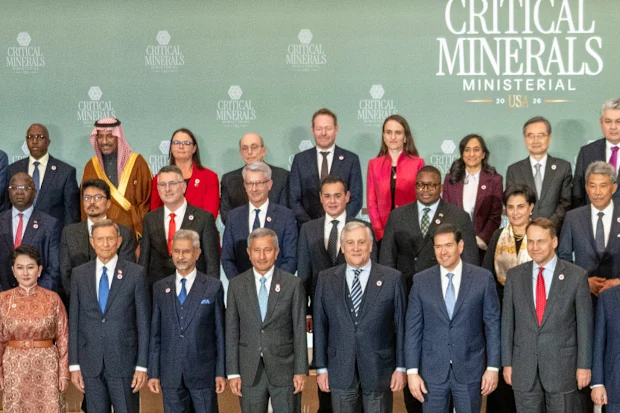
Critical Minerals Club
Key drivers include:
- Geopolitical concentration risks: China processes around 90% of rare earths and a dominant share of graphite and other battery materials. Recent export controls highlighted vulnerabilities across automotive, high-tech, and energy sectors.
- Demand surge: Lithium demand continues strong growth driven by EVs and energy storage. Graphite, cobalt, copper, and nickel face similar pressures. Projections show sustained deficits in several categories through 2035.
- Policy coordination: Participants pursue harmonized standards, joint procurement, investment in processing capacity, and mechanisms like coordinated price floors or tariff adjustments on non-aligned supplies.
For traders in the Gulf region and beyond, the Club creates new pathways for deals with aligned producers while introducing scrutiny on origin, processing standards, and end-use compliance.
🇸🇦The Saudi Vision 2030 Catalyst: Becoming the Midstream Hub
While Western powers focus on policy alignment, Saudi Arabia is rapidly emerging as the physical bedrock for critical minerals processing in the GCC. Under the umbrella of Vision 2030, the Kingdom is deploying billions of dollars through its Public Investment Fund (PIF) and Ma’aden to position itself as a premier midstream and downstream processing hub, bridging resource-rich African and Central Asian markets with Western demand.
Strategic Takeaway for B2B Traders: Annual flagship events like Riyadh’s Future Minerals Forum (FMF) underscore the Kingdom’s aggressive strategy to de-risk global supply chains. By offering massive co-investment incentives for advanced refining, purification, and battery-grade chemical processing, Saudi Arabia provides an attractive, compliant transshipment and value-add corridor for international traders looking to bypass high-tariff or restricted jurisdictions.
⚖️
The Regulatory Core: Decoding the MSP & Coalition Alignment
To accurately assess compliance risks, traders must distinguish between the broader group of 50+ ministerial attendees and the strict regulatory core driving policy enforcement. The engine behind this global restructuring is the Minerals Security Partnership (MSP), flanked by major industrial economies.
The core jurisdictions shaping the 2026 trade frameworks include:
- North America: United States, Canada
- Europe & UK: The European Commission, United Kingdom, Germany, France, Italy, Norway
- Asia-Pacific Allies: Australia, Japan, South Korea, India
Regulatory Impact: Bilateral agreements signed within this core group directly dictate origin-verification rules (such as the US Inflation Reduction Act standards and EU Critical Raw Materials Act mandates). Any mineral transshipped or processed through GCC/MENA zones targeting these end-markets must clear the legal compliance bars set by these specific signatory nations.
Core Minerals in Focus and Their Trade Dynamics
Lithium
Demand for lithium carbonate and hydroxide remains robust. Major sources include Australia, Chile, and emerging projects in Argentina and elsewhere. Club-related frameworks emphasize traceable, high-environmental-standard supply. Traders benefit from stable long-term contracts but must navigate licensing and environmental certifications.
Graphite
Natural and synthetic graphite are critical for battery anodes. China’s dominance in processing makes alternative sources attractive. Sri Lanka’s high-purity vein graphite and projects in Mozambique or Brazil offer diversification routes. Expect tighter quality specifications and interest in sustainable extraction.
Cobalt
Primarily from the Democratic Republic of Congo, with efforts to develop ethical sourcing and recycling. Export quotas and due diligence requirements affect pricing and availability.
Rare Earth Elements (REEs)
Used in magnets, electronics, and defense. Diversification efforts target Australia, the US, Vietnam, and others. Heavy REEs remain particularly sensitive.
Copper and Nickel
Foundational for electrification. Supply gaps persist despite new projects, driving premium pricing for reliable suppliers.
Traders who map these flows early can lock in margins before broader market adjustments.
📈
Market Intelligence: Critical Minerals Outlook Through 2030
Following the severe supply-chain shocks and price spikes of the 2022–2024 cycle—during which Lithium Carbonate prices effectively doubled before stabilizing—the 2026 market reflects a structurally altered landscape. Proactive B2B planning requires tracking these foundational projections:
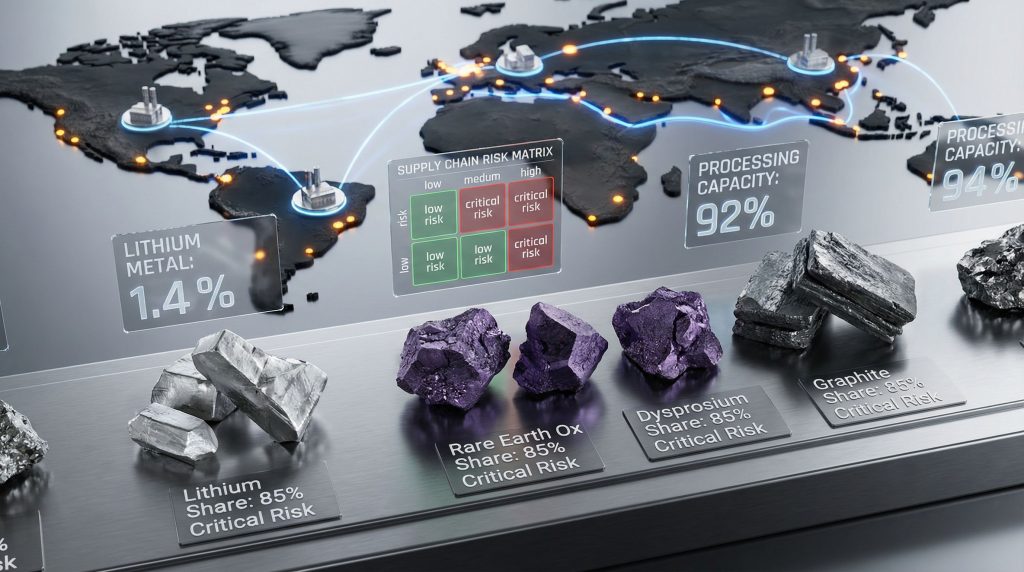
Critical Minerals Outlook
Macro Analysis: While the current 2026 market shows relative consolidation compared to historical volatility, the underlying demand-to-supply ratios remain tight. The massive deficit projections for late-decade supply chains are precisely why Western and GCC entities are prioritizing off-take contracts and sovereign-backed joint ventures inside aligned jurisdictions right now.
📊
Quick Reference: Key Harmonized System (HS) Codes
For B2B commodities traders and logistics operators, precise classification is the foundation of customs clearance, tariff calculation, and compliance tracking. Below are the baseline کدهای HS for the critical minerals reshaping international supply chains in 2026:
💡
Trade Note: While these 6-digit headings are globally harmonized under the WCO, sub-headings and import duty structures may vary slightly across GCC and European ports. Use automated classification tools to verify national-level extensions.
Operational Challenges for Cross-Border Traders
- Tariff and Preference Risks
Club-aligned trade may favor lower duties or faster clearances among members, while non-aligned origins face higher scrutiny or costs. Monitor rules of origin carefully. - Compliance and Traceability
Expect stricter ESG reporting, conflict-free sourcing, and carbon footprint documentation. Non-compliance can halt shipments at ports or void contracts. - Logistics and Processing Bottlenecks
Refining capacity outside traditional hubs is expanding but limited. Container optimization, multimodal routing, and bonded warehousing become critical for cost control. - Price Volatility
Prices for lithium doubled in recent periods amid supply constraints. Hedging, forward contracts, and diversified suppliers reduce exposure. - Financing and Payment Security
Large-volume mineral deals require robust escrow, trade finance, or letter of credit alternatives to manage currency and counterparty risks.
Step-by-Step Strategies to Capitalize on Critical Minerals Opportunities
Step 1: Assess Your Exposure and Opportunities
Review current sourcing countries against Club-aligned lists. Identify gaps where diversification adds value — for instance, pairing Sri Lankan graphite with lithium hydroxide from South American projects for battery supply chains targeting European or GCC markets.
Step 2: Build Compliant Supply Networks
- Prioritize suppliers with verifiable ESG certifications.
- Use digital platforms for real-time compliance checks.
- Engage freight forwarders experienced in specialized bulk and containerized mineral shipments.
Step 3: Optimize Logistics and Costs
Calculate end-to-end expenses including tariffs, demurrage, and transloading. Tools for container loading optimization and tariff calculators help model scenarios accurately. Consider free zones in UAE, Oman, or Saudi Arabia as re-export hubs with favorable infrastructure.
Step 4: Secure Financing and Contracts
Incorporate strong force majeure, quality, and dispute resolution clauses. Explore escrow services for initial transactions to build trust. Advanced loan calculators and trade cost estimators support budgeting.
Step 5: Leverage Market Intelligence
Track ministerial outcomes, new MOUs, and price trends. Real-time market pulse tools and HS code classifiers streamline classification and documentation.
Step 6: Scale with Partnerships
Form joint ventures or long-term offtake agreements with processors in Club-friendly jurisdictions. Participate in industry events and exhibitions in UAE, Saudi Arabia, or Qatar to connect with buyers and suppliers.
🛡️The 2026 Mandate: Digital Product Passports & Blockchain Provenance
Entering the European market in 2026 comes with a strict digital barrier: the enforcement of the EU Battery Passport (Digital Product Passport – DPP). Under these updated frameworks, every batch of critical minerals—especially lithium, cobalt, and graphite destined for European EV supply chains—must carry an unalterable digital twin tracking its entire lifecycle, carbon footprint, and ESG metrics from the mine site to the final port.
To secure upstream access and guarantee market acceptance, modern commodity traders are abandoning manual documentation in favor of immutable verification systems:
- Blockchain-Backed Provenance: Distributed ledger technology (DLT) is now standard for creating tamper-proof records of origin. Each stakeholder in the supply chain cryptographically signs off on weight, purity, and environmental compliance at every transfer point.
- Smart Contract Audits: Decentralized verification protocols automatically check customs declarations against pre-verified mine-site licenses, instantly flagging any material mixed with non-compliant or unverified ores.
- Automated ESG Scoring: Digital ledger networks calculate the cumulative carbon intensity of transshipment and refining steps, ensuring the final dossier meets the strict thresholds required by Western automotive OEMs.
Tech-Driven Advantage: Compliance is no longer an administrative afterthought; it is a core commercial metric. B2B operators utilizing digitized trade infrastructure and cryptographic document verification clear Western borders days faster than competitors relying on paper-based legacy workflows.
Comparison of Sourcing Options (2026 Perspective)
| Mineral | Traditional Dominant Source | Emerging Diversified Options | Key Trader Considerations | Potential Advantages for GCC Traders |
|---|---|---|---|---|
| Lithium | Australia/Chile | Argentina, US projects, Bolivia partnerships | Traceability, environmental standards | Proximity to re-export hubs, energy demand growth |
| Graphite | China | Sri Lanka, Mozambique, Brazil | Purity levels, anode-grade suitability | Sustainable sourcing appeal for European markets |
| Cobalt | DRC | Recycling, Australia, Canada | Ethical sourcing certifications | Reduced geopolitical risk in supply chains |
| Rare Earths | China | Australia, US, Vietnam | Heavy vs. light REE separation | Defense and tech sector demand in region |
| مس | Chile/Peru | Multiple new mines in Americas/Africa | Refining capacity access | Infrastructure projects in MENA |
This table highlights why proactive diversification pays off in both margin protection and contract win rates.
🌐
The INSTC Factor: Central Asia and Iran’s Strategic Minerals Gateway
While the GCC states act as primary commercial and financing hubs, a massive portion of the world’s untapped critical mineral wealth lies directly to their north. Central Asian republics (like Kazakhstan and Uzbekistan) hold monumental reserves of copper, zinc, and rare earth elements (REEs), while Iran possesses over 7% of global total mineral reserves, including massive copper porphyry deposits and emerging lithium prospects.
1. The International North-South Transport Corridor (INSTC)
The INSTC provides a direct, overland-to-sea transit route linking landlocked Central Asian mines through the Iranian rail network straight to the Port of Bandar Abbas and the Chabahar Free Zone. This bypasses traditional maritime bottlenecks, cutting transit times down to less than 20 days.
2. Transshipment via UAE and Oman
Once commodities hit the Persian Gulf coast, Omani ports (Sohar/Salalah) and UAE hubs (Jebel Ali/Khalifa Port) serve as perfect regulatory and blending buffers. Traders leverage these ports to re-export high-grade copper anodes or processed rare earths into Western, European, or East Asian markets under fully compliant trade structures.
💡 Strategic Advantage for B2B Traders: Sourcing raw or semi-processed copper and critical minerals from Kazakhstan or Iran, moving them via the INSTC, and utilizing GCC free zones for trade financing and final logistics documentation offers an unparalleled margin cushion. It bridges massive supply pools with highly scrutinized Western demand networks.
⚠️Geopolitical Compliance: Navigating Sanctions, FATF, and Banking Risks
While the INSTC and Central Asian transit routes offer undeniable geographical shortcuts, international B2B traders cannot ignore the regulatory realities. Utilizing transit corridors that touch highly sanctioned jurisdictions or non-FATF compliant zones introduces severe compliance risks, potential SWIFT blocks, and immediate exclusion from Western supply chains.
To mitigate these friction points without violating the stringent legal bars set by the Critical Minerals Club, structured trade engineering through regional financial safe-havens is mandatory:
- Documentary Transformation via Switch Bills of Lading (Switch BLs): To ensure compliance with Western end-destination ports, logistics operators leverage maritime hubs in Oman (Sohar/Salalah) or the UAE. Here, a second set of Bill of Lading (Switch BL) can be legally issued, verifying the country of intermediate processing or blending, ensuring full transparency while protecting primary supply security.
- Financial Buffering via Back-to-Back Letters of Credit (LCs): Direct financial flows between misaligned jurisdictions are impossible under SWIFT protocols. Traders establish robust corporate structures within Dubai (DMCC/IFZA) or Omani Free Zones to open Back-to-Back LCs—effectively decoupling the sourcing trade finance from the final distribution settlement into European or North American banks.
- Origin Verification Clearances: Utilizing specialized third-party auditing firms based in GCC free zones to conduct independent, verified laboratory testing and origin certifications, guaranteeing that non-sanctioned elements remain separate from restricted flows.
Operational Imperative: The goal is not to bypass regulations, but to build structurally compliant, multi-layered supply frameworks. By using UAE and Oman as legal, operational, and financial buffers, traders successfully bridge raw mineral richness with highly scrutinized Western demand networks.
Risk Mitigation Best Practices
- Due Diligence Protocols: Implement multi-layer checks on suppliers, including third-party audits.
- Contract Essentials: Mandate updated Incoterms, quality specs aligned with ASTM/ISO, and clear penalty structures.
- Insurance and Hedging: Cover political risk, cargo spoilage (for sensitive materials), and currency fluctuations.
- Technology Integration: Deploy AI-driven market analysis, document generators, and compliance checklists to reduce manual errors.
- Scenario Planning: Model impacts of new export restrictions or price spikes using trade explorer tools.
Real-world operations show that companies investing in digital compliance and diversified networks clear customs faster and secure repeat business more reliably.
Trade Tech Accelerators: Top 20 Programs to Scale Global Commerce
How Digital Platforms Streamline Critical Minerals Trade
Modern B2B ecosystems integrate calculators for duties and costs, contract builders, HS code finders, and market intelligence in one environment. These reduce friction in high-stakes mineral deals where timing and accuracy determine profitability. For instance, real-time tariff updates and container optimization visuals help teams adjust routes on the fly.
One practical example: A trader sourcing graphite can cross-reference Club preferences, generate compliant proforma documents, and simulate logistics costs before committing capital.
Future Outlook Through 2030
Demand for these minerals will continue expanding with global electrification and tech growth. The Club’s influence is likely to grow through more bilateral agreements, joint investments, and standards harmonization. GCC countries, with their strategic location, sovereign funds, and infrastructure ambitions, are well-positioned as hubs for processing, storage, and re-export.
Traders who treat compliance and diversification as core competencies — rather than afterthoughts — will capture higher margins and build resilient businesses.
The Critical Minerals Club is accelerating a fundamental reorganization of global trade. Success belongs to those who act with clear information, robust tools, and strategic partnerships.
To streamline your sourcing, compliance, and deal execution in this evolving landscape, register an account and explore integrated trade utilities designed for efficiency and security. Visit https://tendify.net/my-account/ to get started.
Internal links for further reading:

