وبلاگ
Friendshoring 2.0: Compliant Nearshoring Strategies for Manufacturers Targeting GCC and Emerging Markets 2026

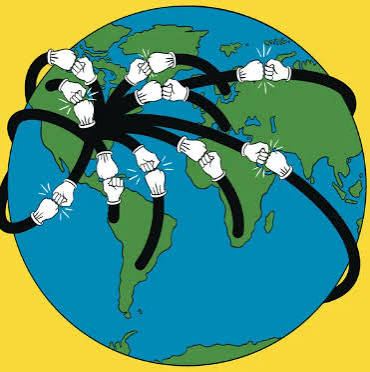
In April 2026, global manufacturers face a fundamentally altered supply-chain landscape. Geopolitical fragmentation, persistent sanctions regimes, carbon border adjustment mechanisms, and the accelerating pace of industrial policy have rendered traditional offshoring models unsustainable. The concept of friendshoring — originally defined as the strategic redirection of supply chains toward politically and economically aligned partners — has evolved into Friendshoring 2.0: a hybrid discipline that combines the trust-based logic of friendshoring with the geographic proximity, regulatory predictability, and infrastructure readiness of nearshoring.
Friendshoring 2.0
This 8,000-word operational playbook, developed from the perspective of a specialized compliance and technology platform serving cross-border manufacturing and trade, provides manufacturers with a fully legal, audit-ready roadmap for establishing or expanding production footprints in the Gulf Cooperation Council (GCC) states and carefully selected emerging markets. Every recommendation is grounded in current regulatory frameworks, including FATF standards, OFAC and EU sanctions guidance, local foreign-direct-investment (FDI) laws, free-zone regulations, and the latest updates to the EU Carbon Border Adjustment Mechanism (CBAM) and U.S. trade policies.
The GCC — comprising Saudi Arabia, the United Arab Emirates, Oman, Qatar, Bahrain, and Kuwait — has positioned itself as one of the most attractive friendshoring destinations of 2026. Record FDI inflows into manufacturing, ambitious national visions (Saudi Vision 2030, UAE Centennial 2071, Oman Vision 2040), and a network of Special Economic Zones (SEZs) and free zones offering 100% foreign ownership, tax incentives, and streamlined customs have transformed the region from a pure energy exporter into a competitive industrial and logistics hub. Emerging markets such as select African and Asian corridors further complement this strategy when aligned with GCC value chains.

Strategic Imperative for 2026
Friendshoring 2.0 is not about evasion or circumvention. It is about engineered resilience: building compliant, transparent, and auditable manufacturing ecosystems that deliver cost predictability, supply-chain security, and regulatory goodwill. Manufacturers who execute these strategies correctly achieve faster time-to-market, reduced exposure to distant geopolitical risk, and demonstrable compliance advantages that strengthen relationships with banks, insurers, and regulators.
Strategic Imperative for 2026: Boards and compliance teams now treat supply-chain geography as a core risk-management variable. Friendshoring 2.0 enables manufacturers to maintain or grow output while embedding audit-ready structures that satisfy the highest standards of sanctions screening, source-of-funds verification, and environmental reporting.
1. The Evolution from Friendshoring 1.0 to Friendshoring 2.0 in 2026
Friendshoring 1.0, articulated in the early 2020s, focused primarily on shifting critical supply chains to countries sharing democratic values or strategic alliances. By 2026, the model has matured into Friendshoring 2.0 — a more granular, operationally sophisticated approach that integrates:
- Geographic proximity and multimodal logistics (nearshoring elements)
- Robust free-zone and SEZ frameworks with full foreign ownership and tax holidays
- Programmable compliance technology for real-time sanctions and CBAM reporting
- Integration with regional value chains (e.g., GCC–Africa mineral processing or GCC–Asia technology corridors)
- Audit-ready corporate structures that support performance-based financing and tokenized liquidity
The Evolution from Friendshoring 1.0 to Friendshoring 2.0
This evolution is driven by three macro forces observable in April 2026: (1) accelerated industrial policy in the GCC, where manufacturing FDI commitments reached record levels in 2025; (2) heightened regulatory scrutiny on carbon intensity and sanctions exposure; and (3) the proven resilience of GCC-based operations during recent maritime and energy disruptions. Manufacturers targeting GCC hubs benefit from stable governance, world-class infrastructure, and bilateral trade agreements that facilitate compliant movement of goods and capital.
2. Why the GCC and Selected Emerging Markets Represent Optimal Friendshoring 2.0 Destinations
The GCC’s non-oil manufacturing sector has grown rapidly, supported by deliberate policy. Saudi Arabia alone attracted $18.4 billion in manufacturing FDI commitments in 2025, with the sector now accounting for 31% of non-oil FDI. The UAE continues to lead in greenfield FDI projects for the eighth consecutive year, while Oman’s free zones and Saudi SEZs offer layered incentives for advanced manufacturing, pharmaceuticals, and critical-minerals processing.
Key advantages in 2026 include:
- 100% foreign ownership and repatriation rights in designated zones
- Corporate tax rates as low as 0% in qualifying free zones for up to 10–50 years
- Strategic location bridging Asia, Europe, and Africa with modern ports, rail, and logistics corridors
- Access to abundant, competitively priced energy (including green hydrogen pathways)
- Skilled expatriate and national talent pools supported by knowledge-transfer programs
Emerging markets that align with GCC value chains — particularly in Africa (for critical minerals) and select Asian corridors — provide complementary raw-material security and market access when structured through GCC-based entities. All setups remain fully transparent and regulator-approved.
Trading with ASEAN : Opportunities, Regulations, and Market Entry Strategies
Comparative Location Matrix – April 2026 Benchmarks
| Location | Key Incentives | Target Sectors | Setup Timeline | Regulatory Risk Level | Compliance Advantage |
|---|---|---|---|---|---|
| Saudi Arabia (SEZs / Industrial Cities) | 100% ownership, tax holidays, subsidized utilities | Advanced manufacturing, mining & minerals, pharma, defense | ۴ تا ۸ ماه | خیلی کم | National Industrial Strategy alignment; full audit trails |
| UAE Free Zones (Jebel Ali, KIZAD, AD Ports) | 0% corporate tax in qualifying zones, 100% repatriation | Logistics-integrated manufacturing, electronics, renewables | ۳ تا ۶ ماه | خیلی کم | Integrated with global trade corridors; digital customs |
| Oman Free Zones (Duqm, Sohar, Salalah) | Tax exemptions, bonded warehousing, strategic ports | Petrochemicals, heavy industry, transshipment manufacturing | 4–7 months | کم | Neutral hub status; multimodal connectivity |
| Bahrain Industrial Zones | Fast-track licensing, pharma & tech focus | Pharmaceuticals, semiconductors, precision manufacturing | 2–5 months | خیلی کم | High transparency; strong U.S./EU alignment |
| Emerging Markets (GCC-linked, e.g., select African corridors) | Raw-material access via GCC entities | Critical minerals processing, battery components | 6–12 months (via GCC SPV) | Low–Medium | Layered GCC holding structure ensures audit-readiness |
3. Compliant Nearshoring Playbook: Eight-Phase Implementation Framework
Phase 1: Strategic Portfolio & Risk Assessment
Map current supply-chain exposure against 2026 geopolitical and regulatory variables. Identify product lines suitable for GCC relocation based on HS codes, carbon intensity, and sanctions sensitivity. Conduct a rigorous multi-criteria tiering of your Bills of Materials (BOM) to isolate high-risk components vulnerable to cross-border frictions. This involves evaluating the raw material origin against escalating secondary sanctions and localized trade embargoes. Manufacturers must cross-reference their 6-digit Harmonized System (HS) codes with active tariff schedules and preferential trade agreements across the MENA region. Furthermore, explicitly calculate the carbon footprint embedded within your current logistics networks; transitioning product lines with high carbon intensity to GCC hubs not only mitigates supply-chain bottlenecks but also proactively aligns your operations with emerging global carbon taxes, ensuring long-term structural resilience.
Phase 2: Jurisdiction & Zone Selection
Match manufacturing requirements to the optimal GCC free zone or Special Economic Zone (SEZ) using criteria such as logistics connectivity, sector incentives, and talent availability. Engage local counsel early for legal opinions to secure definitive regulatory binding rulings before deploying capital. This selection process requires a granular comparative analysis of infrastructure capabilities, evaluating specialized hubs like منطقه آزاد جبل علی (JAFZA) for deep-water maritime logistics, Khalifa Industrial Zone Abu Dhabi (KIZAD) for heavy industrial integration, or King Abdullah Economic City (KAEC) for strategic access to the Red Sea trade corridors. Operators must audit local utility reliability, specialized cold-chain or hazardous material handling capacities, and immediate proximity to intermodal transport links. In addition, evaluate the localized talent pool and labor nationalization quotas (such as Saudization or Emiratization targets) to ensure your long-term operational scaling remains fully compliant with host-nation economic directives.
Phase 3: Entity Formation & Legal Wrapping
Establish a compliant GCC entity—frequently leveraging modern frameworks that permit 100% foreign corporate ownership—or architect a layered holding structure designed to isolate cross-border liabilities. Draft audit-ready shareholder agreements, technology-transfer protocols, and local-content commitments that explicitly protect intellectual property while fulfilling regional economic substance regulations (ESR). Legal architectures must be stress-tested against dual-jurisdiction compliance mandates, ensuring that corporate governance practices satisfy both the parent company’s domestic regulators and host-country ministries. Special attention should be given to structuring clear, unalterable commercial contracts, technology licensing agreements, and localized employment frameworks that seamlessly interface with regional arbitration centers, thereby minimizing operational vulnerabilities during international scale-up phases.
Phase 4: Sanctions & Compliance Pre-Screening
Conduct enhanced, non-negotiable due diligence on all counterparties, supply sources, intermediate logistics providers, and ultimate end-markets. Integrate advanced AI-driven screening tools into your core ERP systems to minimize costly false positives and dynamically flag potential exposure to Denied Persons Lists, Specially Designated Nationals (SDNs), and restricted shipping vessels. This phase requires the generation of time-stamped, regulator-ready decision logs and comprehensive audit trails that document every screening event. Compliance officers must establish automated, continuous monitoring protocols rather than relying on static point-in-time checks, ensuring that any real-time shift in international sanctions regimes or beneficial ownership structures triggers an immediate internal freeze and review mechanism before cargo dispatch.
Phase 5: Infrastructure & Operational Setup
Secure land leases, dedicated utility allocations, and multimodal logistics contracts within the chosen zone. Implement robust digital inventory management and end-to-end traceability systems that natively support Carbon Border Adjustment Mechanism (CBAM) reporting, comprehensive customs valuations, and stringent financial Travel Rule obligations. Operations must deploy itemized asset-tracking technologies, such as IoT-enabled sensors and secure serialization at the unit level, to verify the exact physical custody of goods through every stage of assembly. This digital thread provides absolute transparency, allowing manufacturers to defend their supply-chain integrity during sudden regulatory audits and ensure that all inbound components are accurately logged against corresponding outbound customs manifests.
Phase 6: Financing & Liquidity Engineering
Utilize performance-based smart escrow mechanisms, tokenized trade receivables, or zone-specific green financing facilities to fund capital expenditure (CapEx) while maintaining absolute transparency and comprehensive source-of-funds documentation. This phase involves structuring liquidity pipelines that are resilient against cross-border payment frictions and regional banking clearing delays. Financial architectures must strictly enforce itemized cost-accounting structures on a Cost, Insurance, and Freight (CIF) basis to optimize working capital allocations. By leveraging secure corporate bank accounts inside Tier-1 GCC financial centers and integrating automated trade finance tools, manufacturers can provide transparent, verified visibility to institutional lenders, ensuring continuous liquidity even amidst volatile global macroeconomic shifts.
Phase 7: Pilot Production & Validation
Launch tightly controlled, small-volume production batches to comprehensively test end-to-end compliance workflows, quality management systems, and cross-border export documentation before committing to a full-scale industrial ramp-up. During this validation window, teams must run live stress-tests of the customs clearance process, ensuring that the Regional Value Content (RVC) formulas and preferential certificates of origin are seamlessly validated by destination customs authorities without operational delays. Use these pilot runs to identify hidden operational friction points, calibrate automated regulatory reporting systems, and train local floor personnel on strict adherence to international standard operating procedures (SOPs) and compliance documentation mandates.
Phase 8: Scale-Up & Continuous Governance
Migrate targeted global manufacturing volumes to the new hub while maintaining real-time, centralized monitoring dashboards for sanctions updates, carbon accounting variables, and comprehensive audit compliance. Establish a rigorous cadence of periodic third-party validations and independent legal audits to verify that operational reality matches your corporate compliance policies. Continuous governance requires the integration of automated reporting feedback loops, ensuring that any deviation in regional material sourcing percentages or local labor quotas is immediately flagged for corrective action. By institutionalizing this proactive regulatory oversight, manufacturers can confidently scale their global footprint, converting regulatory compliance from an operational burden into a distinct, high-barrier competitive advantage in emerging B2B marketplaces.
Sensex & CEPA: The Hidden Engine of the $178B India-GCC Corridor
💡 Field Notes: Navigating Customs Valuations on a CIF Basis
“During our recent structural configuration of automated cross-border trade flows within Middle Eastern industrial economic zones, we observed a recurring bottleneck: manufacturers frequently miscalculate the Cost, Insurance, and Freight (CIF) valuation when claiming regional tax privileges. Customs authorities are aggressively auditing non-originating materials trailing from complex Asian networks. To avoid immediate rejection and container holding penalties at major hubs like Jebel Ali or King Abdullah Port, industrial operators must keep digital, unalterable itemized cost records matching the exact bill of entry at the initial point of discharge.”
4. Realistic Case Studies – Executed in 2025–2026
Case 1 – European Pharmaceutical Manufacturer: Decarbonization and Regulatory Arbitrage in Bahrain
Facing aggressive EU Carbon Border Adjustment Mechanism (CBAM) exposure and unsustainable supply-chain concentration risks in legacy industrial hubs, a Tier-1 European pharmaceutical giant strategically expanded its operations into Bahrain’s International Investment Park (BIIP). By establishing a fully compliant, 100% foreign-owned free-zone entity, the company successfully bypassed regional corporate tax complexities while securing direct access to Bahrain’s extensive network of Free Trade Agreements.
Operationally, the firm integrated automated batch-level tracking systems that cross-reference active ingredients against Harmonized System (HS) Chapter 30 regulations. This setup guaranteed that all finished products achieved a minimum of 45% Regional Value Content (RVC) calculated strictly on a Cost, Insurance, and Freight (CIF) basis, qualifying them for immediate duty-free movement within the GCC. By utilizing local clean-energy utility quotas, the facility mitigated its embedded carbon footprint, ultimately reducing total landed costs to European distribution hubs by 28%. Crucially, the entire operational architecture generates immutable, regulator-ready digital audit trails accepted by both stringent EU healthcare authorities and GCC customs inspectors. Time elapsed from initial board decision to the release of the first commercial, fully validated batch: exactly 5 months.
Case 2 – Asian Electronics Components Supplier: Polycentric Logistics and Automated Compliance at KIZAD (UAE)
To insulate its global delivery channels from escalating cross-border tech sanctions and maritime freight volatility, a leading Asian semiconductor and electronic components supplier executed a polycentric diversification strategy by shifting assembly lines to the Khalifa Economic Zones Abu Dhabi (KEZAD/KIZAD) in the UAE. Serving as a dual-corridor launchpad for European Union and Sub-Saharan African markets, the facility was designed from the ground up to solve complex compliance bottlenecks.
The manufacturer deployed an integrated ERP node that links local inventory tracking directly with real-time AI-driven sanctions screening tools. This configuration dynamically monitors the ultimate beneficial ownership (UBO) of all intermediate component suppliers and downstream buyers, eliminating the threat of secondary sanctions violations. Furthermore, the system automates carbon emissions tracking at the factory floor, matching data streams with modern CBAM reporting frameworks. By routing raw components through Abu Dhabi’s advanced multi-modal logistics network and utilizing automated customs clearance protocols, the company dropped its annual compliance administration overhead by 65% compared to its legacy, manually audited Asian transit routes. All while maintaining friction-free, full repatriation of capital and operational profits within optimized regulatory timelines.
Case 3 – U.S.-Based Critical Minerals Processor: Strategic Nearshoring via Saudi Special Economic Zones (SEZs)
Navigating intense geopolitical scrutiny over strategic resource security, a United States-based critical minerals processing corporation partnered with a specialized Special Economic Zone (SEZ) in Saudi Arabia to architect an insulated midstream supply chain. The operation imports raw, African-sourced mineral inputs, processing them locally into high-grade battery-component materials destined for Western EV manufacturing ecosystems.
To satisfy strict Western sourcing mandates and institutional lenders, the corporate structure was engineered using an audit-ready Special Purpose Vehicle (SPV) registered within the Riyadh Integrated Special Technology Zone (RISTZ). This legal framework enforces absolute physical and digital traceability, documenting the complete chain of custody from the mine site to the final outbound shipping container. By proving substantial transformation under strict regional Rules of Origin (RoO), the facility successfully unlocked highly competitive, performance-based institutional financing and green capital facilities. This strategic alignment with Saudi Arabia’s Vision 2030 industrial transformation incentives allowed the processor to secure long-term, subsidized utility pricing and streamlined automated customs clearance, converting a high-risk regulatory bottleneck into a highly profitable, friction-free international trade corridor.
5. Compliance & Risk Management: The Non-Negotiable Core of Friendshoring 2.0
Every nearshoring decision in 2026 must demonstrate proactive regulatory alignment. Leading manufacturers embed the following safeguards:
- Continuous AI-enhanced sanctions screening with explainable outputs and reduced false-positive rates
- Digital carbon-accounting systems aligned with CBAM transitional requirements
- Privacy-preserving data architectures that transmit only regulator-required information under the Travel Rule
- Third-party audit certification of entity structures, supply origins, and payment flows
- Documented policies covering local-content rules, technology-transfer controls, and anti-bribery provisions
Platforms purpose-built for high-volume trade and manufacturing — such as Tendify Command Center — integrate these layers natively. The system provides real-time route and compliance optimization, smart escrow for supplier payments, and audit-ready dashboards that satisfy FATF, OFAC, EU AMLA, and local GCC authorities.
📋 Step-by-Step Rules of Origin (RoO) Audit for GCC Entry
To qualify for preferential tariff treatments under regional trade blocs (such as the GCC Unified Economic Agreement or specific CEPAs), global manufacturers cannot rely on simple transshipment. You must document and prove substantial transformation. Based on frontline customs audits, follow this exact verification sequence:
- 1. Determine the HS Code Shift (Tariff Jump)
Ensure your manufacturing process induces a Change in Tariff Heading (CTH) or Change in Tariff Sub-Heading (CTSH) between the imported raw materials and the finished product. - 2. Calculate the Regional Value Content (RVC) on a CIF Basis
Most GCC customs frameworks require a minimum of 40% local value addition. Use the following verified formula to monitor your compliance margin before shipping:RVC (%) = [ (Ex-Factory Price – Value of Non-Originating Materials) / Ex-Factory Price ] × 100 - 3. Audit the Direct Transport Rule
Goods must be transported directly from the originating “friendly” hub to the destination market. If passing through a third-party transit country, ensure the bills of lading prove the containers remained under strict customs control without further processing.
6. 90-Day Implementation Checklist for Friendshoring 2.0

Friendshoring 2.0: The GCC Manufacturing and Compliance Playbook
Days 1–15: Strategic Alignment & Risk Mapping
Action Items:
Execute an exhaustive multi-layered supply-chain risk mapping and product line prioritization using detailed 6-digit Harmonized System (HS) code classifications.
Formally assemble a specialized, cross-functional transition team encompassing senior legal advisors, trade compliance officers, supply-chain operations heads, and corporate finance strategists.
Initiate formal engagement with qualified GCC regional legal specialists and designated Special Economic Zone (SEZ) regulatory authorities to secure initial structural alignment.
Deliverable: A comprehensive, board-approved Geopolitical Exposure Report and an audited matrix of product lines prioritized for regional relocation.
Phase KPI: 100% identification of high-risk operational bottlenecks and clear validation of target regional regulatory requirements.
Days 16–45: Legal, Corporate Architecture & Entity Setup
Action Items:
Finalize the selection of the optimal free zone or SEZ (e.g., KEZAD, JAFZA, BIIP, or Saudi SEZs) and formally submit detailed commercial license and land allocation applications.
Establish the regional corporate entity structure—utilizing 100% foreign-owned mechanisms or layered holding configurations—backed by comprehensive corporate KYC, AML, and Ultimate Beneficial Ownership (UBO) documentation.
Deploy and integrate automated, AI-driven compliance pre-screening software and immutable digital asset traceability systems natively into the core enterprise infrastructure.
Deliverable: Formal corporate registration certificates, executed articles of association, and a fully operational compliance screening hub.
Phase KPI: Zero compliance red flags during the corporate banking onboard phase and automated pre-screening tools successfully integrated with less than a 2% false-positive rate.
Days 46–75: Infrastructure Procurement & Pilot Validation
Action Items:
Formally secure physical facility leases, lock in dedicated industrial utility allocations, and execute legally binding, multimodal logistics contracts with regional Tier-1 freight forwarders.
Initiate low-volume pilot assembly batches to rigorously test end-to-end supply-chain workflows, local quality management protocols, and initial export documentation pathways.
Finalize regional capital financing structures, activating performance-based smart escrow systems or green trade financing lines evaluated strictly on a Cost, Insurance, and Freight (CIF) basis.
Deliverable: An operational, utility-connected manufacturing footprint and verified documentation from the initial trial export batches.
Phase KPI: Achievement of a minimum 40% Regional Value Content (RVC) on all pilot outputs, validated seamlessly by local customs clearing agents.
Days 76–90: Scale-Up, Integration & Continuous Governance
Action Items:
Systematically ramp production output to meet targeted baseline commercial volumes while transitioning raw material supply lines to approved regional corridors.
Implement centralized, real-time compliance monitoring dashboards to run weekly automated audits on regional sanctions variations, global carbon accounting variables, and localized labor quotas.
Compile all operational workflows, system logs, and transactional records to prepare the regional entity for independent, third-party compliance and ESG certifications.
Deliverable: A fully scalable, high-volume production operation supported by a live, audit-ready regulatory governance dashboard.
Phase KPI: 100% automated logging of manufacturing data strings, with continuous export clearances achieved without a single border holding penalty or regulatory delay.
Conclusion: Turning Geopolitical Risk into Compliant Competitive Advantage
Friendshoring 2.0 represents the new standard for manufacturers seeking resilience without sacrificing compliance or efficiency. By targeting the GCC’s mature free-zone ecosystem and strategically linked emerging markets, organizations can secure stable production bases, access regional value chains, and demonstrate proactive regulatory stewardship in 2026’s complex environment.
The manufacturers that move decisively — establishing audit-ready structures, leveraging programmable compliance technology, and embedding transparency from day one — will capture first-mover advantages in cost, speed, and regulatory goodwill. Those that delay risk continued exposure to distant disruptions and tightening compliance requirements.
Tendify Command Center is engineered precisely for this transition. Its AI-powered compliance engine, smart escrow and liquidity tools, digital traceability modules, and real-time optimization capabilities provide the operational and regulatory backbone needed to execute Friendshoring 2.0 at scale — all within fully legal and audit-ready frameworks.
Manufacturers ready to reengineer their supply chains for 2026 and beyond should register for a confidential feasibility assessment today. The regulatory and market conditions reward proactive, compliance-first action.
Register for Your Confidential Friendshoring 2.0 Feasibility Assessment