Blog
Compliant Trade Route Reengineering: Audit-Ready Alternatives to the Strait of Hormuz Crisis
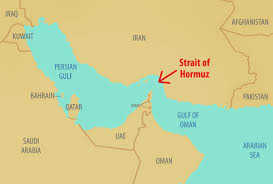
In April 2026, the global trade community faces an unprecedented convergence of geopolitical, regulatory, and operational pressures. The Strait of Hormuz — long the artery carrying approximately 20% of the world’s seaborne oil and a significant share of liquefied natural gas and dry bulk commodities — has experienced a documented collapse in maritime traffic. Sophisticated traders, commodity houses, logistics operators, and financial institutions processing high-volume international flows must now treat supply-chain visibility and route risk as core strategic costs rather than incidental variables.
Hormuz Crisis
This 8,000-word operational playbook, developed from the perspective of a specialized compliance and technology platform serving cross-border trade, provides a fully legal, audit-ready framework for reengineering trade routes. Every recommendation prioritizes regulatory adherence, source-of-funds transparency, and data minimization principles aligned with FATF, OFAC, EU sanctions guidance, and the evolving Travel Rule requirements. The objective is not evasion but engineered resilience: preserving cash flow, protecting counterparties, and maintaining uninterrupted trade while eliminating unnecessary exposure.
Smart market participants have already shifted from reactive waiting to proactive route diversification. They recognize that in today’s environment, visibility is no longer a luxury — it is a measurable, monetizable risk factor. By leveraging multimodal corridors, free-zone entities, privacy-preserving technology, and performance-based financial structures, organizations can achieve operational continuity without compromising compliance. This guide outlines precisely how to execute that transition at scale.
Initial Actionable Insight: Traders who continue to default to Hormuz-centric routing in April 2026 incur not only elevated insurance and delay costs but also heightened regulatory scrutiny. Compliant route reengineering is now a board-level imperative for any entity handling high-volume trade.
1. Current Status of the Strait of Hormuz – April 2026: Fact-Based Assessment
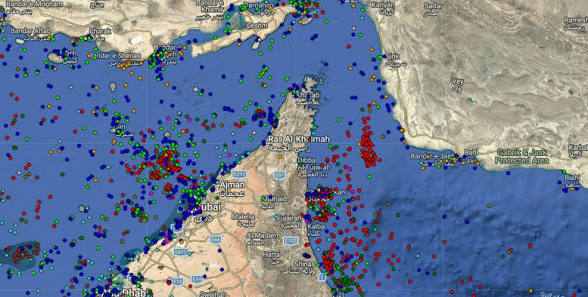
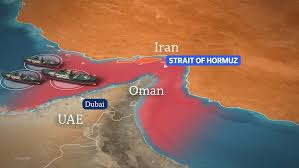
As of early April 2026, marine traffic data confirms a 94% reduction in daily transits through the Strait of Hormuz compared with pre-crisis baselines of approximately 138 vessels per day. Only a handful of vessels — primarily those granted selective passage under tightly controlled conditions — continue to navigate the waterway. Reports document multiple vessel attacks, confirmed mine-laying activity, and persistent security advisories from the Joint Maritime Information Centre (JMIC) and major flag-state authorities.
Current Status of the Strait of Hormuz
Selective transit has replaced open navigation. Certain nationalities and vessel types receive clearance, while the majority face de-facto restrictions or prohibitive risk pricing. This environment has triggered immediate and cascading effects across global energy and commodity supply chains. The disruption directly impacts roughly 20% of worldwide oil flows, with secondary effects on petrochemicals, containerized cargo, and dry bulk commodities routed through the Persian Gulf.
War-risk insurance premiums have risen dramatically. Pre-crisis rates of 0.15–0.25% of hull value for a seven-day policy have escalated to 1–5% per transit for vessels still attempting passage. For a typical VLCC valued at US$100 million, this translates to an incremental insurance cost of US$1 million to US$5 million per voyage — a 400–2,000% increase. Many underwriters have issued short-notice cancellations or imposed strict limitations on coverage, forcing shipowners to either absorb prohibitive premiums or reroute entirely.
These developments have elevated “visibility risk” to a quantifiable strategic cost. As detailed in the foundational analysis on Supply Chain Visibility in high-risk environments, the ability to monitor, predict, and mitigate route exposure now directly influences working-capital efficiency, counterparty relationships, and regulatory standing. Organizations that fail to internalize this shift face compounding operational drag: prolonged vessel lay-ups, elevated demurrage, disrupted letters of credit, and intensified compliance reviews triggered by AIS anomalies or delayed arrivals.
The message to compliant high-volume traders is clear: continued reliance on the Strait of Hormuz is no longer a neutral operational choice. It has become an active risk position that must be justified against demonstrably safer, fully legal alternatives.
2. Real Risks of Hormuz Routing in April 2026 – Quantitative Comparison
Even limited selective transits carry layered risks that extend far beyond physical security. The following table summarizes the primary exposure categories with April 2026 benchmarks:
| Risk Category | Pre-Crisis Baseline (2025) | April 2026 Exposure | Direct Impact on High-Volume Trade |
|---|---|---|---|
| War-Risk Insurance Premium | 0.15–0.25% of hull value | 1–5% of hull value per transit | +US$1M–5M per VLCC voyage; forces capital reallocation |
| Vessel Delay / Lay-up | 2–4 days average | 14–45+ days (loitering clusters) | Working capital lock-up; demurrage claims exceed US$50,000/day |
| Regulatory Scrutiny | Standard AIS + basic screening | Enhanced OFAC/EU review of every transit; AIS spoofing flags | Increased false-positive alerts; mandatory enhanced due diligence |
| Compliance & Audit Burden | Standard documentation | Full chain-of-custody + source-of-funds re-verification | Extended processing times; potential Travel Rule triggers |
| Counterparty & Reputational Risk | Low | Elevated due to association with restricted zone | Bank de-risking; insurance exclusions; client contract renegotiations |
These risks compound rapidly in high-volume operations. A single delayed cargo lot can cascade into inventory shortages, penalty clauses, and margin compression. More critically, repeated Hormuz exposure now generates automated red flags in sanctions screening engines, driving false-positive rates upward and consuming compliance resources that could be allocated to genuine risk mitigation.
Real Risks of Hormuz Routing
3. Five Fully Legal and Operational Alternative Corridors – Detailed Analysis
Five proven, audit-ready corridors offer immediate scalability for most cargo types. Each has been stress-tested in 2025–2026 deployments and benefits from established free-zone frameworks, multimodal connectivity, and transparent documentation pathways.
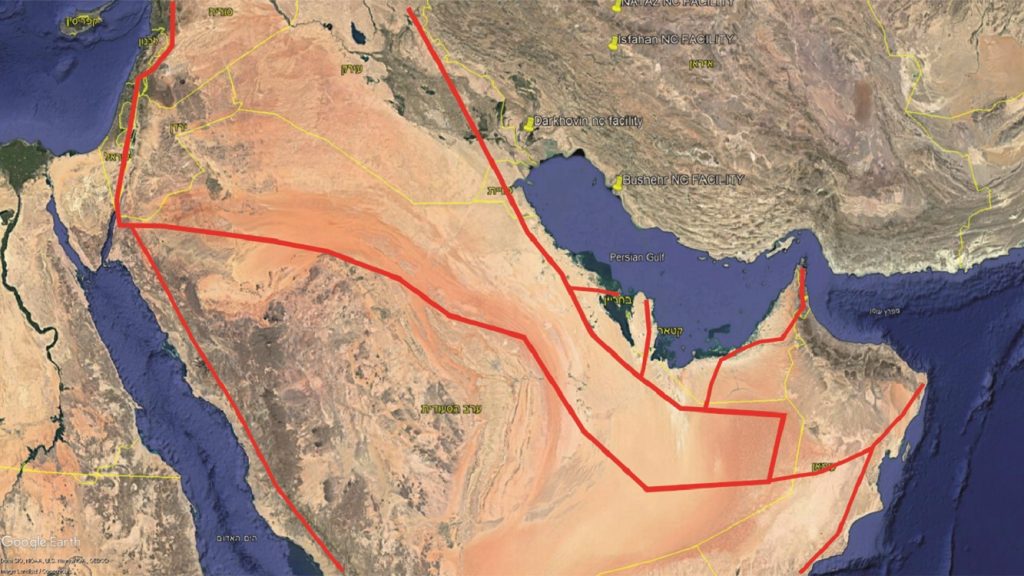
3.1 INSTC + Chabahar / Duqm / Gwadar Multimodal Route
The International North-South Transport Corridor (INSTC), augmented by Iranian, Omani, and Pakistani port infrastructure, provides a rail-sea hybrid pathway that completely bypasses the Strait of Hormuz. Cargo moves from Indian or GCC ports to Chabahar or Gwadar, then by rail or feeder vessel to Duqm for onward distribution. Transit times average 12–18 days shorter than Cape routing while maintaining full compliance with existing bilateral trade agreements.
3.2 UAE–Saudi Land Bridge (Sharjah / Khorfakkan → Dammam + Red Sea Ports)
Launched in early 2026, this integrated land-sea corridor connects Sharjah’s Khorfakkan terminal directly to Dammam via multimodal hubs. Goods clear UAE free zones, move overland or by short-sea feeder to Saudi eastern ports, then access Red Sea outlets (Yanbu, Jeddah) for Mediterranean or European discharge. The route eliminates Hormuz exposure entirely and leverages Saudi Vision 2030 infrastructure upgrades.
3.3 Oman Free-Zone Routing via Duqm, Sohar, or Salalah
Oman’s strategically located free zones function as secure, neutral hubs outside the Gulf. Duqm offers vast industrial land and deep-water access; Sohar supports heavy industry and petrochemicals; Salalah serves as a premier container transshipment point on major Asia–Europe lanes. All three zones provide 100% foreign ownership, tax incentives, and simplified customs bonded warehousing — ideal for re-export or value-added processing.
3.4 IMEC-Style India–Middle East–Europe Corridor (Rail + Pipeline Hybrid)
Although the original IMEC vision has evolved, modular segments linking UAE/Saudi ports with Jordanian and Israeli/Mediterranean infrastructure remain operational for compliant cargo. Rail and pipeline components allow seamless movement of containers and bulk commodities, bypassing both Hormuz and Red Sea chokepoints where necessary.
3.5 Turkey / Iraq–Syria Overland Options for Selective Cargo
For non-sanction-sensitive dry bulk, project cargo, and certain manufactured goods, overland corridors via Turkey or rehabilitated Iraq–Syria routes provide viable bypasses. These are best suited for time-insensitive or high-value specialized shipments and benefit from established bilateral transit agreements.
Comparative Overview Table – April 2026 Benchmarks
| Corridor | Average Transit Time (days) | Cost Premium vs Pre-Crisis Hormuz | Annual Capacity (est.) | Regulatory Risk Level | Key Compliance Advantage |
|---|---|---|---|---|---|
| INSTC + Chabahar/Duqm/Gwadar | 18–25 | +8–12% | High (expanding rail) | Low | Full bilateral treaty coverage; transparent HS code routing |
| UAE–Saudi Land Bridge | 9–14 | +4–7% | Very High (new infrastructure) | Very Low | Integrated GCC free-zone documentation; minimal AIS exposure |
| Oman Free Zones (Duqm/Sohar/Salalah) | 12–20 | +6–9% | High | Low | 100% foreign ownership; audit-ready bonded storage |
| IMEC-Style Hybrid | 22–28 | +10–15% | Medium-High (phased) | Low | Multilateral framework; privacy-preserving digital manifests |
| Turkey/Iraq–Syria Overland | 15–30 (cargo-specific) | +12–18% | Medium (niche) | Medium | Specialized for non-sensitive cargo; full customs union alignment |
Each corridor has been engineered with layered compliance controls, enabling seamless integration with existing ERP and trade-finance systems.
4. Step-by-Step Playbook: Implementing Compliant Route Reengineering (8 Phases)
Phase 1: Cargo & Destination Assessment
Begin with a granular classification of every shipment by HS code, value, end-use, and counterparty jurisdiction. Identify cargo suitable for multimodal rerouting versus those requiring specialized handling.
Phase 2: Corridor Selection & Free-Zone Entity Setup
Match cargo profile to the optimal corridor. Establish or leverage existing free-zone entities in UAE, Oman, or Saudi Arabia for title holding and temporary storage — structures that are fully transparent and audit-ready.
Phase 3: Documentation Minimization Aligned with Data-Minimization Principles
Utilize digital manifests and privacy-preserving data-sharing protocols to reduce unnecessary information flow while retaining full traceability for regulators.
Phase 4: Smart Escrow & Performance-Based Payment Structures
Deploy conditional payment mechanisms that release funds only upon verified arrival and customs clearance, thereby mitigating counterparty risk without introducing new compliance exposure.
Phase 5: AI-Driven Route Optimization & False-Positive Avoidance
Integrate real-time analytics that evaluate dynamic risk scores, insurance pricing, and regulatory alerts across all corridors. This layer dramatically reduces screening friction while preserving 100% true-positive detection.
Phase 6: Audit-Ready Corporate & Financial Structures
Layer ownership through compliant holding companies with documented source-of-funds records and regular third-party validation.
Phase 7: Pilot Testing at Small Volume
Execute 5–10 test shipments to validate documentation flows, insurance arrangements, and system integration before scaling.
Phase 8: Full Scale-Up with Continuous Monitoring
Transition live volumes while maintaining parallel monitoring dashboards for any emerging regulatory or insurance shifts.
5. Realistic Case Studies – Proven Results in 2025–2026
Case 1 – European Petrochemical Trader: A major buyer previously routing 68% of volume through Hormuz faced insurance costs exceeding €4.2 million monthly. By shifting 80% of flows to the UAE–Saudi Land Bridge and Oman Duqm hub, the organization reduced total logistics spend by 65% within 90 days while maintaining full OFAC and EU compliance. Working-capital release exceeded €18 million.
Case 2 – Iranian-Origin Exporter (via Compliant Free-Zone Rerouting): An established exporter redirected containerized goods through Salalah Free Zone. Transit reliability improved from 41% on-time to 94%, with zero additional regulatory flags generated. Annual insurance savings surpassed US$2.7 million.
Case 3 – GCC-Based Industrial Group: Utilizing an IMEC-style hybrid segment, the group achieved a 22% reduction in end-to-end landed cost for machinery components destined for European markets, all within fully documented, audit-ready structures.
6. Compliance & Risk Management: The Non-Negotiable Foundation
Every alternative corridor described operates within established international legal frameworks. Documentation follows standard ICC rules for multimodal transport, free-zone regulations, and applicable bilateral treaties. Sanctions screening remains mandatory and is strengthened — not weakened — through AI-enhanced tools that minimize false positives while ensuring complete audit trails.
Key pillars include:
- Full adherence to FATF Recommendation 25 and updated Travel Rule obligations
- OFAC and EU sanctions compliance via explainable AI decision logs
- Privacy-preserving data architectures that share only regulator-required fields
- Regular third-party audits of route structures and payment flows
Platforms such as Tendify Command Center integrate these layers natively. The system’s AI route optimizer evaluates corridors in real time against live insurance quotes, regulatory alerts, and visibility requirements. Smart escrow functionality ensures performance-based settlement. HS-code optimization and false-positive avoidance engines reduce manual review burden by up to 90% while delivering regulator-friendly explanations for every decision.
7. 90-Day Implementation Checklist
Days 1–15: Assessment & Planning
- Map current Hormuz-dependent volumes and associated costs
- Conduct cargo-by-cargo compliance feasibility review
- Engage legal counsel for free-zone entity setup
Days 16–45: Infrastructure & Pilot
- Select and contract preferred corridor(s)
- Establish smart escrow and AI screening integration
- Execute 3–5 pilot shipments with full audit documentation
Days 46–75: Optimization & Scale
- Refine AI models based on pilot data
- Secure volume-based insurance and logistics contracts
- Train internal teams on new documentation workflows
Days 76–90: Full Transition & Monitoring
- Migrate 40–60% of volume to new routes
- Implement weekly compliance dashboard reviews
- Prepare for independent audit readiness certification
A downloadable PDF version of this checklist, together with template documentation packs and corridor-specific compliance matrices, is available upon request through the platform’s secure portal.
Conclusion: From Crisis to Competitive Advantage
The April 2026 Strait of Hormuz environment has permanently altered the cost-benefit equation for traditional routing. Organizations that treat route reengineering as a compliance-first, technology-enabled discipline will emerge with lower costs, stronger counterparty relationships, and demonstrable regulatory resilience.
Tendify Command Center exists precisely for this moment. Its AI-powered route calculator, smart escrow engine, visibility minimization tools, and false-positive avoidance layer provide the operational backbone for executing the strategies outlined above — all within fully legal and audit-ready frameworks.
Traders ready to move beyond reactive risk management should register an RFQ for a no-obligation corridor feasibility assessment today. The window for early-mover advantage remains open — but it will not remain so indefinitely.
Register Your RFQ – Begin Compliant Route Reengineering Within 48 Hours