Blog
The Trump-Beijing Shocks: Rewriting the Middle East Trade and Logistics Map

In the high-stakes world of international trade, a single diplomatic summit can rewrite shipping lanes, shift commodity flows, and open or close billion-dollar markets overnight. President Donald Trump’s recent visit to Beijing, unfolding amid escalating tensions in the Strait of Hormuz and broader Middle East conflicts, is exactly that kind of event. As someone who’s spent decades building and scaling export operations across volatile corridors, I’ve learned that geopolitical shocks aren’t just headlines—they’re direct hits to your margins, lead times, and risk exposure.
⚡ Fast Trade Intelligence: Beijing Summit Takeaways
- The Core Conflict: U.S. pressures China on Iranian oil and Strait of Hormuz chokepoints; China retaliates with blocking rules protecting its energy supply.
- Immediate Action for Traders: Diversify routes via Oman (Duqm) or Iraq-Turkey overland corridors; factor a 15-20% spike in war-risk insurance premiums into upcoming GCC fixtures.
- The Digital Hedge: Shift from rigid LCs to agile, platform-based escrow systems and real-time compliance tracking to dynamic sanctions evolution.

The Trump-Beijing Shocks
This isn’t abstract analysis. When energy prices spike past $105 per barrel due to Hormuz disruptions, your container costs, insurance premiums, and buyer negotiations all change in real time. The good news? Savvy traders who understand these shifts and use the right tools can turn disruption into durable advantage. That’s why platforms like Platform.Tendify.Net have become essential—they give you real-time visibility, compliance engines, and direct buyer connections when traditional routes get blocked.
Trading Under Fire: Playbook for Iran-UAE War Risk Management
Why This Summit Matters More for Traders Than Diplomats
When a political summit dominates global headlines, diplomats look at communiqués and press releases. Traders, however, look at order books, freight fixtures, and insurance indices.
President Donald Trump did not arrive in Beijing merely to engage in standard statecraft; he brought an unprecedented 17-member economic delegation comprising the absolute titans of Wall Street, Silicon Valley, and traditional American manufacturing. When figures like Elon Musk, Jensen Huang of Nvidia, Tim Cook of Apple, and Larry Fink of BlackRock sit across the table from President Shi Jinping, the agenda shifts entirely from abstract geopolitics to cold, hard economic transaction.

Trump-Beijing
The primary catalyst driving Washington to place Middle Eastern stability at the center of these bilateral negotiations is the severe domestic inflationary pressure caused by recent energy shocks. With oil prices testing critical thresholds above $105 per barrel due to systemic bottlenecks in the Persian Gulf, the White House is acutely aware that its domestic economic agenda hinges on securing global supply lines. Trump’s strategy is clear: utilize access to American technology, artificial intelligence chips, and agricultural exports as leverage to compel Beijing to use its massive economic influence—specifically as the primary consumer of Iranian crude—to stabilize the Strait of Hormuz.
For global market operators moving bulk commodities, petrochemicals, or manufactured goods across the vital corridors connecting Asia, the GCC, and Europe, the outcomes of these high-level discussions are already fracturing the traditional trading landscape. Navigating this environment requires separating the immediate operational shocks from the long-term structural shifts.
The Short-Term Shocks You Are Already Feeling
Geopolitical volatility is never a distant macroeconomic concept—it lands directly on your balance sheet within hours. If your logistics team is currently managing active shipments through the region, you are likely already confronting several operational bottlenecks:
Bunker Adjustment Factor (BAF) and Demurrage Escalation: The immediate surge in crude volatility has caused maritime carriers to aggressively adjust their Bunker Adjustment Factors. For high-volume exporters, this introduces sudden, unbudgeted overheads. Simultaneously, port congestion and heightened security protocols within GCC hubs have dramatically increased the risk of demurrage and detention fees, turning minor transit delays into severe capital drains.
Surging Hull and War-Risk Insurance Premiums: Maritime underwriters at Lloyd’s and other major international syndicates have reassessed risk parameters for the Gulf of Oman, the Persian Gulf, and adjacent waters. War-risk premiums have spiked significantly, forcing traders to either absorb these massive costs into their existing margins or attempt to renegotiate Incoterms—such as shifting from CIF to FOB mid-contract—which frequently triggers intense buyer friction.
Friction in Chinese Energy Sourcing Patterns: As the U.S. delegation pushes for tighter enforcement of energy flows, independent Chinese “teapot” refineries and major state-owned enterprises are recalculating their risk exposure. Any sudden tactical shift or temporary reduction in Beijing’s off-take of unsanctioned or heavily discounted crude forces an immediate re-allocation of global tanker capacity, altering regional freight availability overnight.
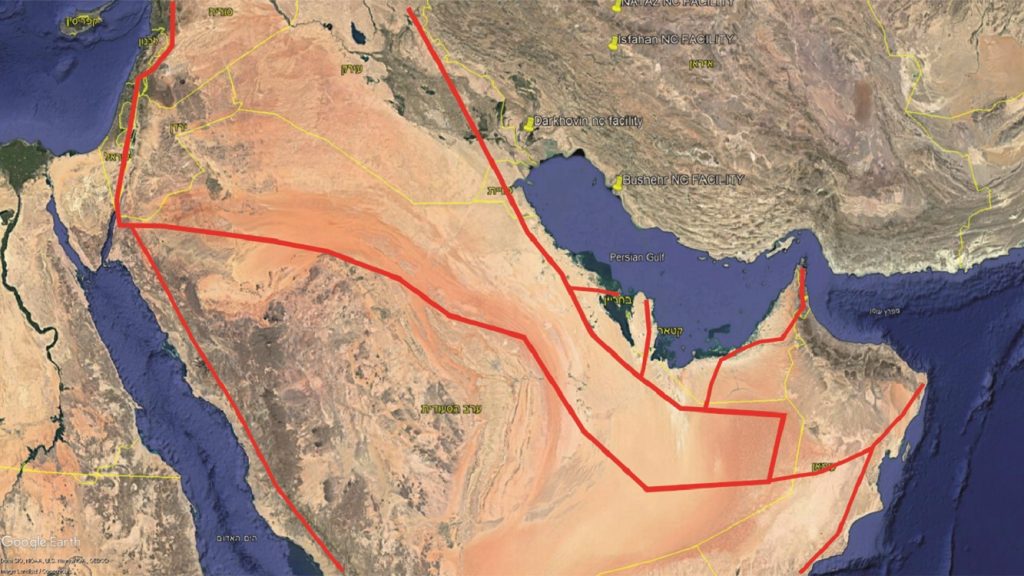
Acute Multi-Modal Re-Routing Pressures: Relying on standard maritime routes transiting primary chokepoints has become an operational gamble. Savvy freight forwarders are aggressively pivoting toward multi-modal alternatives. This includes routing cargo via overland corridors through Oman (utilizing ports like Duqm or Salalah to bypass Hormuz entirely), leveraging cross-border trucking networks through Saudi Arabia, or activating alternative transit routes via Iraq and Turkey into the Mediterranean.
The Long-Term Strategic Opportunities
While short-term disruptions require immediate fire-fighting, they also accelerate structural transformations. The traders who thrive during these crises are those who look past the immediate chaos to position their organizations for the post-summit landscape:
Accelerated Supply-Chain Insulation (The China+1 Strategy): Procurement managers are rapidly moving away from single-source dependencies. The current volatility has proven that relying on a single geographic hub for raw materials or intermediate inputs is a critical vulnerability. We are witnessing a massive structural shift toward “friendshoring,” where corporations are redistributing their manufacturing and sourcing bases across trusted, politically insulated regional blocs.
The Rise of Advanced Re-Export Ecosystems in UAE Free Zones: As direct trading routes face heightened regulatory and compliance scrutiny, the strategic value of the UAE’s logistics architecture has doubled. Utilizing setups in JAFZA, KIZAD, or DMCC allows international operators to legally disassemble, re-package, process, or add value to commodities, effectively shifting the country of origin and enabling smooth distribution into restricted Western or Asian markets.
Institutionalizing Non-Dollar Financial Corridors: One of the most profound long-term outcomes of this geopolitical friction is the rapid maturation of alternative trade finance mechanisms. The expansion of local currency settlement systems—such as the Vostro/Nostro frameworks operating between India and the GCC, and bilateral Yuan-Dirham clearing systems—is systematically stripping out the regulatory compliance friction and clearing delays traditionally imposed by Western intermediary banks.
The Digital Imperative in Risk Management and Compliance: The era of managing global trade via legacy spreadsheets, paper-based Letters of Credit, and manual compliance checks is officially over. Overlapping sanctions regimes, dynamic export control lists, and volatile market spreads have made automated compliance, real-time maritime tracking, and AI-driven predictive intelligence non-negotiable requirements for staying operational and protecting capital.
The Operational Reality: Process Over Budget
Throughout my career in international trade, I have watched multi-million-dollar trading houses stumble and collapse during geopolitical shifts, while lean, agile operators managed to double their profitability. The differentiating factor is never the size of your corporate budget; it is the precision of your intelligence, the flexibility of your supply chain, and the speed of your execution.
When structural shifts occur, the market moves instantly. The traders who win are those who have already mapped out alternative logistics corridors, pre-vetted secondary suppliers, automated their compliance screening, and equipped their execution teams with platforms that allow them to lock in arbitrage spreads and secure freight capacity before their competitors even finish reading the morning headlines.
The Khorfakkan Pivot: Master the UAE Land-Bridge to Bypass Hormuz Risks
The Hormuz Factor: Energy Chokepoint and Your Bottom Line
The Strait of Hormuz is not just a geographical feature; it is the central nervous system of global maritime trade. Representing a chokepoint through which nearly a fifth of the world’s liquid petroleum consumption passes daily, any operational friction within this narrow corridor triggers an immediate, non-linear cascade across the global economy.

The Hormuz Factor
For international trade executives, evaluating the risks associated with Hormuz is not a theoretical macroeconomic exercise. A disruption here does not merely affect the balance sheets of state-owned oil majors or multinational energy conglomerates. Instead, it alters the unit economics of every bulk commodity contract, inflates ocean freight spot rates within hours, and destabilizes the just-in-time inventory schedules of Fast-Moving Consumer Goods (FMCG) importers throughout the region. When the transit security of the Gulf is compromised, the financial shockwaves travel directly down the supply chain, squeezing margins for businesses that have no direct connection to the energy sector.
To protect corporate capital and maintain supply chain continuity in this highly volatile climate, market operators must monitor three critical operational vectors right now.
1. Freight Rate Spikes and Strategic Route Diversification
The moment geopolitical tensions escalate in the Strait of Hormuz, maritime underwriters and container lines adjust their pricing structures almost instantaneously. Spot rates for both dry bulk carriers and product tankers experience vertical spikes as carriers implement General Rate Increases (GRIs) alongside compounding emergency routing surcharges.
In this environment, waiting for traditional shipping lanes to normalize is an operational failure. Proactive logistics managers are already modeling and executing alternative multi-modal routing strategies to completely bypass the chokepoint:
Omani Port Activation: Utilizing the deep-water ports of Duqm and Salalah in Oman allows traders to discharge or load cargo outside the Persian Gulf entirely, significantly lowering war-risk insurance premiums.
Expanded Jebel Ali Transshipment: Leveraging Dubai’s Jebel Ali as a massive sea-to-air or sea-to-land transshipment hub provides a critical operational buffer for high-value components and time-sensitive FMCG inventory.
Overland Transit Corridors: Activating cross-border trucking networks and overland freight corridors via the Turkey-Iraq customs framework allows operators to maintain direct supply lines into the Levant and European markets when maritime paths face strict security lockouts.
Before committing working capital to a specific voyage, smart operators utilize the specialized routing intelligence at platform.tendify.net. By running scenarios through the World Trade Explorer and the 3D Container Optimization Tool, execution teams can simulate multi-modal deviations, calculate precise volumetric efficiencies, and accurately forecast true landed costs before a vessel ever leaves port.
2. Cross-Border Commodity Price Correlations
Energy costs do not exist in a vacuum; they serve as the foundational floor for global commodity pricing. When oil prices climb or stabilize at elevated premiums due to regional friction, a predictable inflationary ripple effect moves across seemingly unrelated sectors:
Bitumen and Petrochemicals: As direct derivatives of the refining process, downstream industrial inputs like bitumen and polymer resins experience immediate pricing pressure. Indian infrastructure developers importing bitumen, for instance, find their long-term project budgets severely compromised overnight.
Construction and Infrastructure Inputs: Energy-intensive commodities such as cement, steel, and clinker feel the immediate impact of increased manufacturing and kiln operation costs, directly affecting procurement schedules for massive infrastructure initiatives like Saudi Vision 2030 projects and Iraqi reconstruction tenders.
Agricultural and Consumer Disruption: Grain shipments, bulk wheat imports, and consumer packaged goods must absorb the dual blow of inflated ocean freight and increased manufacturing overheads, forcing buyers to aggressively renegotiate contract terms mid-transit.
To navigate these shifting cross-border dynamics, market analysts use the Arbitrage Hunter and real-time sentiment engines available via the Tendify Command Center. These tools analyze historical price correlations and immediate regional spreads, allowing traders to spot sudden price disparities across the India-GCC-Central Asia corridors and lock in profitable margins before the broader market adjusts.
3. Sanctions, Compliance Evolution, and Regulatory Friction
The strategic shadow play between Washington and Beijing directly shapes the compliance reality on the trading floor. Any high-level diplomatic understanding regarding the oversight of Iranian oil flows—or the creative bypass of existing restrictions—means that the regulatory framework is in a state of constant, dynamic evolution.
For an international trading entity, an unexpected compliance violation can be more catastrophic than a physical logistics delay. Financial institutions in primary clearing hubs like Dubai, Singapore, and Hong Kong are responding to this volatility by implementing ultra-stringent, automated Know Your Customer (KYC) and Anti-Money Laundering (AML) screenings. Standard trade finance documents, vessel logs, and bills of lading are facing unprecedented levels of structural scrutiny.
Operating safely in 2026 requires moving away from manual compliance checklists. Deploying automated risk-mitigation modules like Sanctions Pro on platform.tendify.net has become an absolute operational necessity. By cross-referencing real-time export documentation requirements, verifying ultimate beneficial ownership (UBO), and screening dynamic vessel tracking data against global enforcement databases, compliance teams can ensure their transactions remain completely insulated from regulatory friction.
GCC Traders: Positioning for the Post-Summit Landscape
The sovereign wealth funds and trade ministries of the Gulf Cooperation Council (GCC) are analyzing the developments in Beijing with intense scrutiny. For the United Arab Emirates and the Kingdom of Saudi Arabia, this summit arrives at a critical juncture in their economic histories. Both nations have committed trillions of dollars toward decoupling their gross domestic product from pure hydrocarbon reliance, channeling capital into massive infrastructure developments, artificial intelligence infrastructure, and regional logistics hubs.
Any sustainable de-escalation of tensions in the Strait of Hormuz resulting from U.S.-China diplomatic frameworks does not just secure oil routes—it breathes vital liquidity and operational predictability into these mega-projects. When regional risk premiums drop, foreign direct investment accelerates, and supply chains stabilize. For GCC-based exporters, importers, and distribution houses, the post-summit landscape presents an immediate window of opportunity. Capitalizing on this requires shifting from defensive risk management to aggressive strategic positioning across four practical trade plays.
1. Advanced Re-Export Mastery via UAE Hubs
As long as direct maritime corridors and compliance frameworks surrounding legacy regional markets remain highly restricted or heavily monitored, Dubai’s position as the premier clearinghouse of the Middle East becomes an invaluable asset. Forward-thinking trading operations do not view trade barriers as dead ends; they view them as re-routing puzzles.
When direct shipping lanes are compromised, the ability to utilize the UAE’s world-class customs architecture to receive, add value to, and re-route cargo is what keeps international trade flows profitable. Selecting the precise regulatory framework for your operations dictates your ultimate margin. For a definitive, operational blueprint on navigating these regulatory frameworks, traders should consult the comprehensive 2026 guide, “Types of Re-Export Setup in the UAE: Free Zone vs Mainland vs Bonded“, available on our blog. This playbook breaks down exactly how to structure your physical and corporate presence to maximize customs duties exemptions and legally optimize cross-border transshipments.
2. Capitalizing on India-GCC Bilateral Synergies
One of the most significant structural shifts accelerated by recent geopolitical friction is the rapid adoption of alternative non-dollar clearing mechanisms. The institutionalization of local currency settlement systems—specifically the Vostro and Nostro account mechanisms operating between India and the GCC—has transformed the economics of the Indo-Arabian trade lane.
By settling high-volume transactions directly in Indian Rupees (INR) and UAE Dirhams (AED), traders completely eliminate the traditional Western correspondent banking network. This slashes hidden transaction fees, eliminates the risk of sudden capital freezes during compliance reviews, and insulates profit margins from U.S. dollar volatility. To capitalize on this rapidly growing corridor, execution teams must maintain absolute precision over their landed costs from day one. Utilizing the specialized India Duty and GCC VAT calculators on platform.tendify.net allows cross-border traders to automatically model complex tariff structures and local tax liabilities, ensuring your quotes remain hyper-competitive while preserving your bottom line.
3. Tapping into Saudi Vision 2030 and Iraqi Reconstruction Engines
The demand for physical commodities across the Middle East is currently being driven by two massive, multi-year macro-economic engines: the relentless construction phase of Saudi Arabia’s Vision 2030 giga-projects and the extensive, sovereign-backed infrastructure tenders across Iraq. These environments require a constant, uninterrupted influx of structural steel, cement, heavy machinery, specialized laboratory instrumentation, and fast-moving consumer goods (FMCG) to support growing logistical hubs.
Securing a piece of these high-value procurement pipelines requires speed, verified institutional trust, and ironclad legal documentation. Traders can instantly position themselves ahead of the competition by deploying the specialized toolsets within the Tendify Command Center. By utilizing our verified Buyer Directories, exporters can bypass traditional gatekeepers and establish direct communication channels with vetted procurement managers in Riyadh and Baghdad. Furthermore, when structuring these complex, cross-border transactions, deploying the ProTrade Contract Generator ensures your commercial agreements are automatically populated with optimal Incoterms, localized dispute resolution clauses, and tight payment terms designed to protect your capital in volatile territories.
4. Securing a Competitive Edge Through Trade Sustainability
While geopolitical summits dominate immediate news cycles, a quieter but equally profound regulatory shift is altering global trade: the institutionalization of strict environmental, social, and governance (ESG) compliance frameworks across major buying blocs in Europe and East Asia. Mechanisms like the European Union’s Carbon Border Adjustment Mechanism (CBAM) are no longer future concepts; they are active enforcement realities that penalize carbon-intensive supply chains.
GCC exporters who proactively integrate carbon accounting into their logistics operations are turning a compliance requirement into a massive competitive differentiator. By deploying CarbonPro on platform.tendify.net, trading houses can accurately track, audit, and document the emissions footprint of their cargo from the point of origin to final delivery. Presenting international buyers with clean, verifiable carbon data does more than just ensure regulatory compliance—it positions your organization as a premium, future-proof partner, allowing you to secure preferential financing rates and lock in long-term supply contracts that less prepared competitors will inevitably lose.
Risk Management: Moving Beyond Traditional LCs and Wires
One of the clearest lessons from recent volatility is the need for smarter payment and compliance systems. The summit discussions around trade stabilization could accelerate adoption of escrow services and digital trust frameworks over traditional letters of credit.
Actionable steps I’ve implemented in my own operations:
- Shift high-value deals to platform-based Trust Accounts for secure, transparent settlement.
- Build multi-corridor logistics plans with real-time tracking.
- Maintain updated HS Code classifications and incoterm strategies using Tendify’s specialized calculators.
- Document everything with professional builders for proforma invoices, contracts, and checklists.
These aren’t nice-to-haves. In uncertain times, they are what separate profitable deals from costly disputes.
The Liquidity Challenge: Cross-Border Settlement Under Pressure
When U.S.-China tech and energy sanctions intertwine, traditional banking corridors in the GCC and Asia experience immediate compliance friction. Waiting 5 days for a compliance clearance on a standard wire transfer can kill a time-sensitive bitumen or petrochemical cargo.
To mitigate this, forward-thinking operators are leveraging decentralized trade finance structures. Integrating multi-currency settlement routes—such as Yuan-denominated clearing or secure, asset-backed digital escrow mechanisms—ensures liquidity keeps moving even if individual clearing banks tighten their risk parameters. Your risk management playbook for 2026 must treat alternative payment infrastructure not as a backup plan, but as a primary operational lane.
Technology as Your Geopolitical Hedge
The presence of heavy hitters from the artificial intelligence, semiconductor, and sovereign finance sectors within the American delegation in Beijing sends an unmistakable signal to the global markets: the next era of trade resilience will not be defined by physical infrastructure alone, but by data dominance and technological agility. When leaders from the world’s most advanced chip designers and asset management firms sit down to negotiate bilateral trade frameworks, they are acknowledging that information asymmetry is the ultimate economic battlefield.
In this new paradigm, technology is no longer just an administrative cost-center or an efficiency tool; it is your primary strategic hedge against geopolitical chaos. When traditional logistics corridors face sudden operational closures, or when overlapping sanctions regimes change overnight, the trading houses that rely on institutional memory and manual processes face catastrophic operational blind spots. Conversely, the operators who treat data as a core commodity can insulate their supply chains from external shocks. At Tendify, we engineered the Command Center precisely to thrive within this high-volatility environment, providing global trade executives with the precise digital tools required to convert external macroeconomic uncertainty into internal operational clarity.
To maintain market leadership and protect capital today, serious trading operations must fully deploy four core modules within the platform ecosystem.
1. AI Market Pulse: Quantifying Geopolitical Sentiment
Traditional market analysis tools are inherently lagging indicators, relying on historical transaction records and delayed customs filings that reflect the past rather than forecasting the future. In a rapidly changing geopolitical landscape, waiting for a formal policy announcement or a mainstream news wire to confirm a market shift means you are already too late to protect your margins.
The AI Market Pulse engine at platform.tendify.net fundamentally redefines how trading houses ingest market intelligence. By utilizing advanced machine learning algorithms to continuously scan, aggregate, and analyze multi-lingual data streams—ranging from regional shipping registries and local trade policy adjustments to macroeconomic sentiment across GCC and Asian markets—the module identifies early-stage market anomalies. Whether it is a subtle shift in bulk commodity pricing trends across Central Asian borders or sudden sentiment volatility regarding energy flows, this tool quantifies the noise. It provides procurement teams with predictive trend modeling, allowing you to hedge your positions, adjust forward contracts, and exploit cross-border price disparities before they are priced into the broader market.
Hormuz May 2026: The Trader’s Survival Guide to the Jask Escalation
2. SeaConnect: Advanced Maritime Intelligence and Route Simulation
When maritime chokepoints like the Strait of Hormuz or the Bab al-Mandab face heightened security risks, naval tracking and precise logistics visibility become the thin line separating a profitable voyage from a multi-million-dollar cargo abandonment. Operators cannot afford to rely on basic automated identification system (AIS) tracking data that provides no contextual risk analysis.
Our SeaConnect module equips your logistics division with institutional-grade maritime intelligence. Beyond standard vessel tracking, the tool actively monitors port congestion indices, calculates real-time anchorage delays across key GCC and Asian hubs, and assesses localized risk premiums along critical shipping lanes. If a localized disruption occurs, the platform doesn’t merely report the incident; it allows execution teams to dynamically model alternative multi-modal routes. By integrating automated transit-time adjustments and factoring in emergency carrier surcharges, SeaConnect empowers you to confidently execute strategic re-routing plans—such as shifting from direct gulf transit to overland corridors—ensuring your supply chain remains uninterrupted.
3. Warehouse Optimizer: Transitioning from “Just-in-Time” to “Just-in-Case”
The legacy supply chain model of lean, just-in-time inventory management was built for a hyper-globalized world that no longer exists. Today’s structural friction and localized transit delays mean that running thin safety stocks is a direct invitation to operational paralysis and contractual default.
Navigating this reality requires transforming your storage and distribution strategy from a passive warehouse setup into a dynamic buffers system. The Warehouse Optimizer within the Tendify Command Center provides real-time, multi-nodal visibility over your entire regional inventory matrix. By dynamically cross-referencing live transit data from SeaConnect with your active sales pipelines, the module automatically calculates optimal safety stock thresholds based on localized volatility metrics. If the platform detects an escalating risk premium along a primary supply line, it triggers immediate alerts to re-balance inventory across your regional nodes—such as optimizing your holding volumes within UAE free zones—preventing costly stockouts while ensuring your working capital isn’t permanently locked up in stagnant over-supply.
4. Enterprise Compliance and Automated Document Engines
As the regulatory friction between major global trading blocs intensifies, the documentation requirements imposed by customs authorities, clearing banks, and international maritime underwriters are expanding exponentially. A single missing clause in a commercial agreement or a minor classification error in a customs declaration can trigger intense regulatory audits, severe capital freezes, or outright cargo seizures.
Operating safely in this environment requires institutionalizing absolute document precision. Tendify’s full suite of compliance and specialized document builders—including our ProTrade Contract Generator and dynamic Sanctions Pro check engines—completely removes the risk of human error from your execution pipeline. The platform enables compliance teams to instantly generate ironclad, localized proforma invoices, verified bills of lading, and custom compliance checklists that adapt to evolving trade laws. By automating HS code classifications and ensuring every document perfectly aligns with current international trade frameworks, you guarantee that your shipments pass through complex customs checkpoints seamlessly, keeping your operations fully compliant and your capital completely secure.
Building Long-Term Resilience: Lessons from Volatility
Throughout my career navigating the highly volatile corridors of global commerce, I have witnessed market transitions that separated the industry’s enduring institutions from those that suddenly collapsed. The giants that stumbled did not fail because they lacked capital, logistics networks, or established buyer relationships. They failed because they suffered from structural inertia—an inability to recognize that the geopolitical and macroeconomic ground was shifting beneath them. They treated systemic volatility as a temporary crisis to be outwaited, rather than a permanent evolution in how global trade operates.
Conversely, the nimble operators who thrived during these historic disruptions were those who adapted early, actively anticipating architectural shifts in international relations. The outcomes of the recent summit in Beijing—regardless of the sanitized wording in the final diplomatic communiqués—will fundamentally accelerate several macroeconomic trends that have been quietly gaining momentum.
For enterprise trade executives, long-term resilience is no longer an abstract corporate objective. It is an active operational discipline built upon four foundational structural transformations.
1. The Realignment of Supply Chains: Nearshoring and Friendshoring
The hyper-globalized supply chain model of the early 2000s, which prioritized lowest-unit-cost sourcing above all else, is being systematically dismantled. The friction between major global trading blocs has made long-distance, single-source dependencies an unacceptable corporate liability. We are entering the era of localized trade fragmentation, where supply lines are being compressed into trusted regional alliances and ideologically aligned blocs.
Nearshoring and friendshoring are no longer just buzzwords discussed at economic forums; they are active capital-reallocation strategies. Forward-thinking trading firms are deliberately sacrificing marginal cost efficiencies to secure operational certainty. This means establishing secondary and tertiary production bases closer to primary demand markets or within politically insulated zones—such as expanding manufacturing setups within the GCC or leveraging Central Asian trade corridors. By aligning your procurement architecture with reliable geopolitical alliances, you protect your distribution channels from sudden tariff retaliations, embargoes, and catastrophic maritime chokepoint closures.
2. Digital-First Compliance as a Strategic Weapon
The regulatory landscape governing international trade has reached an unprecedented level of complexity. The intersection of unilateral Western sanctions, China’s increasingly assertive blocking rules, and dynamic export control lists has created a regulatory minefield where a single transaction can inadvertently violate overlapping legal frameworks.
In this hyper-regulated environment, traditional paper-based compliance and manual verification processes are no longer just inefficient—they are dangerous. Waiting days for legal teams to manually vet ultimate beneficial owners or cross-reference dual-use goods lists slows down execution speed and alienates buyers. Resilient trading organizations treat compliance not as an administrative bottleneck, but as a core competitive advantage. Transitioning to a digital-first compliance infrastructure allows trade compliance teams to automate real-time entity screening, dynamically monitor vessel flags, and instantly update export documentation. When your organization can clear complex regulatory hurdles in minutes while competitors spend weeks stuck in compliance reviews, you win the deal.
3. Multimodal Logistics Mastery and Chokepoint Insulation
Relying exclusively on a single maritime shipping route is a critical vulnerability that can halt your cash flow overnight. When regional chokepoints like the Strait of Hormuz, the Suez Canal, or the Bab al-Mandab face escalating security risks or operational blockades, the traditional maritime spot market panics, sending freight rates and insurance premiums into unpredictable spirals.
True logistics resilience requires absolute multi-modal fluency. Modern supply chain architects do not simply book container space on a ship and hope for the best; they build dynamic, interconnected logistics matrixes that integrate ocean, air, rail, and overland trucking. If a critical maritime corridor experiences structural friction, a resilient operator can instantly pivot cargo flows—routing goods overland through established customs networks like the Iraq-Turkey framework, utilizing sea-to-air transshipment hubs in the UAE, or leveraging deep-water ports situated outside the immediate conflict zone. This level of operational agility ensures your cargo keeps moving, your delivery timelines remain intact, and your customer relationships are preserved when traditional transit routes fail.
4. Overthrowing the “Gut Feel” Model: Data-Driven AI Decision Making
For decades, the international commodity and trade sectors operated on intuition, legacy relationships, and historical precedents. Procurement directors bought inventory based on cyclical patterns, and logistics managers booked freight based on seasonal trends. However, in an era defined by non-linear geopolitical shocks and flash market volatility, relying on “gut feel” is a recipe for severe capital loss.
The future of global trade belongs to data-driven organizations that leverage artificial intelligence to achieve predictive visibility. Survival requires ingesting and synthesizing millions of disparate data points in real time—tracking ocean carrier capacity drops, monitoring cross-border price disparities, analyzing real-time customs policy changes, and quantifying sentiment shifts across key geopolitical nodes. Transitioning to an AI-powered trade operating system allows executives to move away from reactive crisis management and toward proactive market positioning. It enables your execution teams to stress-test your supply chains against hypothetical disruptions, calculate true landed costs under various tariff scenarios, and lock in profitable arbitrage margins before the rest of the market even perceives the opportunity.
Geopolitics as an Operating System Variable
The ultimate lesson of the current volatility is a philosophical one: successful international traders do not look at geopolitics with apprehension or fear. They do not view a high-stakes diplomatic summit or a regional trade dispute as an unpredictable external crisis that ruins their business plans. Instead, they treat geopolitics as just another variable within their corporate operating system.
Geopolitical risk can be modeled with precision, mitigated through advanced technology, and ultimately monetized by those who maintain superior operational flexibility. When a structural shock alters global trade lanes and commodity flows, it simultaneously creates massive pricing dislocations and supply vacuums. The organizations that have institutionalized resilience—those that have diversified their regional hubs, automated their compliance, mastered multi-modal logistics, and armed their teams with real-time predictive intelligence—are the ones that seamlessly capture these market inefficiencies. They do not merely survive the turbulence; they capture market share, deepen client trust, and emerge from every period of volatility with significantly stronger margins.
Next Steps: Turn Insight into Actionable Advantage
Don’t wait for the next headline to force your hand. The traders winning in 2026 are those mapping scenarios now and equipping their teams with superior tools.
Head over to Platform.Tendify.Net today. Test the full Command Center, run your next deal through the calculators and simulators, and connect directly with verified partners who are already navigating these same waters. Whether you’re optimizing a bitumen shipment to India, preparing tender documents for Iraqi reconstruction, or exploring new re-export channels in the UAE, the platform gives you the operating system to move with confidence.
The world of global trade rewards preparation over prediction. Those who build robust systems, maintain multiple options, and leverage intelligent platforms will not only survive the current turbulence—they’ll emerge stronger, with deeper relationships and healthier margins.
The Hormuz situation and U.S.-China dynamics will continue evolving. Stay ahead by making data, compliance, and direct connections your competitive edge. Your next profitable deal is waiting—equip yourself to capture it.
Ready to future-proof your trade operations? Access Platform.Tendify.Net and start building your resilient trade engine today. The market waits for no one—make sure you’re the one shaping the flows, not reacting to them.