Blog
AED vs. USD Hedging: Managing Currency Risks in UAE Trade Contracts

I’ve been in the trenches of international trade for over two decades, closing deals across continents and navigating everything from commodity booms to global disruptions. One lesson stands out clearly: currency exchange risk can quietly erode profits if you don’t address it head-on. In the UAE, where the Dirham (AED) is pegged to the US Dollar (USD) at a fixed rate of 3.6725, many traders assume direct AED-USD fluctuations aren’t an issue. But in real-world trade contracts—especially those involving third currencies like EUR, GBP, or CNY—the risks are very real. A strengthening USD can inflate import costs or shrink export revenues overnight.

Currency Exchange Risk in UAE Trade
Consider this: global foreign exchange markets turn over more than $7.5 trillion daily, according to recent Bank for International Settlements data. Even with the AED-USD peg providing stability for dollar-denominated deals, indirect exposures hit hard. I’ve seen suppliers lose 10-15% margins when the USD surges against supplier currencies. This guide cuts through the noise. I’ll explain the risks in UAE trade, why they persist despite the peg, and actionable hedging strategies to protect your contracts. By the end, you’ll have a clear playbook to safeguard your cash flow.
Understanding Currency Exchange Risk in UAE Trade
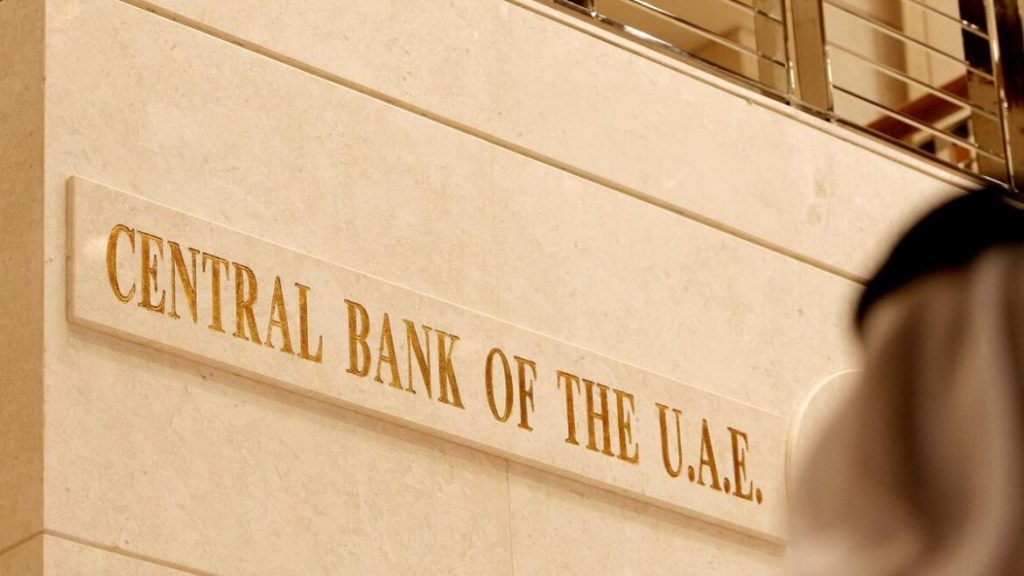
Since 1997, the UAE Central Bank has maintained a fixed exchange rate policy, anchoring the Dirham (AED) to the US Dollar (USD) at a rate of 3.6725. This strategic peg ensures near-zero volatility—typically staying within a negligible margin of 0.01%. This stability is the backbone of the UAE’s macro-economy, particularly for oil and gas exports which are globally priced in USD, and it serves as a “safe haven” for foreign direct investment (FDI).
Why Risks Still Linger in UAE Trade Contracts Despite the stability of the USD peg, UAE traders are far from immune to FX risks. In fact, the “perceived safety” of the peg often leads to complacency. The risks remain high due to:
Non-USD Currency Diversification: The UAE is a global crossroads. A massive portion of imports, especially in textiles, electronics, and heavy machinery, originates from the Eurozone, China, India, and Japan. When you price a contract in EUR, CNY, or INR, you are fully exposed to those currencies’ volatility against the USD (and subsequently the AED).
Extended Payment Cycles & Credit Terms: In the B2B wholesale sector, standard payment terms of 30, 60, or 90 days are common. These windows of time provide ample opportunity for global “black swan” events to trigger sharp currency movements.
The Re-Export Hub Paradox: Dubai’s unique position as a re-export hub means many firms buy in one currency (e.g., CNY from China) and sell in another (e.g., USD or SAR in the GCC). This “currency mismatch” creates a double-sided risk that can erode margins at both ends of the supply chain.
Purchasing Power Erosion: While the AED value is fixed against the USD, a rampant “strong dollar” cycle makes imports from non-USD countries cheaper, but conversely, it makes UAE-based services and re-exported goods significantly more expensive for foreign buyers, leading to a drop in sales volume.
The Economic Impact on Margins Industry data, including reports from global CRM and financial leaders like HubSpot and Bloomberg, indicate that over 60% of mid-sized importers experience significant profit erosion due to currency volatility annually. For a UAE-based business dealing in high-volume, low-margin commodities or specialized industrial equipment, even a 2-3% currency fluctuation can completely wipe out the projected net profit of a multi-million Dirham shipment. Understanding these nuances is the first step toward building a resilient hedging strategy.
The Poland Corridor: A Strategic Guide to Import-Export Opportunities
Case Study: The Cost of Ignoring Cross-Currency Volatility
Let’s look at a real-world scenario we’ve encountered in the UAE B2B market. A Dubai-based importer signs a contract worth AED 1,000,000 with a European supplier (denominated in EUR) when 1 EUR = 4.00 AED.
- Initial Liability: €250,000
- Unhedged Scenario: If the EUR strengthens to 4.30 AED by the time of payment (a common 7.5% shift), the importer now owes AED 1,075,000.
- Result: A sudden AED 75,000 loss in net margin, simply due to timing.
SEO Tip: Using “AED to EUR conversion risk” helps capture long-tail search queries from UAE importers.
Why the AED-USD Peg Doesn’t Eliminate All Risks
The peg delivers rock-solid stability for pure AED-USD transactions. Lock a contract at 1 USD = 3.6725 AED, and it holds firm. But most UAE trade isn’t that simple.
- Import Example: Sourcing machinery from Europe in EUR. If EUR weakens against USD, you pay more AED despite the peg.
- Export Example: Selling to non-USD markets. A weaker local buyer currency cuts your AED proceeds.

Exchange Risk in UAE Trade
The peg shields direct bilateral risk but amplifies exposure to USD global movements. When USD rises (as in recent Fed cycles), UAE importers suffer higher costs, while exporters to non-USD zones gain less.
Data from the World Bank highlights UAE non-oil trade surpassing oil revenues, with partners like China, India, and EU driving diversified currency exposures. Ignoring this leaves profits vulnerable.
Identifying Your Currency Exposure in Trade Contracts
Before implementing any hedging instrument, you must map your exposure with surgical precision. Strategic exposure assessment is the foundation of financial resilience; skipping this step leads to either “Over-Hedging” (which ties up vital working capital in unnecessary derivative margins) or “Under-Hedging” (which leaves your profit margins vulnerable to market gaps). In the high-volume environment of UAE trade, where liquidity is king, finding the “Golden Mean” of exposure is essential.
A Professional Framework for Exposure Assessment
Comprehensive Contract Audit: Go beyond simple invoice tracking. Review every open purchase order (PO) and sales agreement. Document the base currency (the currency of the goods’ origin), the invoice currency, and the settlement currency. Pay close attention to “Incoterms,” as they often dictate when the currency risk officially transfers from the seller to the buyer.
Granular Flow Categorization: Do not aggregate your totals. Separate your anticipated inflows (receivables from foreign buyers) and outflows (payables to international suppliers) by specific currency pairs (e.g., AED/EUR, AED/CNY, AED/INR).
Calculation of Net Position (Netting): For each specific currency and time bucket (e.g., Q1, Q2), subtract your total outflows from your inflows.
Positive Net (Long Position): You have more foreign currency coming in than going out. You risk a loss if that foreign currency weakens.
Negative Net (Short Position): You owe more than you receive. You risk a loss if that foreign currency strengthens.
Dynamic Temporal Mapping: Use a rolling 12-month forecast instead of a static annual view. Currency risks are not linear; they compound over time, especially during delayed payment cycles or extended manufacturing lead times common in the UAE’s industrial sector.
Multi-Scenario Stress Testing: Quantify your “Value at Risk” (VaR). Model hypothetical but realistic scenarios—such as a 10% surge in the US Dollar Index (DXY) or a sudden devaluation of an emerging market currency. Calculate exactly how many Dirhams would be shaved off your net profit in each scenario.
The Cost of Miscalculation: A Real-World Perspective To illustrate the gravity of this assessment, consider a case study from the UAE construction sector. While sourcing specialized materials from East Asia, a firm failed to account for the volatility of the Chinese Yuan (CNY) against the USD-pegged Dirham. During the 120-day fulfillment period, a sharp 12% shift in the CNY exchange rate occurred. Because the exposure wasn’t mapped at the “Proforma” stage, the 8% projected profit margin on a multi-million Dirham contract was completely obliterated before the first shipment arrived. Early mapping would have flagged this vulnerability, allowing the firm to lock in a forward rate and preserve their capital.
Strategic Tools for the Modern Trader While basic spreadsheets are a starting point for SMEs, growing enterprises should look toward integrated ERP systems or specialized trade finance platforms. The goal is to move from “Reactive Accounting” to “Proactive Risk Management.” Remember: in international trade, accuracy in mapping doesn’t just save money—it drives sustainable competitive advantage.
Practical Hedging Strategies for AED vs USD Exposures
Hedging is not about speculation; it is a strategic insurance policy designed to lock in profit margins or cap potential downsides. In the UAE’s high-stakes trading environment, the cost of protection is often negligible compared to the catastrophic impact of an unhedged currency swing. Here are the most robust, proven tools for UAE-based traders:
1. Forward Contracts (The Standard for Price Certainty)
Forward contracts allow you to lock in today’s exchange rate for a settlement date in the future. This is the “gold standard” for UAE importers and exporters with known payment obligations and fixed timelines.
Mechanism: You enter a binding agreement with a financial institution (like Emirates NBD, FAB, or HSBC) to exchange a specific amount of currency at a pre-determined rate on a specific future date.
Strategic Pros: Complete elimination of uncertainty; zero upfront premium or out-of-pocket cost at the time of trade.
Strategic Cons: It is a mandatory obligation; if the market rate improves in your favor, you cannot benefit from the better rate.
The “UAE Advantage”: Due to the high liquidity in the AED/USD corridor, spreads for forward contracts in Dubai are among the most competitive globally.
Operational Example: If you have a USD 500,000 payable due in 90 days for a shipment of laboratory equipment, a Forward Contract locks the rate at the pegged 3.6725 (plus/minus minor swap points), ensuring your AED cost remains identical to your initial budget regardless of global volatility.
2. Currency Options (Flexibility with a Safety Net)
Options grant you the right—but not the legal obligation—to exchange currency at a specific “strike price.” This is the ideal tool for “Contingent Exposure,” such as when you are bidding on a large project (RFQ) and aren’t yet sure if the contract will be awarded.
Strategic Pros: You are protected against the downside (the “floor”), but you retain 100% of the upside if the currency moves in your favor.
Strategic Cons: Requires an upfront “Premium” (a non-refundable fee), which can impact immediate cash flow.
Application: Use Call Options to hedge against rising foreign currency costs for imports, and Put Options to protect the value of your foreign receivables (exports).
3. Natural Hedging (The Zero-Cost Internal Buffer)
Natural hedging is the practice of structuring your business operations to offset currency risks internally, without using complex financial derivatives.
Invoicing Alignment: Whenever possible, invoice your exports in the same currency as your primary imports. If you buy from Europe in EUR, try to negotiate your sales to other markets in EUR to create a self-balancing ecosystem.
Global Sourcing Strategy: Shift your sourcing to markets that use the same currency as your buyers. This minimizes the number of “conversion touchpoints.”
Multi-Currency Account Management: Maintain specialized accounts for EUR, GBP, and CNY within UAE banks. Instead of converting every receipt back to AED immediately, hold those funds to pay future liabilities in that same currency.
Effectiveness: While highly cost-effective and simple to manage, natural hedging requires significant operational scale and may not cover 100% of your exposure.
4. Currency Swaps (Managing Recurring Cash Flows)
A currency swap involves the simultaneous purchase and sale of identical amounts of one currency for another with two different value dates (typically “Spot” and “Forward”).
Strategic Use Case: This is best for UAE businesses with ongoing, recurring foreign obligations, such as monthly payments to a specialized manufacturer or long-term debt servicing in a foreign currency.
The Benefit: It allows you to manage liquidity effectively by “swapping” excess AED for a foreign currency temporarily and then reversing the trade later, essentially hedging both the exchange rate and the interest rate differentials.
Choosing the Right Mix For most UAE-based B2B firms, a 70/30 Hybrid Approach works best: use Forward Contracts for 70% of your highly certain liabilities to ensure budget stability, and leave 30% for Options or Natural Hedging to maintain flexibility. This balanced portfolio approach protects the “Bottom Line” while allowing the business to remain agile in a shifting global economy.
CARICOM Trade Guide: How to Profit in the Caribbean Single Market
Comparison of Key Hedging Tools
| Tool | Protection Level | Cost | Flexibility | Best For |
|---|---|---|---|---|
| Forward Contracts | Full | Low (spread) | Low (fixed) | Known amounts/dates |
| Options | Downside only | Premium | High | Uncertain volumes |
| Natural Hedging | Partial | None | Medium | Ongoing balanced flows |
| Swaps | Full | Spread | Medium | Long-term recurring |
Implementing Hedging in Your UAE Trade Workflow
Theory’s easy; execution wins. Here’s my battle-tested process:
- Set Policy: Define risk tolerance (e.g., hedge 70%+ exposures over USD 100,000).
- Choose Partners: Use regulated UAE banks or licensed brokers for compliance and rates.
- Monitor Regularly: Review quarterly or on major events.
- Document Everything: For audits and performance tracking.
- Start Small: Pilot on one contract to build confidence.
In volatile times, I’ve hedged 80% exposures and slept better knowing margins held.
For deeper insights on secure deals, check our guides:
- The Ultimate Practical Guide to Re-Exporting Goods from Dubai
- The Ultimate Guide to Payment Gateways and Banking Services for International Trade in the UAE
- Domestic Logistics in the UAE
Real-World Case Studies: Hedging in Action
- Importer Scenario: UAE firm importing EUR machinery. EUR/USD drops 8% post-contract. Unhedged: 8% cost overrun. Forward hedge: Locked rate saves equivalent of full shipment profit.
- Exporter Scenario: Selling to India in INR. INR weakens against USD. Options hedge caps downside while capturing partial upside on recovery.
Studies from Backlinko and similar sources show hedged firms outperform unhedged peers by 5-12% in volatile periods.
Field Note from Tendify’s Trade Desk
In my experience working with SMEs in the UAE, many businesses rely on the USD peg as a “safety net.” However, they overlook the banking fees and hidden spreads that can eat up to 2% of the transaction value. We recommend negotiating “Currency Adjustment Clauses” (CAC) directly into your long-term supply contracts. This allows for a shared risk model if the exchange rate fluctuates beyond a pre-agreed threshold (e.g., +/- 3%).
Pro Tip: Always ask your bank for a “Fixed Forward” if your lead time for cargo is more than 60 days. It locks your profit margin the moment the Proforma Invoice is issued.
Frequently Asked Questions: UAE Currency Hedging
Is the UAE Dirham always pegged to the USD?
What is the most common hedging tool for Dubai traders?
Final Thoughts: Take Control of Your Currency Risks Today
Managing currency exchange risk in UAE trade contracts isn’t optional—it’s essential for sustainable profits. The AED-USD peg offers a strong foundation, but indirect exposures demand proactive AED vs USD hedging. Assess exposures, select fitting tools, and implement consistently.
Over years building global supply chains, I’ve learned unhedged risk compounds quietly until it bites hard. Hedging flips that—turning uncertainty into predictable advantage.
Ready to secure your trade deals and connect with verified global partners? Sign up on Tendify.net today for free RFQ posting, real-time pricing, and secure trust accounts that streamline international transactions. Your next profitable contract starts here—register now and elevate your trade game.