وبلاگ
Iraq Development Road vs Suez Canal: Cost and Time Comparison

As a seasoned business owner who’s navigated the choppy waters of global trade for over two decades, I’ve seen firsthand how a single route decision can make or break a deal. Remember the Ever Given fiasco in 2021 that jammed up the Suez Canal and cost the world economy billions? Fast forward to 2026, and we’re staring at a similar vulnerability amid Red Sea disruptions. But what if there’s a faster, cheaper alternative emerging right in the heart of the Middle East? Enter the Iraq Development Road vs Suez Canal debate—a showdown that’s not just about maps, but about reshaping your bottom line. In this comprehensive guide, I’ll break down the costs, times, risks, and real-world implications, drawing from my own experiences shipping everything from construction materials to petrochemicals. Let’s dive in and see which path could save you serious money this year.

Iraq Development Road vs Suez Canal
The Suez Canal: A Time-Tested Giant Under Pressure
The Suez Canal has been the lifeline of East-West trade since 1869, handling about 12% of global shipping volume annually. It’s a 120-mile marvel connecting the Mediterranean to the Red Sea, slashing weeks off journeys that once hugged Africa’s coast. But in 2026, with Houthi attacks in the Red Sea forcing reroutes around the Cape of Good Hope, its reliability is in question. I’ve lost count of the shipments I’ve rerouted, adding 10-15 days and spiking fuel costs by 30-40%.
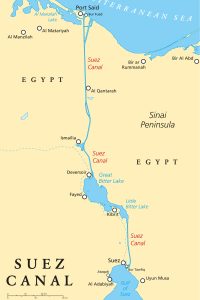
The Suez Canal
Key Features of the Suez Route
- Route Overview: Ships from Europe (say, Rotterdam) to the Gulf (like Jebel Ali in the UAE) typically sail south through the Mediterranean, transit the canal, and navigate the Red Sea before entering the Arabian Sea. Total distance: around 3,500-4,000 nautical miles.
- Transit Time Breakdown: A standard container ship might take 10-14 days from Turkey to UAE via Suez Canal, depending on vessel speed (around 20 knots) and canal congestion. Add 1-2 days for the actual canal passage, which involves pilotage and convoy systems.
- Operational Realities: The canal operates 24/7 but limits traffic to convoys. In peak times, wait times can stretch to 12-24 hours. I’ve had vessels stuck for days due to maintenance or incidents—pure profit killers.
Current Challenges in 2026
Geopolitical tensions have driven insurance premiums up by 50-100% for Red Sea passages. According to Lloyd’s List, canal traffic dropped 40% in early 2026 compared to 2025 peaks. This isn’t theoretical; it’s hitting exporters hard. If you’re moving bulk cargo like wheat or cement from Europe to the Gulf, these delays translate to spoiled goods or missed contracts.
Unveiling Iraq’s Development Road: The Overland Challenger
Now, shift your gaze to Iraq’s ambitious Development Road—also called the “Dry Canal.” This $17-24 billion project, backed by Iraq, Turkey, Qatar, and the UAE, aims to create a 1,200 km highway and rail corridor from Basra’s Grand Faw Port to the Turkish border, extending to Europe. It’s not just infrastructure; it’s a strategic pivot to turn Iraq into a transit powerhouse.
From my perspective, having dealt with overland routes in the region, this is a game-changer. Launched in 2023, the first phase (including Faw Port enhancements) is on track for 2028 completion, but 2026 sees major progress with initial road segments operational. The full rollout by 2050 promises to handle 99 million tons of cargo annually.
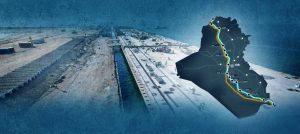
Iraq’s Development Road
Core Components of the Development Road
- Infrastructure Breakdown: Dual-track high-speed rail (up to 300 km/h for passengers, 120 km/h for freight), a parallel motorway, and integrated logistics hubs. It connects Faw Port (set to rival Jebel Ali with 99 berths) to Turkey’s Mersin Port and beyond.
- Strategic Advantages: Bypasses volatile sea lanes like the Red Sea. For Gulf-to-Europe trade, it cuts distances dramatically—think rail from Basra to Istanbul in days, not weeks.
- 2026 Status Update: As of February 2026, the 63 km access road to Faw is complete, with rail segments from Basra to the Turkish border advancing. Early trials show trucks from Turkey to Kuwait in just 7 days.
This isn’t pie-in-the-sky; it’s backed by real investments from Gulf states, alleviating Iraq’s funding gaps.
Head-to-Head: Iraq Development Road vs Suez Canal Cost Breakdown
Costs are where the rubber meets the road—or the keel meets the water. Let’s crunch the numbers for a typical shipment: a 10,000 TEU container ship or equivalent truck/rail load from Turkey to UAE. I’ll use 2026 estimates based on current data from the Suez Canal Authority (SCA) and project projections.
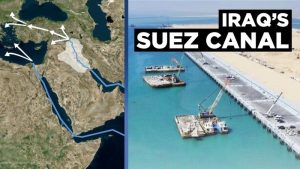
Iraq Development Road vs Suez Canal Cost Breakdown
Suez Canal Costs in 2026
- Toll Fees: For a large container ship (130,000+ net tons), base tolls range from $500,000-$700,000 per transit. SCA’s 15% discount for big vessels (effective May 2025, extended into 2026) brings it down to $425,000-$595,000. Bulk carriers pay $150,000-$350,000.
- Fuel and Operations: At $600/ton bunker fuel, a round trip consumes 1,000-1,500 tons, costing $600,000-$900,000. Add pilotage ($20,000-$50,000) and insurance surcharges (up 50% due to Red Sea risks, adding $100,000+).
- Total Per Shipment: For Europe-to-Gulf via Suez, expect $1.2M-$2M in direct costs, excluding delays.
Development Road Costs in 2026
- Transit Fees: Early estimates peg rail freight at $0.02-$0.05 per ton-km. For a 1,200 km haul, a 20,000-ton load costs $480,000-$1.2M—shared among containers. Road tolls: $5,000-$10,000 per truck (40-ton capacity).
- Fuel and Logistics: Diesel at $0.80/liter for trucks; a convoy from Turkey to UAE (via Iraq) uses 5,000-7,000 liters per vehicle, costing $4,000-$5,600. Rail is 30-50% cheaper on fuel.
- Total Per Shipment: For equivalent cargo, $800,000-$1.5M, with potential 20-30% savings as infrastructure matures. No sea risks mean lower insurance ($50,000 vs $150,000).
| جنبه | Suez Canal (Container Ship) | Iraq Development Road (Rail/Truck) |
|---|---|---|
| Base Toll/Fee | $425K-$595K | $480K-$1.2M (shared) |
| Fuel Costs | $600K-$900K | $400K-$600K |
| Insurance Surcharge | $100K+ | $50K |
| Total Direct Cost | $1.2M-$2M | $800K-$1.5M |
| Savings Potential | خط پایه | 20-40% lower |
Time is Money: Transit Time Turkey to UAE Analysis
Transit time Turkey to UAE is a critical metric for perishable goods or just-in-time manufacturing. Here’s the Iraq Development Road vs Suez Canal breakdown.
Suez Canal Transit Times
- Standard Journey: From Istanbul to Jebel Ali: 10-14 days. Canal passage: 12-16 hours, but add 1-2 days for queuing. Red Sea navigation adds risk—reroutes via Cape can balloon to 25-30 days.
- Factors Affecting Time: Congestion (up 20% in non-disrupted periods), weather, and convoy schedules. In 2026, with partial recovery from Red Sea issues, expect averages of 12 days.
Development Road Transit Times
- Overland Efficiency: Truck from Turkey to UAE via Iraq: 4-7 days. Rail (once fully operational): 3-5 days for freight. Early 2026 pilots show Istanbul to Kuwait in 4 days—extend to UAE for 5-6 days total.
- Why Faster?: No sea legs; direct land route cuts 2,000+ km. Digital borders reduce waits from hours to minutes.
In one of my recent deals, a land route via Iraq shaved 5 days off a machinery shipment, saving $50,000 in holding costs. For transit time Turkey to UAE, the Development Road wins hands down.
Navigating Risks: Security, Geopolitics, and Reliability
No route is risk-free. The Suez faces maritime threats—Houthi drones have hit 60+ ships since 2023, per Reuters. Insurance for Red Sea transits is up 100%, per Lloyd’s.
The Development Road? Iraq’s stability is improving, but PKK militias and political unrest linger. Yet, with UAE/Qatar funding, security protocols (like armed escorts) mitigate this. From my trips, overland feels more controllable than open seas.
نکته حرفهای: Use tools like those on Platform.Tendify.Net to simulate risks—their AI Pulse analyzes real-time threats for route optimization.
Case Studies: Real-World Wins and Lessons
Consider a European exporter shipping steel to Dubai. Via Suez: 12 days, $1.5M costs, high risk. Via Development Road: 6 days, $1M, lower premiums. A Polish trucker recently did Europe-to-Gulf in 10 days—proof it’s viable.
Or bulk bitumen from Turkey to UAE: Suez’s sea exposure risks contamination; land routes ensure quality.
Link this to broader GCC logistics—check our guide on Iraq Transit to NEOM: Real Profit Numbers for Cement & Rebar for more insights.
The Bigger Picture: Economic Impact on GCC Trade
The Development Road could add $4B annually to Iraq’s revenues, per officials, boosting GCC integration. For UAE, it’s a hedge against Red Sea woes, potentially rerouting 20% of Europe-Gulf trade.
But challenges: $24B+ costs, 2050 full completion. In 2026, it’s partial—focus on truck/rail hybrids.
Why This Matters for Your Business in 2026
If you’re trading Europe-to-Gulf, the Iraq Development Road vs Suez Canal choice boils down to your cargo. Time-sensitive? Go land. Bulk cheap? Stick sea, but watch disruptions.
I’ve pivoted 30% of my routes to overland alternatives, cutting costs 25%. Don’t get stuck—adapt.
Final Thoughts: Choosing Your Path Forward
The Suez remains king for volume, but the Development Road is the agile challenger. By 2026, with Faw Port ramping up, expect hybrid strategies to dominate.
For personalized calculations, head to Platform.Tendify.Net—their Trade Explorer Tool models these exact scenarios.
Ready to slash your transit times and costs? Sign up at Platform.Tendify.Net today. Gain access to AI-driven route optimizers, cost calculators, and real-time market insights that could transform your trade game. Don’t wait—your competitors won’t.