وبلاگ
Import Heavy Machinery to UAE Without Duties: 2026 Guide
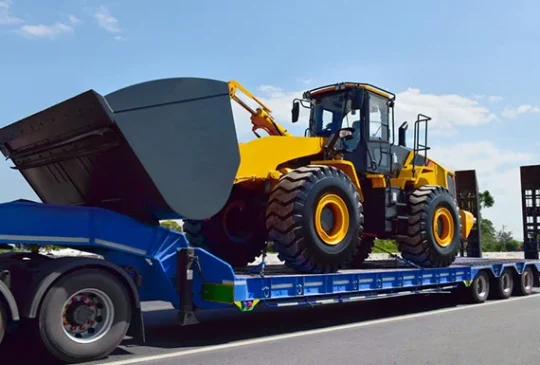
Over my years running global supply chains for major EPC contracts, I’ve learned that bringing heavy machinery into the UAE can make or break a project’s timeline and budget. Imagine landing a multi-million dirham construction deal in Dubai or Abu Dhabi, only to face massive customs duties that eat into your margins—or worse, delays that push back your start date.
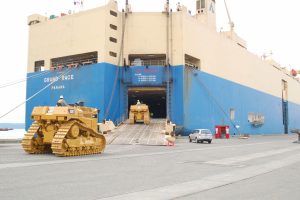
Import Heavy Machinery to UAE
That’s the trap many engineering firms fall into. But in 2026, UAE’s temporary admission rules let you import cranes, excavators, bulldozers, and other heavy equipment without paying permanent duties—as long as you re-export them after the job. I’ve used this dozens of times to keep cash flowing and projects on track. This guide gives you the full playbook: why it works, exact steps, pitfalls to avoid, and how to turn it into a real advantage.
چرا Temporary Admission is Essential for UAE EPC and Engineering Projects
The UAE’s booming infrastructure—think Expo legacies, new airports, and massive real estate developments—relies heavily on imported heavy machinery. Standard imports hit you with 5% customs duties (plus VAT considerations), but temporary admission suspends those entirely for qualified goods.
Key reasons this matters in 2026:
- Projects often need specialized equipment not available locally.
- Duties on high-value items like a tower crane can run into hundreds of thousands of dirhams.
- Cash tied up in duties or guarantees elsewhere could fund mobilization instead.
The Federal Customs Authority (FCA) explicitly allows temporary admission برای heavy machinery and equipment used in project completion, testing, or experiments.
Standard duration & legal limits:
Initial admission is granted for ۶ ماه, renewable in 6-month increments based on proven project timelines—up to a strict legal limit of 3 years (36 months). Upon hitting the 3-year cap, the equipment must either be re-exported outside the GCC or converted into a permanent import with full duty payment.
نکته حرفهای: Never wait until the last month to apply for renewal. FCA requires extension applications along with certified project progress reports at least 30 days prior to the 6-month expiry, or automatic overstay penalties will apply.
2026 Technical & Environmental Clearance Mandates
FCA & Municipal Standard
Strict Emission Certifications
All diesel-powered equipment entering Dubai and Abu Dhabi must strictly hold valid Euro V/VI یا US EPA Tier 4 Final emission certificates to pass port customs.
Mandatory Age Cap (Under 10 Years)
Customs authorities enforce a mandatory age check. Machinery older than 10 years from the manufacturing date is subject to strict entry barriers or outright rejection unless specialized technical exceptions apply.
Third-Party Technical Inspection (Pre-Clearance)
Importers must provide an accredited Third-Party Inspection Certificate (issued prior to dispatch by recognized bodies like SGS, Bureau Veritas, or TÜV SÜD) verifying operational integrity, safety compliance, and chassis/serial authenticity.
Insight: This isn’t just a loophole; it’s designed to attract foreign expertise and investment. I’ve seen competitors lose bids because they baked permanent duties into their quotes, while we stayed lean using temporary rules.
Understanding UAE Temporary Admission Rules in 2026
UAE follows GCC Common Customs Law, with FCA overseeing implementation. Temporary admission suspends duties if goods are re-exported intact.
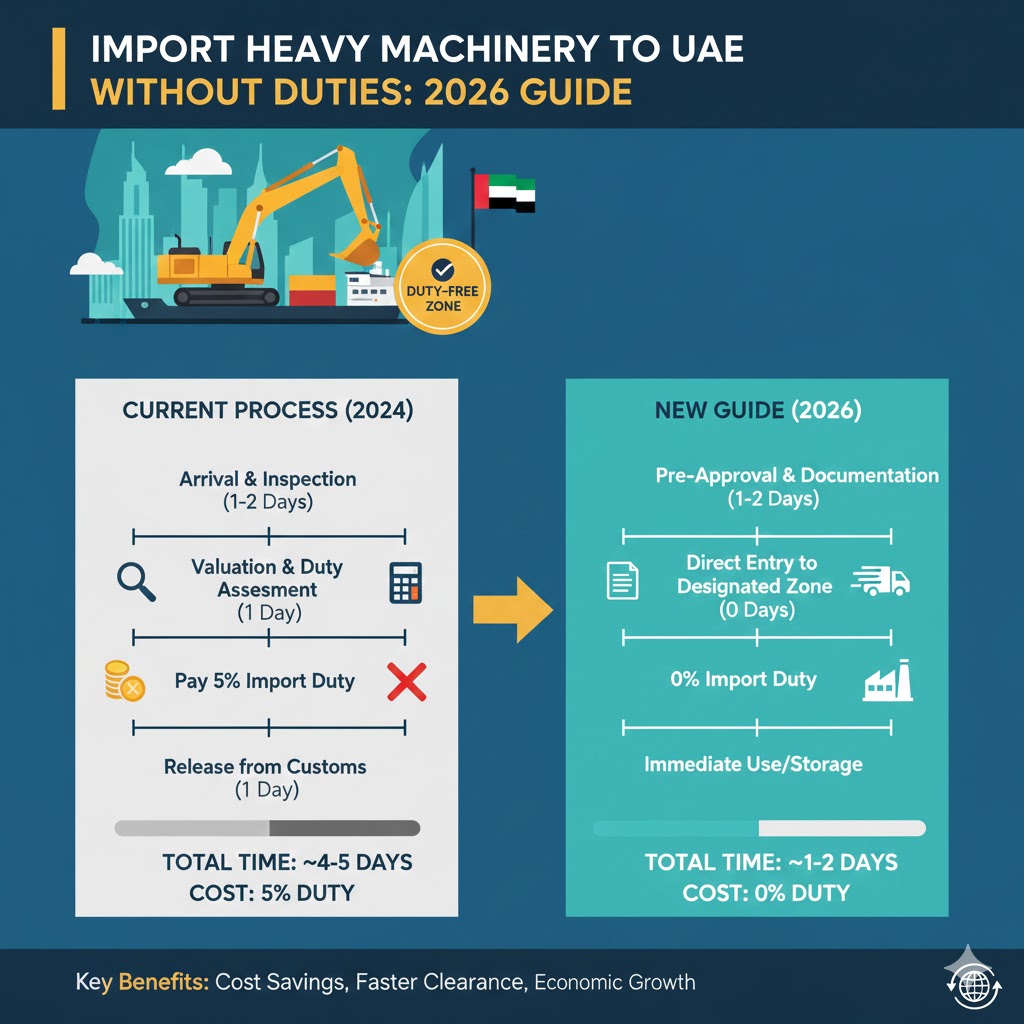
Import Heavy Machinery to UAE Without Duties: 2026 Guide
Eligible categories for heavy machinery:
- Equipment for executing government or investment projects.
- Machinery for scientific/practical tests related to projects.
- Items for repair (if re-exported post-repair).
Standard duration: 6 months initial, renewable. Extensions require proof of ongoing project need.
Security requirement: You must post an E-Guarantee or cash deposit covering the exact formula: 5% Customs Duty (based on CIF value) + 5% VAT. Refunded upon proven re-export.
Alternative: ATA Carnet for certain cases (more below)—no deposit needed, but limited applicability.
Pro tip: Free zones like Jebel Ali offer additional flexibility, but mainland projects usually clear through standard ports/airports.
For comparison of free zone options, see our guide on Jebel Ali or Duqm Free Zone 2026: Which Saves You More on Customs and Storage Costs?.
ATA Carnet vs. Standard Temporary Admission: Which Fits Your Heavy Machinery?
Not all temporary imports qualify for ATA Carnet—the “merchandise passport” that skips duties and deposits entirely.
ATA Carnet pros:
- No bank guarantee required.
- Valid up to 1 year (UAE often caps at 6 months).
- Covers multiple entries/exits.
Cons for heavy machinery:
- UAE primarily accepts for exhibitions, trade fairs, commercial samples, and some professional equipment.
- Heavy construction machinery typically doesn’t qualify—it’s better suited for tools, displays, or event gear.
For EPC projects, stick to standard temporary admission with bank guarantee. I’ve tried forcing ATA for large equipment; it gets rejected, wasting time.
Heavy Machinery to UAE Without Duties
If your import includes exhibit items alongside machinery, split them—use ATA for qualifying parts.
Step-by-Step: Importing Heavy Machinery Under Temporary Admission
Here’s the process I’ve executed flawlessly on multiple UAE sites.
- Pre-Arrival Planning
Register with FCA (get a client code if needed). Ensure your UAE entity or sponsor has a valid trade license aligned with import activities. - Gather Required Documents
- Commercial invoice and detailed packing list (with HS codes, values, serial numbers).
- Bill of lading/air waybill.
- Certificate of origin.
- Project contract copy (government or major investment—proves need).
- Bank guarantee letter (from an approved UAE bank). The exact requirement is 100% of the customs duties (5% of the CIF value) plus the 5% VAT. No arbitrary buffer is needed.
- Technical specs, tracked serial numbers, and Environmental/Emission Certificates (proof of Euro V/VI or Tier 4 compliance for diesel machinery).
- File Customs Declaration
Use Bayan system (electronic). Select “Temporary Admission” regime. Submit via licensed clearing agent. - Submit E-Guarantee
Issue a Digital Bank Guarantee via your UAE bank, automatically routed to Dubai Customs (Mirsal II) or Abu Dhabi Customs (ATLP). Once validated in the system, duties are instantly suspended for inspection and release - Clearance and Release
Goods undergo physical/X-ray inspection and emission standard verification before release. - During Project
Track equipment via portal and submit progress reports 30 days prior to expiry if requesting extensions. - صادرات مجدد
Present machinery for serial verification upon exit to release the guarantee, or transition to GCC Transit regime for movement to KSA/Qatar.
Pro Tip: Physical Inspection & Serial Tracking Checklist
Mismatched chassis numbers or missing technical tags are the #1 reason for bank guarantee forfeitures and re-export delays. Complete this physical verification checklist before your machinery arrives at the port:
Timeline: Smooth cases clear in days; plan 2-4 weeks buffer.
To avoid valuation disputes that trigger extra payments, explore strategies in GCC Ports 2026: Master Customs Valuation and Dodge Crushing Penalties.
Converting Temporary Admission to Permanent Import (Local Consumption)
Duty Offset Hack
If project plans change and you decide to keep, sell, or transfer heavy machinery within the UAE mainland instead of re-exporting, you can file for Conversion to Local Consumption. Customs will recalculate duties based on the equipment’s depreciated value rather than its original import valuation.
1. Customs Re-Valuation & Depreciation Schedule
UAE Customs applies an official depreciation rate (typically 10% to 20% per year of use in the country, up to allowable caps) against the initial CIF value. This reduced valuation forms the new base for permanent duty settlement.
2. Guarantee Deduction & Duty Settlement
Instead of paying full new duties out of pocket, customs deducts the recalculated 5% Customs Duty + 5% VAT directly from your active E-Guarantee/deposit, releasing the remaining balance back to your account.
A crane imported at AED 2,000,000 CIF operates under temporary admission for 2 years. Upon local conversion, customs applies a 25% cumulative depreciation adjustment, revising the asset value to AED 1,500,000. Permanent 5% duty is settled on AED 1.5M (AED 75,000) instead of the original AED 100,000—saving AED 25,000 in customs charges.
مشکلات رایج و نحوه اجتناب از آنها
Delays here cost fortunes in demurrage or idle crews.
Top issues:
- Incomplete project proof → Rejection.
- Undervaluation → Disputes and penalties.
- Missed extensions → Automatic permanent import + full duties.
- Damage/loss → Forfeit guarantee.
Solutions:
- Partner with experienced UAE clearing agents.
- Use tracked serial numbers from day one.
- Insure equipment comprehensively.
- Monitor via FCA online portal.
Case example: One project I managed extended a crane import twice—saved over AED 500,000 in duties—simply by submitting progress reports on time.
| Challenge | Impact | Fix |
|---|---|---|
| Bank Guarantee Delays | Project start pushback | Pre-arrange with bank; use template formats |
| Extension Oversight | Full duties triggered | Set calendar reminders; file 30 days early |
| Re-Export Verification | Guarantee hold-up | Schedule inspection appointment |
| HS Code Mismatch | Reclassification + fines | Consult agent pre-filing |
| Emission Non-Compliance | Rejection at port / Failed technical clearance | Verify Euro V/VI / Tier 4 certificates before shipping |
| Bank Guarantee Delays | Project start pushback | Issue direct E-Guarantees via Mirsal II / ATLP integrated banks |
FCA Penalty Schedule: Overstay & Non-Compliance
2026 Enforcement
| Violation Type | Financial Fine / Penalty | Operational Impact |
|---|---|---|
| Late Extension or Overstay | AED 1,000 / Week | Accumulates weekly up to a legal cap of 20% of the CIF equipment value. Port gate pass is blocked until settled. |
| Failure to Re-Export or Loss | 100% Forfeit + Full Duty | Total forfeiture of E-Guarantee + mandatory payment of permanent 5% Customs Duty and 5% VAT. Company client code flagged. |
| Chassis / Serial Mismatch | Deposit Hold + Audit Fine | Re-export clearance blocked at exit port. Triggers manual customs investigation and potential smuggling reclassification. |
Bank Guarantees: Making Them Work for You
The guarantee is the biggest hurdle—but manageable.
Requirements:
- Issued by UAE-licensed bank.
- Unconditional/on-demand preferred.
- Security & E-Guarantee Calculation: The TRN Advantage Standard temporary admission requires securing both Customs Duty and VAT. However, how much liquidity you actually lock up depends on your UAE tax status:
Standard Security Formula: 5% Customs Duty (CIF value) + 5% VAT (calculated on CIF + Duty).
The TRN Cash-Flow Hack: If your entity holds a valid Tax Registration Number (TRN) with the Federal Tax Authority (FTA) linked to your customs code, you can apply the Reverse Charge Mechanism (RCM). This defers the 5% VAT directly to your periodic VAT Return, requiring your E-Guarantee/Bank Security to cover ONLY the 5% Customs Duty.
- Calculation Example (Equipment CIF Value: AED 1,000,000):
Customs Duty (5%): AED 50,000 (Required in E-Guarantee)
VAT (5% of AED 1,050,000): AED 52,500 → Deferred via TRN (Zero bank deposit required for VAT)
Total Guarantee Required: AED 50,000 (Instead of AED 102,500)
💡 نکته حرفهای: Linking your customs client code with your FTA TRN account before filing the Bayan declaration cuts your bank guarantee requirement in half, saving substantial bank issuance fees and freeing up working capital.
Costs: 1-2% annual fee + setup.
Release: Proven re-export via customs certificate.
Tip: Some banks offer revolving guarantees for frequent importers.
Hidden Operational Fees Breakdown
UAE Customs 2026
| Fee Type | Estimated Cost | Description & Impact |
|---|---|---|
Inspection & Bayan Fee | AED 300 – 700 | Electronic entry filing, X-ray scanning, and physical serial verification per declaration at the port. |
E-Guarantee Processing | AED 100 – 200 | Administrative charges inside Mirsal II / ATLP to digitally process, route, and release bank security. |
Exit Certificate Fee | AED 100 – 250 | Mandatory document issued upon re-export. Essential gatekeeper required to cancel your guarantee. |
Bank Guarantee Admin | AED 500 – 800 | One-time issuance (~AED 300-500) and cancellation (~AED 200-300) fees charged by local UAE banks. |
Technical Port Yard Fees | Varies by Port | Handling and yard fees charged by DP World / AD Ports for machinery requiring technical emission checks. |
Digital Transformation in 2026: Mirsal II, ATLP, and E-Guarantees
Process delays are no longer driven by physical paperwork. UAE Customs operates through advanced digital platforms: Mirsal II in Dubai and the Advanced Trade and Logistics Platform (ATLP) in Abu Dhabi.
The most critical upgrade for EPC contractors in 2026 is the integration of Digital Bank Guarantees (E-Guarantees). Direct API links between licensed UAE banks and customs portals now enable instant posting and tracking of financial securities.
Mirsal II & ATLP: Direct API Integration with FTA (TRN)
2026 Tech Upgrade
1. Automated E-Guarantee Issuance via Bank APIs
Physical paper guarantees are completely obsolete. Licensed UAE commercial banks are now directly linked via real-time APIs to Dubai Customs (Mirsal II) و Abu Dhabi Customs (ATLP). When your bank issues a security bond, it auto-reflects in your customs declaration within minutes, instantly suspending duties upon arrival.
2. Rapid Guarantee Cancellation (< 48 Hours)
Historically, releasing a physical bank guarantee took 3 to 6 weeks. Under the synchronized 2026 digital ecosystem, once port officials complete digital re-export verification at the exit gate, an automated electronic clearance token is sent to your issuing bank. Bank guarantees are now fully unblocked and cancelled in under 48 business hours.
Moving Machinery Beyond UAE: GCC Customs Transit Regime
EPC contractors rarely send heavy fleet back to Europe or Asia once a UAE job finishes. Instead, equipment is often mobilized directly to major GCC mega-projects—such as Saudi Arabia’s NEOM, Red Sea, or Qiddiya.
Instead of a standard re-export, declare the exit under the GCC Common Customs Transit Regime via the UAE exit port (e.g., Ghuwaifat border for overland transport to KSA).
Utilize a GCC Statistical Declaration (Makasa) or issue a cross-border transit bond. This allows your original UAE duty guarantee to be released upon verified entry into Saudi Arabia or Qatar.
Always sync your UAE temporary admission expiry date with your Saudi FASAH import authorization to prevent gap penalties during land border crossings.
Cross-Border Mobilization: UAE to KSA (NEOM) via Makasa
GCC Customs Corridor
Moving heavy machinery directly from a UAE site to Saudi mega-projects (e.g., NEOM, Red Sea, or Qiddiya) requires leveraging the GCC Common Customs Transit Regime rather than executing a basic re-export.
1
2
3
تسلط Temporary Admission for Competitive Edge
Getting temporary admission right means leaner bids, faster mobilization, and healthier profits on UAE projects. It’s not complex once you’ve done it—but getting it wrong is expensive.
If you’re bidding on UAE infrastructure or need regional customs insights, check Mastering FASAH for Saudi Customs 2026: Avoid Costly Mistakes and Clear Goods in Hours.
Download the 2026 UAE Temporary Admission Operations Checklist
Get the complete 2-page operational PDF covering emission standards, serial matching protocols, TRN tax hacks, depreciation math, and GCC cross-border transit rules.


