وبلاگ
The Khorfakkan Pivot: Master the UAE Land-Bridge to Bypass Hormuz Risks
In over two decades of scaling export operations across some of the world’s most volatile trade corridors, I’ve learned one constant: the difference between surviving a crisis and thriving through it lies in operational decoupling. When tensions escalated in the Strait of Hormuz in early 2026, major carriers like Hapag-Lloyd and Maersk didn’t wait for calm seas. They activated what’s now known as the Hormuz Bypass via UAE Land-Bridge — a multimodal strategy centered on deep-water ports on the Gulf of Oman side and bonded inland corridors.
This isn’t just a temporary workaround. It’s a structural shift toward Risk Decoupling و Operational Resilience that every serious trader in the GCC needs to understand. In this guide, I’ll break down exactly why this pivot happened, how it works operationally, the real costs and timelines involved, the challenges you’ll face, and how to integrate it into your supply chain for competitive advantage.
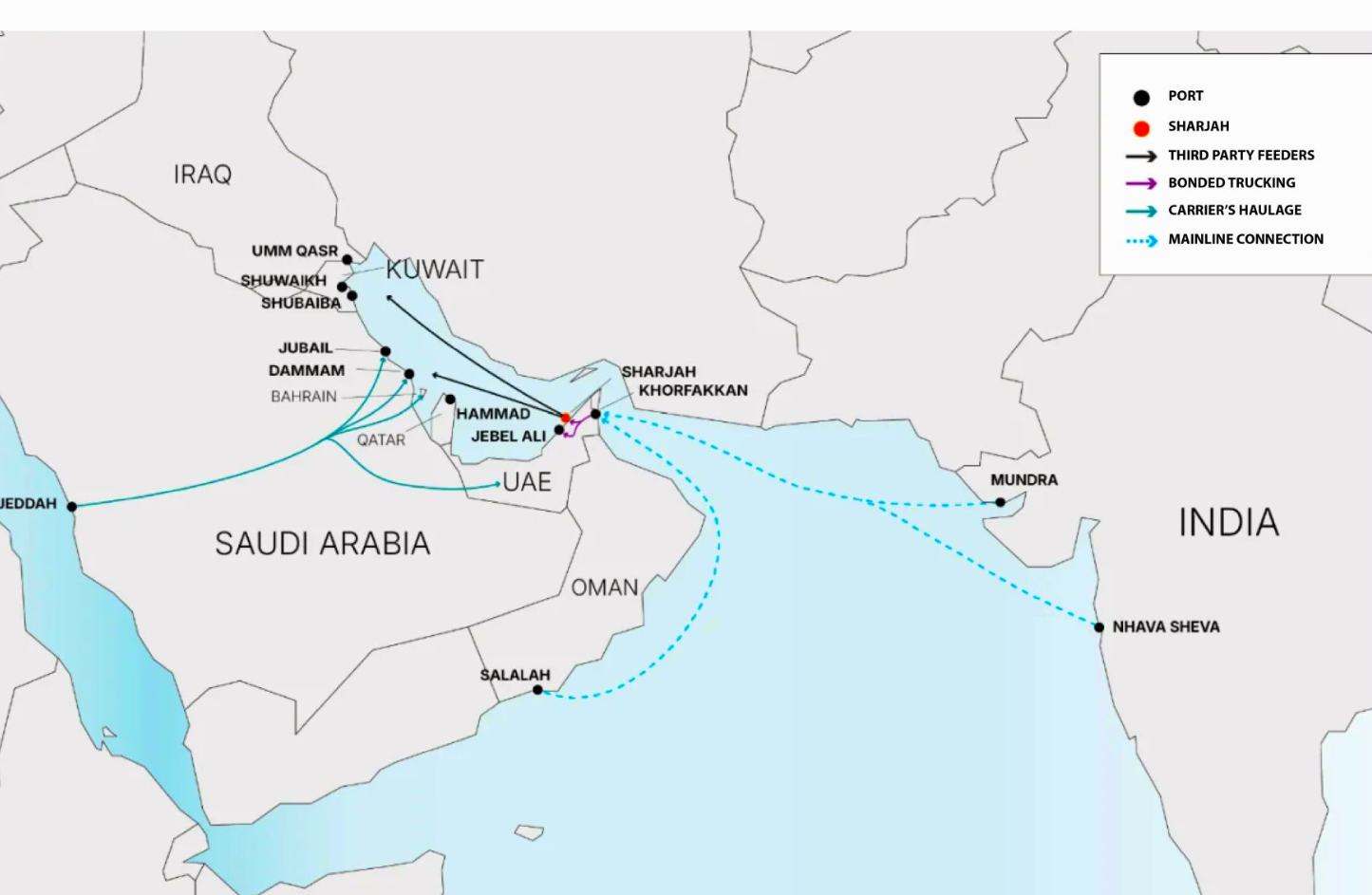
The Khorfakkan Pivot
If you’re importing, exporting, or moving goods into the Upper Gulf (Kuwait, Saudi Arabia, Qatar, Iraq, Bahrain), this article will give you the playbook. And if you want to test these routes with live tools — calculators, checklists, and market intelligence — head over to Platform.Tendify.Net right now. Our command center integrates real-time logistics data with compliance engines to make these bypass strategies executable in minutes, not weeks.
Why the Hormuz Bypass Became Inevitable: The Strategic “Why”
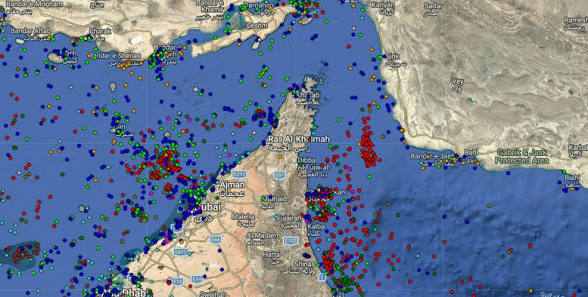
The Strait of Hormuz has historically functioned as the world’s most sensitive maritime artery, facilitating the transit of roughly 20% of global seaborne oil and a massive share of the world’s containerized trade. However, by the second quarter of 2026, the traditional “direct-call” model reached a breaking point.
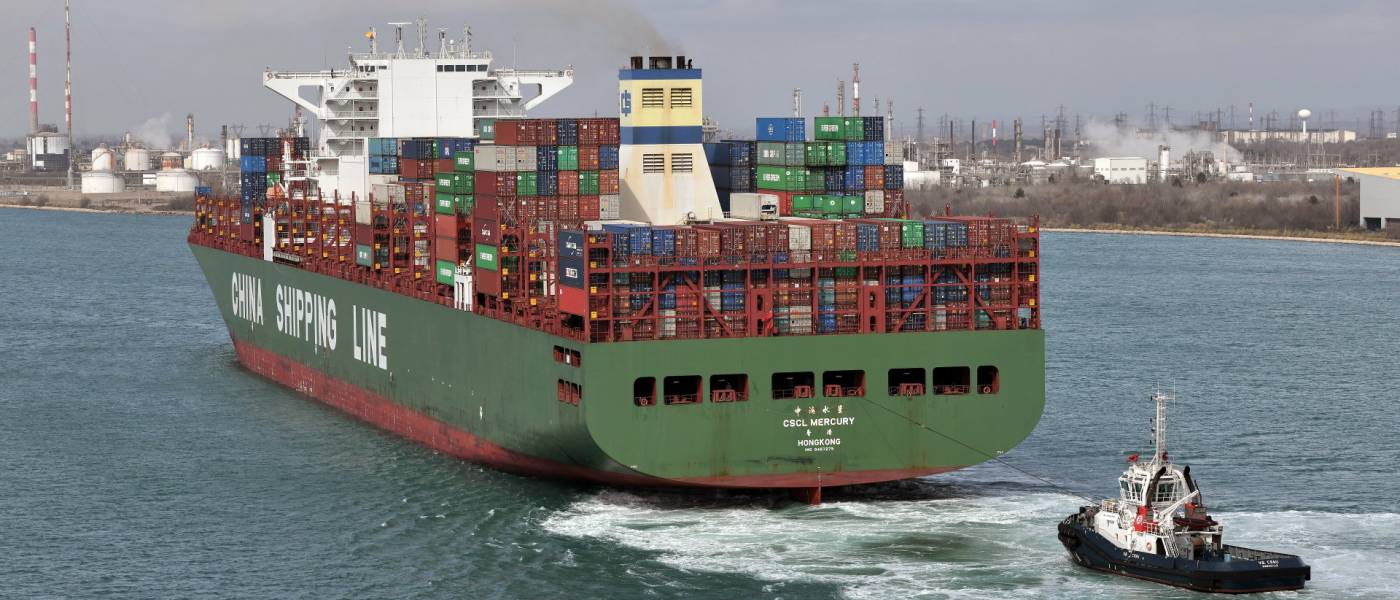
the Hormuz Bypass
The escalation of asymmetric security risks—ranging from naval skirmishes near Jask to sophisticated electronic interference in the narrowest parts of the Strait—has rendered direct transits untenable for major global carriers. In the current environment, the priority has shifted from “Speed-to-Market” to “Certainty-of-Delivery.”
The Poland Corridor: A Strategic Guide to Import-Export Opportunities
The Economic Drivers of the Pivot
The decision to bypass the Strait is not merely a safety precaution; it is a calculated financial necessity driven by the following four pillars:
1. War Risk Surcharge (WRS) & Insurance Decoupling: Direct exposure to the Hormuz corridor in 2026 triggers catastrophic spikes in Hull & Machinery (H&M) و Protection and Indemnity (P&I) premiums. By discharging at Khorfakkan یا Fujairah on the Gulf of Oman side, operators effectively decouple their cargo from the “High-Risk Zone,” instantly neutralizing the most aggressive surcharges that would otherwise decimate a trader’s margins.
2. Tier-1 Asset Protection: In an era of ultra-large container vessels (ULCVs), shipowners are unwilling to expose $200M+ mother vessels to contested waters. The deep-water berths at Khorfakkan—one of the region’s premier natural deep-sea ports—allow these massive vessels to discharge safely in open Indian Ocean waters, avoiding the “bottleneck anxiety” of the internal Persian Gulf.
3. Predictability as the New Currency: While a land bridge adds a nominal 5-to-7-day transit window, it eliminates the “Geopolitical Wildcard.” In 2026, a predictable 12-day multimodal route is infinitely more valuable to a Supply Chain Manager than a “scheduled” 5-day direct route that risks a 15-day naval blockade or a vessel seizure. This consistency is the lifeblood of just-in-time inventory and high-value project cargo.
4. Advanced Multimodal Integration: This pivot is made possible by the UAE’s heavy investment in Integrated Logistics Corridors. By leveraging world-class road networks, dry ports like Sajaa, and the expanding Etihad Rail infrastructure, the “UAE Land-Bridge” now connects the Arabian Sea directly to the industrial heartlands of Saudi Arabia (Dammam, Jubail) and the Upper Gulf.
The Strategic Outcome
The result is a radical transition from a fragile, single-point-of-failure logistics model to an antifragile, diversified routing architecture. For the strategic trader, the bypass is no longer a “Plan B”—it is the new standard for resilient operations in an era of permanent volatility.
The Operational Anatomy of the UAE Land-Bridge (Khorfakkan Pivot)
At the heart of this strategy is Khorfakkan Port (AEKLF) in Sharjah Emirate — a deep-water facility on the Gulf of Oman facing the Indian Ocean. Mother vessels discharge here without entering the Persian Gulf proper. Cargo then moves inland via bonded trucking or rail-feeder combinations.

The Operational Anatomy of the UAE Land-Bridge
Step-by-step flow for typical containerized or breakbulk cargo:
- Ocean Leg to Safe Discharge: Large vessels call at Khorfakkan or Fujairah. These ports handle significant transshipment and offer immediate access to bonded logistics corridors.
- Bonded Inland Movement: Containers are sealed under customs transit (no full import clearance in Sharjah if destined elsewhere). Trucking to Jebel Ali (for Dubai hub), other UAE points, or cross-border into Saudi Arabia via established routes. Dubai Customs Notice 03/2026 formalized bonded transfers from these eastern ports.
- Sajaa Dry Port Hub: A critical node for de-stuffing, storage, consolidation, or transloading. This minimizes dwell times and optimizes onward legs.
- Feeder or Cross-Border to Upper Gulf: From UAE hubs, third-party feeders or road/rail services connect to Dammam, Kuwait, Doha (Hamad), or Iraqi ports/land borders. Bonded trucking keeps VAT and duties deferred until final destination.
این Bonded Logistics Corridors approach is what makes the system efficient. Goods don’t “enter” the UAE fully for many transshipment scenarios, preserving cost advantages.
How to Completely Avoid Demurrage in UAE & Iraq Ports (2026 Guide)
Technical Deep-Dive: The Bonded Transit Mechanism
The success of the Khorfakkan-Sharjah land bridge relies on the Electronic Customs Seal (E-Seal) system and the Transit Guarantee protocol. Under this 2026 framework, containers are fitted with GPS-enabled e-seals at Khorfakkan Port. This allows the cargo to move through the ‘Sajaa-Dhaid’ corridor without the need for traditional bank guarantees for each shipment, provided the carrier is a registered ‘Trusted Trader’ on the UAE’s federal logistics platform. For you, this means reduced administrative ‘dwell time’ and zero upfront VAT/Duty outlays during the transit phase.
Typical Timelines (as of mid-2026):
- Khorfakkan discharge to Sharjah/Dubai area: 1-2 days bonded truck.
- Full leg to Dammam or Upper Gulf feeders: Add 3-5 days.
- Total vs. direct Hormuz: Often comparable or better in predictability, despite nominal extra days.
Our tools at Platform.Tendify.Net include a Trade Cost Calculator and Container Optimization engine precisely for modeling these multimodal scenarios against traditional routes.
Distribution into the Upper Gulf: Feeders, Trucking, and Network Effects
Once in the UAE, the system fans out efficiently:
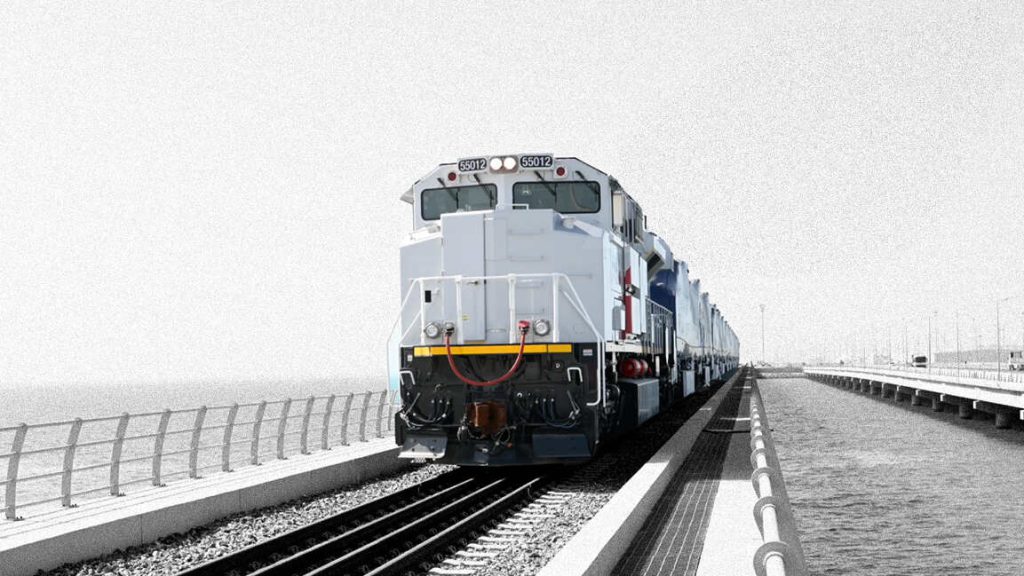
- The Rail Synergy: Beyond Rubber and Asphalt: While trucking remains the primary mode for the Khorfakkan bypass, 2026 marks the full integration of Etihad Rail’s freight services. High-volume traders are now utilizing the rail link from Sharjah’s industrial hubs directly to Ghuwaifat at the Saudi border. This ‘Rail-Bridge’ extension offers a lower carbon footprint — critical for ESG compliance — and provides a hedge against the inevitable diesel price spikes and truck driver shortages during regional escalations.”
- Saudi Land-Bridge Extensions: Connections to Dammam/Jubail via road and Etihad Rail integrations serve eastern Saudi markets and onward to Qatar/Bahrain.
- Third-Party Feeders: Lines use smaller regional vessels for the final hop into Kuwait, Iraq (Umm Qasr/Basra), or Qatar. This limits brand exposure in higher-risk intra-Gulf waters.
- Direct Trucking Options: For time-sensitive or lower-volume cargo, bonded trucks handle UAE-Saudi-Kuwait legs, though congestion on key highways requires advance planning.
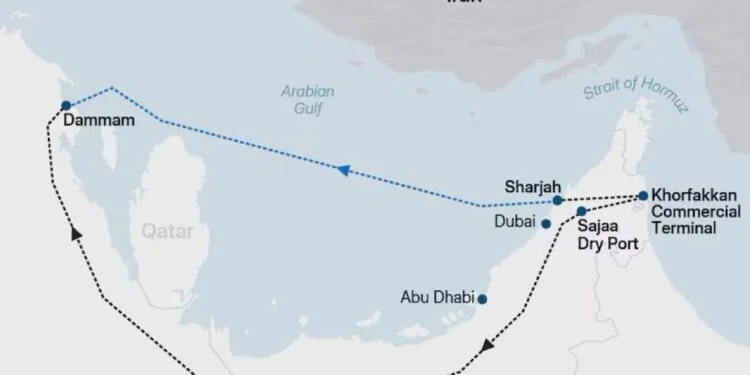
Distribution into the Upper Gulf
Equipment Management Reality: Expect potential imbalances. Empty containers may pile up in Upper Gulf ports if return flows are disrupted. Factor in higher drop-off or repositioning fees in contracts.
This network has proven robust enough that carriers like Hapag-Lloyd and MSC rapidly reopened bookings to Upper Gulf destinations via Sharjah-centric routings.
The Reality Check: Challenges and Risk Mitigation
While the UAE Land-Bridge offers a strategic escape from the Hormuz bottleneck, it is not a “plug-and-play” solution. No logistics strategy is flawless, especially in a high-friction environment like May 2026. To maintain profitability, experienced operators must manage the following execution risks with surgical precision:
1. Addressing Schedule Irregularity & “Feeder Uncertainty”
The final maritime leg into the Upper Gulf is often the most volatile.
The Risk: Third-party feeder schedules are highly sensitive to regional security alerts, leading to sudden “Blank Sailings” or port rotations.
The Mitigation: Do not rely on fixed arrival dates. Build Flexible Lead Time (FLT) clauses into your sales contracts—we recommend a ±7 to 10-day acceptance window to protect yourself from late-delivery penalties.
2. Managing Cost Volatility & Ancillary Surcharges
The bypass effectively replaces “War Risk Insurance” with “Operational Surcharges.”
The Risk: Bonded trucking rates are subject to “Surge Pricing” during naval escalations. You must account for fuel adjustment factors, security escort fees, and administrative “Bonded Transit” levies.
The Mitigation: Perform daily benchmarking. Use the Tendify Export/Import Cost Tool to compare these land-bridge costs against Cape of Good Hope reroutes or the Jeddah-Red Sea corridor in real-time.
3. The Customs & Compliance “Paper Trail”
Even under a “Bonded” status, the margin for error in documentation is zero.
The Risk: Mismatches in Commercial Invoices, Packing Lists, or HS Codes at inland clearance points (like the Sharjah-Dubai border or Ghuwaifat) can trigger 48-hour inspections, erasing your transit time advantage.
The Mitigation: Ensure your documentation is digitally airtight before the mother vessel even berths. Utilize Tendify’s Compliance Engine to pre-verify origin proofs and HS classifications against the latest 2026 GCC Customs directives.
4. Infrastructure Bottlenecks & Capacity Surges
When a major carrier pivots, thousands of containers follow simultaneously.
The Risk: Popular corridors like the Khorfakkan-Sajaa-Jebel Ali route can see sudden surges, leading to “Equipment Imbalance” (a shortage of trucks or empty containers).
The Mitigation: Diversify your “Discharge Portfolio.” Do not put 100% of your volume into a single hub; split allocations between Khorfakkan, Fujairah, and Salalah to ensure you always have a fallback option.
5. Multimodal Insurance Nuances
A common trap for traders is assuming their marine cargo policy covers the entire land-bridge journey.
The Risk: Traditional War Risk coverage often expires once the cargo is discharged from the vessel. The inland leg may fall into a “coverage gap” if your policy isn’t explicitly Multimodal-Rated.
The Mitigation: Conduct an immediate Policy Audit. Confirm that “Delay-in-Transit” and “War-Risk-Inland” provisions are active for the trucking leg. If not, secure a “Gap-Filler” policy through a specialized maritime underwriter.
Pro-Tip from the Field: “In 2026, the most expensive container is the one that is ‘almost’ there. Always verify the latest berth productivity and border wait-times on Platform.Tendify.Net. In a volatile market, what worked 48 hours ago is already ancient history.
Special Cargo Considerations: Refrigerated & Dangerous Goods
Not all bypasses are equal.
Reefer (Refrigerated) containers require ‘Power-on-Road’ solutions or Genset-equipped trucks, which are currently in high demand and short supply at eastern ports. Similarly, Class 1-9 Dangerous Goods (DG) — common in the petrochemical and fertilizer sectors — require specific permits for inland transit through Sharjah and Dubai. If you are moving sensitive cargo, use the Tendify Compliance Engine to verify permit lead times before the mother vessel reaches the Indian Ocean.
Pro Tip from the Field: Always verify the latest with local agents or platforms like Tendify. Geopolitics moves fast — what worked last week might need tweaking.
Alternative Routes: Jeddah/Saudi Land-Bridge and Others
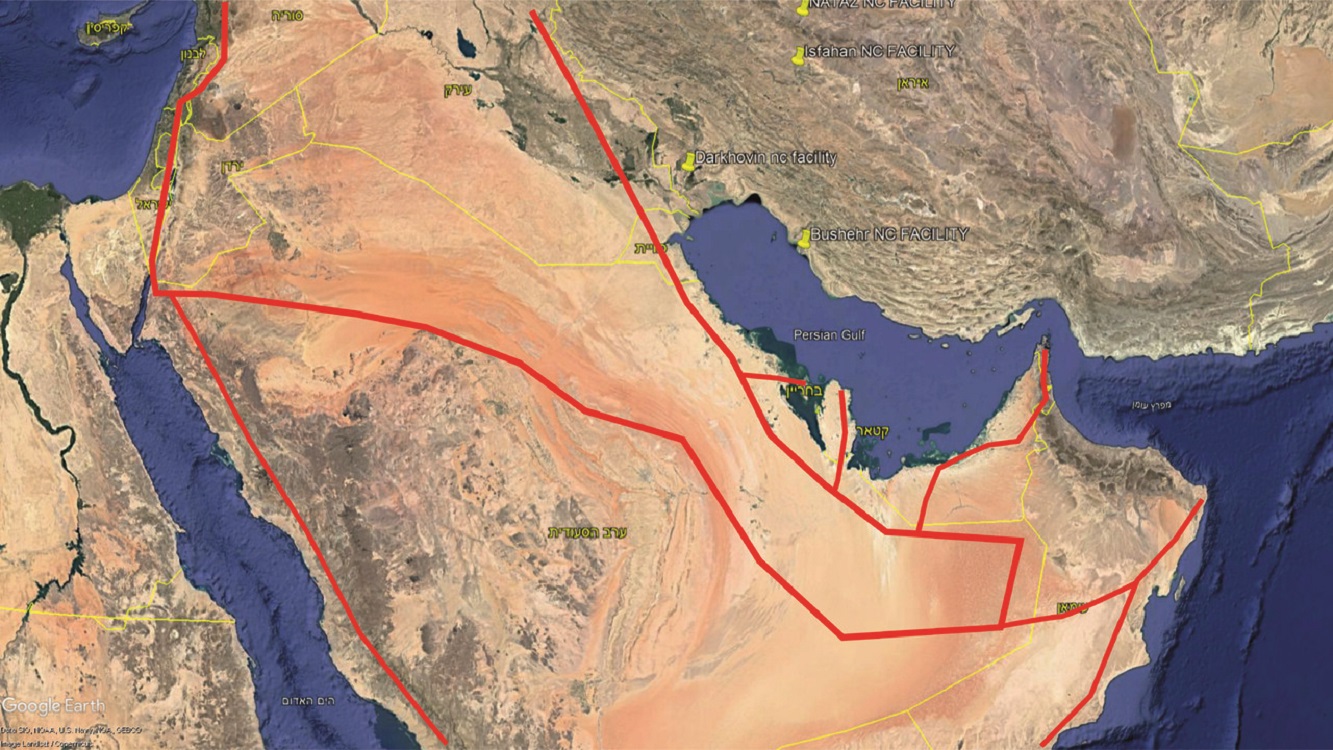
The UAE Khorfakkan model isn’t the only game. Saudi Arabia’s East-West connections (Yanbu/Jeddah) offer strong options for Red Sea-origin cargo heading to western/central GCC. For high-volume bulk, pipeline and rail integrations provide scale.
Oman’s Salalah and Sohar ports also serve as bypass gateways, though they faced their own pressures earlier in the crisis. Smart traders maintain a portfolio: primary UAE Land-Bridge + Saudi alternatives + selective direct transits when windows open.
Comparison Table (High-Level 2026 Estimates):
- Direct Hormuz (when open): Fastest sea time, highest risk/insurance.
- UAE Khorfakkan Land-Bridge: Balanced cost/time, excellent infrastructure.
- Saudi Jeddah Route: Strong for certain origins/destinations, rail synergies.
- Cape of Good Hope: Longest, most predictable in extreme disruption, highest fuel.
Test these scenarios yourself in our platform’s calculators.
Building Long-Term Resilience: Lessons for Your Operations
The 2026 Hormuz crisis has acted as a catalyst, accelerating trade shifts that were already in motion: the death of the “single-route” era and the rise of Multimodal Integration. In this new reality, winners are those who stop viewing logistics as a “cost center” to be minimized and start treating it as a core competency to be optimized.
To build a business that doesn’t just survive but actually strengthens under pressure, follow these six actionable pillars to implement today:
1. Conduct a “Hormuz Exposure” Audit
The Action: Map every SKU in your inventory against its transit dependency. Identify high-margin or time-sensitive goods that require an “Automatic Bypass” protocol.
The Goal: Ensure that for every critical shipment, you have a pre-vetted secondary route (e.g., Khorfakkan land-bridge or Saudi rail-link) ready for immediate activation.
2. Legal Fortification: Update Your Contractual Architecture
The Action: Move beyond generic templates. Incorporate specific “Regional Volatility Clauses” that cover force majeure for naval escalations, alternative routing cost-sharing, and dynamic price adjustments.
The Goal: Protect your cash flow from being trapped in legal disputes when freight rates double overnight.
3. Digitize Your Compliance Muscle
The Action: Stop relying on manual spreadsheets. Leverage Tendify’s integrated AI tools—including our HS Code Finders, Duty Calculators, and Compliance Checklists.
The Goal: Achieve “Zero-Friction” customs movement. In a bonded corridor, a single documentation error can cost you days; automation is your best defense against administrative delays.
4. Build a Diversified “Tier-1” Partner Network
The Action: Don’t put your fate in the hands of a single forwarder. Qualify multiple partners who possess proven expertise in Bonded Trucking and high-frequency feeder operations.
The Goal: Create a “Redundant Network.” If one partner’s equipment is seized or delayed, your secondary and tertiary options must be ready to execute without a new vetting process.
5. Monitor and Model: The “Black Swan” Simulation
The Action: Run quarterly stress tests on your supply chain. Use Tendify’s AI Market Pulse to simulate “what-if” scenarios (e.g., a 15-day Strait closure or a 300% insurance spike).
The Goal: Move from “Reaction” to “Anticipation.” By the time a disruption hits the headlines, your team should already be executing a pre-rehearsed response.
6. Formalize Your Internal “Bypass SOPs”
The Action: Document every step of your alternative routing—from the required E-seals for bonded transit to the specific contact points at Khorfakkan and Dammam.
The Goal: Institutional memory. When a crisis hits, you cannot afford to have your strategy locked in one person’s head. Your Internal Bypass Playbook ensures flawless execution under stress.
| Route Option | Avg. Time (Days) | سطح ریسک | Cost Factor | بهترین برای |
| Direct Hormuz | 1-2 | High (War Risk) | $$$ (Insurance) | High-volume Bulk |
| UAE Land-Bridge | 5-7 | کم | $$ (Trucking) | Containers/FMCG |
| Saudi Land-Bridge | 8-10 | کم | $$ | Red Sea Origins |
| Cape of Good Hope | 25-30 | مینیمال | (Fuel) | Extreme Crises |
Final Thought: In the trade landscape of 2026, the most dangerous word is ‘Normal.’ The companies thriving today are the ones who accepted that volatility is the new baseline. They didn’t just build a backup plan; they built an Antifragile System on Tendify.
Top-Tier Carriers & Logistics Providers for the Bypass Route
If you are looking to activate this route, these companies have established the most robust “Land-Bridge” and “Feeder” operations in 2026:
Primary Ocean Carriers (Mother Vessels to Khorfakkan/Fujairah):
Hapag-Lloyd: A pioneer in the “Hormuz Bypass” strategy, offering integrated sea-to-road solutions specifically for Upper Gulf destinations.
Maersk (A.P. Moller): Utilizes a sophisticated multimodal network linking Salalah and Khorfakkan to their inland “Integrated Logistics” hubs.
MSC (Mediterranean Shipping Company): Maintains high-frequency calls at eastern UAE ports with strong feeder links to Iraq and Kuwait.
Regional Feeder & Multimodal Specialists:
Global Feeder Shipping (GFS): The “workhorse” of the Gulf; they specialize in the final maritime leg from UAE hubs to ports like Umm Qasr, Shuwaikh, and Hamad.
DP World (Logistics Division): Offers end-to-end “Bonded” solutions, including trucking and warehousing at the Sajaa Dry Port.
Emirates Logistics: Known for high-capacity bonded trucking fleets and expertise in cross-border GCC customs clearance.
Etihad Rail DB: The go-to provider for high-volume, rail-integrated moves from Sharjah/Abu Dhabi to the Saudi border.
Note: Tendify is not an agent for these firms. We provide the digital infrastructure to monitor, calculate, and verify your compliance regardless of which carrier you choose.
Strategic FAQ: The UAE Land-Bridge & Khorfakkan Bypass
1. Is the UAE Land-Bridge significantly more expensive than the direct sea route?
While the land-bridge introduces trucking and handling fees, it often results in a Net Saving during periods of high tension. By bypassing the Strait of Hormuz, you avoid the War Risk Surcharge (WRS) and potentially lower your base insurance premiums. Use the Tendify Cost Tool to compare real-time freight vs. multimodal expenses.
2. How do “Bonded” movements affect my VAT and Customs duties in the UAE?
If your final destination is outside the UAE (e.g., Kuwait or Saudi Arabia), cargo moving from Khorfakkan to other hubs remains under Customs Bond. This means VAT and Import Duties are suspended (deferred) as long as the “E-Seal” remains intact and the transit is completed within the stipulated timeframe.
3. What is the average “Dwell Time” at Khorfakkan compared to Jebel Ali?
As of May 2026, Khorfakkan often maintains faster berth productivity for mother vessels because it experiences less congestion than Jebel Ali’s inner-gulf terminals. However, the “Dwell Time” for inland trucking depends on the availability of Bonded Carriers, which we recommend booking at least 72 hours in advance.
4. Can I move refrigerated (Reefer) or Dangerous Goods (DG) via this route?
Yes, but with caveats. Reefer cargo requires specialized “Genset” trucks for the inland leg. For DG cargo, you must obtain specific Inland Transit Permits from the Sharjah and Dubai police/civil defense. These requirements can add 48-72 hours to your prep time.
5. What happens if the cargo is delayed at the Saudi border (Ghuwaifat)?
Border congestion is a reality. To mitigate this, ensure your Bayyan 2.0 filings and origin proofs are pre-cleared. Moving cargo via Etihad Rail is increasingly becoming the preferred “Fast-Track” option for crossing into Saudi Arabia to avoid truck queues.
The Blacklisted Dollar Trap: Why “Cheap Cash” is the Most Expensive Mistake in Global Trade
Why This Matters for Your Bottom Line in 2026 and Beyond
The Hormuz Bypass via UAE Land-Bridge demonstrates that resilience isn’t reactive — it’s engineered. By embracing Operational Decoupling, bonded corridors, and the Khorfakkan Pivot, traders maintain continuity, control costs, and even uncover new efficiencies in a fragmented world.
In my experience, the traders who invest time in understanding these systems today will dominate market share tomorrow. They’ll negotiate better rates, offer more reliable delivery to buyers, and sleep better at night.
Ready to put this into practice? Don’t navigate these corridors alone.
Visit Platform.Tendify.Net today. Access our full suite of trade engines — from real-time calculators and document builders to AI advisors and market intelligence — all designed for exactly these scenarios. Whether you need a quick Incoterms check, container load optimization for bonded legs, or a customized export checklist for UAE-Saudi transit, it’s there in one command center.
The strait may be volatile, but your supply chain doesn’t have to be. Build the resilient operation that turns disruption into your edge.
Start mapping your first bypass route now. Your competitors already are.
Navigating the Hormuz Bypass A Strategy for Global Trade Resilience.pdf