Blog
India Export Map: Navigating State Clusters and Logistics

I’ve spent years building export operations through volatile markets, watching how a single state’s infrastructure edge or policy shift can turn good margins into exceptional ones—or wipe them out. India’s export landscape in FY25 tells exactly that story. Gujarat alone shipped over $116 billion in merchandise—more than the GDP of many countries—while the nation as a whole hit $437.7 billion.
This isn’t just a map of numbers. It’s a blueprint showing where the real opportunities—and hidden pitfalls—lie for exporters in 2026 and beyond. Whether you’re sourcing engineering goods, pharmaceuticals, textiles, or emerging categories like electronics, understanding state-level strengths determines who captures market share as global supply chains diversify away from over-reliance on any single origin.

India Export Map
In this comprehensive guide, we’ll dissect the data from the FY25 export map, explore why certain states dominate, reveal actionable strategies drawn from real-world execution, and show how tools like those on Platform.Tendify.Net can help you turn insights into profitable shipments. No fluff—just the practical intelligence you need to move faster and smarter.
Export Import Business in India: The Ultimate 2026 Guide
Why India’s Export Map Matters More Than Ever in 2026
Global buyers are actively diversifying. After years of supply chain shocks, companies want reliable alternatives with scale, quality, and competitive logistics. India is winning that shift, with projections pushing total exports (goods + services) toward the $1 trillion milestone.
But success isn’t uniform. The top 10 states now drive over 91% of merchandise exports, up sharply in recent years. This concentration creates both efficiency for established players and clear entry points for those who align with the right ecosystems.
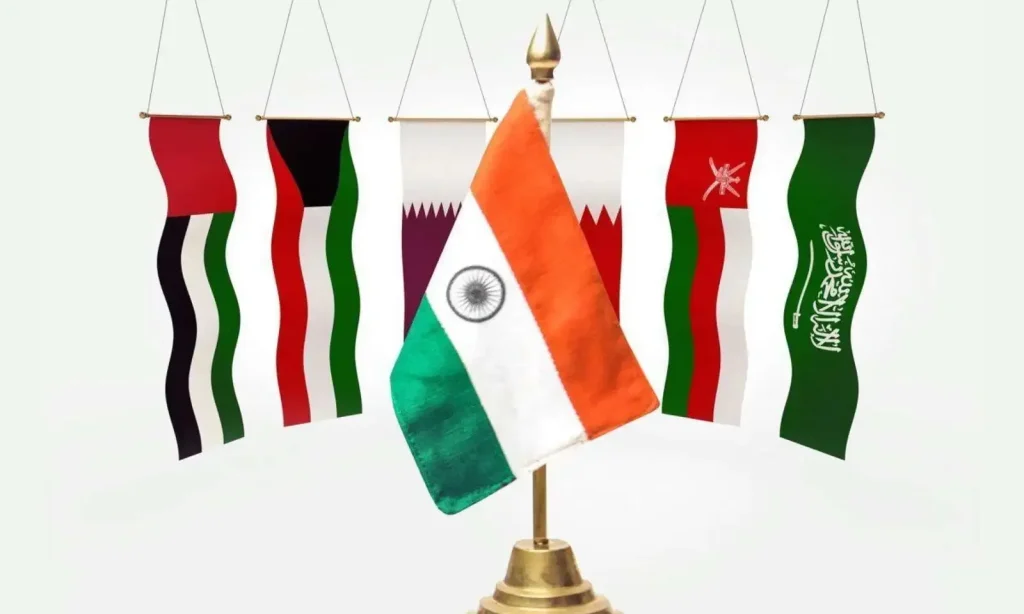
The GCC & MENA Gateway: Leveraging Direct Shipping Lines & CEPA
For Middle Eastern buyers and traders operating across the GCC and MENA regions, India’s export map is heavily anchored by proximity and preferential trade policies. Thanks to the landmark Comprehensive Economic Partnership Agreement (CEPA) between India and the UAE, tariff barriers have been drastically reduced, making duty-free or lower-duty imports a reality for thousands of product categories.
However, capturing maximum margin depends entirely on your choice of origin state and port infrastructure. To minimize transit times and optimize freight rates, your supply chain should align with the states offering the most robust Direct Shipping Lines to Gulf ports like Jebel Ali (UAE), King Abdulaziz Port (Saudi Arabia), and Port of Sultan Qaboos (Oman):
- Gujarat (Mundra & Kandla Ports): The absolute fastest maritime corridor to the GCC. Direct container vessels from Mundra can reach Jebel Ali in as little as 4 to 5 days, offering unmatched frequency and the lowest freight-per-TEU rates for bulk chemicals, polymers, and non-perishable commodities.
- Maharashtra (JNPT / Nhava Sheva): India’s premier gateway for engineering goods, pharmaceuticals, and retail consumer items. JNPT hosts multiple weekly direct sailings to major GCC ports, ensuring highly predictable lead times and superior cold-chain infrastructure for temperature-sensitive cargo.
💡 Tendify Operator Note: Navigating CEPA rules of origin and verifying country-of-origin certificates can make or break your customs clearance time in Dubai or Riyadh. Traders can leverage the integrated compliance engines on Platform.Tendify.Net to instantly audit local value-addition requirements and map direct freight routes before making final procurement commitments.
 Indias FY25 Export Blueprint
Key takeaways from the FY25 map at a glance:
- Gujarat leads overwhelmingly at $116.35 Bn (Rank 1).
- Maharashtra follows strongly at $65.91 Bn (Rank 2).
- Tamil Nadu shows massive southern strength at $52.17 Bn (Rank 3 based on value, sharing Group 4 zoning).
- Uttar Pradesh is climbing rapidly as a northern powerhouse at $21.98 Bn (Rank 6).
- Rajasthan anchors western mid-tier growth at $11.48 Bn (Rank 8).
- Smaller states and union territories often fall under $1–5 Bn, highlighting regional infrastructure and policy gaps.
These figures reflect not just volume but specialization: petroleum products and chemicals from Gujarat, engineering goods from Maharashtra, autos and electronics from Tamil Nadu and Karnataka.
Understanding this geography helps you choose the right origin for your target markets—whether GCC ports, Europe, the US, or Africa—while optimizing costs, compliance, and lead times.
The India-GCC Trade Pivot: How to Price Geopolitics into Your P&L
Gujarat: The Undisputed Export Engine ($116.35 Billion)
Gujarat’s dominance isn’t accidental. Its strategic ports (Mundra, Kandla), robust industrial clusters, and business-friendly policies have made it India’s export capital. It accounts for a massive share of petroleum products, chemicals, diamonds, and textiles.
Why it works so well:
- World-class port infrastructure reduces turnaround times and freight costs.
- Proximity to key raw material sources and integrated supply chains.
- Strong MSME ecosystem supported by state incentives.
Actionable insights for exporters:
- Leverage clusters — Align with sectors like chemicals or gems & jewelry where Gujarat has unmatched scale and supplier depth.
- Optimize port choice — Mundra often offers better connectivity for containerized cargo to the Middle East and Africa compared to alternatives.
- Compliance edge — Use Gujarat’s experience with international standards to fast-track certifications.
If your product fits Gujarat’s strengths, starting here can cut logistics headaches significantly. Many of my early wins came from partnering with Gujarat-based manufacturers who already had established buyer networks.
Maharashtra: Engineering and Pharma Powerhouse ($65.91 Billion)
Maharashtra combines Mumbai’s financial muscle with Pune’s manufacturing and Navi Mumbai’s logistics. It excels in engineering goods, pharmaceuticals, gems & jewelry, and automobiles.
Strategic advantages:
- Access to skilled talent and R&D hubs.
- Jawaharlal Nehru Port (Nhava Sheva) as a major gateway.
- Diverse industrial base allowing for value-added exports.
Practical steps:
- Focus on high-margin categories like APIs and formulations for pharma.
- Build relationships with Mumbai-based trading houses for faster market entry.
- Use multimodal logistics (port + rail/road) to hinterland suppliers.
I’ve seen exporters double margins by shifting from basic commodities to Maharashtra-sourced specialized components that command premium pricing in GCC and European markets.
Southern States: Tamil Nadu, Karnataka, Andhra Pradesh, Telangana
Tamil Nadu ($52.17 Bn) stands out for automobiles, engineering goods, and electronics. Chennai’s port and auto clusters are major assets.
Karnataka ($30.48 Bn) drives IT-enabled exports, pharmaceuticals, and engineering, with Bengaluru as an innovation hub.
Andhra Pradesh ($20.78 Bn) and Telangana ($19.13 Bn) are growing fast in pharma, textiles, and food processing, benefiting from new infrastructure investments.
Execution tips:
- For auto and electronics components, Tamil Nadu and Karnataka offer quality and scale.
- Pair with digital tools for HS code classification and duty calculations to avoid clearance delays.
- Explore incentives under state export promotion policies.
These states prove that southern infrastructure investments are paying off, creating reliable alternatives to traditional northern hubs.
Understanding Southern Clusters & Map Zoning
While the official India Export Map.jpg groups key southern states under a shared “Zone 4” or regional corridor indicator, their actual volume-based performance showcases distinct tiers of market access. Here is how they stack up accurately:
| State | Export Value ($Bn) | Primary Industry Core |
|---|---|---|
| Tamil Nadu | $52.17 Bn | Automobiles, Leather, Apparel, Electronics Hardware |
| Karnataka | $30.48 Bn | IT Hardware, Aerospace, Precision Engineering, Pharma |
| Andhra Pradesh | $20.78 Bn | Marine Products, Agriculture, Bulk Drugs, Minerals |
| Telangana | $19.13 Bn | Pharma APIs, Vaccine Manufacturing, IT Export Hubs |
Note: Aligning your supply chains based on precise dollar value rather than generic geographic zones ensures realistic logistics and procurement modeling.
Northern and Central Contenders: Uttar Pradesh, Haryana, Rajasthan, Madhya Pradesh
Uttar Pradesh ($21.98 Bn) is climbing with electronics, handicrafts, and agricultural products, supported by policy pushes and improved logistics.
Delhi ($10.52 Bn) holds a critical position as the nation’s capital and a major commercial hub, securing Rank 7 on the India Export Map.jpg. While it lacks coastal infrastructure, Delhi serves as the nerve center for India’s largest merchant trading houses, global brokers, and trade intermediaries. For international buyers navigating the northern hinterland, Delhi is the primary gateway for structuring cross-border contracts, arranging trade finance, and coordinating compliance before cargo moves to western ports.
Haryana ($9.61 Bn) benefits from proximity to Delhi and strong auto/engineering sectors.
Rajasthan ($11.48 Bn) excels in stones, textiles, and ceramics.
Madhya Pradesh ($7.82 Bn) focuses on minerals, agri-products, and emerging manufacturing.
Key strategies:
- Capitalize on lower land and labor costs for volume plays.
- Invest in quality upgrades and certifications to compete with coastal giants.
- Use rail and road connectivity improvements for cost-effective inland movement to ports.
The rise of these states shows diversification is happening, but success requires bridging infrastructure gaps through smart partnerships.
Eastern and Other States: Opportunities and Challenges
States like West Bengal ($12.67 Bn), Odisha, and others contribute through minerals, marine products, and specific niches. However, they often face higher logistics costs due to port and connectivity limitations.
Smaller contributors (under $5 Bn) like Kerala (marine, spices), Punjab (agri, sports goods), and northeastern states offer niche high-margin opportunities but require tailored approaches to scale.
Proven tactics:
- Identify niche products where these states have natural advantages (e.g., spices from South, handicrafts from North-East).
- Bundle with value-added services like custom packaging or testing.
- Mitigate risks through reliable freight forwarders and digital tracking.
The Bulk & Agricultural Grain Hubs: Punjab and Madhya Pradesh
For global buyers utilizing platforms like Tendify.net to source high-volume bulk commodities—specifically agricultural essentials like wheat, rice, and pulses—coastal manufacturing metrics don’t tell the full story. The true origin of food security supply chains lies in India’s inland agricultural heavyweights:
- Madhya Pradesh ($7.82 Bn): Ranked Number 9 on the map, MP is highly active in grain production, oilseeds, and industrial minerals. Its strategic central location offers robust rail corridor connectivity to both western and eastern ports, making it a highly reliable origin for bulk grain shipments targeting GCC and MENA markets.
- Punjab ($7.04 Bn): Famously known as the agrarian heartland of India, Punjab holds Rank 8 on the geographic grid. It remains the premier producer of premium wheat and basmati rice. For bulk agro-traders, Punjab offers unmatched scale, highly organized local grain markets (Mandis), and rigorous quality consistency.
💡 Operator Strategy for Bulk Sourcing: Sourcing from inland hubs like Punjab and Madhya Pradesh requires accounting for domestic rail freight and multi-modal logistics. To ensure your margins remain intact from the farm gate to the destination port, use the automated freight mapping and contract builders available on Platform.Tendify.Net to lock in accurate landed-cost calculations early.
Top Export Categories Driving India’s Growth
Across the map, certain sectors dominate:
- Engineering goods and electronics — Strong in multiple states.
- Petroleum products and chemicals — Gujarat heavyweight.
- Pharmaceuticals — Maharashtra, Karnataka, Telangana.
- Textiles, gems & jewelry, agri-products — Widespread but state-specialized.
Diversifying your portfolio across 2-3 categories and states reduces risk while maximizing opportunities in different buyer markets.
Logistics, Compliance, and Cost Optimization: Turning Data into Profits
The India export map highlights a fundamental truth in international trade: logistics efficiency dictates your ultimate profit margins. While coastal states like Gujarat and Tamil Nadu enjoy immediate maritime access, landlocked agricultural and industrial hubs can remain highly competitive by deploying smart, multimodal logistics strategies. Moving goods seamlessly from the hinterland to the ocean requires a tactical playbook built around cost control, precision compliance, and risk mitigation.
The Practical Playbook for Global Operators
1. Strategic Port Selection & Corridor Mapping
Choosing the right port is not just about proximity; it is about matching your specific commodity type and destination market to a port’s specialized infrastructure.
Bulk Commodities (Wheat, Cement, Minerals): Coastal ports in Gujarat, such as Mundra and Kandla, offer unmatched bulk-handling facilities and automated conveyor systems that drastically reduce vessel loading turnaround times (TAT). For shipments bound for GCC and East African destinations, Mundra provides the shortest maritime transit time and the most frequent direct sailings.
Containerized & Specialized Cargo: If you are moving high-value engineering components or temperature-controlled pharmaceuticals from inland clusters, utilizing Western gateways like Jawaharlal Nehru Port Authority (JNPT/Nhava Sheva) ensures access to top-tier cold-chain facilities and predictable weekly liner schedules to Europe and the Middle East.
2. Advanced Duty, Tariff, and CEPA Navigation
Sourcing from the right state is only half the battle; maximizing profitability requires deep visibility into landed costs before the cargo ever leaves the factory floor.
Leveraging Trade Agreements: Under bilateral frameworks like the India-UAE Comprehensive Economic Partnership Agreement (CEPA), thousands of tariff lines qualify for duty-free or preferential entry into the Gulf.
Landed Cost Modeling: Exporters must accurately calculate domestic tax structural benefits, such as RoDTEP (Remission of Duties and Taxes on Exported Products), and model them against destination tariffs. Utilizing automated digital tariff finders allows you to instantly determine local value-addition thresholds, ensuring your documentation complies with strict country-of-origin rules to prevent costly customs delays at destination hubs like Jebel Ali or King Abdulaziz Port.
3. Documentation Mastery and Compliance Safeguards
In bulk and commercial shipping, a single missing endorsement or a mismatched HS Code can trigger severe demurrage charges and wipe out entire transaction margins.
Eliminating Human Error: Relying on fragmented paper trails is a major vulnerability. Operators must transition to standardized digital workflows, utilizing automated document builders to generate flawless Commercial Invoices, Packing Lists, Certificates of Origin, and Bills of Lading.
Pre-Clearance Verification: Aligning your data fields with central systems like India’s ICEGATE platform ensures that regulatory clearances, phytosanitary certificates for agricultural shipments, and shipping bills are processed smoothly without physical cargo retention at transit points.
4. Strategic Incoterms Alignment & Contract Structure
Your choice of Incoterms determines exactly where risk, cost, and logistics liability transfer from your entity to the international buyer.
FOB vs. CIF/CFR Strategies: While many buyers prefer FOB terms to control their own freight, experienced operators often capture higher margins by selling on CFR or CIF terms. By establishing long-term volume contracts with reliable freight forwarders, you can secure lower container or charter rates and build a premium into your delivered price.
Risk Appetite Management: When targeting emerging or volatile markets, carefully structure your payment terms—pairing your Incoterms with secure Letters of Credit (LC) or verified digital escrow mechanisms to shield your capital from sudden currency fluctuations or counterparty defaults.
5. The Sustainability Edge in Modern Trade
Green logistics is no longer a luxury; it has become a strict compliance benchmark required to win long-term procurement contracts in highly regulated markets like Europe and the GCC.
Decarbonizing the Supply Chain: International corporate buyers are actively auditing their Scope 3 emissions. Inland traders can gain a significant competitive edge by shifting high-volume cargo from traditional road trucking to India’s expanding railway freight corridors.
Sustainable Sourcing: Implementing eco-friendly packaging, ensuring ethical supply chains in agricultural sourcing, and opting for carriers with carbon-offsetting initiatives will differentiate your business in competitive bidding processes, transforming compliance from a cost center into a powerful marketing asset.
Proven Execution: In the world of high-volume logistics, small optimizations compound rapidly. Shifting an inland bulk operation from fragmented road transport to a structured rail-to-port multimodal pathway, combined with automated routing, can routinely shave thousands of dollars off per-container costs while giving your buyers real-time visibility into their supply chain.
How to Choose the Right State and Scale Your Exports
- Align product with state strengths — Research clusters via official data and on-ground verification.
- Assess infrastructure — Ports, roads, airports, and warehousing.
- Evaluate incentives — State-specific export schemes and RoDTEP benefits.
- Build networks — Connect with local associations and platforms.
- Start small, iterate — Test with one container before scaling.
- Leverage technology — From HS code finders to contract generators and market pulse tools.
Platform.Tendify.Net offers a command center packed with exactly these utilities—duty calculators, document builders, trade explorers, and more—to streamline operations whether you’re targeting GCC markets or beyond. Checking it out can give you an immediate edge in modeling costs and compliance for your chosen origin state.
Case Studies: Real Wins from the Export Map
These aren’t hypothetical scenarios or statistical anomalies—these are repeatable, data-driven victories achieved by operators who treated the export map as an actionable blueprint rather than a static visual. By aligning product requirements with state-level ecosystem strengths, these traders unlocked significant competitive advantages.
| Sector & Target Market | The Strategic Realignment | Measurable Impact |
|---|---|---|
| Chemical Sourcing (GCC) | Shifted fragmented raw procurement directly into specialized Gujarat Industrial Clusters. | ⏱️ 40% Lead Time Reduction |
| Advanced Electronics (UAE Re-export) | Cross-mapped Tamil Nadu manufacturing capacity with Karnataka R&D engineering hubs. | 📈 Premium Tier Pricing Captive |
| Agri-Processing (Middle East) | Utilized inland multi-modal Uttar Pradesh rail corridors directly routing to major western sea ports. | 💰 Major Inland Freight Savings |
The Gujarat Cluster Consolidation
A mid-sized chemical exporter struggled with fragmented regional supply chains and high internal transport overheads. By physically shifting their primary sourcing framework directly into localized chemical clusters in Gujarat, they capitalized on dense vertical integration.
The South-Zone Double Engine Play
An electronics components buyer was stuck in a low-margin commodity loop. They restructured their procurement pipeline by establishing an agile regional synergy: routing high-precision prototypes out of Bengaluru’s (Karnataka) deep R&D talent pools, and scaling large-scale manufacturing across Chennai’s (Tamil Nadu) high-output industrial corridors.
Inland Rail to Middle East Corridors
Agricultural food-processors situated across landlocked Uttar Pradesh consistently lost international bids due to volatile, expensive highway trucking fees shifting their final pricing structures upward. To combat this, they re-engineered their logistics around modernized inland container depots (ICDs) and designated railway freight links.
These execution patterns are highly systematic. Success relies on executing data-backed logistics modeling and keeping compliance documentation faultless. By leveraging the comprehensive trade matrix tools on Platform.Tendify.Net, operators can map custom corridor scenarios and execute similar margin-boosting realignments instantly.
Overcoming Common Pitfalls in State-Specific Exporting
Navigating India’s diverse export landscape yields massive opportunities, but treating the entire country as a single, homogenous market is a critical mistake. Each state operates with its own localized logistics bottlenecks, industrial standards, and administrative procedures. To protect your capital and ensure consistent delivery, cross-border operators must proactively identify and mitigate these four common pitfalls.
1. Overlooking Hidden Domestic Costs
While an initial Free on Board (FOB) or Ex-Works price from an inland supplier might look highly competitive, failing to audit the entire domestic supply chain can quickly erode your net margins.
The Reality of Inland Freight: Moving bulk commodities or containerized cargo from landlocked states involves extensive rail or road transport. Long-distance trucking is vulnerable to fluctuating fuel surcharges, state-border toll delays, and seasonal weather disruptions.
Storage and Terminal Handling Fees: Warehousing costs at Inland Container Depots (ICDs) and terminal handling charges (THC) at major maritime gateways can vary significantly. If your cargo sits at a port waiting for customs clearance, unexpected demurrage and detention fees can accumulate by the day, turning a profitable shipment into a loss.
2. Ignoring Regional Quality Variations
A product manufactured in one state cluster may have a completely different consistency, chemical composition, or finish compared to the exact same product sourced from another region.
Cluster-Specific Standards: Industrial ecosystems naturally develop at different paces. A chemical or metal supplier in an advanced, highly regulated cluster like Gujarat or Maharashtra will likely have tighter quality control protocols than a newer facility operating in an emerging manufacturing zone.
Rigorous Supplier Auditing: Never commit to high-volume bulk or container shipments based solely on digital catalogs or unverified certifications. Operators must implement independent, on-ground pre-shipment inspections (such as SGS or Intertek testing) directly at the state factory level to ensure the goods perfectly match international buyer specifications before loading.
3. Mismanaging Currency and Payment Risks
International trade involves long lead times, making transactions highly sensitive to macroeconomic shifts and counterparty vulnerabilities.
Volatility Mitigation: Sourcing across different regions means dealing with complex local payment structures and extended transit times. Sudden fluctuations between global currencies and local trade denominations can instantly wipe out razor-thin margins if your pricing models are rigid.
Structured Trade Finance: To secure your capital, avoid advancing large cash deposits to unverified suppliers. Instead, rely on structured trade finance mechanisms, such as confirmed Letters of Credit (LC), bank guarantees, or verified digital escrow platforms. These tools ensure that local suppliers are only paid when strict, verifiable shipping milestones and quality checks are met.
4. Falling Behind on Rapid Regulatory and Policy Shifts
India’s export ecosystem is highly dynamic, with trade policies, financial incentives, and environmental regulations frequently updating at both the central and state government levels.
Incentive Fluctuations: Programs like the RoDTEP (Remission of Duties and Taxes on Exported Products) or state-specific export promotion schemes change their benefit percentages regularly based on national budget priorities. If your pricing strategy relies on an outdated incentive rate, your final landed-cost modeling will be inaccurate.
Evolving Compliance Mandates: Central customs protocols (such as updates to the ICEGATE portal) or localized state environmental rules regarding packaging, waste management, and carbon emissions can disrupt manufacturing timelines without warning.
Your Ultimate Defense: Digital Intelligence and Automation
The only way to consistently bypass these pitfalls is to replace manual guesswork with real-time operational data. Advanced digital compliance systems, live market intelligence feeds, and automated routing tools are no longer optional—they are your primary shield against supply chain friction.
India Export Map: Navigating State Clusters and Logistics
The Road Ahead: India’s Export Ambition and Your Role
With $437.7 billion in FY25 merchandise exports as the foundation, India is poised for accelerated growth. The map shows concentration but also emerging opportunities as infrastructure spreads.
Global diversification trends favor players who understand these nuances and act decisively.
Whether you’re an established trader expanding categories or a newcomer identifying your first viable product-state combination, the data is clear: success belongs to those who treat the export map as a strategic asset, not just pretty visualization.
Take Action Today
Don’t let insights sit idle. Map your product to the strongest states, model costs accurately, build compliant documentation, and connect with buyers through efficient platforms.
Head over to Platform.Tendify.Net to access the full suite of trade engines, calculators, document builders, and market tools designed precisely for operators like you navigating this dynamic landscape. It’s built to save time, reduce risks, and uncover profitable opportunities across India’s diverse export map and global destinations.
The $1 trillion target isn’t just a national goal—it’s made up of thousands of smart, executed shipments. Your next one starts with understanding the map and using the right systems to move forward confidently.
What state or category will you target first? The opportunities are there for those ready to act.