Blog
Export Import Business in India: The Ultimate 2026 Guide
Over twenty years ago, I shipped my first container of spices from Mumbai to Dubai. The paperwork felt like a mountain, the bank delays were frustrating, and I lost money on that initial deal because I didn’t understand the real mechanics. Today, after building multiple export businesses that have moved thousands of containers across continents, I can tell you this: exporting from India is one of the most powerful wealth-creation vehicles available right now—if you do it right.
India’s export engine is firing on all cylinders. With supportive policies, a massive manufacturing base, and growing global demand for Indian goods, the opportunity has never been bigger. But most new exporters still fail because they treat it like a simple “buy low, sell high” game instead of building a professional operation.

export import business in india
In this definitive guide, I’m pulling back the curtain on exactly how to export from India successfully in 2026. We’ll cover everything from getting your export import company set up properly to navigating documentation, logistics, and scaling profitably. No fluff—just the actionable insights I wish I had when I started.
Why Exporting from India Remains a Massive Opportunity in 2026
India has become a global supply chain powerhouse. From agricultural products and textiles to engineering goods and pharmaceuticals, Indian exports continue to grow steadily. Recent india export data shows strong performance in key sectors like rice export from india, marine products, and petroleum derivatives.
Exporting from India
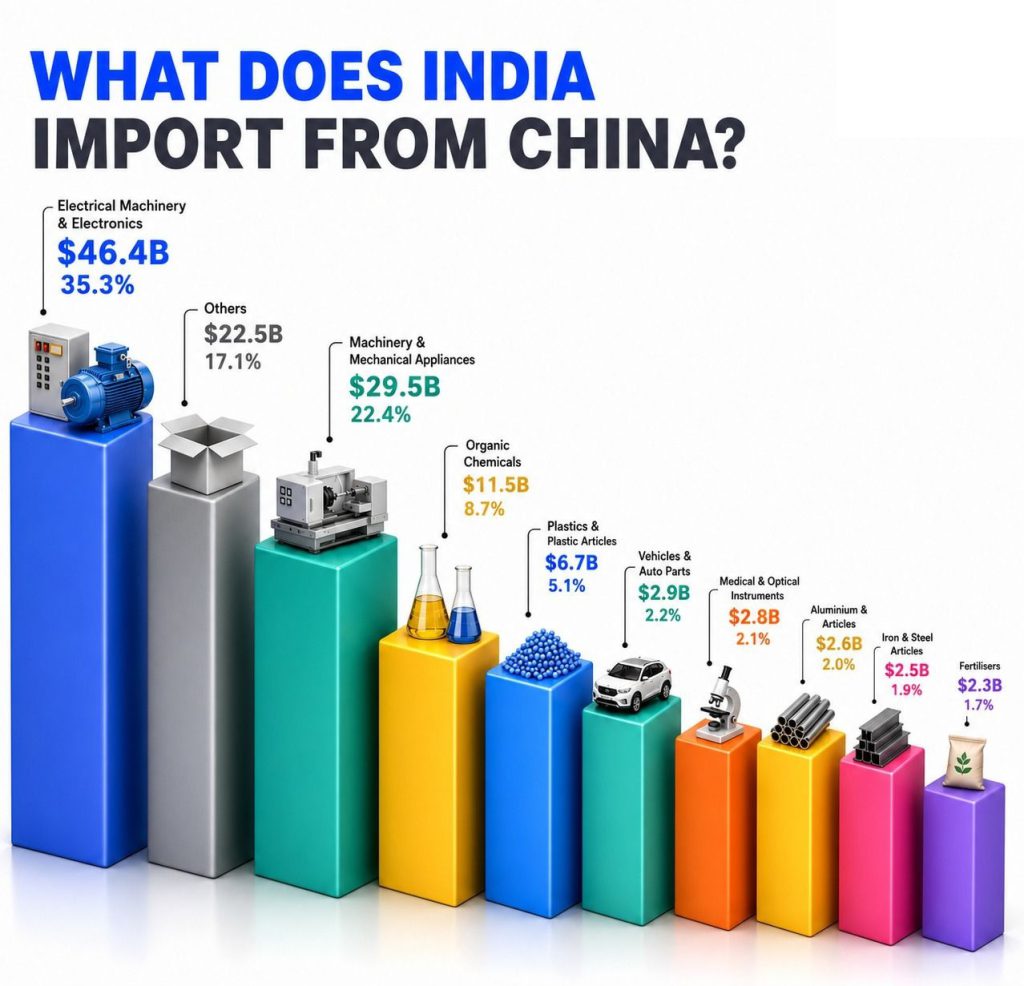
On the flip side, india import data reveals heavy demand for edible oils, electronics, and capital goods—meaning balanced trade flows create opportunities for savvy traders who understand both directions. For example, fluctuations in the import duty on edible oil directly impact domestic pricing and create ripple effects for related export categories.
The real advantage? India offers competitive pricing, improving infrastructure, and government initiatives that reduce barriers for genuine exporters. But success demands treating this like a serious business, not a side hustle.
Recent india export data shows strong performance in key sectors like rice export from india, marine products, and beef export (note: in Indian trade commerce, the commercial term ‘beef export’ legally refers strictly to boneless buffalo meat, also known as carabeef, which is heavily regulated and monitored under APEDA guidelines).
Understanding the Export Import Company Landscape in India
Before you look at logistics, find your first overseas buyer, or book a single cargo container, you must build a flawless legal foundation. Setting up a dedicated export import company in India is a straightforward digital process, but committing fundamental errors during the initial structural phase will trigger devastating compliance bottlenecks, operational freezes, or unexpected tax liabilities later down the line.
When establishing your trading entity, your choice of corporate structure determines everything from your personal liability and capital-raising capacity to how global buyers and major banking institutions perceive your credibility.
Here is an analytical breakdown of the key legal structures available for your export import company in India, complete with strategic insights to help you choose the right path:
1. Sole Proprietorship (The Entry-Level Vehicle)
This is the fastest, simplest, and least expensive structure to deploy. It is ideally suited for independent traders, solo consultants, or beginners who are testing international waters with low-volume transactions before committing significant capital.

Sole Proprietorship
The Advantage: Minimal regulatory compliance, low setup costs, and absolute absolute control over decision-making. You can use your personal PAN (Permanent Account Number) to initiate business activities.
The Catch: It offers zero liability protection. Your personal assets are entirely exposed if the business defaults or faces legal action from overseas buyers. Furthermore, raising institutional capital or securing large trade finance lines is incredibly difficult as a sole proprietor.
2. Partnership Firms and Limited Liability Partnerships (LLPs)
If you are launching your venture with trusted business partners, technical co-founders, or financial investors, co-owning the business is a necessity to pool resources and mitigate early-stage risks.

Partnership Firms and Limited Liability Partnerships
Partnership Deed: A traditional partnership is simple to form, but like a proprietorship, it exposes the partners to unlimited personal liability.
The LLP Advantage: A Limited Liability Partnership (LLP), governed by the Ministry of Corporate Affairs (MCA), is a vastly superior alternative for modern traders. It seamlessly blends the operational flexibility of a partnership with the robust liability protections of a corporate structure. Your personal wealth is safe, compliance costs remain moderate, and the entity has its own permanent legal identity.
3. Private Limited Company (The Gold Standard for Global Trade)
If your strategic objective is to build a high-growth enterprise, secure international B2B marketplace credibility, and access premium banking facilities, a Private Limited (Pvt Ltd) Company is the undisputed industry standard.
International Trust: Global buyers, sovereign funds, and major shipping lines inherently trust a Private Limited structure over any other entity type. It signals that you are a serious corporate player committed to transparency and regulatory audits.
Financial Leverage: This structure makes it significantly easier to secure Letter of Credit (LC) limits, pre-shipment credit, packing credit, and foreign exchange hedging lines from top-tier commercial banks. It also enables you to legally raise external equity funding if you decide to build a scalable trading house or a tech-enabled Micro-SaaS supply chain platform.
Comparison: Choosing the Right Structure for Your Vision
To help you make an immediate decision, evaluate your business goals against this definitive breakdown:
Go with a Sole Proprietorship/LLP if: You are bootstrapping a small-scale operation, focusing on localized agricultural sourcing, or starting trade as a lean, low-overhead experiment.
Go with a Private Limited Company if: You plan to aggressively scale operations, handle complex multinational agreements, register your brand internationally, or build a corporate team that requires external institutional financing.
Choosing your structure wisely protects your personal financial health from day one, simplifies your tax compliance, and guarantees that your entity passes the rigorous KYC (Know Your Customer) verifications required by top global banks and customs clearing houses.
The Foundation: Getting Your Import Export Code (IEC)
If you take away only one piece of advice from this entire guide, let it be this: do not attempt to bypass or delay your regulatory registrations. Obtaining your import export code (IEC) is completely non-negotiable. The IEC acts as your primary export import license and primary business identification number for any and all cross-border trade originating from or entering India.
Import Export Code (IEC)
Without an active, verified IEC, Indian Customs authorities will absolute block your shipments from leaving the port, and your commercial bank will refuse to process any foreign inward remittances.
Why the IEC is the Ultimate Gatekeeper
Issued officially by the Directorate General of Foreign Trade (DGFT) under the Ministry of Commerce and Industry, the IEC is a permanent 10-digit identifier. Since the implementation of the modern GST regime, your IEC number is actually identical to your company’s Permanent Account Number (PAN).
However, simply having a PAN does not mean you have trade privileges. You must formally apply to the DGFT to link your PAN to the national customs network, verify your corporate bank accounts, and officially activate your trading status. Once approved, this system generates your formal import export certificate, signaling to global customs, shipping lines, and border authorities that your company is a verified, legal trading entity.
India Bitumen Imports 2026: Market Shares, Top Suppliers & Export Strategies
Step-by-Step Blueprint to Secure Your Import Export Certificate
The application process is entirely digitized, eliminating paperwork delays if you prepare your digital files correctly beforehand. Follow this exact technical sequence to secure your license:
⚠️ Critical Pro-Tip from Years in the Trenches:
Do not make the mistake of thinking the IEC is a ‘set-it-and-forget-it’ document. Under the current Foreign Trade Policy, every single exporter is legally mandated to electronically update their IEC details on the DGFT portal annually between April and June, even if absolutely nothing has changed in your business structure. Failing to complete this quick annual re-validation will result in your code being automatically flagged as ‘De-Activated’. Your operations will grind to a sudden halt at the port until compliance is restored.
Once your application is successfully signed and submitted, the DGFT’s automated system typically reviews, approves, and issues your import export certificate within 1 to 3 working days.
Securing this credential means you are officially in the game. It acts as the master key that unlocks your ability to claim duty drawbacks, leverage export incentive schemes like RoDTEP (Remission of Duties and Taxes on Exported Products), and open highly sophisticated, multi-currency corporate bank accounts to safely receive international wire transfers.
The Australia Trade Roadmap: Navigating ECTA, ASEAN, and Africa’s Emerging Lanes
Crucial Next Step: Registering Your AD Code
Once your IEC is active, you cannot instantly ship cargo until you complete your Authorised Dealer (AD) Code registration. An AD Code is a 14-digit letter issued by your corporate bank confirming that you maintain a valid foreign exchange account. You must electronically register this bank-issued AD Code on the ICEGATE (Indian Customs Electronic Gateway) portal for every single port from which you intend to ship. Without this port-level linkage, customs software will automatically block your shipping bills from generating, completely stalling your logistics at the border.
How to Export from India: The Complete Operational Blueprint
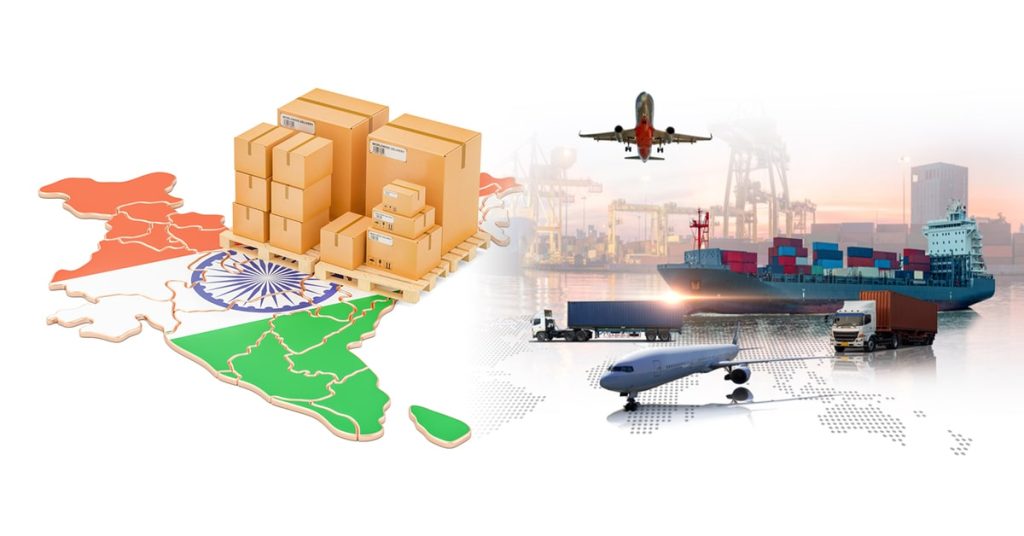
How to Export from India
Here’s the exact process I recommend following for every new shipment:
Step 1: Market Research and Product Selection
Don’t export what you think will sell—export what the data proves is in demand. Analyze india export data for your category. Focus on products with strong margins and manageable logistics, such as rice export from india (a global leader), spices, textiles, or machinery components.
Step 2: Find Reliable Buyers
Use B2B platforms, trade shows, and targeted outreach. Verify buyers thoroughly—request references and start small. Tools like digital marketplaces can accelerate this significantly.
Do not rely blindly on generic internet searches. Instead, leverage official Indian trade bodies like the Federation of Indian Export Organisations (FIEO) and commodity-specific Export Promotion Councils (EPCs)—such as APEDA for agricultural goods and rice. These government-backed councils provide registered members with access to verified international buyer directories, official trade delegations, and protected B2B market intelligence that slashes your counterparty risk.
Step 3: Pricing and Quotation
Calculate your true landed cost including production, packaging, inland transport, ocean freight, insurance, and duties. Add healthy margin while remaining competitive. Always issue a professional proforma invoice.
Step 4: Secure the Order and Contract
Use clear contracts covering Incoterms, payment terms, quality specifications, and dispute resolution. For higher-value deals, consider escrow services over traditional letters of credit.

India’s 2026 Global Trade Roadmap
Critical Trade Documentation You Must Master
Paperwork is where most deals fall apart. Here are the essentials:
- Commercial Invoice for Export: Must be accurate and detailed. This is your primary billing document for customs.
- Packing List: Detailed description of contents, weights, and dimensions.
- Bill of Lading or Airway Bill: Proof of shipment.
- Certificate of Origin: Vital for claiming preferential tariffs under FTAs.
- Insurance Certificate: Protects against transit risks.
- Export Declaration and Other Compliances: Including GST returns and any sector-specific licenses (e.g., for food or chemicals).
Every product in international commerce is classified using the globally standardized Harmonized System (HS). Before drafting any paperwork, you must identify your precise 8-digit Indian HS Code (ITC-HS), as choosing the wrong tariff classification leads to severe miscalculations in duties, immediate customs hold-ups, and potential compliance penalties.
| Document / Tool | Core Function | Why It Matters |
| Commercial invoice for export | Primary billing document | Crucial for customs valuation and clearing agents. |
| Packing List | Detailed cargo breakdown | Specifies exact contents, total weights, and dimensions. |
| Bill of Lading | Proof of shipment & title | Issued by the carrier to acknowledge receipt of cargo. |
| Container tracking | Real-time logistics monitoring | Modern platforms use this to eliminate port uncertainty and track transit. |
Real talk: Invest in good software or a reliable freight forwarder early. Mistakes here cost far more than prevention.
Logistics and Shipping: Making It Move Smoothly
Moving physical cargo across global borders is where theoretical business plans face the harsh reality of global supply chains. In international trade, execution is everything. A single day’s delay at JNPT (Mumbai) or Mundra Port (Gujarat) can wipe out your entire profit margin in demurrage fees.
Fortunately, technological advancements like real-time container tracking have completely transformed the game. Modern trade operating systems allow serious exporters to monitor their ocean freight in real time, giving you exact visibility over your cargo’s journey, reducing port uncertainty, and allowing you to provide proactive updates to your overseas buyers. However, technology is only as good as the strategic decisions driving your logistical framework.
1. Decoding Incoterms: Balancing Control and Risk
One of the absolute first logistics milestones you must negotiate with your buyer is the Incoterm (International Commercial Terms). This rule defines exactly where the seller’s responsibility ends and the buyer’s liability begins. For most Indian exporters, the choice comes down to a balance between operational risk and supply chain control:
| Incoterm | Who Pays for Main Freight? | Where Does Risk Transfer? | Best Used For |
| FOB (Free On Board) | The Buyer | Once the goods are safely loaded onto the vessel at the Indian port. | Beginners who want to avoid dealing with international ocean freight rates and marine insurance. |
| CIF (Cost, Insurance, and Freight) | The Seller (You) | At the destination port, though risk transfers when goods pass the ship’s rail at origin. | Experienced exporters who want to control the shipping line selection and leverage freight margins as a competitive advantage. |
2. Sourcing and Managing Your Freight Forwarder
Do not attempt to book cargo containers directly with mega shipping lines when you are starting out. Your closest ally in this business is a licensed, reliable freight forwarder who intimately understands the operational nuances of major Indian sea gateways and air cargo hubs.
A high-quality forwarder doesn’t just buy container space; they handle your customs customs brokerage, manage local warehouse-to-port cartage, navigate sudden equipment shortages, and ensure your commercial invoice for export and shipping bills match customs requirements perfectly. When vetting a logistics partner, ensure they have strong, established networks in your specific destination country to guarantee hassle-free clearing at the final port.
3. Product-Specific Packaging Optimization
Your packaging must be engineered to withstand weeks of ocean transit, dramatic temperature fluctuations, high humidity, and rough handling at multiple checkpoints. This is particularly critical for sensitive agricultural commodities.
For instance, when managing a high-volume rice export from india shipment, traditional packaging is a recipe for disaster. Rice is highly hygroscopic; it absorbs environmental moisture rapidly. If you do not utilize heavy-duty, food-grade polypropylene (PP) woven bags, combined with specialized container desiccant strips and kraft paper linings, condensation will form inside the steel container during the voyage. This leads to mold outbreaks, ruined grain quality, and catastrophic cargo rejection upon arrival.
4. Harnessing Multimodal Logistics for Cost Optimization
If your processing unit, factory, or agricultural warehouse is located in an inland state—such as Punjab, Haryana, or Madhya Pradesh—you must master multimodal logistics to remain price-competitive.
Instead of arranging expensive long-haul road trucking to coastal ports, leverage India’s extensive network of Inland Container Depots (ICDs) and Container Freight Stations (CFSs). You can complete your customs clearance locally at an inland dry port, load your goods into a sealed container, and transfer it smoothly via dedicated rail freight corridors directly to major coastal sea hubs. This seamless blending of rail and sea transport slashes your domestic transit costs, minimizes handling damage, and dramatically reduces your overall carbon footprint.
Payment Methods and Risk Management
In global trade, a deal isn’t truly successful until the funds are cleared and sitting safely in your corporate bank account. Never ignore payment security. Moving goods across oceans before securing your financial downside is the fastest way to kill a growing business.
International trade inherently involves longer cash-flow cycles, geopolitical shifts, and counterparty risks. Managing these moving parts requires a strategic blend of secure payment methods and proactive banking partnerships.
1. The Global Payment Spectrum: Balancing Risk and Trust
Every transaction is a negotiation of trust between you and the buyer. While buyers want to delay payment until they receive and inspect the cargo, you need capital upfront to secure raw materials and process the shipment. Here is how modern exporters structure their payment terms to manage this risk:
Advance Payment (Telegraphic Transfer / TT): This is the holy grail for exporters. Receiving a percentage upfront (e.g., a 30% deposit via wire transfer before production, with the remaining 70% paid against scanned copies of the Shipping Documents and Bill of Lading) provides immediate working capital and validates the buyer’s commitment.
Letters of Credit (LC): For high-value transactions or when dealing with buyers in emerging markets, an Irrevocable Letter of Credit issued by a reputable, top-tier international bank is the industry standard. The buyer’s bank guarantees payment to your bank, provided you present flawless shipping documents that comply exactly with the LC terms.
Digital Trade Escrow Platforms: For smaller deals, trial shipments, or Micro-SaaS style trade transactions, digital escrow platforms are rapidly gaining popularity. These platforms hold the buyer’s funds securely in an independent account and release them automatically to the exporter once verified tracking data proves the cargo has been delivered, offering a friction-free middle ground for new business relationships.
2. Mastering the Inward Remittance Framework in India
When receiving international payments in India, simply seeing the money arrive in your account is not the final step. Under the Foreign Exchange Management Act (FEMA) guidelines set by the Reserve Bank of India (RBI), every single dollar, euro, or dirham entering your business must be legally accounted for.
You must work closely with your bank to secure a Foreign Inward Remittance Certificate (FIRC) or an Electronic FIRC (e-FIRC). This document serves as official legal proof to customs and tax authorities that your export proceeds have been fully realized in foreign currency. Failing to secure your e-FIRCs can disqualify you from receiving vital government export benefits, duty drawbacks, and GST refunds.
📉 Pro-Tip: Navigating Currency Volatility and Hedging
Global currency markets are notoriously volatile, and sharp movements in the Indian Rupee (INR) against the US Dollar (USD) or Euro (EUR) can completely wipe out your profit margins between the day you sign a contract and the day payment actually arrives.
Build a strong, proactive relationship with your commercial bank’s specialized trade finance and treasury team from day one. Do not treat them as passive utility providers. Instead, utilize their expertise to set up formal Forward Contracts or currency hedging strategies. A forward contract allows you to lock in a guaranteed exchange rate for a future date, ensuring that your calculated margins remain safe regardless of sudden macroeconomic fluctuations.
3. Credit Insurance: Shielding Against Default
Even with thorough background checks, unexpected political turmoil, currency devaluation in the buyer’s country, or sudden corporate bankruptcy can cause a buyer to default on a shipment.
To completely insulate your business from catastrophic bad debts, serious operators secure credit insurance policies through the Export Credit Guarantee Corporation (ECGC) of India. An ECGC policy protects your cash flow by covering up to 80-90% of your financial loss if an overseas buyer fails to pay due to commercial or political risks, allowing you to scale into new, high-growth global markets with absolute peace of mind.
Scaling Your Export Import Company Profitably
Once you’ve completed your first few shipments successfully:
- Diversify products and markets.
- Invest in quality certifications (ISO, etc.) to access premium buyers.
- Leverage government schemes like RoDTEP for duty drawbacks.
- Build a team or outsource non-core functions like documentation.
Advanced tip: Use data analytics to spot arbitrage opportunities and optimize routes. Platforms offering real-time market insights give serious operators a competitive edge.
Common Pitfalls That Kill New Exporters (And How to Avoid Them)
The global trade arena is highly rewarding, but it is unforgiving to amateur mistakes. While the growth potential is massive, a single systemic error can instantly freeze your capital or drain your margins. Most new trading ventures do not fail because of a lack of buyers or market demand; they fail due to structural operational blind spots.
By analyzing thousands of failed trade attempts, we can catalog the five fatal mistakes that consistently kill new exporters—and look at exactly how you can insulate your operation against them.
1. Underestimating Working Capital Cycles
International trade inherently operates on stretched timelines. Unlike domestic trade, where payment cycles might span a few days, a cross-border supply chain takes weeks or months.
The Pitfall: New traders often trap 100% of their available cash in their very first ocean shipment. Between sourcing raw materials, local manufacturing, transit to the port, customs clearance, sea freight voyage, and final clearing at the destination, your capital can easily be locked up for 45 to 90 days. If you lack cash reserves, your business grinds to a halt while waiting for funds to clear.
The Solution: Maintain a robust cash cushion and build solid credit lines with your banking partners early. Explore specialized trade finance instruments such as pre-shipment credit, export packing credit, or bill discounting to keep your operational wheels turning smoothly while cargo is in transit.
2. Lax Quality Control (QC) Protocols
In international commerce, you do not get a second chance to make a first impression. Overseas buyers are incredibly sensitive to quality variances, and a single subpar delivery can destroy years of hard-earned relationship equity.
The Pitfall: Relying blindly on a manufacturer’s word or assuming that a sample perfectly represents the final production run. If your goods arrive at a foreign port out of specification—whether it is an off-spec chemical batch, variations in textile weaving, or moisture damage in an agricultural commodity—the buyer can reject the entire container, forcing you to pay for return freight or local destruction costs.
The Solution: Establish formal, independent third-party inspection mechanisms. Partner with internationally recognized auditing firms like SGS, Bureau Veritas, or Intertek to inspect the cargo at the factory or port before it is loaded into the shipping container. Never let a container seal close without a certified pre-shipment inspection report.
3. Ignoring Changing Regulatory Compliance
Cross-border trade operates at the intersection of complex geopolitical policies, public health rules, and environmental mandates. Regulations are fluid and change rapidly.
The Pitfall: Shipping goods without verifying the latest import restrictions, maximum residue limits (MRLs), or packaging mandates enforced by the destination country. For example, failing to treat wooden pallets used for stacking cargo can lead to immediate quarantine and severe customs fines at European or North American ports under international phytosanitary rules.
The Solution: Do not rely on outdated forum posts or hearsay. Constantly monitor updates from the Ministry of Commerce, the DGFT, and respective Export Promotion Councils (EPCs). Always double-check compliance requirements directly with your buyer’s customs clearing broker at the destination port before production begins.
4. Flawed or Incomplete Trade Documentation
The global shipping apparatus runs on absolute bureaucratic precision. Customs clearing agents do not look at your physical cargo first; they look at your digital paperwork.
The Pitfall: Typos, mismatched weights, incorrect Harmonized System (HS) codes, or missing declarations on critical papers. A minor clerical error on your commercial invoice for export or Bill of Lading can cause customs authorities to hold your container in a secure port yard for weeks. This triggers compounding storage charges and demurrage fees that can easily exceed the entire value of the goods.
The Solution: Invest in professional trade automation tools or work with a highly experienced customs broker. Create a rigid compliance checklist for every shipment, ensuring that values, descriptions, weights, and country-of-origin data match exactly across every single document in the shipping set.
5. Over-Reliance on a Single International Market
Putting all your operational eggs in one geographical basket exposes your business to extreme macro-level vulnerabilities.
The Pitfall: Building an entire export business around a single country or buyer. If that specific region experiences a sudden economic recession, a currency collapse, political instability, or introduces unexpected tariff barriers, your entire revenue engine collapses overnight.
The Solution: Use your initial trade profits to strategically diversify your market reach. If you are successfully exporting agricultural commodities to the Middle East, begin running parallel market research for Southeast Asia or North Africa. Spreading your operational risk across multiple trade corridors insulates your business from localized geopolitical shocks.
📋 Systemizing the Trade Workflow
Do not treat each shipment as an isolated, chaotic event. Treat it as a data-gathering process. To scale seamlessly, you must document your entire operational pipeline internally. Create comprehensive, repeatable Standard Operating Procedures (SOPs) for product sourcing, document execution, and port coordination. When you turn your logistics into a predictable machine, you transition from a stressful side hustle into a highly scalable global trade enterprise.
Tools and Resources Every Serious Exporter Needs
In today’s environment, technology levels the playing field. Digital tools for HS code classification, duty calculation, contract generation, and market analysis save countless hours.
I’ve personally tested many solutions over the years. The ones that deliver the highest ROI integrate multiple functions into a single command center.
For traders serious about scaling, Platform.Tendify.Net stands out as a comprehensive Global Trade Operating System. It brings together AI-powered market intelligence, document builders, calculators, compliance tools, and more—exactly what you need to move faster and smarter than competitors. Whether you’re handling your first rice export from india shipment or managing a diversified portfolio, having these capabilities in one place transforms operations from chaotic to controlled. I strongly recommend checking it out to see how it fits your workflow.
The Mindset Shift That Separates Winners from Dreamers
Exporting isn’t just about moving goods—it’s about building systems, relationships, and resilience. Treat every challenge as data for improvement. Stay patient in the beginning; the compounding rewards are substantial.
Ready to Build Your Export Empire?
You now have the complete blueprint for how to export from India in 2026. The knowledge is here—the only thing left is execution.
If you’re committed to doing this properly, start today: get your IEC sorted, research your first product deeply, and build your support stack.
Head over to Platform.Tendify.Net and explore the full suite of trade engines and tools designed specifically for ambitious exporters like you. Many traders I’ve mentored have accelerated their growth significantly by integrating these capabilities early.
The global market is waiting. Go build something valuable.
🙋♂️ Frequently Asked Questions (FAQ)
1. What is the basic export meaning in international trade?
In simple terms, export meaning refers to the act of shipping goods or services produced in one country to another country for sale or trade. For businesses in India, it represents a strategic path to tap into international purchasing power and scale operations beyond domestic borders.
2. What is the term for export and import in Hindi?
If you are searching for the terms import in Hindi, the word is आयात (Aayat). On the other hand, export is translated as निर्यात (Niryat). Understanding these native terms is highly useful when communicating with local manufacturers and grassroots suppliers across India.
3. Is an export import license mandatory for trading in India?
Yes. To legally run an export import company, you must secure a specific export import license known as the Import Export Code (IEC). This is a 10-digit code issued by the Directorate General of Foreign Trade (DGFT), and no commercial customs clearance is possible without it.
4. How long does it take to get an import export certificate (IEC)?
Once you submit your application and upload the required documents on the DGFT portal, the import export certificate is typically generated within 1 to 3 working days. The process is completely digital and highly streamlined.
5. Why is the commercial invoice for export so critical?
The commercial invoice for export is the foundational legal document issued by the seller to the foreign buyer. It acts as a bill of sale and is heavily scrutinized by customs authorities to determine the true value of the goods, assess duties, and clear the shipment at both the origin and destination ports.
6. How can traders mitigate risks in agricultural shipments like rice or beef export from india?
When dealing with high-volume commodities—such as rice export from india or beef export (strictly managed as legally permissible boneless buffalo meat under APEDA regulations)—traders must focus heavily on stringent quality controls, moisture-resistant packaging, and strict adherence to the destination country’s health regulations. Utilizing real-time container tracking and securing comprehensive marine insurance are also vital to manage transit risks.
7. How does the import duty on edible oil affect the broader trade market?
India is a major consumer of vegetable oils. Fluctuations in the import duty on edible oil directly alter domestic market prices and processing costs. For diversified trade houses, monitoring these duty shifts is essential, as they create ripple effects that impact overall agricultural supply chains and related export margins.
This guide is based on real-world experience and current 2026 practices. Always verify the latest regulations with official sources like DGFT before acting, as policies can evolve.
2026 India Export Blueprint.pdf