وبلاگ
Majlis Etiquette: How to Close Million-Dollar Deals in Riyadh & Abu Dhabi
I’ve sat through hundreds of meetings over the past two decades, from boardrooms in London to warehouses in Jebel Ali. But nothing quite prepares you for your first real majlis session in Riyadh or Abu Dhabi. You walk in expecting a structured agenda and PowerPoint slides. Instead, you find low seating, Arabic coffee, dates on silver trays, and conversation that drifts from family to football before anyone mentions business. That’s when most outsiders lose the deal—not because their numbers were wrong, but because they treated the majlis like a Western boardroom.

Majlis Etiquette
In the Gulf, especially Saudi Arabia and the UAE, the majlis isn’t just a room; it’s the cultural engine of business. It’s where trust is built, relationships solidify, and multi-million-dollar contracts are quietly sealed. Rush it, ignore the rituals, or push too hard, and you walk out empty-handed. Master it, and doors open that no email or LinkedIn message could ever unlock.
This guide draws from years of closing deals across the region. I’ll walk you through the etiquette, the psychology, the step-by-step flow, and the subtle signals that separate those who get invited back from those who don’t. If you’re exporting to the GCC, sourcing from Gulf buyers, or expanding into Saudi and Emirati markets, these are the rules that actually move the needle in 2026.
Why the Majlis Still Rules High-Value Deals in 2026
Despite all the digital tools, video calls, and instant messaging, face-to-face majlis meetings remain the gold standard for anything over seven figures. Why? Because in Gulf business culture, a deal isn’t just a transaction—it’s a partnership rooted in honor, reputation, and long-term mutual benefit.
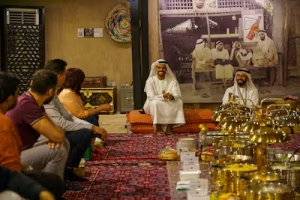
Majlis Still Rules
Statistics back this up: studies from regional business hubs show that over 70% of major GCC contracts (especially in construction, energy, commodities, and wholesale trade) involve at least one extended majlis-style session before signatures appear. In Saudi Arabia, Vision 2030 has accelerated mega-projects, but decision-makers still rely on personal rapport forged in these settings. In the UAE, even cosmopolitan Abu Dhabi and Dubai preserve majlis traditions in family offices and high-net-worth circles.
The majlis creates psychological safety. People lower their guard over coffee and conversation. They reveal real priorities, hidden concerns, and unspoken red lines—information you never get in a formal meeting. That’s why savvy traders treat every majlis as the most important part of the sales cycle.
Sustainability and Green Logistics Solutions in Saudi Arabia
Understanding the Majlis: Traditional vs. Modern Business Settings
The classic majlis is a dedicated room in a home, diwan, or office—cushions along the walls, no shoes, everyone at the same level (literally). In Riyadh, you might enter a royal-style majlis with intricate carpets. In Abu Dhabi, it could be a sleek lounge in a high-rise with the same low seating and hospitality rituals.
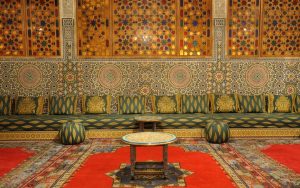
Understanding the Majlis
Modern variations exist:
- Corporate majlis — Many companies now have dedicated reception areas mimicking the traditional setup for meetings.
- Coffee shop majlis — Informal follow-ups in high-end cafes in Riyadh’s Kingdom Centre or Abu Dhabi’s Corniche.
- Event majlis — Side sessions at exhibitions like Big 5 or ADIPEC where deals advance over tea.
Regardless of format, the core principles remain identical.
Preparing for Your First Majlis Meeting
Preparation separates amateurs from professionals.
1. Timing and Scheduling Schedule far in advance—weeks or months for senior decision-makers. Avoid Friday (holy day) and prayer times. Best slots: mornings or late afternoons. Be flexible if the host reschedules; it’s normal and not a rejection.
2. Dress Code Men: Conservative suit (no flashy ties), closed shoes. In more traditional Riyadh settings, a thobe might be appreciated if invited, but stick to Western business attire unless advised. Women: Modest clothing covering shoulders and knees; headscarf optional but respectful in conservative venues. Always remove shoes at the entrance unless told otherwise.
3. Gifts (Small but Thoughtful) Bring dates, high-quality sweets, or a small token from your country. Avoid alcohol, pork-derived items, or anything too extravagant (it can feel like a bribe). Present with your right hand.
4. Research the Host Know their tribe, family business history, or recent projects. Mention shared connections subtly—it builds instant credibility.
Trading with Russia? Do This Critical Check Before Sending Money or Signing Contracts
Entering and Greeting: The First 5 Minutes Set the Tone
Walk in calm and confident. Greet the most senior person first (look for cues: age, seating position, how others defer). Use a firm but not aggressive handshake (same gender only unless the woman extends her hand).
Standard greeting:
- “As-salamu alaikum” (peace be upon you)
- Response: “Wa alaikum as-salam”
Follow with “Kayf halak?” (How are you?) or “Shlonak?” in Gulf dialect. Small talk about health, family (in general terms), or recent news follows. Never jump to business.
Accept coffee or tea immediately—refusing can offend. Hold the cup in your right hand. Sip slowly; refills signal the conversation continues. When you’ve had enough, shake the cup gently to signal “no more.”
Conversation Flow: Building Trust Before Business
The first 20–40 minutes (sometimes longer) are relationship-building.
Key topics to warm up:
- Family (respectfully, without prying)
- Travel experiences
- Shared interests (football, falconry, cars)
- Praise for Saudi Vision 2030 or UAE’s innovation achievements
Avoid:
- Politics, religion debates, Israel-Palestine unless raised
- Criticizing local customs or competitors
- Direct “no” — use diplomatic phrasing like “That might be challenging, let’s explore options”
Listen more than speak. Nod, maintain eye contact, show genuine interest. The host is assessing your character as much as your offer.
Transitioning to Business: Reading the Room
The host decides when to shift. Signs include:
- Leaning forward
- Asking specific questions about your product/service
- Mentioning mutual contacts or past deals
Introduce your proposal indirectly: “We’ve helped similar companies in [sector] achieve X results—perhaps there’s alignment here.”
Use stories and examples over hard data at first. Gulf negotiators value narrative proof.
Negotiation Tactics That Work in the Majlis
Negotiations in this setting are indirect, patient, and relationship-first.
- Start high/low and bargain — Expect theatrical opening positions. Counter respectfully.
- Silence is powerful — Don’t fill every pause. Let them speak.
- Indirect disagreement — Say “Perhaps another approach could deliver even better results” instead of “That’s wrong.”
- Hierarchy respect — Direct comments to the senior person; others may defer.
- Multiple rounds — One majlis rarely closes. Follow-ups are normal.
نکته حرفهای: Bring concessions in advance. Showing flexibility builds goodwill.
Closing the Deal: Subtle Signals and Next Steps
Deals close quietly—no dramatic announcements.
Signs you’re close:
- Host discusses implementation details
- Mentions “inshallah” positively with timelines
- Invites you to another majlis or family event
To seal:
- Summarize agreements verbally
- Propose clear next steps (e.g., “Shall we prepare the MOU?”)
- Thank profusely and express long-term interest
Follow up same day with a polite message recapping and attaching any docs.
Common Mistakes That Kill Deals
- Pushing for quick decisions
- Being overly aggressive or loud
- Ignoring hospitality rituals
- Focusing only on price, not relationship
- Using left hand for anything
- Checking phone constantly
I’ve seen million-dollar opportunities vanish over something as small as refusing coffee twice.
How Tendify Fits into the Modern Majlis
Platforms like Tendify accelerate access. Verified profiles act as your digital introduction, RFQs open doors, and trust accounts reduce risk so conversations focus on value, not fear. Once you connect digitally, the majlis becomes the place to transform a lead into a legacy partner.
For deeper dives into Gulf trade logistics and networking, check these resources on our blog:
- Networking 4.0: The Blueprint for Building a High-Performance Export Ecosystem
- Building Strategic B2B Networks in the Gulf: The Art and Science of Relationship-Driven Growth
The majlis hasn’t changed much in centuries because it works. Respect the ritual, invest in the person, and the business follows naturally.
Ready to put these principles into action and connect with serious GCC buyers? Join Tendify today—post your first RFQ for free, build your verified profile, and start turning digital introductions into real majlis invitations. Your next multi-million deal might be one coffee away.