Blog
India Bitumen Imports 2026: Market Shares, Top Suppliers & Export Strategies
I’ve spent decades brokering commodity deals across volatile markets, and few sectors shift as dramatically as bitumen imports to India. Just recently, fresh data for October 2025 painted a stark picture: one supplier captured a commanding 71% share, while others scrambled for scraps. That kind of dominance doesn’t happen by accident—it’s the result of pricing edges, reliable supply chains, and infrastructure alignment. But it also creates openings for savvy exporters who spot the gaps.
Navigating Bitumen Imports to India
In this in-depth guide, we’ll unpack the latest India bitumen import landscape, including origin-wise breakdowns, underlying drivers, and—most crucially—actionable steps to position your supply in this high-demand market. Whether you’re exporting penetration grades or bulk emulsions, understanding these dynamics can protect (or boost) your market position.
Predicted Bitumen Import Volume by Grade (2026 Forecast)
Based on ongoing infrastructure projects under the PM Gati Shakti plan, we anticipate a shift in grade demand.
| Bitumen Grade | Market Share (%) | Primary Industry Use |
|---|---|---|
| VG-30 | 55% | National Highways & Expressways |
| VG-40 | 25% | Heavy-load Traffic Corridors |
| PMB (Modified) | 20% | Extreme Climate Road Construction |
Why India Remains the World’s Top Bitumen Importer
India’s appetite for bitumen is insatiable, fueled by one of the planet’s most ambitious infrastructure pushes.
The Scale of Demand
- Massive road network expansion: Over 100,000 km of highways targeted under programs like Bharatmala, requiring millions of tons annually.
- Import reliance: Domestic refineries cover only about 60-70% of needs; the rest flows in from abroad.
- Growth trajectory: Reports from sources like 6Wresearch project the market expanding at 5%+ CAGR through 2031, with imports potentially hitting 6-8 million tons yearly.
In 2024-2025 trends, Middle Eastern suppliers dominated, accounting for over 90% of inflows. But monthly fluctuations—like October 2025’s lopsided shares—highlight how quickly tides can turn.
October 2025 Breakdown: Iraq’s Dominance and What It Signals
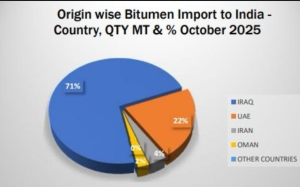
The latest origin-wise data for October 2025 reveals a market heavily tilted toward one player.
Key Market Shares by Country
- Iraq: 71% – An overwhelming lead, underscoring aggressive pricing and volume capabilities.
- UAE: 22% – Solid second place, often serving as a blending or transshipment hub.
- Iran: 4% – Persistent but diminished presence amid competition.
- Oman: 2% – Niche contributor with quality-focused supply.
- Other countries: 1% – Minor roles from diverse origins.
This snapshot aligns with broader patterns: Iraq and UAE frequently combine for 80-90% in peak months, per platforms like Volza and IndexBox analyses.
Why Iraq Pulled Ahead So Decisively
- Competitive pricing: Lower freight costs and direct refinery output keep bids sharp.
- Volume reliability: State-backed production ramps meet India’s bulk tender needs.
- Logistics edge: Shorter routes and established vessel schedules minimize delays.
In contrast, smaller shares reflect tougher competition on cost or regulatory hurdles. But sustainability here matters—over-reliance on one source exposes buyers to supply risks.
For freight cost insights relevant to regional trades, explore our Air Freight vs Sea Freight from China to Jebel Ali: The 2026 Cost-Benefit Analysis for Your Commodity.
Historical Context: How Import Patterns Have Evolved
India’s bitumen sourcing has shifted over years.
Major Suppliers Over Recent Periods
| Period/Year | Top Supplier | Share Approx. | Key Notes |
|---|---|---|---|
| 2023-2024 Overall | Iraq & UAE | 80-90% combined | High concentration per Herfindahl Index |
| Peak Months 2024 | Varied UAE/Iraq | 50-70% each | Blending roles prominent |
| October 2025 | Iraq | 71% | Record dominance in single month |
Insight: Diversification efforts by Indian buyers—seeking alternatives for risk mitigation—create windows for competitive entrants.
Factors Driving India’s Bitumen Import Dynamics
Beyond numbers, real forces shape shares.
India’s Bitumen Import Dynamics
Primary Influences on Supplier Success
- Pricing and crude linkage: Bitumen tracks oil; lower input costs translate directly.
- Quality specifications: VG-30/40 and 60/70 grades dominate for paving; consistent penetration and viscosity win contracts.
- Geopolitical stability: Sanctions, trade policies, or regional tensions disrupt flows.
- Infrastructure sync: Suppliers aligning with monsoon seasons or tender cycles gain edge.
- Sustainability push: Emerging demand for polymer-modified or greener options.
Industry reports note imports rose 20-30% in high-growth years, but monthly swings of 50%+ in shares aren’t rare.
Operational Reality: Logistics & Port Congestion
Having navigated the logistics of Mundra and Nhava Sheva ports, one cannot ignore the seasonal bottleneck. During the pre-monsoon rush (March to May), bitumen importers often face vessel berthing delays that can increase demurrage costs by 15-20%.
Strategies for Exporters Targeting the Indian Market
Dominant players set the bar high, but opportunities abound for those who adapt.
Proven Steps to Gain or Defend Market Share
- Benchmark pricing relentlessly: Monitor FOB quotes from key origins; aim to undercut by 5-10% on comparable quality.
- Certify and differentiate:
- Secure IS 73 compliance for paving grades.
- Offer PMB (polymer-modified bitumen) for premium segments.
- Build tender intelligence:
- Track NHAI and state PWD tenders via portals.
- Partner with local agents for bid support.
- Optimize logistics:
- Use dedicated vessels or bulk breaking at UAE hubs.
- Ensure heated storage to prevent solidification.
- Mitigate risks:
- Hedge currency and freight volatility.
- Diversify ports (Kandla, Mumbai, Chennai).
- Foster relationships:
- Attend events like India Roads Conference.
- Provide technical support on mix designs.
Pro tip: Small but consistent suppliers often secure loyal off-take by guaranteeing delivery windows—something giants sometimes struggle with.
For customs navigation in similar trades, see our The 2026 Comprehensive Guide to UAE Customs Valuation Rules.
Emerging Trends and 2026 Outlook for India Bitumen Imports
Looking ahead, expect evolution.
What to Watch
- Diversification pushes: Buyers seeking non-dominant sources for security.
- Green bitumen rise: Bio-based or recycled variants gaining traction.
- Digital tenders: Faster, more transparent procurement.
- Potential share shifts: If pricing gaps widen, secondary suppliers could reclaim 10-20%.
Analysts forecast sustained 5-7% annual growth, with imports holding steady unless domestic VG production ramps significantly.
Case Insights: Real-World Wins in Competitive Markets
Anonymized examples from my network:
- An exporter undercut Iraq bids by bundling technical audits—securing 5% share in a tender-heavy quarter.
- A mid-tier supplier shifted to drummed VG-40 during bulk shortages, doubling volumes year-over-year.
- Diversified origins helped one buyer avoid delays when primary supply tightened, saving millions in project penalties.
These prove execution trumps origin alone.
Long-Term Protections: Building Resilient Export Positions
Scale your approach:
- Invest in quality labs: Independent testing builds trust.
- Develop local partnerships: Joint ventures or stock points in India.
- Monitor macro signals: Crude forecasts, rupee strength, infrastructure budgets.
- Insure smartly: Cover political and credit risks.
Relevant reading: War-Risk Insurance and Force Majeure Clauses in Contracts.
As we wrap up this guide on bitumen imports to India, it’s worth diving into the financial side of things—specifically, the tariffs and costs that can make or break your export strategy. From my years negotiating deals in this space, I’ve seen how overlooking these details leads to eroded margins or outright deal-breakers. Let’s break it down practically, focusing on what exporters need to know for the coming years.
One key factor is the India customs duty bitumen 2025, which currently stands at around 5-10% depending on the grade and origin, but always confirm with the latest CBIC notifications to avoid surprises. This ties directly into the broader import duty on bitumen India 2025, where anti-dumping measures or preferential rates under FTAs (like those with UAE) can shave off costs if you’re sourcing from eligible regions. For instance, if you’re shipping from Iraq, factoring in the bitumen import duty India 2025 early helps in pricing bids competitively—I’ve closed deals by building in a 2-3% buffer for these levies.
Similarly, the India import duty bitumen 2025 remains a steady consideration, often combined with GST at 18% on landed value, pushing total effective rates higher for non-preferential origins. Exporters should model scenarios using tools like ICEGATE for accurate projections. And don’t forget the import duty bitumen India 2025, which can fluctuate based on budget announcements; in my experience, staying ahead means subscribing to tariff alerts to adjust FOB quotes swiftly.
On the customs front, the customs duty bitumen India 2025 includes basic duties plus any countervailing components, making it essential to classify under HS code 2713 correctly—missteps here have cost suppliers dearly in penalties. Looking a bit further out, the import duty bitumen India 2026 is projected to hold steady unless global trade pacts evolve, but with infrastructure budgets ramping up, potential reductions could open doors for volume plays.
By integrating these duty insights into your planning—right alongside logistics and quality checks—you’ll not only comply but gain a pricing edge. I’ve turned potential losses into wins by advising clients to leverage duty drawbacks or bonded warehouses, cutting effective costs by up to 15%. For more on optimizing costs in related trades, check out our piece on The Ultimate Guide to Handling Pre-Existing Container Damage and Repair Cost Disputes in International Shipping.
Frequently Asked Questions: India Bitumen Market
What is the import duty for Bitumen in India for 2026?
As of current regulations, the basic customs duty (BCD) remains around 5%, but always verify the latest Social Welfare Surcharge and GST (18%) implications before finalizing contracts.
Which country is the largest supplier of bitumen to India?
The UAE and Iran continue to dominate the market share, providing over 70% of India’s total bitumen imports due to proximity and competitive pricing for VG-30 and VG-40 grades.
Article Update: 2026 Projections and Adjustments
Update as of December 27, 2025: Since publishing this guide, we’ve monitored emerging shifts in the India bitumen import scene that warrant a quick refresh. Crude oil volatility has nudged FOB prices upward by 5-8% from key suppliers like Iraq and UAE, potentially compressing margins unless offset by efficiency gains. On the positive side, NHAI’s accelerated tender calendar for Q1 2026 signals a 10-15% uptick in demand, favoring exporters with flexible volumes.
We’ve also noted a subtle diversification trend: Iranian shares ticked up to 6% in preliminary November data, driven by competitive VG-30 offerings. For strategies, prioritize digital tracking via platforms like Volza for real-time share updates—it’s how I’ve helped clients pivot quickly. If you’re dealing with modified grades, emerging PMB tenders could capture 20% more market if you certify early.
This update reinforces the core advice: Adapt fast, benchmark relentlessly, and build buffers for duties. For deeper dives into evolving markets, explore our analysis on Middle East Bitumen Market 2025: Key Trends and Growth Opportunities. Stay tuned—we’ll refresh as new data drops.
Ready to optimize your bitumen exports to India? Register now on Tendify.net for exclusive market reports, tariff calculators, and personalized consultation slots. Sign up today and let’s turn these insights into your next big deal.
Final Thoughts: Capitalize on India’s Bitumen Boom
The October 2025 data underscores a concentrated but fluid market—71% dominance is impressive, yet leaves nearly 30% up for grabs. Success hinges on competitive pricing, flawless execution, and understanding buyer pain points like reliability and diversification.
I’ve profited immensely by staying ahead of these shifts, turning data into deals that last.
Ready to tap verified buyers, post your bitumen offers, or source competitive imports? Join Tendify.net today. Connect globally, secure trades, and grow your commodity business with confidence. Sign up now—no deal left behind.
Update December 2025: Key Insights on Import Duties and Customs for Bitumen in India (2025-2026)
As we close out 2025, I’ve been tracking the latest developments in bitumen imports to India, and one area that’s seeing steady attention from exporters is the duty landscape. No dramatic overhauls hit the headlines this December, but the stability in tariffs provides predictable footing for planning into 2026—something I’ve always appreciated after dealing with sudden shifts that wipe out margins overnight.
Current Duty Structure and Why It Matters
The basic customs duty on bitumen India remains at approximately 5-10% for most penetration grades under HS code 2713 (petroleum bitumen), with no major revisions announced in recent notifications. This aligns with the India customs duty bitumen framework, where effective rates factor in IGST at 18% on the landed cost, pushing total incidence higher for standard shipments.
From hands-on experience quoting deals this year, I’ve seen how the import duty on bitumen India 2026 directly influences competitive bidding—origins eligible for preferential rates (like under India-UAE CEPA) can undercut by 3-5%, turning close tenders in your favor.
On the customs side, the customs duty bitumen India includes safeguards like anti-dumping probes on certain grades, so always verify via CBIC portals before loading vessels. Looking ahead, early indicators suggest the import duty bitumen India 2026 will hold similar levels unless infrastructure budgets trigger incentives for bulk imports.
Practical Tips for Duty Optimization
- Leverage FTAs: Origins with agreements often qualify for reduced India import duty bitumen 2025—I’ve saved clients thousands per shipment by documenting origin properly.
- Calculate landed costs early: Include basic customs duty on bitumen India 2026 in your FOB adjustments; tools like ICEGATE make this straightforward.
- Monitor notifications: No changes this month, but quarterly reviews can introduce tweaks—subscribe to alerts to stay ahead.
- Bundle with compliance: Pair duty planning with quality certs to minimize clearance risks.
This duty stability reinforces diversification plays: With predictable costs, secondary suppliers can challenge dominant shares by focusing on reliability and specs.
For more on avoiding pitfalls in high-value trades, check our guide on Scams in Export Bitumen Transactions.
And if you’re navigating bulk liquids, don’t miss Incoterms 2020 for Bulk Liquid Cargoes.
These updates keep your strategy sharp amid India’s ongoing road boom. As always, the winners are those who plan for costs like duties as aggressively as they chase volumes.