وبلاگ
Iraq Steel Rebar 2026: Best Suppliers for the $50B Reconstruction Boom
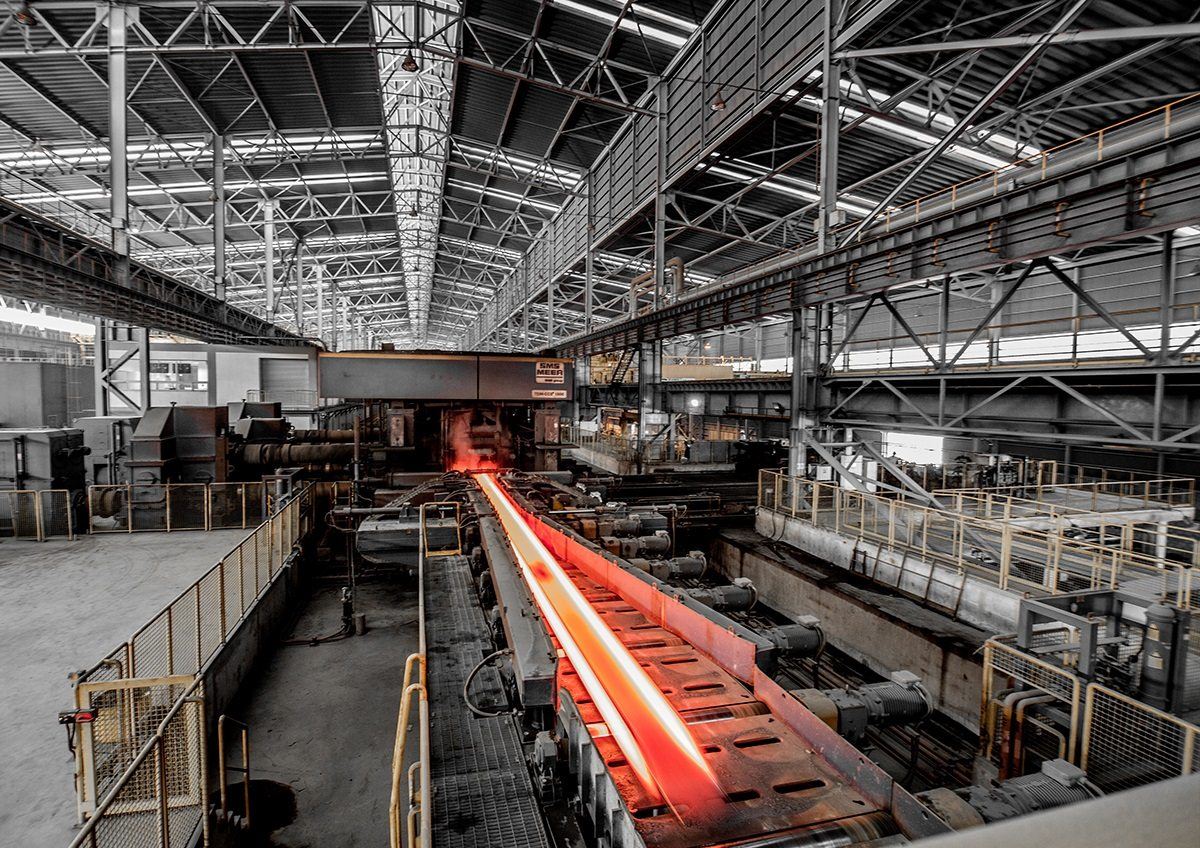
I’ve spent over 40 years navigating global commodities markets, supplying everything from petrochemicals to construction materials across challenging regions. Right now, one of the hottest opportunities I’m tracking is steel rebar exports to Iraq. With searches spiking for “rebar price per kg Iraq 2025,” it’s clear traders and contractors are eyeing this market. Iraq’s post-conflict reconstruction and infrastructure surge are driving massive demand for reinforcing steel bars—and smart suppliers are positioning themselves to capitalize.
Iraq Steel Rebar
The reality? Iraq’s construction sector is exploding, projected to grow at 5-6% annually through 2030, fueled by billions in oil revenues and international investments. Domestic production is ramping up, but quality imports remain essential for major projects. Get in now with compliant, high-grade rebar, and you can secure long-term margins in a market hungry for reliable supply.
Iraq’s Steel Rebar Market Overview: Demand Drivers and 2025 Projections
Iraq consumes millions of tons of rebar annually, primarily for concrete reinforcement in buildings, bridges, and roads. Recent reports peg the construction industry at a potential $65 billion value by 2030, with steel rebar forming the backbone.
Here’s what’s fueling this:
- Reconstruction Momentum: Post-conflict rebuilding in cities like Mosul and Baghdad requires vast quantities of structural steel.
- Infrastructure Mega-Projects: Initiatives like the Development Road corridor, new ports, and highways demand high-strength deformed bars.
- Housing and Urban Growth: Rapid urbanization and population growth push residential and commercial developments.
- Energy Sector Expansion: Oil, gas, and renewable projects need durable reinforcement for facilities.
Industry forecasts show steady growth, with public-private partnerships accelerating projects. I’ve seen similar booms—when demand outpaces local supply, importers win big.
Current Rebar Prices in Iraq: What Traders Need to Know in 2025
Prices fluctuate with global scrap, energy costs, and local supply. As of late 2025:
- Local mill offers: Around $600-710 per ton ex-works, with Basra often lower at ~$600/t.
- Imported rebar: Competitive, especially from regional sources, landing at $525-575/t warehouse.
- Per kg equivalent: Roughly $0.60-0.71/kg ex-works (divide ton prices by 1000).
Rebar Prices in Iraq
These figures come from real-time market trackers like SteelRadar and Kallanish. Volatility is normal—scrap inflows or crude oil swings can shift prices 5-10% monthly.
Price Comparison: Local vs. Import
| Source/Type | Price Range (USD/ton ex-works) | یادداشتها |
|---|---|---|
| Iraqi EAF Mills | 650-710 | Domestic, variable by region |
| Basra Producers | ~600 | Stable, lower due to location |
| Imported (Regional) | 525-575 | Competitive edge for quality |
| Turkish Offers | 560-625 | FOB, quality premium |
Why the spread? Local protectionism and duties sometimes favor domestic, but projects demand ASTM/EN-compliant grades that imports often deliver better.
Why Steel Rebar Exports to Iraq Are a 2025 Hotspot
This isn’t just another market—it’s emerging fast.
Key Opportunities
- Quality Gap: Many projects specify high-yield deformed rebar (e.g., Grade 60 or equivalent) for seismic and load-bearing needs.
- Tax Incentives: Article 15 exemptions for reconstruction materials cut costs significantly.
- Logistics Advantages: Proximity from Gulf/Middle East hubs reduces freight vs. distant sources.
- Rising Standards: Compliance with Iraqi Quality Standards (IQS) opens doors to government tenders.
For details on navigating exemptions, see our practical guide: Unlocking Tax Exemptions for Iraq’s Reconstruction Projects: A Practical Guide to Article 15 Benefits.
And for quality compliance strategies, check راهنمای جامع استانداردهای کیفیت عراق (IQS): محصولات اجباری و استراتژیهای انطباق.
Challenges in Supplying Rebar to Iraq—and How to Overcome Them
I’ve dealt with these firsthand:
- موانع نظارتی: IQS certification and pre-inspection requirements.
- Logistics Risks: Border delays or multimodal needs.
- Payment and Currency: Preference for secure terms amid volatility.
- Competition: Local mills expanding capacity.
Solutions? Partner with verified forwarders, secure LCs, and focus on certified grades.
Step-by-Step Guide: Exporting Steel Rebar to Iraq Successfully
From decades of deals:
- Research Demand: Target regions like Baghdad, Basra, Erbil via tenders.
- Ensure Compliance: Obtain IQS/CMI certificates; test for yield strength, ductility.
- Price Competitively: Factor duties, freight—aim below local peaks.
- Secure Logistics: Use containers or bulk; plan for Umm Qasr port.
- Build Relationships: Direct with contractors or via platforms.
- Mitigate Risks: Use insurance, phased shipments.
- Monitor Market: Track scrap/crude for timing.
This approach has locked in multi-thousand-ton contracts for clients.
Standards and Specifications: What Iraq Buyers Demand
Common grades:
- Deformed bars: 8-40mm diameter, HRB400/500 equivalents.
- Standards: ASTM A615, BS 4449, or local equivalents.
- Testing: Tensile, bend, chemical composition.
Buyers prioritize corrosion resistance for harsh climates.
Price Trends from 2024 to 2025 Transition
In late 2024, prices dipped amid oversupply from regional producers. But as 2025 kicked off, a 5-10% uptick emerged, fueled by construction restarts after seasonal slowdowns. This shift highlights the cyclical nature of the market—something I’ve leveraged in my own dealings by timing purchases during lows.
Average Iraq Rebar Price Per Ton in 2025: A Balanced View
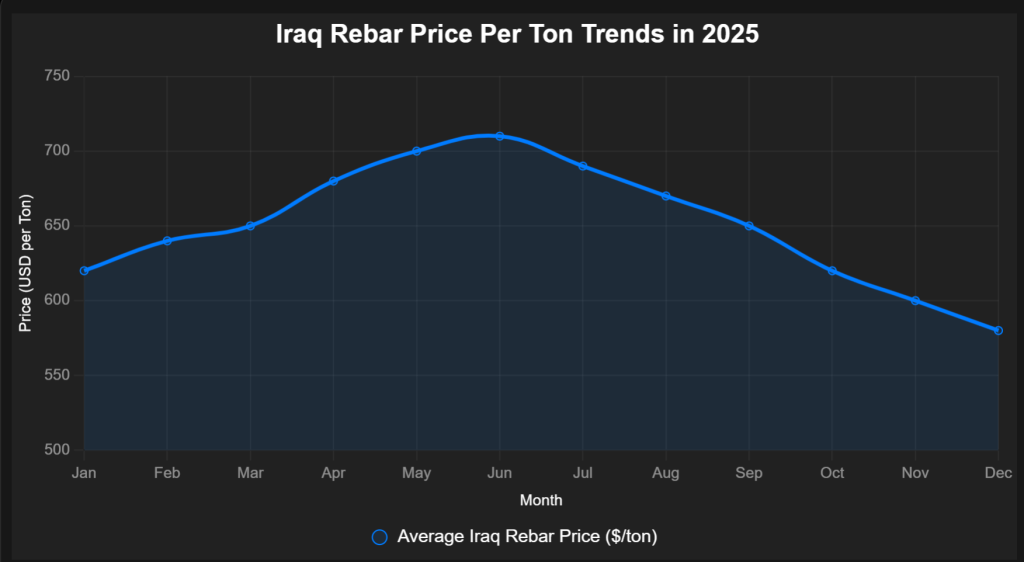
Based on aggregated data from key sources, the average Iraq rebar price per ton in 2025 settled around $650-680. This figure accounts for both domestic and imported supplies, with variations by region. In Basra, closer to ports, averages trended lower at about $600-620 per ton, while northern areas like Erbil saw $680-700 due to logistics costs.
Why this average? It’s a blend of local mill outputs and imports. Domestic producers aimed to hold floors at $600 to prevent further erosion, as noted in industry decisions. Imported rebar from Turkey and Iran often undercut this, averaging $550-650, but quality premiums pushed the overall mean higher. For businesses, this average serves as a benchmark—plan budgets around it, but build in 10-15% buffers for volatility.
Iraq Rebar Price Per Ton 2025
Regional Variations in Average Prices
- Southern Iraq (e.g., Basra): Closer to import hubs, averages ~$600/ton, benefiting from lower transport fees.
- Central Iraq (e.g., Baghdad): $650-670/ton, balancing domestic and imported sources.
- Northern Iraq: Higher at $680+, due to inland shipping and security premiums.
These averages reflect a market striving for stability amid growth.
High and Low Price Points for Iraq Rebar in 2025
2025 wasn’t a flat year—prices swung notably. The high end peaked at around $710 per ton in mid-year, driven by supply shortages during peak construction seasons. This was evident in local mill offers, where ex-works prices hit these levels amid raw material cost spikes.
On the flip side, lows dipped to $550-600 per ton, particularly in late Q4 when demand softened and imports flooded the market. These troughs often occurred in southern ports, where competitive bidding from regional exporters like Iran (averaging $473 for billets, influencing rebar) kept pressure down.
In my career, I’ve learned that highs often signal buying pauses, while lows are prime for stockpiling. For 2025, the spread between high and low (about $110-160) underscores the market’s reactivity to external pressures.
Monthly Breakdown of Highs and Lows
To make it actionable, here’s a simplified table of estimated monthly ranges:
| ماه | Low ($$ /ton) | High ( $$/ton) | یادداشتها |
|---|---|---|---|
| Jan-Mar | 580 | 650 | Post-winter recovery |
| Apr-Jun | 600 | 710 | Peak demand surge |
| Jul-Sep | 570 | 680 | Volatility from global events |
| Oct-Dec | 550 | 640 | Seasonal slowdown |
Reasons for Price Changes in Iraq Rebar Market 2025
Prices don’t fluctuate in a vacuum—there’s always a “why” that savvy operators decode. In 2025, several key drivers shaped the Iraq rebar price per ton:
- Demand Fluctuations: Weak global demand in May led to volatility, with seasonal construction halts dropping prices by 5-10%. Conversely, infrastructure booms in Q2 pushed highs.
- Supply Chain and Production Costs: Rising raw material costs (e.g., iron ore, energy) added 3-6% to prices early in the year. Turkish exports, up 3.6% to $570/ton FOB, influenced Iraqi imports.
- Geopolitical and Economic Factors: Currency instability and tariffs from neighbors like Iran affected imports. A decision by Iraqi manufacturers to cap sales below $600 stabilized lows but capped growth.
- Global Market Influences: Broader trends, like US prices climbing to over $700/ton, rippled into Iraq via trade links. Weak demand contrary to forecasts caused late-year drops.
From personal experience, these reasons often compound— a demand dip plus cost hikes can amplify swings. Understanding the “why” lets you hedge effectively.
Future Outlook for Steel Rebar Prices in Iraq Beyond 2025
Looking ahead, expect modest growth to $700+ averages by 2026 if demand holds. But watch for global recessions or supply gluts. The key? Stay informed and agile.
In wrapping up, mastering the Iraq rebar price per ton in 2025 boils down to blending data with instinct. If you’re in the trade, don’t go it alone—join a network that connects you directly with verified suppliers and real-time deals.
Final Thoughts: Capitalize on Iraq’s Rebar Demand Now
Steel rebar to Iraq represents a prime 2025 opportunity—steady growth, project-backed demand, and room for quality importers. Prices are attractive, but success comes from compliance, reliability, and timing.
Ignore the regulatory details or quality specs, and shipments stall. Master them, and you’re building lasting supply chains in a rebuilding nation.
If you’re sourcing or exporting rebar—whether deformed bars for highways or mild steel for housing—our platform at Tendify.net connects you directly to verified global suppliers with real-time pricing, compliance support, and seamless logistics options.
Register today to post your RFQ, receive competitive quotes tailored to Iraq’s market, and secure trusted deals—no hassles, just efficient trade.
Ready to tap into this boom? Sign up now and let’s get your rebar moving to Iraq profitably.